Before you start
The town of Vagharshapat, also called Etchmiadzin, lies about twenty kilometres west of Yerevan, on the plain beneath Mount Ararat. It is the spiritual heart of Armenia, the seat of the Catholicos, head of the Armenian Apostolic Church, and home to its mother cathedral, often called the oldest cathedral in the world. This guide begins in the cathedral and its museum, then visits the seventh-century churches of Saint Gayane and Saint Hripsime, and ends at the ruins of Zvartnots Cathedral. Together they are a UNESCO World Heritage Site. Saint Hripsime is a short walk or taxi ride from the cathedral, and Zvartnots is a few kilometres east, on the road to Yerevan.
Use it as a self-guided tour of Etchmiadzin and Zvartnots: 7 stops in visit order, each played when you’re ready, at your own pace.
 Free preview · Stop 1
The Mother See
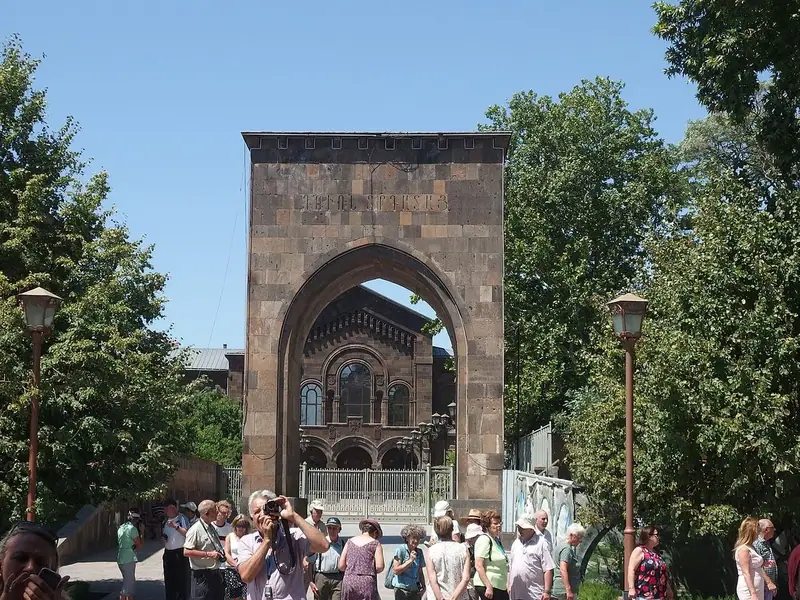
Begin inside the walled complex of the Mother See of Holy Etchmiadzin, the headquarters of the Armenian Apostolic Church. Around you are the residence of the Catholicos, the seminary and other church buildings, set around gardens and a great courtyard, with the cathedral in the middle. In the nineteenth century the monastery was surrounded by high walls with towers, and visitors compared it to a fortress. The name Etchmiadzin means the descent of the only begotten, and it comes from a legend. Agathangelos, an early writer, tells how Gregory the Illuminator saw a vision of a figure descending from heaven and striking the ground with a golden hammer, to show where the church should be built. Later tradition said that the figure was Christ. Look around the courtyard for khachkars, the carved stone crosses of Armenia, each with its own pattern.
Photo: Palickap · CC BY 4.0 · Wikimedia Commons
What to see at Etchmiadzin and Zvartnots: 7 stops, in visit order
- 01
 The Mother SeeThe heart of a churchFree preview
- 02
 The CathedralThe oldest cathedralIn the guide
- 03
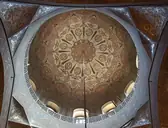 The Painted InteriorFlowers and saintsIn the guide
- 04
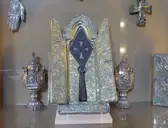 The TreasuryRelics and manuscriptsIn the guide
- 05
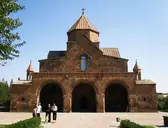 Saint GayaneA seventh-century churchIn the guide
- 06
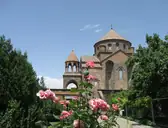 Saint HripsimeA masterpiece of stoneIn the guide
- 07
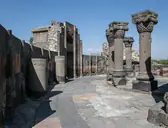 ZvartnotsA ruined cathedralIn the guide
Site map of Etchmiadzin and Zvartnots
History of Etchmiadzin and Zvartnots
Vagharshapat was one of the capitals of ancient Armenia, ruled at the time by a branch of the Parthian Arsacid dynasty. According to tradition, around 301 King Trdat the Third was converted by Gregory the Illuminator, and Armenia became the first country to adopt Christianity as its state religion, though some historians place this a few years later. The first cathedral was built soon afterwards. In the following centuries Armenia was fought over by Persia, Byzantium and the Arabs, and the great churches of the seventh century were built in these troubled times. The Armenian Church has endured ever since, through centuries of foreign rule.
Etchmiadzin and Zvartnots guide: questions
How many stops does the Etchmiadzin and Zvartnots guide have?
7 stops, in visit order: 1. The Mother See; 2. The Cathedral; 3. The Painted Interior; 4. The Treasury; 5. Saint Gayane; 6. Saint Hripsime; 7. Zvartnots.
Can I do a self-guided tour of Etchmiadzin and Zvartnots with this guide?
Yes. The guide is made for a self-guided tour: 7 stops in visit order, each with a photo, a story and a voice, so you can explore Etchmiadzin and Zvartnots at your own pace, without joining a group. Download it before you go and it works offline.
How long is each guide?
The 7 stops add up to about 5 minutes of listening in total. You play each stop when you’re ready, so you can go at your own pace.
Does the guide work offline?
Yes, once it’s downloaded. The guide is a single self-contained web page (about 6.6 MB) with the photos, text and audio built in. Download it to your phone before you go (Wi-Fi is best); after that it opens in any modern browser on iPhone or Android, with no app, account or mobile signal needed.
Does it use GPS or need my location?
No. The guide doesn’t use GPS and doesn’t know where you are: you play each stop when you reach it. It works on iPhone and Android in any modern browser, and it’s in English.
What’s included?
One self-contained HTML guide: 7 stops in visit order, each with a photo, text and a voice, plus the story of who built the site.
Who built Etchmiadzin and Zvartnots?
Vagharshapat was one of the capitals of ancient Armenia, ruled at the time by a branch of the Parthian Arsacid dynasty. According to tradition, around 301 King Trdat the Third was converted by Gregory the Illuminator, and Armenia became the first country to adopt Christianity as its state religion, though some historians place this a few years later.
Is there a free audio guide to Etchmiadzin and Zvartnots?
The first stop, The Mother See, is free to read and hear on this page, so you can try the Etchmiadzin and Zvartnots audio tour before you buy. The full guide, with all 7 stops, is a one-off purchase: download it once and it’s yours to keep, working offline.
Is the Etchmiadzin and Zvartnots guide worth it?
If you’d like to know what you’re looking at, yes. For $10 you get 7 stops in visit order, each with a photo, a short history and a voice you play when you’re ready, plus a site map of the stops, and about 5 minutes of listening in all. It’s short on purpose, so you spend your time looking, not listening. It’s yours to keep, works offline and needs no app. The first stop is free on this page, so you can try it before you buy. If you’d like hours of detail, a guided tour will go deeper.
Audio guide or guided tour?
It depends how you like to visit. This guide lets you explore Etchmiadzin and Zvartnots at your own pace, at any time, for a one-off price. A guided tour gives you a live expert you can ask questions, but at fixed times and usually for a higher price. Many people use both: a tour for the big picture, and the guide to read beforehand or to revisit the stops in their own time.
Is this the official Etchmiadzin and Zvartnots guide?
No. It’s an independent guide by The Historian Guide, not affiliated with or endorsed by the operator of Etchmiadzin and Zvartnots. For tickets and opening hours, check the official site operator before you go.
Does the guide include entry tickets or opening hours?
No. The guide is a digital companion only. Admission to Etchmiadzin and Zvartnots is separate, so check the official site operator for current tickets and opening hours before you go.
- Stop 1 · The Mother See: Palickap · CC BY 4.0 · Wikimedia Commons · resized
- Stop 2 · The Cathedral: Luigi Guarino · CC BY 2.0 · Wikimedia Commons · resized
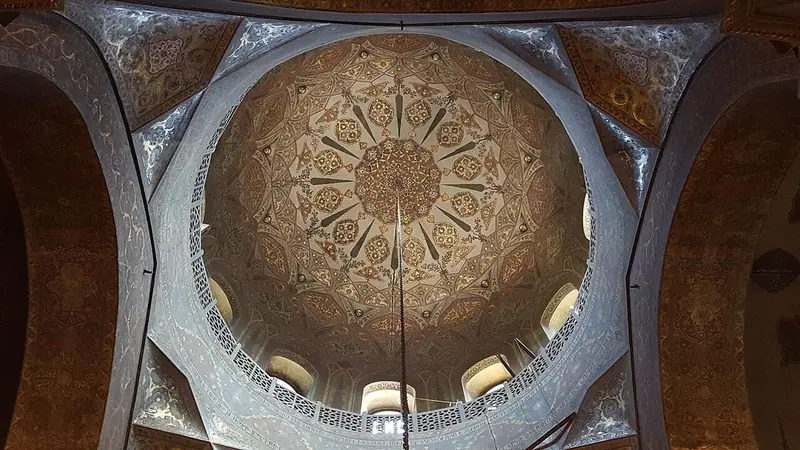
- Stop 3 · The Painted Interior (also the cover): Yerevantsi · CC BY-SA 4.0 · Wikimedia Commons · resized
- Stop 4 · The Treasury: Photo by Emanuele Iannone · Public domain · Wikimedia Commons · resized
- Stop 5 · Saint Gayane: Liveon001 © Travis K. Witt · CC BY-SA 3.0 · Wikimedia Commons · resized
- Stop 6 · Saint Hripsime: Valen1988 · CC BY-SA 4.0 · Wikimedia Commons · resized
- Stop 7 · Zvartnots: Սարո Հովհաննիսյան · CC BY-SA 4.0 · Wikimedia Commons · resized


All photographs from Wikimedia Commons under the licences shown.
More guides in Armenia
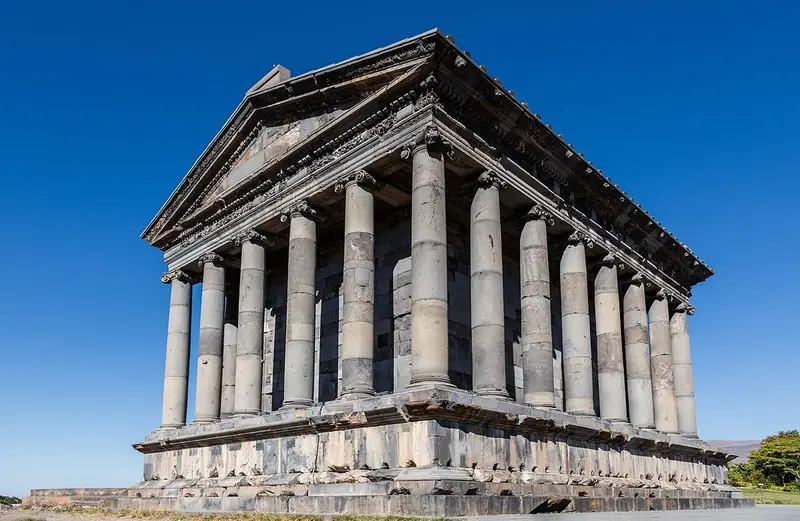 Armenian8 stops · 1st century CE; 13th century
Garni and Geghard audio guide
See Armenia’s only standing Greco-Roman colonnaded temple on the edge of a gorge, then the rock-cut churches of the monastery of Geghard.
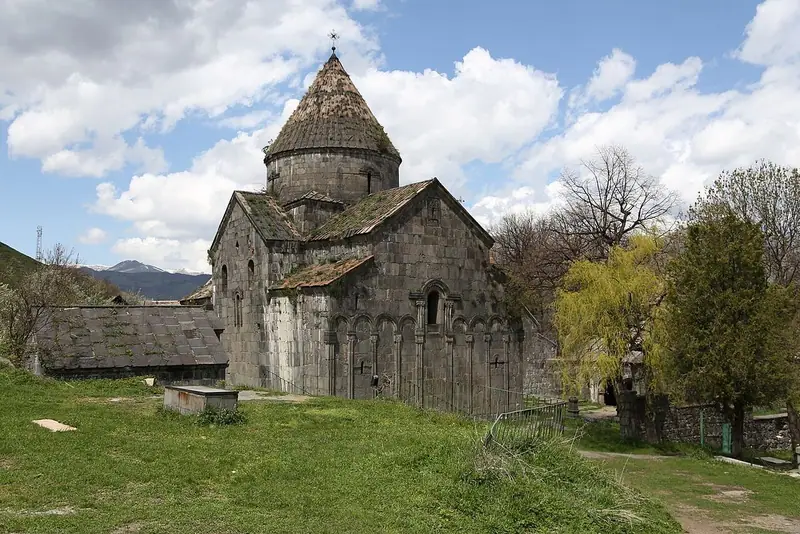 Armenian8 stops · 928–1273
Haghpat and Sanahin audio guide
Visit two medieval monasteries facing each other above the Debed gorge, with their churches, narthexes, library and bell tower.
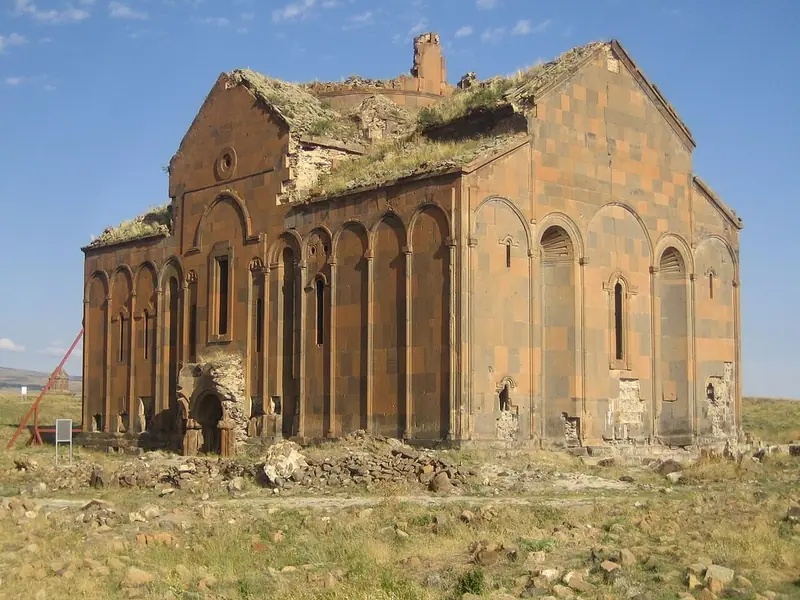 Armenian8 stops · 10th – 14th century CE
Ani audio guide
The ruined capital of medieval Armenia above a border gorge: Trdat’s cathedral, the frescoed church of Tigran Honents, the half-fallen Holy Redeemer and the minaret of Manuchihr.
Every guide, in every country
Etchmiadzin and Zvartnots and every other guide we publish, including future ones. One payment, no subscription.