Before you start
Few cities have been at the centre of history as often as Sarajevo. Founded by the Ottomans in the fifteenth century, it grew into a city where mosques, churches and synagogues stood side by side. In 1914 a shot fired on its riverbank set off the First World War, and from 1992 to 1996 it endured the longest siege of a capital city in modern warfare. This guide follows the old town from east to west: from the City Hall to the Ottoman bazaar of Baščaršija and the Gazi Husrev-beg Mosque, down to the Latin Bridge, and along Ferhadija street past the cathedral and the Markale market to the Eternal Flame.
Use it as a self-guided tour of Sarajevo: 7 stops in visit order, each played when you’re ready, at your own pace.
 Free preview · Stop 1
The City Hall
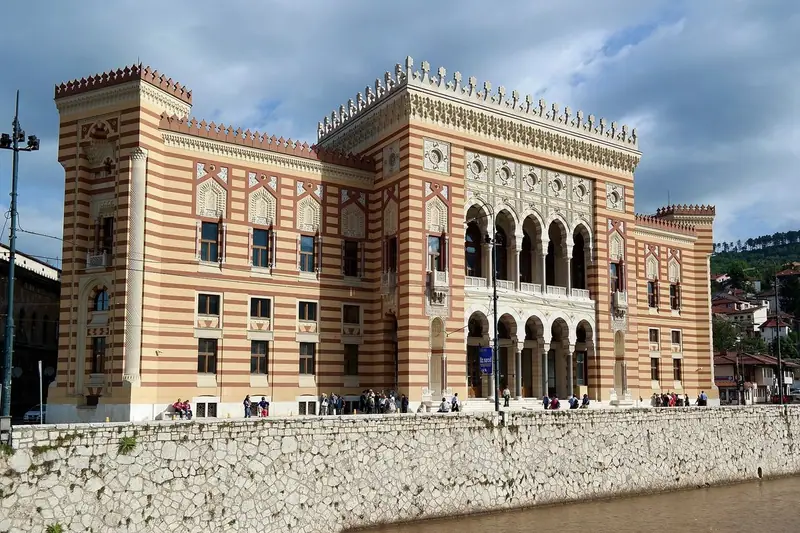
Begin at the striped Moorish Revival building on the riverbank, the City Hall, known in Bosnian as Vijećnica. It was built by the Austro-Hungarian authorities between 1892 and 1894, designed in a style inspired by the Islamic architecture of Spain and North Africa, to give their new province a building that looked both modern and local. On 28 June 1914 Archduke Franz Ferdinand and his wife Sophie attended a reception here, just before they were shot. In 1949 the building became the National and University Library of Bosnia and Herzegovina. On the night of 25 August 1992, during the siege, it was shelled and set on fire, and most of its collection of rare books, manuscripts and archives was destroyed, while citizens and librarians tried to save books under sniper fire. After a long restoration it reopened in 2014, and it now houses the city council and exhibitions. Walk west along the riverbank and turn into the bazaar.
Photo: Choinowski · CC BY-SA 4.0 · Wikimedia Commons
What to see at Sarajevo: 7 stops, in visit order
- 01
 The City HallThe library that burnedFree preview
- 02
 BaščaršijaThe Ottoman bazaarIn the guide
- 03
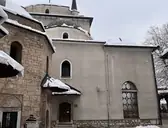 The Gazi Husrev-beg MosqueThe heart of Ottoman SarajevoIn the guide
- 04
 The Latin BridgeThe shot that started a warIn the guide
- 05
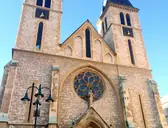 The Sacred Heart CathedralThe Catholic cathedralIn the guide
- 06
 The Markale MarketA place of remembranceIn the guide
- 07
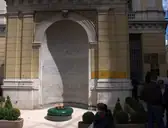 The Eternal FlameRemembering the Second World WarIn the guide
Site map of Sarajevo
History of Sarajevo
Sarajevo was founded after the Ottoman conquest of Bosnia, when the governor Isa-beg Isaković built a caravanserai, a mosque and a bazaar beside the river Miljacka in the 1460s. In the sixteenth century the governor Gazi Husrev-beg endowed the great mosque, schools, baths and markets around which the city grew. Muslims, Orthodox and Catholic Christians, and Sephardic Jews who had fled Spain lived here together. In 1878 Austria-Hungary occupied Bosnia, and its architects added grand public buildings in European and in Moorish Revival styles. On 28 June 1914 Gavrilo Princip assassinated the heir to the Austro-Hungarian throne here. After the Second World War, Sarajevo became the capital of Bosnia and Herzegovina within Yugoslavia, and in 1984 it hosted the Winter Olympics.
The full history continues in the guide.
Sarajevo guide: questions
How many stops does the Sarajevo guide have?
7 stops, in visit order: 1. The City Hall; 2. Baščaršija; 3. The Gazi Husrev-beg Mosque; 4. The Latin Bridge; 5. The Sacred Heart Cathedral; 6. The Markale Market; 7. The Eternal Flame.
Can I do a self-guided tour of Sarajevo with this guide?
Yes. The guide is made for a self-guided tour: 7 stops in visit order, each with a photo, a story and a voice, so you can explore Sarajevo at your own pace, without joining a group. Download it before you go and it works offline.
How long is each guide?
The 7 stops add up to about 6 minutes of listening in total. You play each stop when you’re ready, so you can go at your own pace.
Does the guide work offline?
Yes, once it’s downloaded. The guide is a single self-contained web page (about 7.8 MB) with the photos, text and audio built in. Download it to your phone before you go (Wi-Fi is best); after that it opens in any modern browser on iPhone or Android, with no app, account or mobile signal needed.
Does it use GPS or need my location?
No. The guide doesn’t use GPS and doesn’t know where you are: you play each stop when you reach it. It works on iPhone and Android in any modern browser, and it’s in English.
What’s included?
One self-contained HTML guide: 7 stops in visit order, each with a photo, text and a voice, plus the story of who built the site.
Who built Sarajevo?
Sarajevo was founded after the Ottoman conquest of Bosnia, when the governor Isa-beg Isaković built a caravanserai, a mosque and a bazaar beside the river Miljacka in the 1460s. In the sixteenth century the governor Gazi Husrev-beg endowed the great mosque, schools, baths and markets around which the city grew.
Where is Sarajevo?
Few cities have been at the centre of history as often as Sarajevo.
Is there a free audio guide to Sarajevo?
The first stop, The City Hall, is free to read and hear on this page, so you can try the Sarajevo audio tour before you buy. The full guide, with all 7 stops, is a one-off purchase: download it once and it’s yours to keep, working offline.
Is the Sarajevo guide worth it?
If you’d like to know what you’re looking at, yes. For $10 you get 7 stops in visit order, each with a photo, a short history and a voice you play when you’re ready, plus a site map of the stops, and about 6 minutes of listening in all. It’s short on purpose, so you spend your time looking, not listening. It’s yours to keep, works offline and needs no app. The first stop is free on this page, so you can try it before you buy. If you’d like hours of detail, a guided tour will go deeper.
Audio guide or guided tour?
It depends how you like to visit. This guide lets you explore Sarajevo at your own pace, at any time, for a one-off price. A guided tour gives you a live expert you can ask questions, but at fixed times and usually for a higher price. Many people use both: a tour for the big picture, and the guide to read beforehand or to revisit the stops in their own time.
Is this the official Sarajevo guide?
No. It’s an independent guide by The Historian Guide, not affiliated with or endorsed by the operator of Sarajevo. For tickets and opening hours, check the official site operator before you go.
Does the guide include entry tickets or opening hours?
No. The guide is a digital companion only. Admission to Sarajevo is separate, so check the official site operator for current tickets and opening hours before you go.
- Stop 1 · The City Hall: Choinowski · CC BY-SA 4.0 · Wikimedia Commons · resized
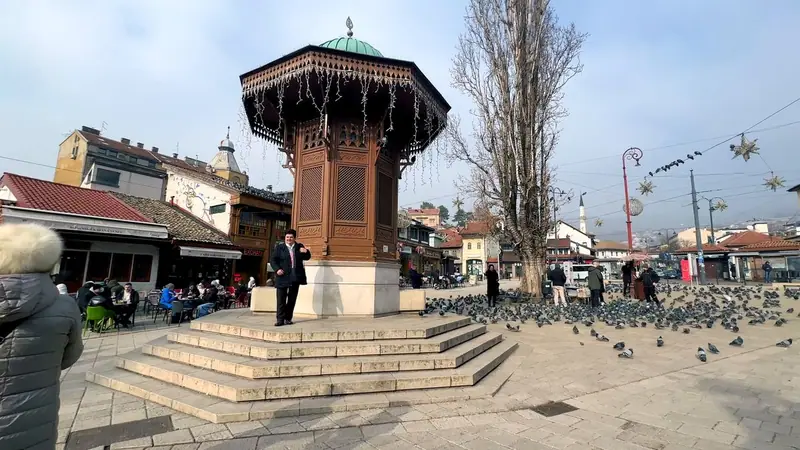
- Stop 2 · Baščaršija (also the cover): followtheimprints · CC BY 3.0 · Wikimedia Commons · resized
- Stop 3 · The Gazi Husrev-beg Mosque: Niegodzisie · CC BY-SA 4.0 · Wikimedia Commons · resized
- Stop 4 · The Latin Bridge: Dudva · CC0 · Wikimedia Commons · resized
- Stop 5 · The Sacred Heart Cathedral: Bjoertvedt · CC BY-SA 4.0 · Wikimedia Commons · resized
- Stop 6 · The Markale Market: Duesseljan · CC0 · Wikimedia Commons · resized
- Stop 7 · The Eternal Flame: Francisco Antunes from London, United Kingdom · CC BY 2.0 · Wikimedia Commons · resized


All photographs from Wikimedia Commons under the licences shown.
More guides in Bosnia and Herzegovina
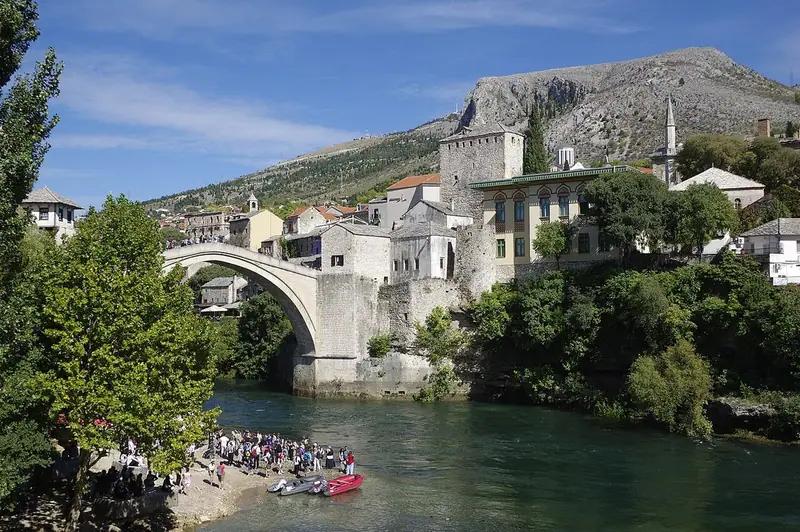 Ottoman9 stops · 1474 – 1878 (Old Bridge 1566)
Mostar audio guide
The rebuilt Old Bridge over the Neretva and the mosques, bazaar and stone houses of Mostar’s old town, a symbol of reconciliation.
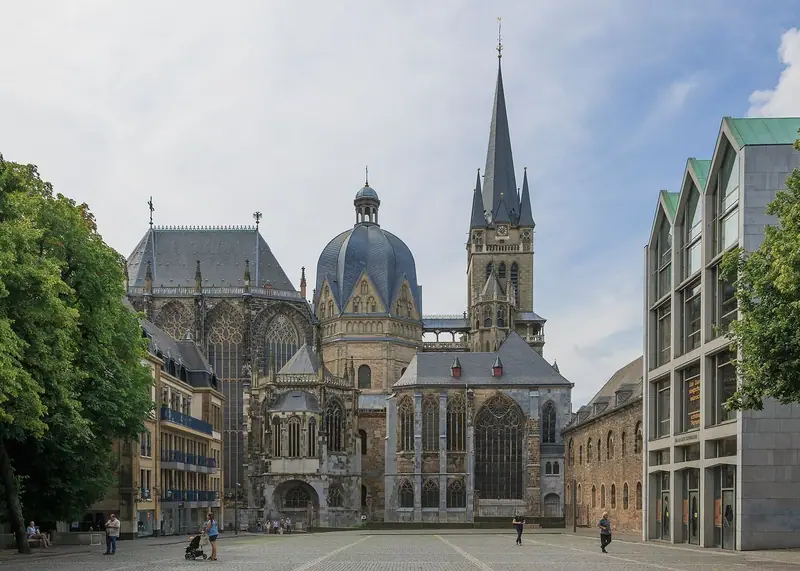 Carolingian6 stops · 788–1531
Aachen audio guide
From Charlemagne’s Palatine Chapel and the cathedral treasury, across the courtyard to the Town Hall and the Carolingian Granus Tower, then to the Elisenbrunnen spa fountain and the fourteenth-century Ponttor.
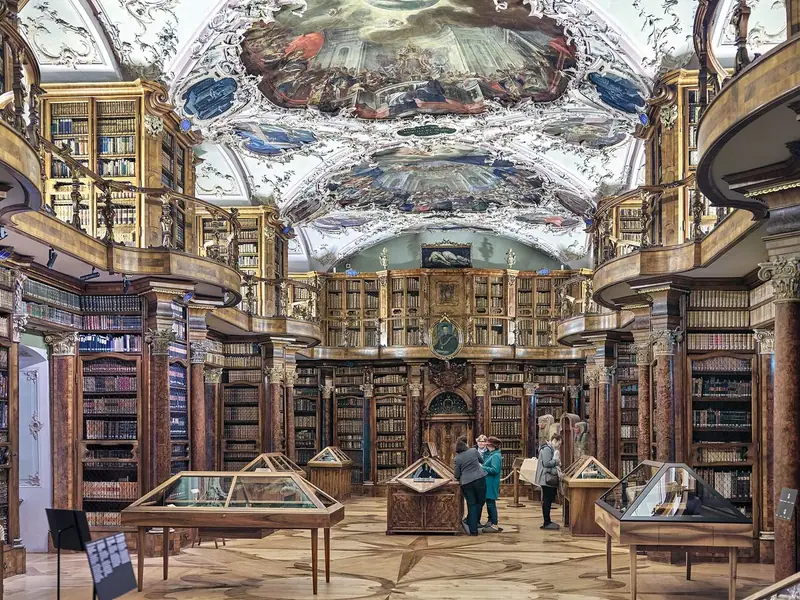 Baroque7 stops · 719–1805
Abbey of St Gall audio guide
The abbey that grew from a hermit’s cell: the Baroque library hall and its ancient manuscripts, the cathedral, the prince-abbot’s palace, the abbot’s own gate and the gorge where it all began.
Every guide, in every country
Sarajevo and every other guide we publish, including future ones. One payment, no subscription.