Before you start
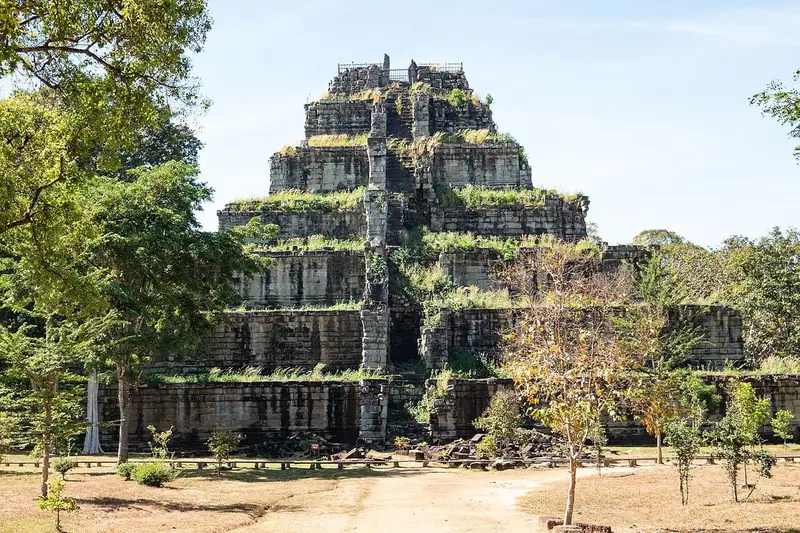
Koh Ker lies in the forest of northern Cambodia, in Preah Vihear Province, about 120 kilometres from Siem Reap and the temples of Angkor. The drive takes around two and a half hours, and simple guest houses in the nearby villages make it possible to stay overnight. More than 180 sanctuaries have been recorded in a protected area of 81 square kilometres, but only about two dozen are open to visitors, along an access road and a ring road around the great reservoir. UNESCO inscribed Koh Ker as a World Heritage Site in 2023. Much of the surrounding forest has not been fully cleared of mines, so keep to the roads and marked paths. Bring water, a hat and insect repellent, as shade between the temples is patchy. The route begins with the shrines along the access road, follows the ring road past the linga shrines, and ends at the great pyramid of the Prang.
Use it as a self-guided tour of Koh Ker: 7 stops in visit order, each played when you’re ready, at your own pace.
 Free preview · Stop 1
Prasat Pram
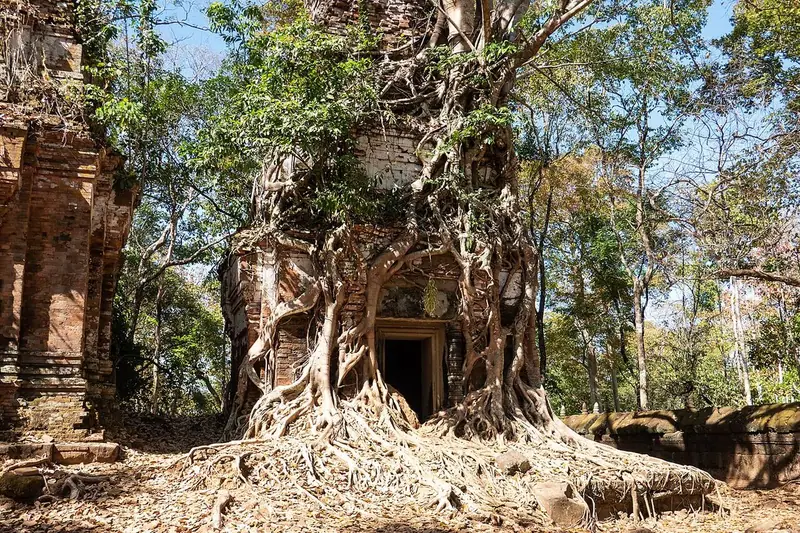
Begin at Prasat Pram, the most southerly of the temples open to visitors, reached by a short path west of the access road. Its name means five towers. Three brick towers stand in a row on a single platform, facing east, the central one slightly taller than the others, and each once held a linga. Look at the bricks, small and very regular, joined by a thin organic mortar whose formula is still not fully understood. Traces of the white stucco that once covered the towers survive. Two of the towers are wrapped in tree roots. In front of the platform stand two smaller buildings facing west; the brick one has diamond-shaped openings in its upper part, which suggest it was a fire shrine. A lion and fragments of a four-armed Vishnu from this temple are now in the National Museum in Phnom Penh.
Photo: PsamatheM · CC BY-SA 4.0 · Wikimedia Commons
What to see at Koh Ker: 7 stops, in visit order
- 01
 Prasat PramFive towers in the rootsFree preview
- 02
 Prasat Neang KhmauThe Black LadyIn the guide
- 03
 Banteay Pir ChanA ruined temple of 937In the guide
- 04
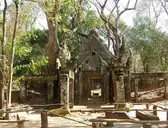 Prasat KrachapA quincunx of brick towersIn the guide
- 05
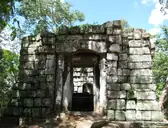 The Linga ShrinesGods carved from the bedrockIn the guide
- 06
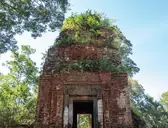 Prasat Krahom and Prasat ThomThe red tower and the double sanctuaryIn the guide
- 07
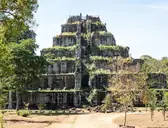 The PrangThe seven-tiered pyramidIn the guide
Site map of Koh Ker
History of Koh Ker
Koh Ker was built by the Khmer, whose empire ruled much of mainland South-East Asia from the ninth century, with its capital usually in the region of Angkor. Its kings were Hindu, and later Buddhist, and they built temples of brick, laterite and sandstone as homes for the gods. In inscriptions the town is called Lingapura, the city of lingas, and Chok Gargyar. Shiva was worshipped here before the kings arrived, and a Sanskrit inscription records the consecration of a linga in 921. Jayavarman IV, who ruled from 928 to 941, made Koh Ker his capital, perhaps because it was his homeland. Taxes in rice raised across the empire fed the workers, and in a few years they built a vast reservoir and about forty temples.
The full history continues in the guide.
Koh Ker guide: questions
How many stops does the Koh Ker guide have?
7 stops, in visit order: 1. Prasat Pram; 2. Prasat Neang Khmau; 3. Banteay Pir Chan; 4. Prasat Krachap; 5. The Linga Shrines; 6. Prasat Krahom and Prasat Thom; 7. The Prang.
Can I do a self-guided tour of Koh Ker with this guide?
Yes. The guide is made for a self-guided tour: 7 stops in visit order, each with a photo, a story and a voice, so you can explore Koh Ker at your own pace, without joining a group. Download it before you go and it works offline.
How long do you need at Koh Ker?
We suggest allowing most of a day. The 7 stops add up to about 5 minutes of listening, and you play each one when you’re ready, so you can linger wherever you like.
How long is each guide?
The 7 stops add up to about 5 minutes of listening in total. You play each stop when you’re ready, so you can go at your own pace.
Does the guide work offline?
Yes, once it’s downloaded. The guide is a single self-contained web page (about 8.1 MB) with the photos, text and audio built in. Download it to your phone before you go (Wi-Fi is best); after that it opens in any modern browser on iPhone or Android, with no app, account or mobile signal needed.
Does it use GPS or need my location?
No. The guide doesn’t use GPS and doesn’t know where you are: you play each stop when you reach it. It works on iPhone and Android in any modern browser, and it’s in English.
What’s included?
One self-contained HTML guide: 7 stops in visit order, each with a photo, text and a voice, plus the story of who built the site.
Who built Koh Ker?
Koh Ker was built by the Khmer, whose empire ruled much of mainland South-East Asia from the ninth century, with its capital usually in the region of Angkor. Its kings were Hindu, and later Buddhist, and they built temples of brick, laterite and sandstone as homes for the gods.
Where is Koh Ker?
Koh Ker lies in the forest of northern Cambodia, in Preah Vihear Province, about 120 kilometres from Siem Reap and the temples of Angkor.
Is there a free audio guide to Koh Ker?
The first stop, Prasat Pram, is free to read and hear on this page, so you can try the Koh Ker audio tour before you buy. The full guide, with all 7 stops, is a one-off purchase: download it once and it’s yours to keep, working offline.
Is the Koh Ker guide worth it?
If you’d like to know what you’re looking at, yes. For $10 you get 7 stops in visit order, each with a photo, a short history and a voice you play when you’re ready, plus a site map of the stops, and about 5 minutes of listening in all. It’s short on purpose, so you spend your time looking, not listening. It’s yours to keep, works offline and needs no app. The first stop is free on this page, so you can try it before you buy. If you’d like hours of detail, a guided tour will go deeper.
Audio guide or guided tour?
It depends how you like to visit. This guide lets you explore Koh Ker at your own pace, at any time, for a one-off price. A guided tour gives you a live expert you can ask questions, but at fixed times and usually for a higher price. Many people use both: a tour for the big picture, and the guide to read beforehand or to revisit the stops in their own time.
Is this the official Koh Ker guide?
No. It’s an independent guide by The Historian Guide, not affiliated with or endorsed by the operator of Koh Ker. For tickets and opening hours, check the official site operator before you go.
Does the guide include entry tickets or opening hours?
No. The guide is a digital companion only. Admission to Koh Ker is separate, so check the official site operator for current tickets and opening hours before you go.
- Stop 1 · Prasat Pram: PsamatheM · CC BY-SA 4.0 · Wikimedia Commons · resized
- Stop 2 · Prasat Neang Khmau: PsamatheM · CC BY-SA 4.0 · Wikimedia Commons · resized
- Stop 3 · Banteay Pir Chan: BluesyPete · CC BY-SA 3.0 · Wikimedia Commons · resized
- Stop 4 · Prasat Krachap: BluesyPete · CC BY-SA 3.0 · Wikimedia Commons · resized
- Stop 5 · The Linga Shrines: thomaswanhoff · CC BY-SA 2.0 · Wikimedia Commons · resized
- Stop 6 · Prasat Krahom and Prasat Thom: PsamatheM · CC BY-SA 4.0 · Wikimedia Commons · resized
- Stop 7 · The Prang (also the cover): PsamatheM · CC BY-SA 4.0 · Wikimedia Commons · resized


All photographs from Wikimedia Commons under the licences shown.
More guides in Cambodia
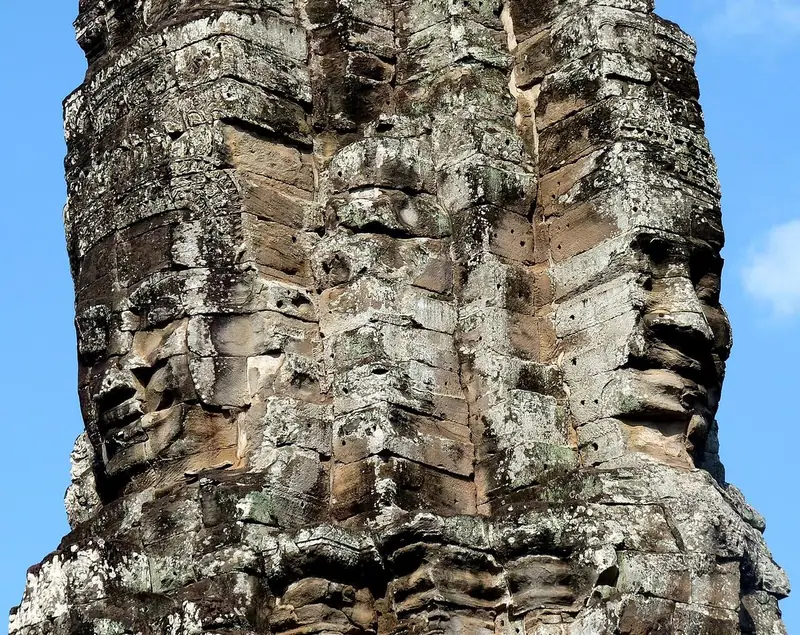 Khmer7 stops · 11th–13th century CE
Angkor Thom and the Bayon audio guide
Pass through the South Gate into the royal city of Jayavarman VII, where serene stone faces gaze from every tower of the Bayon.
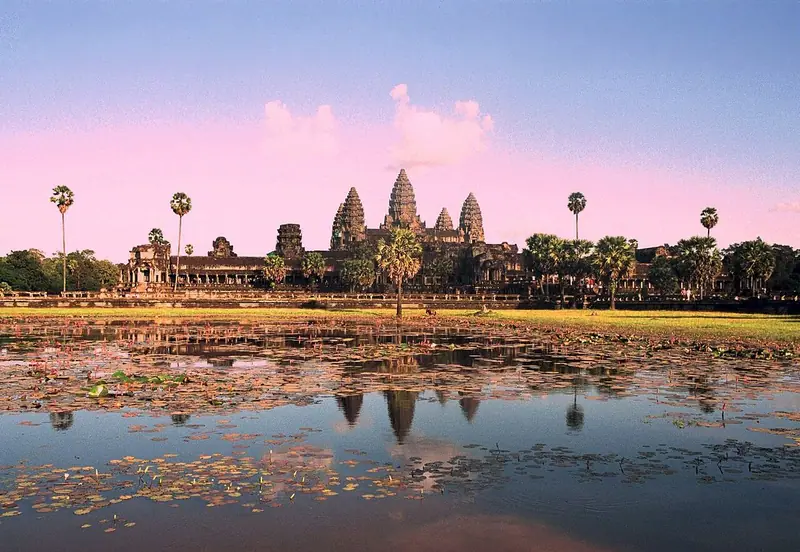 Khmer8 stops · 12th century CE
Angkor Wat audio guide
Cross the western causeway into Angkor Wat, past galleries of reliefs of battles, gods and the Churning of the Sea.
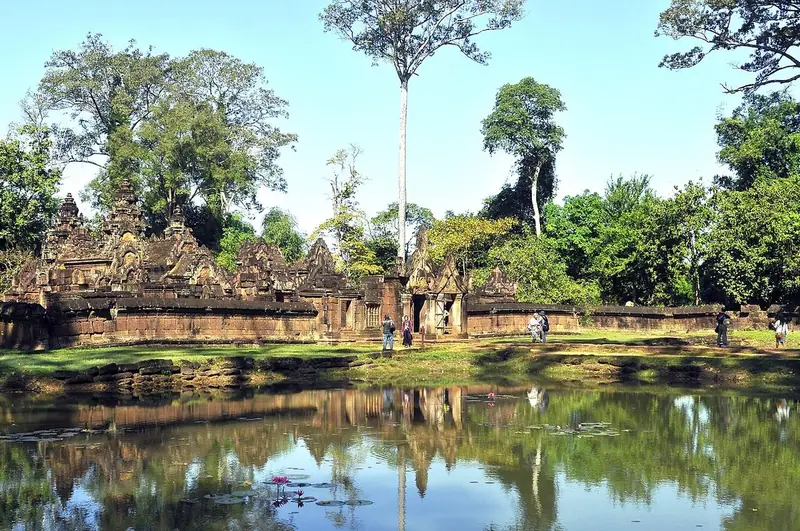 Khmer7 stops · 967 CE
Banteay Srei audio guide
A small, exquisitely carved temple, with Shiva the Dancer over its doors, that was unusually not built by a king.
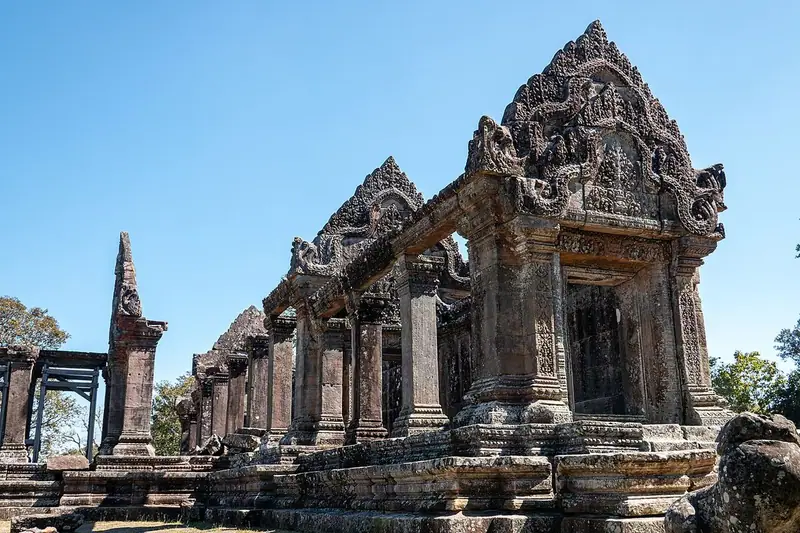 Khmer10 stops · 9th – 12th century CE
Preah Vihear audio guide
A Khmer temple to Shiva strung along a clifftop above the Cambodian plain: five gateways, carved pediments and a sanctuary on the brink, damaged in the border fighting of 2025.
 Khmer6 stops · from 1186 CE
Ta Prohm audio guide
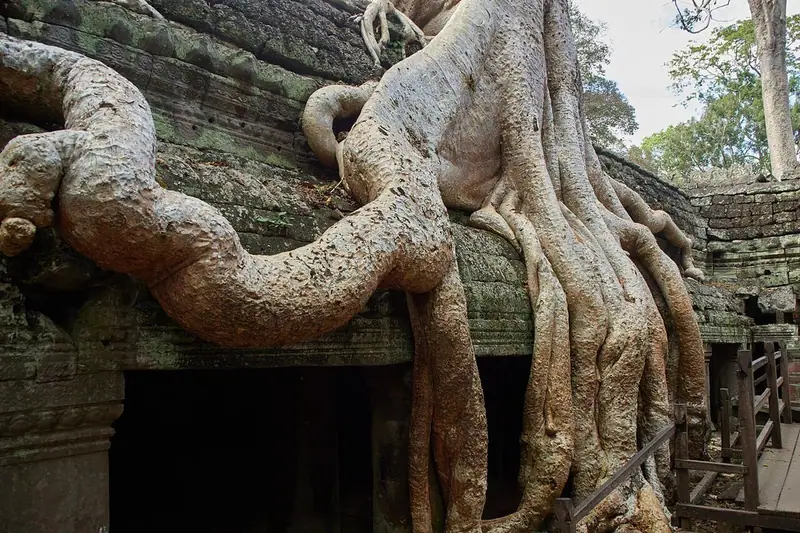
A temple held in the grip of giant trees, its towers and carved devatas half swallowed by the forest.
Every guide, in every country
Koh Ker and every other guide we publish, including future ones. One payment, no subscription.