Before you start
Old Montreal is the oldest part of the city, the riverside quarter where French settlers founded Ville-Marie in 1642. For two centuries it was the whole of Montreal, a walled town of the fur trade, and then the business heart of Canada’s greatest city. Its narrow streets of grey stone still hold buildings of the French regime, the Gothic Revival basilica of Notre-Dame and the banks and markets of the nineteenth century. This guide begins at Pointe-à-Callière, where the settlers landed, climbs to Place d’Armes and the basilica, goes east to Place Jacques-Cartier and the Château Ramezay, then down to the Bonsecours Market, the sailors’ chapel and the Clock Tower on the river. The route is about two kilometres.
Use it as a self-guided tour of Old Montreal: 7 stops in visit order, each played when you’re ready, at your own pace.
 Free preview · Stop 1
Pointe-à-Callière
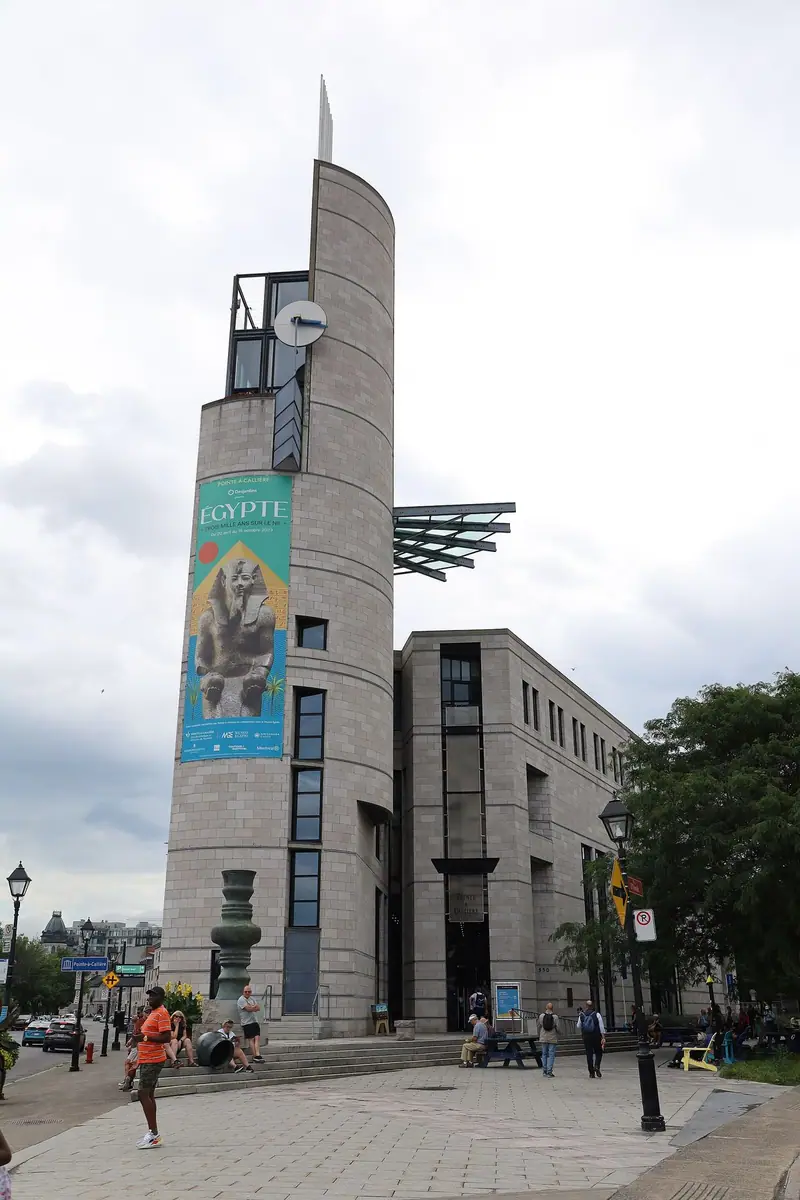
Start at the triangular modern building at the point of land between the old port and the Place d’Youville. This is where, in May 1642, Maisonneuve, Jeanne Mance and a small group of French settlers landed and built their first fort. The museum here, Pointe-à-Callière, opened in 1992 for the city’s three hundred and fiftieth anniversary, is built over the archaeological remains. Below ground you can walk among the foundations of the first settlement, Montreal’s first Catholic cemetery, an old marketplace and the city’s first collector sewer, built in a stone vault over a small river that once flowed here. The point takes its name from Louis-Hector de Callière, a governor of Montreal who built his house here at the end of the seventeenth century. Facing the river is the old Custom House, built in 1838 in the Neoclassical style. From here, walk up the hill to Place d’Armes.
Photo: Antony-22 · CC BY-SA 4.0 · Wikimedia Commons
What to see at Old Montreal: 7 stops, in visit order
- 01
 Pointe-à-CallièreWhere Montreal was bornFree preview
- 02
 Notre-Dame and Place d’ArmesThe great basilicaIn the guide
- 03
 Place Jacques-CartierThe old market squareIn the guide
- 04
 The Château RamezayA governor’s houseIn the guide
- 05
 The Bonsecours MarketA market and a parliamentIn the guide
- 06
 The Bon-Secours ChapelThe sailors’ churchIn the guide
- 07
 The Clock TowerA memorial to sailorsIn the guide
Site map of Old Montreal
History of Old Montreal
Long before Europeans arrived, the island in the St Lawrence was home to Indigenous peoples; when the French explorer Jacques Cartier came up the river in 1535, he found the Iroquoian town of Hochelaga here. In 1642 a group of French Catholics led by Paul de Chomedey de Maisonneuve, with the nurse Jeanne Mance, founded a mission settlement called Ville-Marie. It grew into Montreal, a centre of the fur trade, protected by a wall of stone. The British took it in 1760, during the Seven Years’ War, and after the American Revolution many English-speaking settlers arrived. In the nineteenth century Montreal became Canada’s largest city and its commercial capital, and the old town filled with banks, warehouses and offices. In the twentieth century business moved uphill, and the old quarter declined, until a campaign in the 1960s saved it, and it was declared a historic district in 1964.
Old Montreal guide: questions
How many stops does the Old Montreal guide have?
7 stops, in visit order: 1. Pointe-à-Callière; 2. Notre-Dame and Place d’Armes; 3. Place Jacques-Cartier; 4. The Château Ramezay; 5. The Bonsecours Market; 6. The Bon-Secours Chapel; 7. The Clock Tower.
Can I do a self-guided tour of Old Montreal with this guide?
Yes. The guide is made for a self-guided tour: 7 stops in visit order, each with a photo, a story and a voice, so you can explore Old Montreal at your own pace, without joining a group. Download it before you go and it works offline.
How long is each guide?
The 7 stops add up to about 5 minutes of listening in total. You play each stop when you’re ready, so you can go at your own pace.
Does the guide work offline?
Yes, once it’s downloaded. The guide is a single self-contained web page (about 7.3 MB) with the photos, text and audio built in. Download it to your phone before you go (Wi-Fi is best); after that it opens in any modern browser on iPhone or Android, with no app, account or mobile signal needed.
Does it use GPS or need my location?
No. The guide doesn’t use GPS and doesn’t know where you are: you play each stop when you reach it. It works on iPhone and Android in any modern browser, and it’s in English.
What’s included?
One self-contained HTML guide: 7 stops in visit order, each with a photo, text and a voice, plus the story of who built the site.
Who built Old Montreal?
Long before Europeans arrived, the island in the St Lawrence was home to Indigenous peoples; when the French explorer Jacques Cartier came up the river in 1535, he found the Iroquoian town of Hochelaga here. In 1642 a group of French Catholics led by Paul de Chomedey de Maisonneuve, with the nurse Jeanne Mance, founded a mission settlement called Ville-Marie.
Where is Old Montreal?
Old Montreal is the oldest part of the city, the riverside quarter where French settlers founded Ville-Marie in 1642.
Is there a free audio guide to Old Montreal?
The first stop, Pointe-à-Callière, is free to read and hear on this page, so you can try the Old Montreal audio tour before you buy. The full guide, with all 7 stops, is a one-off purchase: download it once and it’s yours to keep, working offline.
Is the Old Montreal guide worth it?
If you’d like to know what you’re looking at, yes. For $10 you get 7 stops in visit order, each with a photo, a short history and a voice you play when you’re ready, plus a site map of the stops, and about 5 minutes of listening in all. It’s short on purpose, so you spend your time looking, not listening. It’s yours to keep, works offline and needs no app. The first stop is free on this page, so you can try it before you buy. If you’d like hours of detail, a guided tour will go deeper.
Audio guide or guided tour?
It depends how you like to visit. This guide lets you explore Old Montreal at your own pace, at any time, for a one-off price. A guided tour gives you a live expert you can ask questions, but at fixed times and usually for a higher price. Many people use both: a tour for the big picture, and the guide to read beforehand or to revisit the stops in their own time.
Is this the official Old Montreal guide?
No. It’s an independent guide by The Historian Guide, not affiliated with or endorsed by the operator of Old Montreal. For tickets and opening hours, check the official site operator before you go.
Does the guide include entry tickets or opening hours?
No. The guide is a digital companion only. Admission to Old Montreal is separate, so check the official site operator for current tickets and opening hours before you go.
- Stop 1 · Pointe-à-Callière: Antony-22 · CC BY-SA 4.0 · Wikimedia Commons · resized
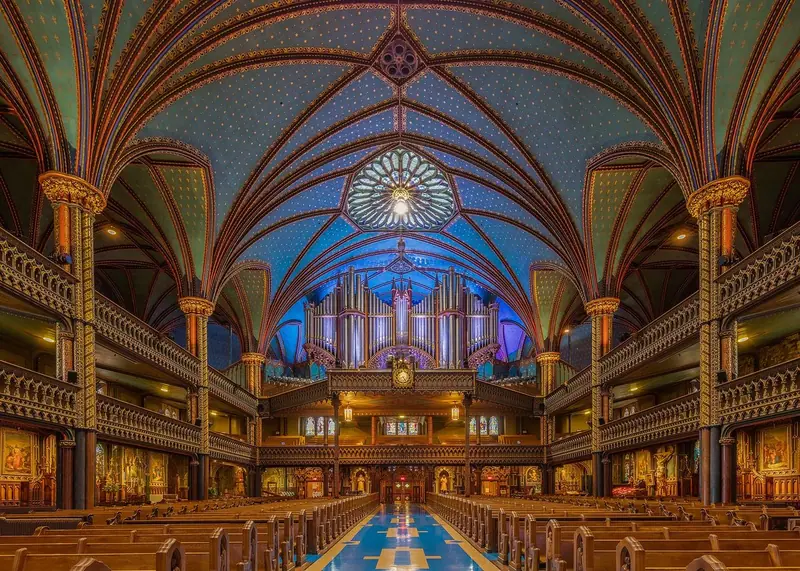
- Stop 2 · Notre-Dame and Place d’Armes (also the cover): Diego Delso · CC BY-SA 4.0 · Wikimedia Commons · resized
- Stop 3 · Place Jacques-Cartier: Ken Lund from Reno, Nevada, USA · CC BY-SA 2.0 · Wikimedia Commons · resized
- Stop 4 · The Château Ramezay: Pymouss · CC BY-SA 4.0 · Wikimedia Commons · resized
- Stop 5 · The Bonsecours Market: Daderot · CC0 · Wikimedia Commons · resized
- Stop 6 · The Bon-Secours Chapel: DXR · CC BY-SA 4.0 · Wikimedia Commons · resized
- Stop 7 · The Clock Tower: Michael Vesia · CC BY-SA 3.0 · Wikimedia Commons · resized


All photographs from Wikimedia Commons under the licences shown.
More guides in Canada
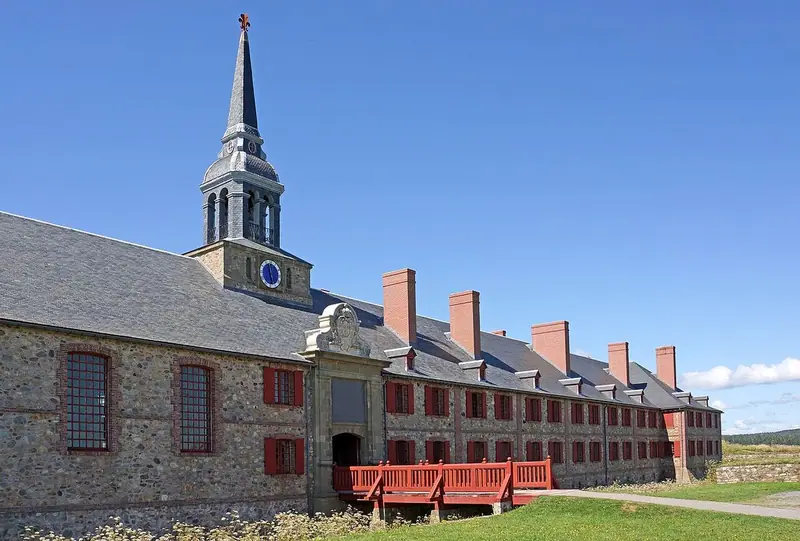 French Colonial8 stops · 1713–1758
Fortress of Louisbourg audio guide
Step into the summer of 1744 in a rebuilt French fortified town on Cape Breton’s Atlantic shore, from the Dauphin Gate to the King’s Bastion.
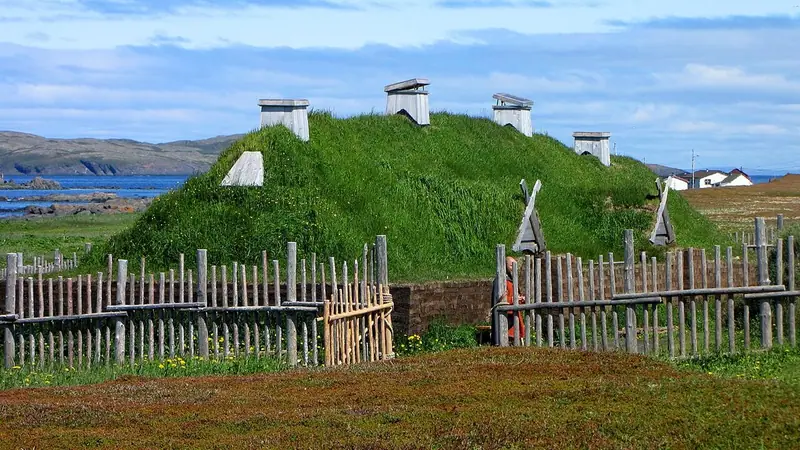 Norse7 stops · c. 1000 CE
L’Anse aux Meadows audio guide
Cross the meadow at Newfoundland’s northern tip to the only confirmed Norse site in North America, where Europeans first settled in the Americas around a thousand years ago.
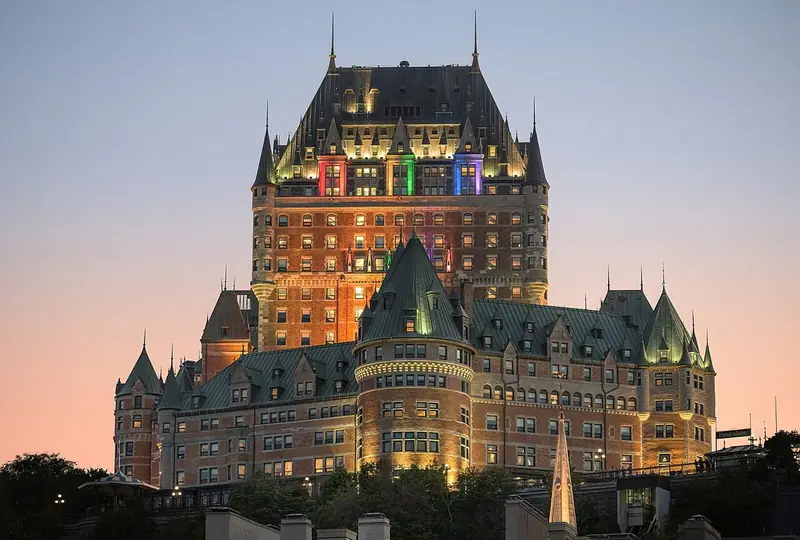 French Colonial9 stops · 1608 – 19th century
Old Quebec audio guide
The only city north of Mexico to keep its fortified walls, from Place Royale in the Lower Town up the Breakneck Stairs to the Citadel.
Every guide, in every country
Old Montreal and every other guide we publish, including future ones. One payment, no subscription.