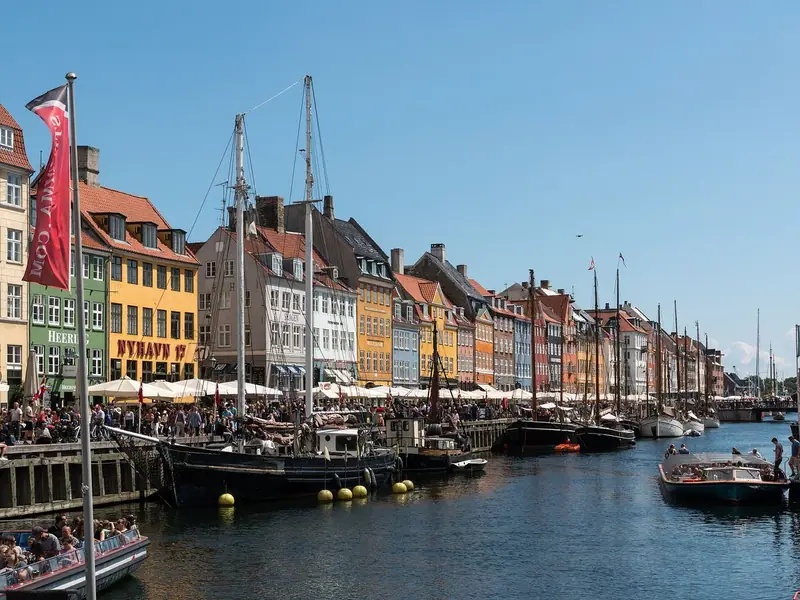
Before you start
Copenhagen grew up between a harbour and a castle, first as a medieval port, then as the capital of a kingdom that, in the seventeenth and eighteenth centuries, rebuilt itself in brick and sandstone around a royal court. This guide is a walk through that historic centre: from Christiansborg, the palace that still houses the Danish parliament, along to the canal of Nyhavn, the royal square of Amalienborg and the Marble Church, then west to Rosenborg Castle in the King’s Garden, and south to the Round Tower beside the city’s long pedestrian street. Rosenborg Castle has its own dedicated guide; the stop here is the castle in its park, as part of a city walk. The route is about three kilometres and takes three to four hours with visits.
Use it as a self-guided tour of Copenhagen: 6 stops in visit order, each played when you’re ready, at your own pace.
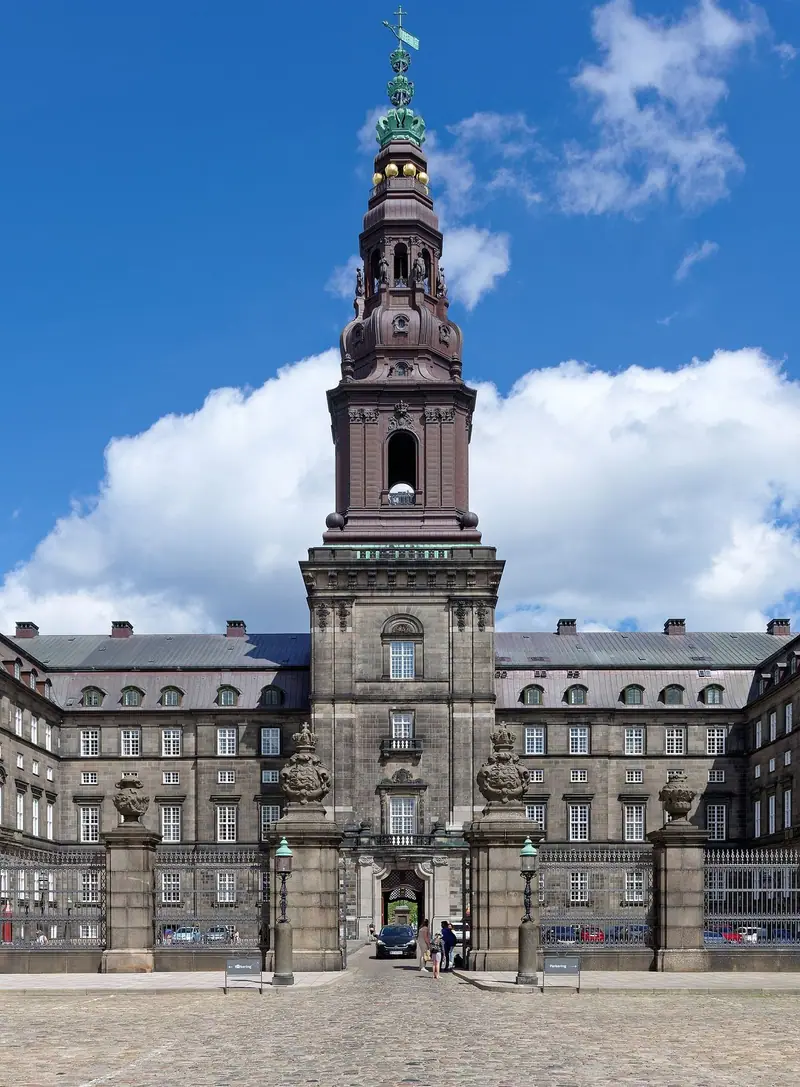 Free preview · Stop 1
Christiansborg Palace
Begin on Slotsholmen, the castle island, at Christiansborg Palace. A fortress has stood here since Bishop Absalon built his castle in 1167, and the present building, completed in 1928 after a fire in 1884, is the third palace of that name on the site. It is still the heart of the Danish state: the Folketing, the parliament, sits in one wing, the Prime Minister’s Office and the Supreme Court in others, and the royal family uses the state rooms for official receptions. Beneath the palace you can visit the ruins of Absalon’s castle and of later royal buildings, a descent that makes the long history of the island suddenly visible. The tower, the tallest in the city, can often be climbed. The equestrian statue on the parade ground is of Christian the Ninth. When you leave the island, walk north-east, towards the harbour and the mouth of Nyhavn.
Photo: Jakub Hałun · CC BY-SA 4.0 · Wikimedia Commons
What to see at Copenhagen: 6 stops, in visit order
- 01
 Christiansborg PalaceThe island of the realmFree preview
- 02
 NyhavnThe new harbourIn the guide
- 03
 AmalienborgThe four palaces of the kingIn the guide
- 04
 Frederik’s ChurchThe Marble ChurchIn the guide
- 05
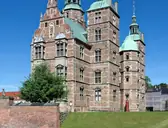 Rosenborg CastleChristian the Fourth’s country houseIn the guide
- 06
 The Round TowerChristian the Fourth’s observatoryIn the guide
Site map of Copenhagen
History of Copenhagen
The city began as a harbour town under the bishops of Roskilde, and in 1167 Bishop Absalon raised a castle on the island of Slotsholmen, the site still occupied by Christiansborg. In the fifteenth century the Danish court moved here from Roskilde, and Copenhagen became the capital. Christian the Fourth, who reigned from 1588 to 1648, remade the city: he built Rosenborg, the Round Tower, the palaces of the sailors’ quarter and a new district to the east, Christianshavn, and he enlarged the fleet and the fortifications. A century later, in the 1740s and 1750s, the district of Frederiksstaden was laid out for King Frederick the Fifth, with Amalienborg and the Marble Church as its centre. The royal palace on Slotsholmen burned more than once; the present Christiansborg was finished in 1928. The city was occupied in the Second World War, and since then it has remained the political and cultural capital of Denmark.
Copenhagen guide: questions
How many stops does the Copenhagen guide have?
6 stops, in visit order: 1. Christiansborg Palace; 2. Nyhavn; 3. Amalienborg; 4. Frederik’s Church; 5. Rosenborg Castle; 6. The Round Tower.
Can I do a self-guided tour of Copenhagen with this guide?
Yes. The guide is made for a self-guided tour: 6 stops in visit order, each with a photo, a story and a voice, so you can explore Copenhagen at your own pace, without joining a group. Download it before you go and it works offline.
How long is each guide?
The 6 stops add up to about 5 minutes of listening in total. You play each stop when you’re ready, so you can go at your own pace.
Does the guide work offline?
Yes, once it’s downloaded. The guide is a single self-contained web page (about 7.3 MB) with the photos, text and audio built in. Download it to your phone before you go (Wi-Fi is best); after that it opens in any modern browser on iPhone or Android, with no app, account or mobile signal needed.
Does it use GPS or need my location?
No. The guide doesn’t use GPS and doesn’t know where you are: you play each stop when you reach it. It works on iPhone and Android in any modern browser, and it’s in English.
What’s included?
One self-contained HTML guide: 6 stops in visit order, each with a photo, text and a voice, plus the story of who built the site.
Who built Copenhagen?
The city began as a harbour town under the bishops of Roskilde, and in 1167 Bishop Absalon raised a castle on the island of Slotsholmen, the site still occupied by Christiansborg. In the fifteenth century the Danish court moved here from Roskilde, and Copenhagen became the capital.
Where is Copenhagen?
Copenhagen grew up between a harbour and a castle, first as a medieval port, then as the capital of a kingdom that, in the seventeenth and eighteenth centuries, rebuilt itself in brick and sandstone around a royal court.
Is there a free audio guide to Copenhagen?
The first stop, Christiansborg Palace, is free to read and hear on this page, so you can try the Copenhagen audio tour before you buy. The full guide, with all 6 stops, is a one-off purchase: download it once and it’s yours to keep, working offline.
Is the Copenhagen guide worth it?
If you’d like to know what you’re looking at, yes. For $10 you get 6 stops in visit order, each with a photo, a short history and a voice you play when you’re ready, plus a site map of the stops, and about 5 minutes of listening in all. It’s short on purpose, so you spend your time looking, not listening. It’s yours to keep, works offline and needs no app. The first stop is free on this page, so you can try it before you buy. If you’d like hours of detail, a guided tour will go deeper.
Audio guide or guided tour?
It depends how you like to visit. This guide lets you explore Copenhagen at your own pace, at any time, for a one-off price. A guided tour gives you a live expert you can ask questions, but at fixed times and usually for a higher price. Many people use both: a tour for the big picture, and the guide to read beforehand or to revisit the stops in their own time.
Is this the official Copenhagen guide?
No. It’s an independent guide by The Historian Guide, not affiliated with or endorsed by the operator of Copenhagen. For tickets and opening hours, check the official site operator before you go.
Does the guide include entry tickets or opening hours?
No. The guide is a digital companion only. Admission to Copenhagen is separate, so check the official site operator for current tickets and opening hours before you go.
- Stop 1 · Christiansborg Palace: Jakub Hałun · CC BY-SA 4.0 · Wikimedia Commons · resized
- Stop 2 · Nyhavn (also the cover): Dietmar Rabich · CC BY-SA 4.0 · Wikimedia Commons · resized
- Stop 3 · Amalienborg: Visit European Castles · CC BY-SA 4.0 · Wikimedia Commons · resized
- Stop 4 · Frederik’s Church: Jakub Hałun · CC BY-SA 4.0 · Wikimedia Commons · resized
- Stop 5 · Rosenborg Castle: Jakub Hałun · CC BY-SA 4.0 · Wikimedia Commons · resized
- Stop 6 · The Round Tower: Einaz80 · CC BY-SA 4.0 · Wikimedia Commons · resized


All photographs from Wikimedia Commons under the licences shown.
More guides in Denmark
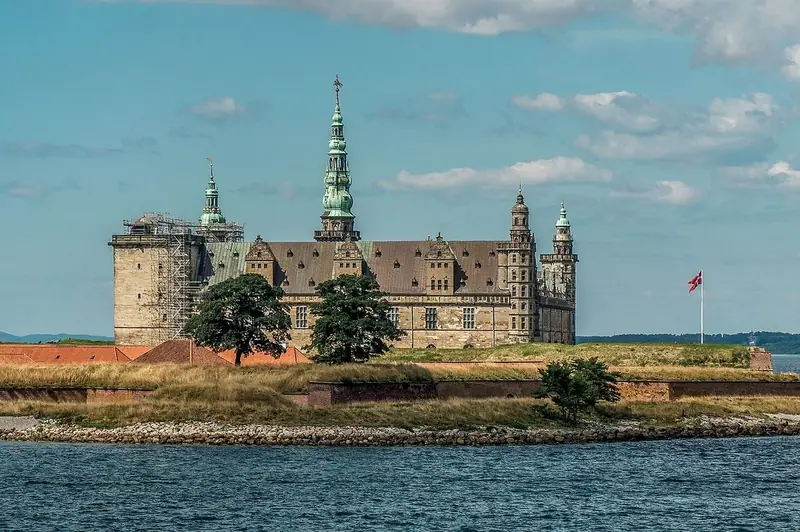 Renaissance7 stops · 1574–1640
Kronborg Castle audio guide
The ramparts of Hamlet’s Elsinore on the narrowest point of the Øresund, then the courtyard, ballroom and dark casemates.
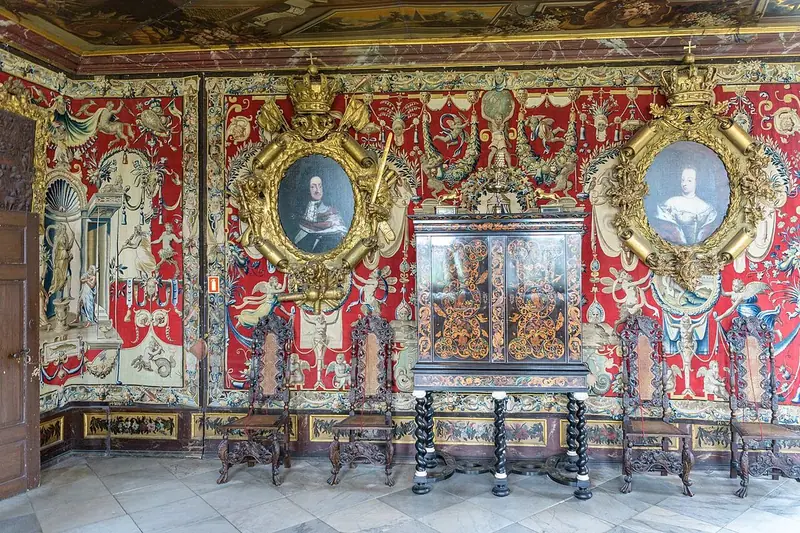 House of Oldenburg7 stops · 1606–1849
Rosenborg Castle audio guide
Through the King’s Garden into Christian IV’s red brick castle, his rooms and the Long Hall, down to the Danish crown jewels.
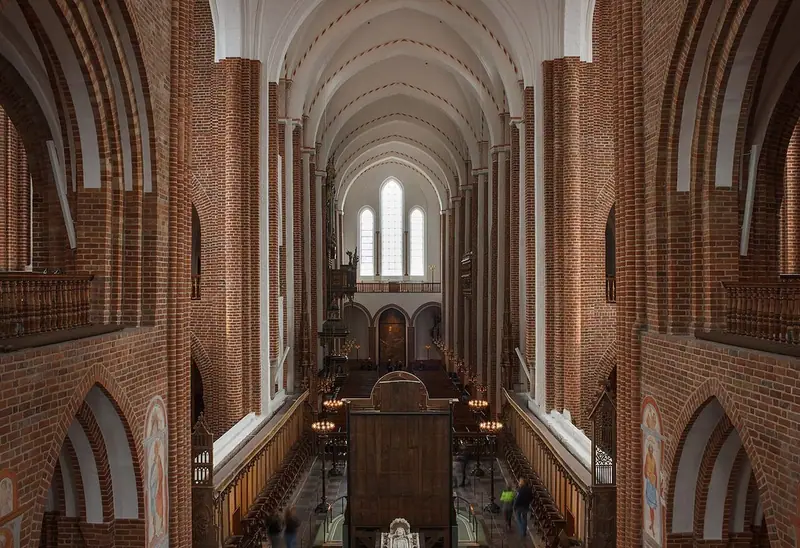 Danish7 stops · 960–1658
Roskilde Cathedral and Viking Ships audio guide
Explore the cathedral where Denmark’s kings are buried, then walk down to the Viking Ship Museum and the Skuldelev ships by the fjord.
Every guide, in every country
Copenhagen and every other guide we publish, including future ones. One payment, no subscription.