Before you start
Luxor Temple stands in the heart of modern Luxor on the east bank of the Nile, right beside the riverside Corniche and a few minutes’ walk from the town’s main hotels and the Luxor Museum. It is part of the UNESCO World Heritage Site ‘Ancient Thebes with its Necropolis’, inscribed in 1979, and is managed by Egypt’s Ministry of Tourism and Antiquities. Compared with Karnak it is compact and easy to walk, with level paving most of the way, and it is open into the evening, when the walls are floodlit. This guide starts outside at the Avenue of Sphinxes, enters through the great gateway, and then follows the temple’s main axis south, from the courts and colonnade into the inner rooms and the sanctuary at the far end.
Use it as a self-guided tour of Luxor Temple: 7 stops in visit order, each played when you’re ready, at your own pace.
 Free preview · Stop 1
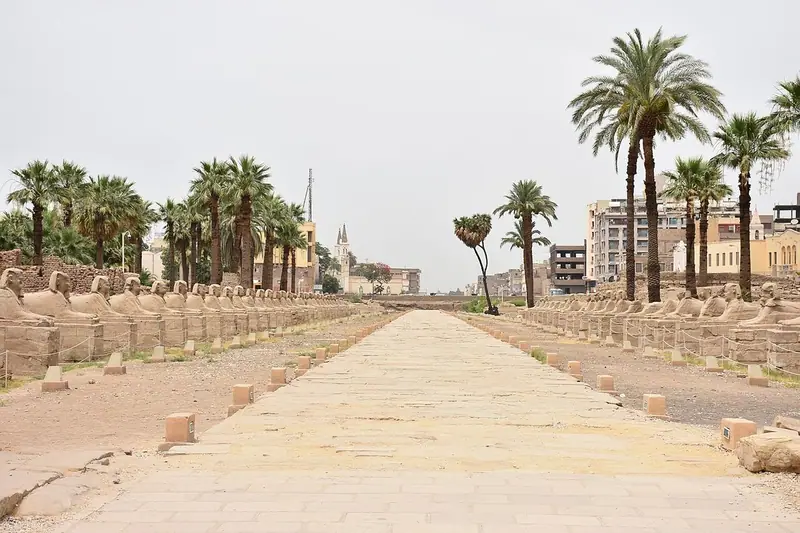
Avenue of Sphinxes
Begin outside the temple at the northern end, where an avenue of human-headed sphinxes stretches away from the entrance. The sphinxes nearest the temple bear the name of Nectanebo I, one of the last native pharaohs, in the fourth century BCE. The avenue once ran for nearly three kilometres north to Karnak, and once a year, during the great Opet festival, the statues of Amun, his wife Mut and their son Khonsu were carried along it, or sailed by river, from Karnak to spend time here, in a ceremony that renewed the power of the god and the king. After decades of excavation and clearance through the modern town, the whole route was reopened in 2021. Walk a little way along it to feel the sense of procession, then turn back and face the great gateway of the temple.
Photo: MusikAnimal · CC BY-SA 4.0 · Wikimedia Commons
What to see at Luxor Temple: 7 stops, in visit order
- 01
 Avenue of SphinxesThe road to KarnakFree preview
- 02
 Pylon of Ramesses IIThe great gatewayIn the guide
- 03
 Court of Ramesses IIA mosque above the templeIn the guide
- 04
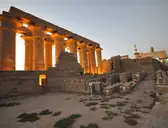 Colonnade of Amenhotep IIIThe great processional hallIn the guide
- 05
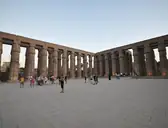 Sun Court of Amenhotep IIIThe great peristyle courtIn the guide
- 06
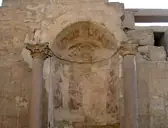 Roman Imperial ChapelEmperors among the godsIn the guide
- 07
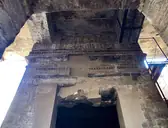 Shrine of Alexander the GreatThe sanctuary of the boatIn the guide
Site map of Luxor Temple
History of Luxor Temple
Luxor Temple was built by the ancient Egyptians of the New Kingdom, about 1550 to 1070 BCE, when Thebes was the religious capital of Egypt. Its core was raised around 1390 BCE by Amenhotep III and dedicated to Amun, king of the gods. Later kings added to it: Tutankhamun and Horemheb decorated the colonnade, and Ramesses II, in the thirteenth century BCE, built the great forecourt and the entrance gateway. Alexander the Great rebuilt the boat shrine in the fourth century BCE, and the Romans turned part of the temple into a shrine of their emperors. Ancient Egyptian civilisation itself took shape around 3100 BCE, when Upper and Lower Egypt were united, and lasted as an independent kingdom until Rome annexed Egypt in 30 BCE after the death of Cleopatra VII. Afterwards the temple held a church and, later, a mosque, and the town grew over its buried halls until excavation began in the 1880s.
Luxor Temple guide: questions
How many stops does the Luxor Temple guide have?
7 stops, in visit order: 1. Avenue of Sphinxes; 2. Pylon of Ramesses II; 3. Court of Ramesses II; 4. Colonnade of Amenhotep III; 5. Sun Court of Amenhotep III; 6. Roman Imperial Chapel; 7. Shrine of Alexander the Great.
Can I do a self-guided tour of Luxor Temple with this guide?
Yes. The guide is made for a self-guided tour: 7 stops in visit order, each with a photo, a story and a voice, so you can explore Luxor Temple at your own pace, without joining a group. Download it before you go and it works offline.
How long is each guide?
The 7 stops add up to about 5 minutes of listening in total. You play each stop when you’re ready, so you can go at your own pace.
Does the guide work offline?
Yes, once it’s downloaded. The guide is a single self-contained web page (about 6.0 MB) with the photos, text and audio built in. Download it to your phone before you go (Wi-Fi is best); after that it opens in any modern browser on iPhone or Android, with no app, account or mobile signal needed.
Does it use GPS or need my location?
No. The guide doesn’t use GPS and doesn’t know where you are: you play each stop when you reach it. It works on iPhone and Android in any modern browser, and it’s in English.
What’s included?
One self-contained HTML guide: 7 stops in visit order, each with a photo, text and a voice, plus the story of who built the site.
Who built Luxor Temple?
Luxor Temple was built by the ancient Egyptians of the New Kingdom, about 1550 to 1070 BCE, when Thebes was the religious capital of Egypt. Its core was raised around 1390 BCE by Amenhotep III and dedicated to Amun, king of the gods.
Where is Luxor Temple?
Luxor Temple stands in the heart of modern Luxor on the east bank of the Nile, right beside the riverside Corniche and a few minutes’ walk from the town’s main hotels and the Luxor Museum.
Is there a free audio guide to Luxor Temple?
The first stop, Avenue of Sphinxes, is free to read and hear on this page, so you can try the Luxor Temple audio tour before you buy. The full guide, with all 7 stops, is a one-off purchase: download it once and it’s yours to keep, working offline.
Is the Luxor Temple guide worth it?
If you’d like to know what you’re looking at, yes. For $10 you get 7 stops in visit order, each with a photo, a short history and a voice you play when you’re ready, plus a site map of the stops, and about 5 minutes of listening in all. It’s short on purpose, so you spend your time looking, not listening. It’s yours to keep, works offline and needs no app. The first stop is free on this page, so you can try it before you buy. If you’d like hours of detail, a guided tour will go deeper.
Audio guide or guided tour?
It depends how you like to visit. This guide lets you explore Luxor Temple at your own pace, at any time, for a one-off price. A guided tour gives you a live expert you can ask questions, but at fixed times and usually for a higher price. Many people use both: a tour for the big picture, and the guide to read beforehand or to revisit the stops in their own time.
Is this the official Luxor Temple guide?
No. It’s an independent guide by The Historian Guide, not affiliated with or endorsed by the operator of Luxor Temple. For tickets and opening hours, check the official site operator before you go.
Does the guide include entry tickets or opening hours?
No. The guide is a digital companion only. Admission to Luxor Temple is separate, so check the official site operator for current tickets and opening hours before you go.
- Stop 1 · Avenue of Sphinxes: MusikAnimal · CC BY-SA 4.0 · Wikimedia Commons · resized
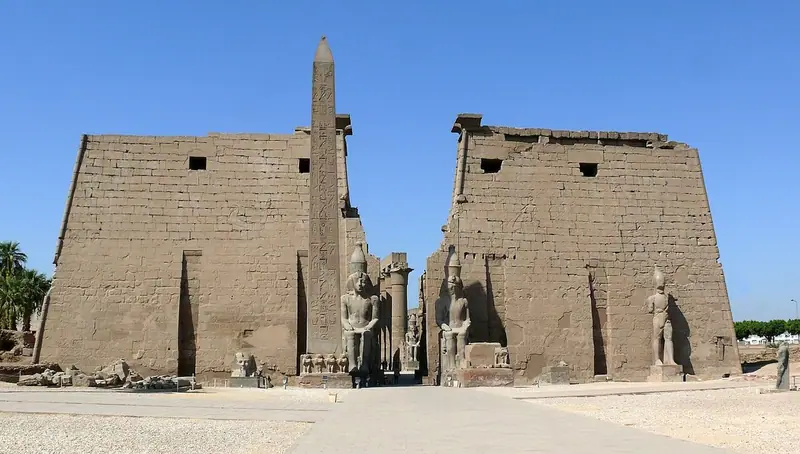
- Stop 2 · Pylon of Ramesses II (also the cover): Ad Meskens · CC BY-SA 3.0 · Wikimedia Commons · resized
- Stop 3 · Court of Ramesses II: Marc Ryckaert · CC BY 3.0 · Wikimedia Commons · resized
- Stop 4 · Colonnade of Amenhotep III: Jorge Láscar from Melbourne, Australia · CC BY 2.0 · Wikimedia Commons · resized
- Stop 5 · Sun Court of Amenhotep III: Jorge Láscar from Melbourne, Australia · CC BY 2.0 · Wikimedia Commons · resized
- Stop 6 · Roman Imperial Chapel: Olaf Tausch · CC BY 3.0 · Wikimedia Commons · resized
- Stop 7 · Shrine of Alexander the Great: Warren LeMay from Chicago, IL, United States · CC0 · Wikimedia Commons · resized


All photographs from Wikimedia Commons under the licences shown.
More guides in Egypt
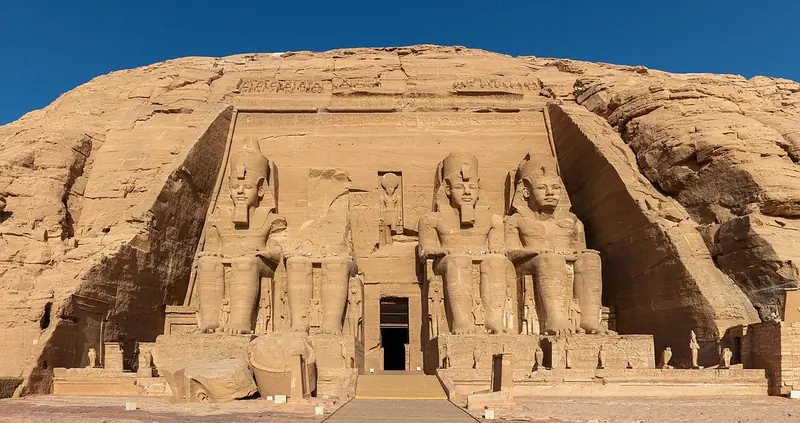 Ancient Egyptian8 stops · 13th century BCE
Abu Simbel audio guide
Ramesses II’s colossal temple façade, the Temple of Nefertari, and how both were rescued from the waters of Lake Nasser.
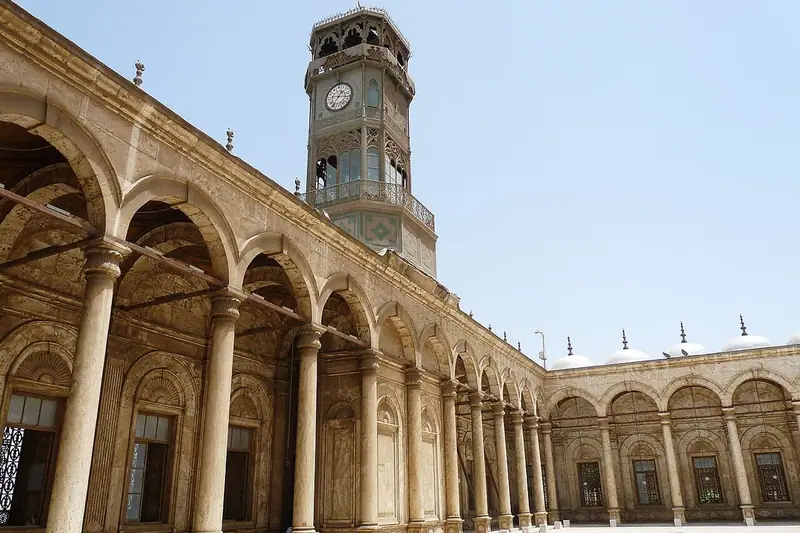 Ayyubid7 stops · from 1176 CE
Cairo Citadel audio guide
Saladin’s walls on the Muqattam Hills and the domes of Muhammad Ali’s mosque, high above the minarets of Islamic Cairo.
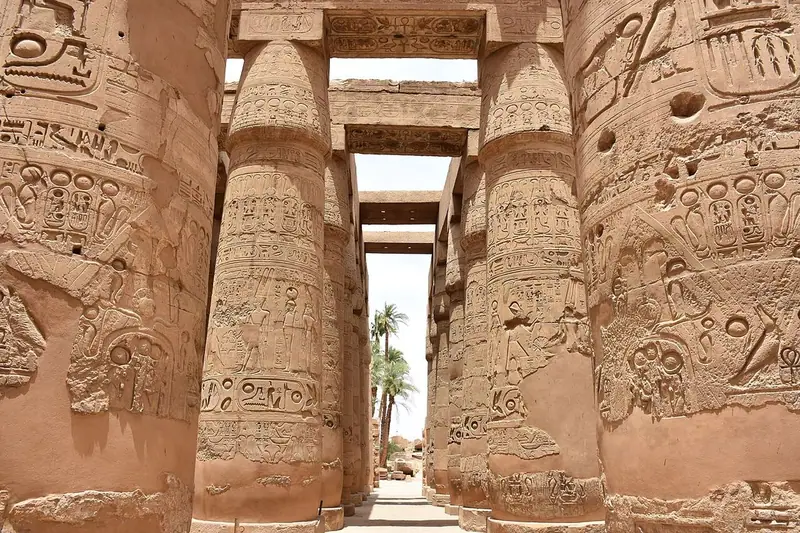 Ancient Egyptian7 stops · Middle Kingdom to Ptolemaic period
Karnak Temple audio guide
Along the Avenue of Rams into the Great Hypostyle Hall, a forest of giant columns built for Amun-Re.
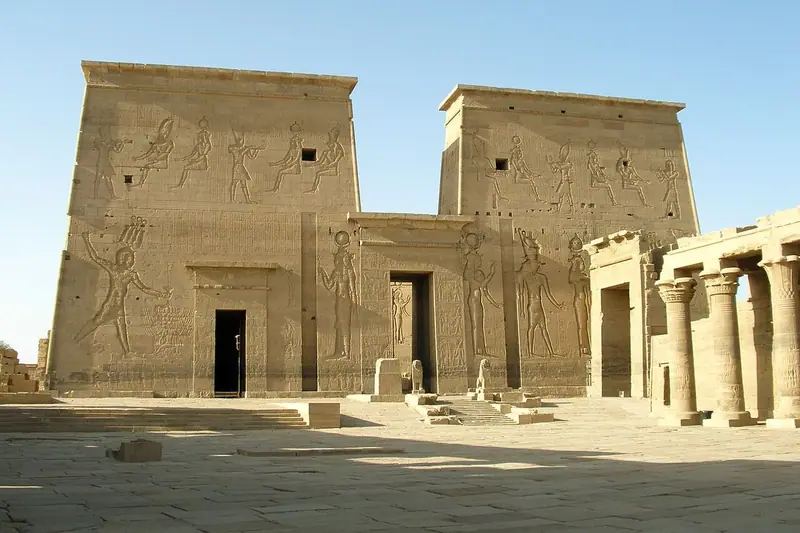 Ancient Egyptian8 stops · 3rd century BCE onwards
Philae Temple audio guide
A short boat ride to the island temple of Isis, with the Kiosk of Trajan standing at the water’s edge.
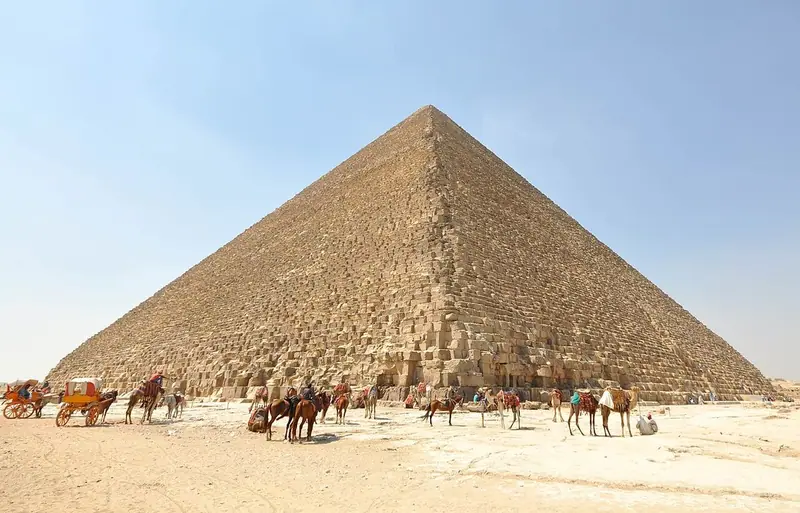 Ancient Egyptian7 stops · c. 26th century BCE
Pyramids of Giza audio guide
The Great Pyramid of Khufu, the pyramids of Khafre and Menkaure, and the Great Sphinx keeping watch.
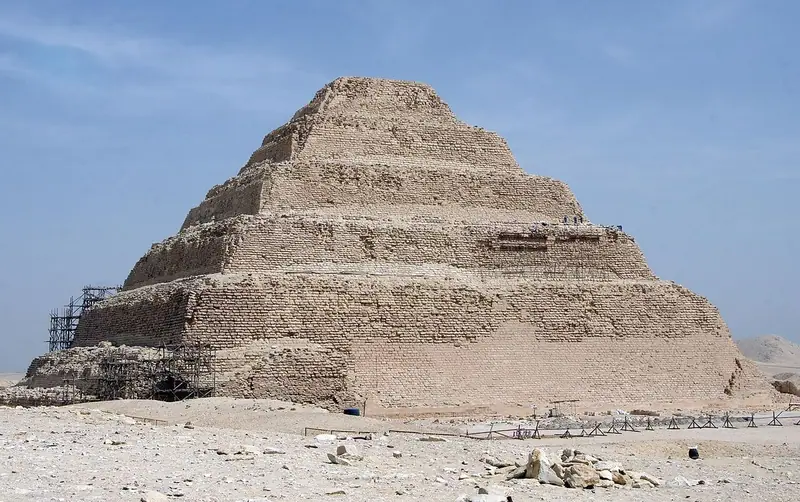 Ancient Egyptian8 stops · from c. 27th century BCE
Saqqara audio guide
Djoser’s Step Pyramid, the Pyramid of Unas, painted tombs and the vast galleries of the Serapeum.
Every guide, in every country
Luxor Temple and every other guide we publish, including future ones. One payment, no subscription.