Before you start
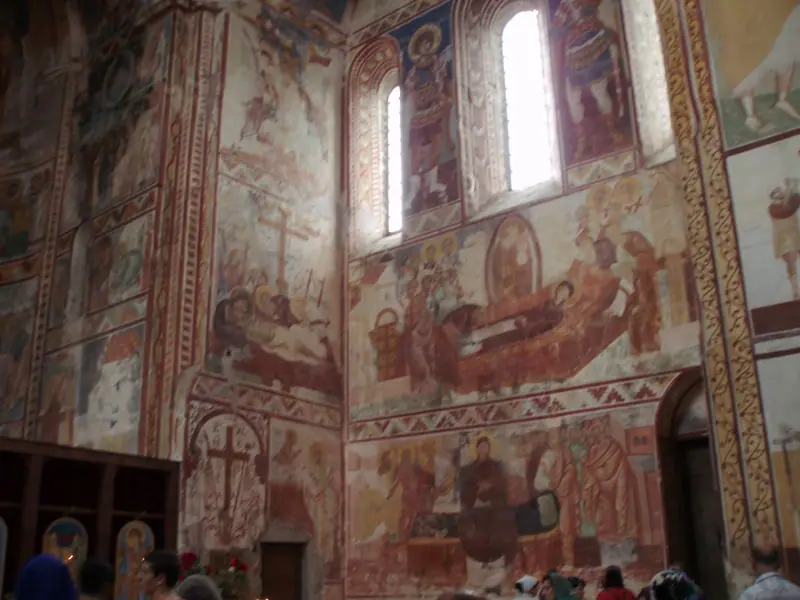
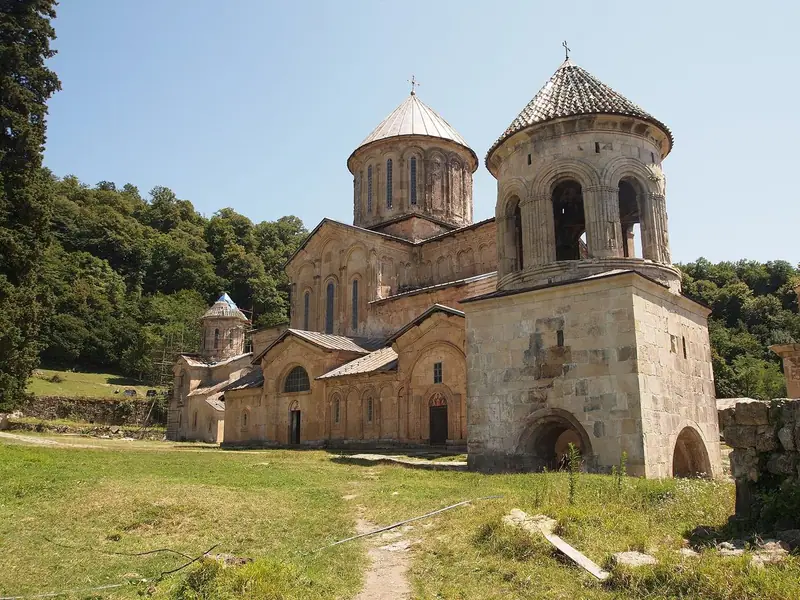
On a hill a few kilometres north-east of Kutaisi, King David IV, known as David the Builder, founded Gelati in 1106 as a monastery and an academy, the intellectual heart of Georgia’s golden age. This guide begins at the gate, by David’s tomb, and visits the Cathedral of the Virgin, the academy and the smaller churches of St George and St Nicholas. It then drops back towards the city, first to the cliff-top monastery of Motsameta and then to Bagrati Cathedral, the eleventh-century church on Ukimerioni Hill that was rebuilt in 2009–2012 and, unlike Gelati, is no longer on the World Heritage List. Gelati is a short drive from Kutaisi; Motsameta lies on the same road; Bagrati is in the city itself. Allow half a day, and be prepared for conservation work still under way at Gelati.
Use it as a self-guided tour of Gelati and Bagrati: 6 stops in visit order, each played when you’re ready, at your own pace.
 Free preview · Stop 1
The Gatehouse and the Tomb of David the Builder
You enter Gelati through a fortified gatehouse, and in the floor of the gateway lies the tomb of David IV, the founder, who died in 1125. He chose this modest place himself, so that everyone who came into the monastery would step over him. An inscription associated with the tomb reads, in substance, ‘This is my rest for ever; here will I dwell.’ It is one of the most telling royal burials in the Caucasus: a king who had rebuilt a country asking to be trodden underfoot at the door of his academy. Stand a moment here before you go on. From the gate the monastic precinct opens, with the great cathedral ahead and the smaller churches and the academy around the court. Go first into the Cathedral of the Virgin, the principal church.
Photo: DDohler · CC BY 2.0 · Wikimedia Commons
What to see at Gelati and Bagrati: 6 stops, in visit order
- 01
 The Gatehouse and the Tomb of David the Builder‘This is my rest for ever’Free preview
- 02
 The Cathedral of the VirginMosaic and frescoIn the guide
- 03
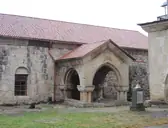 The Gelati AcademyA second JerusalemIn the guide
- 04
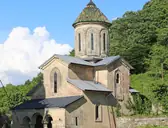 The Churches of St George and St NicholasThe lesser churchesIn the guide
- 05
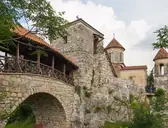 Motsameta MonasteryThe place of the martyrsIn the guide
- 06
 Bagrati CathedralThe rebuilt cathedral of Bagrat IIIIn the guide
Site map of Gelati and Bagrati
History of Gelati and Bagrati
David IV came to the throne as a young man and spent his reign reuniting and defending the Georgian kingdom; in 1106 he founded Gelati as a monastery, a royal burial church and a school that would be, in the words of a chronicler, a second Jerusalem. Scholars at the academy translated philosophy and theology, and the Cathedral of the Virgin was furnished with mosaic and fresco of a quality that still amazes. David was buried in 1125 not in the church itself but under the gatehouse, so that all who entered would walk over his tomb. Bagrati Cathedral, in Kutaisi, is slightly older: its floor was laid in 1003, in the reign of Bagrat III, who had unified the kingdom. It was ruined by an Ottoman bombardment in 1692, stood as a celebrated ruin for three centuries, and was reconstructed in 2009–2012.
The full history continues in the guide.
Gelati and Bagrati guide: questions
How many stops does the Gelati and Bagrati guide have?
6 stops, in visit order: 1. The Gatehouse and the Tomb of David the Builder; 2. The Cathedral of the Virgin; 3. The Gelati Academy; 4. The Churches of St George and St Nicholas; 5. Motsameta Monastery; 6. Bagrati Cathedral.
Can I do a self-guided tour of Gelati and Bagrati with this guide?
Yes. The guide is made for a self-guided tour: 6 stops in visit order, each with a photo, a story and a voice, so you can explore Gelati and Bagrati at your own pace, without joining a group. Download it before you go and it works offline.
How long is each guide?
The 6 stops add up to about 5 minutes of listening in total. You play each stop when you’re ready, so you can go at your own pace.
Does the guide work offline?
Yes, once it’s downloaded. The guide is a single self-contained web page (about 6.0 MB) with the photos, text and audio built in. Download it to your phone before you go (Wi-Fi is best); after that it opens in any modern browser on iPhone or Android, with no app, account or mobile signal needed.
Does it use GPS or need my location?
No. The guide doesn’t use GPS and doesn’t know where you are: you play each stop when you reach it. It works on iPhone and Android in any modern browser, and it’s in English.
What’s included?
One self-contained HTML guide: 6 stops in visit order, each with a photo, text and a voice, plus the story of who built the site.
Who built Gelati and Bagrati?
David IV came to the throne as a young man and spent his reign reuniting and defending the Georgian kingdom; in 1106 he founded Gelati as a monastery, a royal burial church and a school that would be, in the words of a chronicler, a second Jerusalem. Scholars at the academy translated philosophy and theology, and the Cathedral of the Virgin was furnished with mosaic and fresco of a quality that still amazes.
Where is Gelati and Bagrati?
On a hill a few kilometres north-east of Kutaisi, King David IV, known as David the Builder, founded Gelati in 1106 as a monastery and an academy, the intellectual heart of Georgia’s golden age.
Is there a free audio guide to Gelati and Bagrati?
The first stop, The Gatehouse and the Tomb of David the Builder, is free to read and hear on this page, so you can try the Gelati and Bagrati audio tour before you buy. The full guide, with all 6 stops, is a one-off purchase: download it once and it’s yours to keep, working offline.
Is the Gelati and Bagrati guide worth it?
If you’d like to know what you’re looking at, yes. For $10 you get 6 stops in visit order, each with a photo, a short history and a voice you play when you’re ready, plus a site map of the stops, and about 5 minutes of listening in all. It’s short on purpose, so you spend your time looking, not listening. It’s yours to keep, works offline and needs no app. The first stop is free on this page, so you can try it before you buy. If you’d like hours of detail, a guided tour will go deeper.
Audio guide or guided tour?
It depends how you like to visit. This guide lets you explore Gelati and Bagrati at your own pace, at any time, for a one-off price. A guided tour gives you a live expert you can ask questions, but at fixed times and usually for a higher price. Many people use both: a tour for the big picture, and the guide to read beforehand or to revisit the stops in their own time.
Is this the official Gelati and Bagrati guide?
No. It’s an independent guide by The Historian Guide, not affiliated with or endorsed by the operator of Gelati and Bagrati. For tickets and opening hours, check the official site operator before you go.
Does the guide include entry tickets or opening hours?
No. The guide is a digital companion only. Admission to Gelati and Bagrati is separate, so check the official site operator for current tickets and opening hours before you go.
- Stop 1 · The Gatehouse and the Tomb of David the Builder: DDohler · CC BY 2.0 · Wikimedia Commons · resized
- Stop 2 · The Cathedral of the Virgin (also the cover): David Holt · CC BY-SA 2.0 · Wikimedia Commons · resized
- Stop 3 · The Gelati Academy: Kober · Public domain · Wikimedia Commons · resized
- Stop 4 · The Churches of St George and St Nicholas: Bernard Gagnon · CC BY 4.0 · Wikimedia Commons · resized
- Stop 5 · Motsameta Monastery: Marcin Konsek · CC BY-SA 4.0 · Wikimedia Commons · resized
- Stop 6 · Bagrati Cathedral: Marcin Konsek · CC BY-SA 4.0 · Wikimedia Commons · resized


All photographs from Wikimedia Commons under the licences shown.
More guides in Georgia
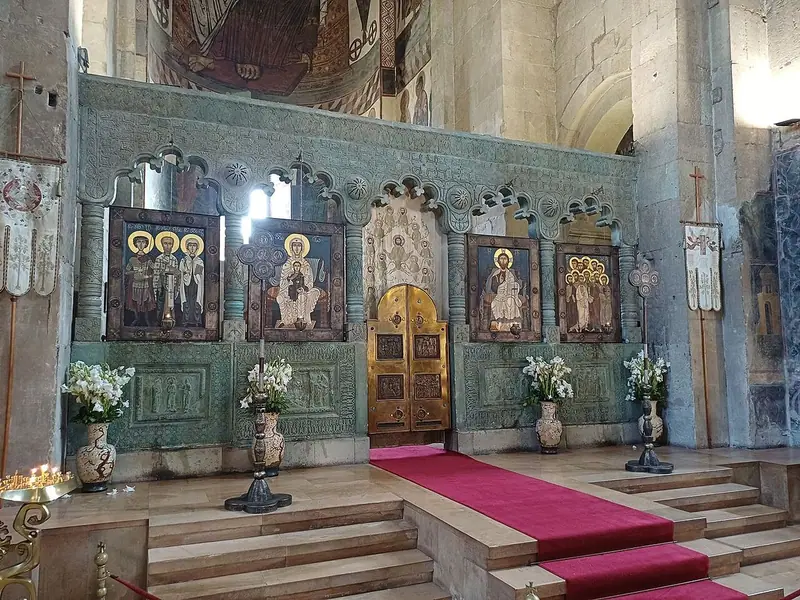 Georgian8 stops · 4th–19th century
Mtskheta audio guide
Start at Jvari Monastery on its hilltop, then cross to the cathedral and the Life-Giving Pillar in the Holy City where Georgia became Christian.
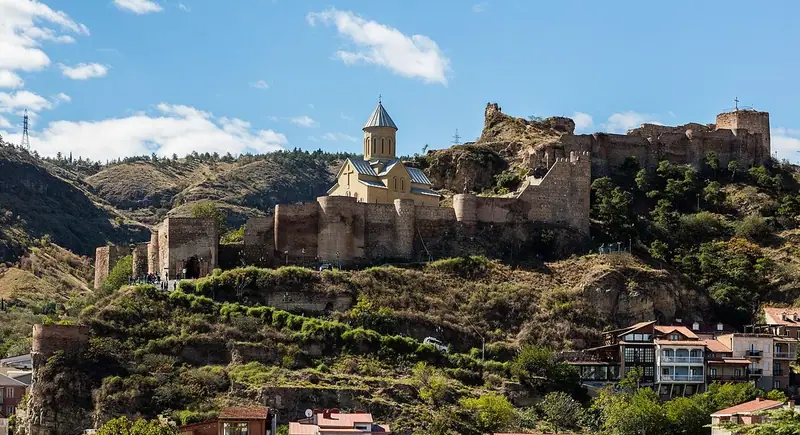 Georgian7 stops · 5th century CE – 19th century
Old Tbilisi audio guide
From Metekhi Church past the domed sulphur baths and up to Narikala Fortress, then down to Sioni Cathedral.
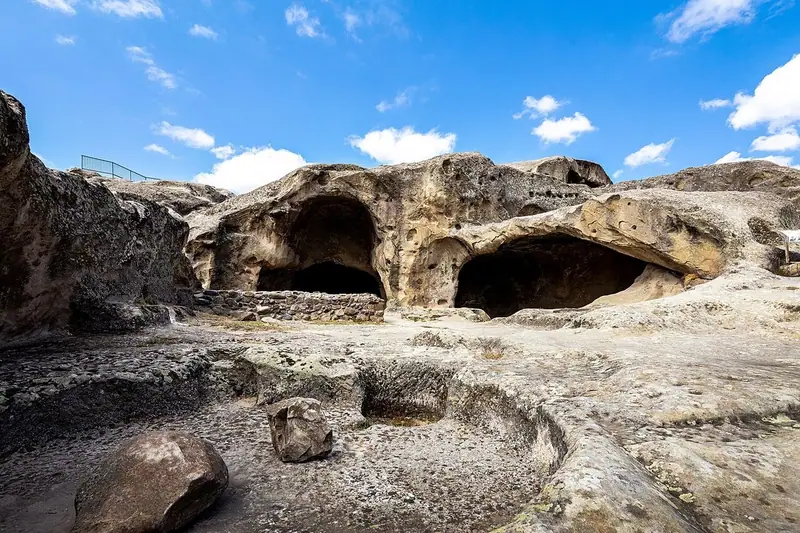 Kartli (Iberia)7 stops · c. 1000 BCE – 14th century
Uplistsikhe audio guide
Climb the ancient main street of a town cut into a sandstone ridge above the Mtkvari, past the theatre and Tamar’s Hall to the Prince’s Church.
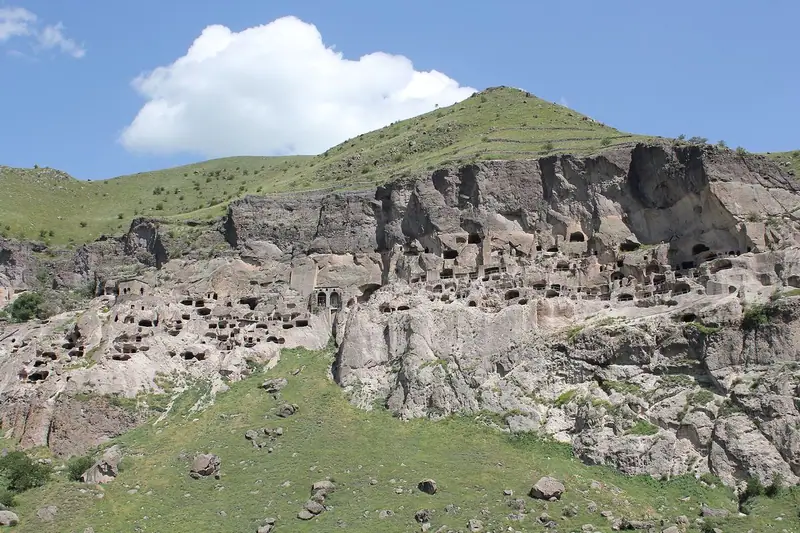 Medieval Kingdom of Georgia6 stops · 1180s–1283
Vardzia audio guide
The cave monastery of Queen Tamar: the entrance tunnel, bell tower, painted Church of the Dormition, royal rooms and terraces, and the nearby fortress of Khertvisi.
Every guide, in every country
Gelati and Bagrati and every other guide we publish, including future ones. One payment, no subscription.