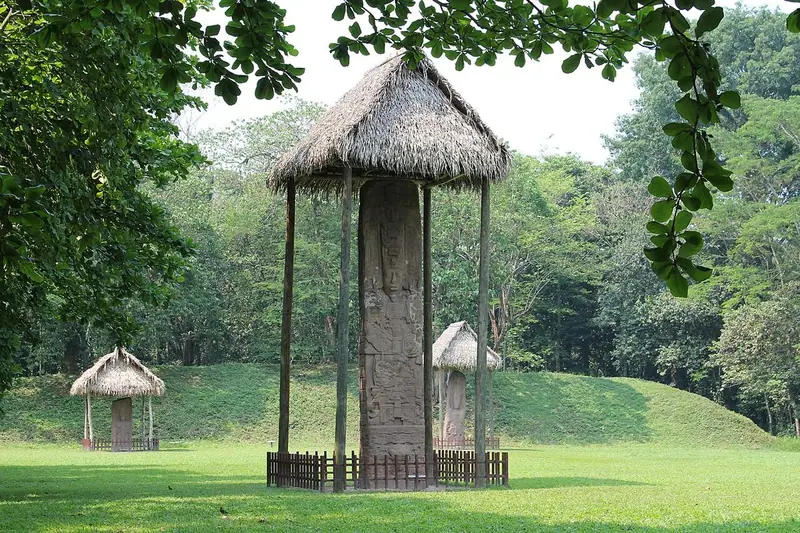
Before you start
Quiriguá is an ancient Maya city in the lower valley of the Motagua River, in south-eastern Guatemala, not far from the border with Honduras. Its buildings are modest, but its carved stone monuments are among the finest of the Maya world, and they include the tallest stela the Maya ever raised. It was declared a UNESCO World Heritage Site in 1981. This guide takes you across the Great Plaza, past the giant stelae, to the ballcourt, the carved boulders known as zoomorphs and the acropolis. The lowland climate is hot and humid, so bring water, a hat and insect repellent, and do not touch the monuments.
Use it as a self-guided tour of Quiriguá: 7 stops in visit order, each played when you’re ready, at your own pace.
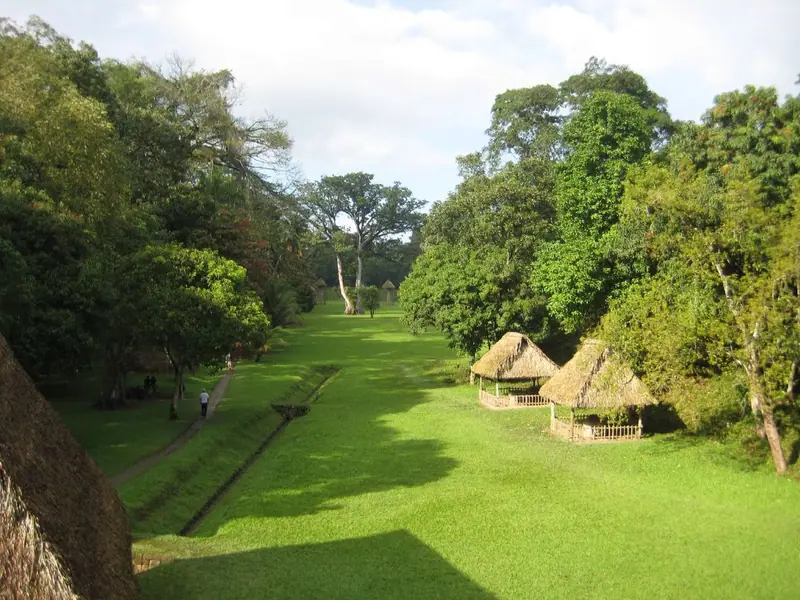 Free preview · Stop 1
The Great Plaza
Begin at the northern end of the Great Plaza, a long, grassy space surrounded by forest. It measures three hundred and twenty-five metres from north to south, and it is the largest plaza in the whole Maya region. Notice the monuments standing in the plaza, each under its own thatched roof, which protects it from the sun and the rain. In 1910, the United Fruit Company bought this land and the country all around for banana plantations, but set aside the ceremonial centre as an archaeological park, leaving an island of forest among the plantations. You may see banana plantations on the way. The ruins were first described by the English artist Frederick Catherwood, who visited them in 1840. The southern part of the plaza may once have been a marketplace.
Photo: Stuardo Herrera from Guatemala, Guatemala · CC BY 2.0 · Wikimedia Commons
What to see at Quiriguá: 7 stops, in visit order
- 01
 The Great PlazaAn Island of ForestFree preview
- 02
 Stela DHieroglyphs as Living FiguresIn the guide
- 03
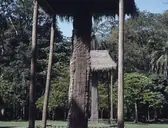 Stela FThe King Who Defeated His MasterIn the guide
- 04
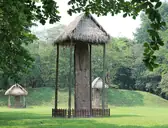 Stela EThe Tallest StelaIn the guide
- 05
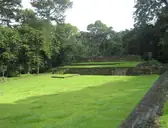 The Ballcourt PlazaThe Ball GameIn the guide
- 06
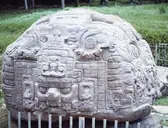 Zoomorph PThe Great TurtleIn the guide
- 07
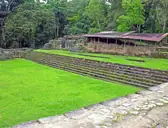 The AcropolisPalaces of the KingsIn the guide
Site map of Quiriguá
History of Quiriguá
Quiriguá was founded in the fifth century CE, and for a long time it was a vassal of the great city of Copán, in what is now Honduras. In the 720s, the king of Copán, Uaxaclajuun Ubʼaah Kʼawiil, often known as Eighteen Rabbit, installed a new lord at Quiriguá, Kʼakʼ Tiliw Chan Yopaat. In 738, this vassal captured his overlord, and won independence for his city, probably with the support of the powerful city of Calakmul. Kʼakʼ Tiliw Chan Yopaat then rebuilt the city centre and raised most of the great monuments you see today. The last inscriptions date to 810, and the city was later abandoned.
Quiriguá guide: questions
How many stops does the Quiriguá guide have?
7 stops, in visit order: 1. The Great Plaza; 2. Stela D; 3. Stela F; 4. Stela E; 5. The Ballcourt Plaza; 6. Zoomorph P; 7. The Acropolis.
Can I do a self-guided tour of Quiriguá with this guide?
Yes. The guide is made for a self-guided tour: 7 stops in visit order, each with a photo, a story and a voice, so you can explore Quiriguá at your own pace, without joining a group. Download it before you go and it works offline.
How long is each guide?
The 7 stops add up to about 5 minutes of listening in total. You play each stop when you’re ready, so you can go at your own pace.
Does the guide work offline?
Yes, once it’s downloaded. The guide is a single self-contained web page (about 8.5 MB) with the photos, text and audio built in. Download it to your phone before you go (Wi-Fi is best); after that it opens in any modern browser on iPhone or Android, with no app, account or mobile signal needed.
Does it use GPS or need my location?
No. The guide doesn’t use GPS and doesn’t know where you are: you play each stop when you reach it. It works on iPhone and Android in any modern browser, and it’s in English.
What’s included?
One self-contained HTML guide: 7 stops in visit order, each with a photo, text and a voice, plus the story of who built the site.
Who built Quiriguá?
Quiriguá was founded in the fifth century CE, and for a long time it was a vassal of the great city of Copán, in what is now Honduras. In the 720s, the king of Copán, Uaxaclajuun Ubʼaah Kʼawiil, often known as Eighteen Rabbit, installed a new lord at Quiriguá, Kʼakʼ Tiliw Chan Yopaat.
Where is Quiriguá?
Quiriguá is an ancient Maya city in the lower valley of the Motagua River, in south-eastern Guatemala, not far from the border with Honduras.
Is there a free audio guide to Quiriguá?
The first stop, The Great Plaza, is free to read and hear on this page, so you can try the Quiriguá audio tour before you buy. The full guide, with all 7 stops, is a one-off purchase: download it once and it’s yours to keep, working offline.
Is the Quiriguá guide worth it?
If you’d like to know what you’re looking at, yes. For $10 you get 7 stops in visit order, each with a photo, a short history and a voice you play when you’re ready, plus a site map of the stops, and about 5 minutes of listening in all. It’s short on purpose, so you spend your time looking, not listening. It’s yours to keep, works offline and needs no app. The first stop is free on this page, so you can try it before you buy. If you’d like hours of detail, a guided tour will go deeper.
Audio guide or guided tour?
It depends how you like to visit. This guide lets you explore Quiriguá at your own pace, at any time, for a one-off price. A guided tour gives you a live expert you can ask questions, but at fixed times and usually for a higher price. Many people use both: a tour for the big picture, and the guide to read beforehand or to revisit the stops in their own time.
Is this the official Quiriguá guide?
No. It’s an independent guide by The Historian Guide, not affiliated with or endorsed by the operator of Quiriguá. For tickets and opening hours, check the official site operator before you go.
Does the guide include entry tickets or opening hours?
No. The guide is a digital companion only. Admission to Quiriguá is separate, so check the official site operator for current tickets and opening hours before you go.
- Stop 1 · The Great Plaza: Stuardo Herrera from Guatemala, Guatemala · CC BY 2.0 · Wikimedia Commons · resized
- Stop 2 · Stela D: HJPD · CC BY 3.0 · Wikimedia Commons · resized
- Stop 3 · Stela F: HJPD · CC BY 3.0 · Wikimedia Commons · resized
- Stop 4 · Stela E (also the cover): Arian Zwegers from Brussels, Belgium · CC BY 2.0 · Wikimedia Commons · resized
- Stop 5 · The Ballcourt Plaza: Stuardo Herrera from Guatemala, Guatemala · CC BY 2.0 · Wikimedia Commons · resized
- Stop 6 · Zoomorph P: HJPD · CC BY 3.0 · Wikimedia Commons · resized
- Stop 7 · The Acropolis: Dennis G. Jarvis · CC BY-SA 2.0 · Wikimedia Commons · resized


All photographs from Wikimedia Commons under the licences shown.
More guides in Guatemala
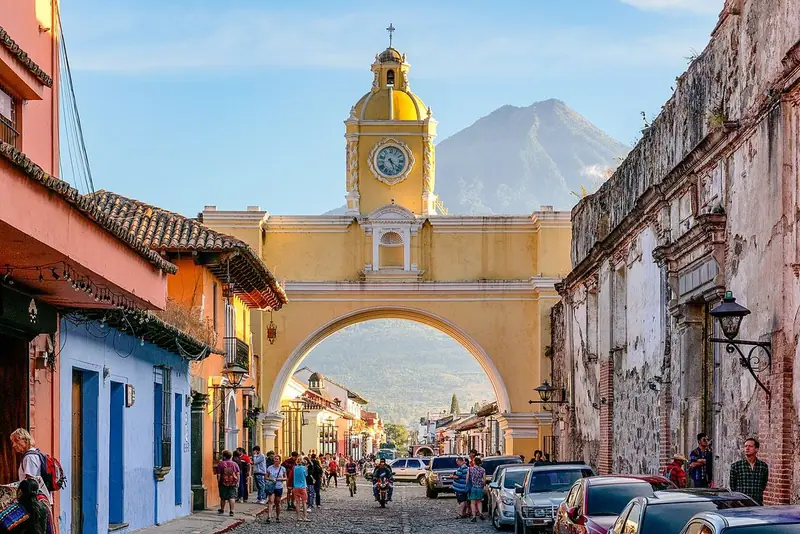 Spanish Colonial7 stops · 1543–1773 CE
Antigua Guatemala audio guide
The grid of Santiago de los Caballeros beneath three volcanoes, from the Central Park and the cathedral to the Santa Catalina Arch, La Merced and the Capuchinas.
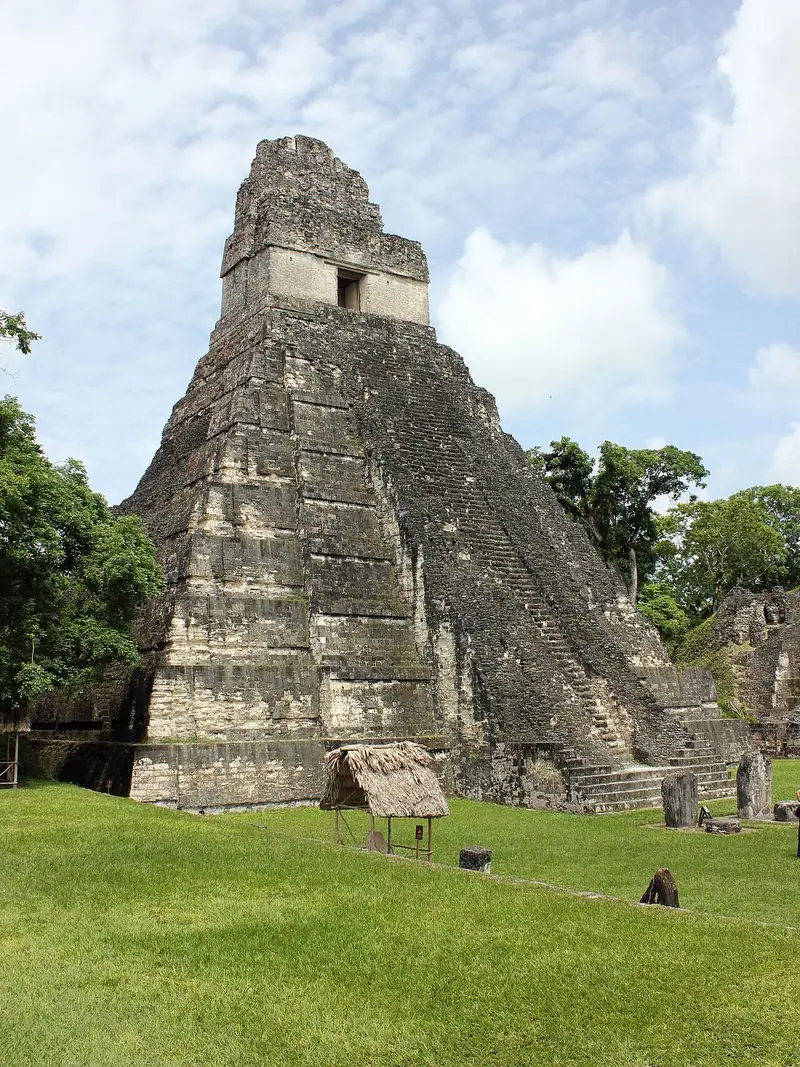 Maya8 stops · 4th century BCE – 10th century CE
Tikal audio guide
Through the rainforest to the Great Plaza of Tikal, its temple-pyramids rising above the trees, then on to the Lost World and Temple Four.
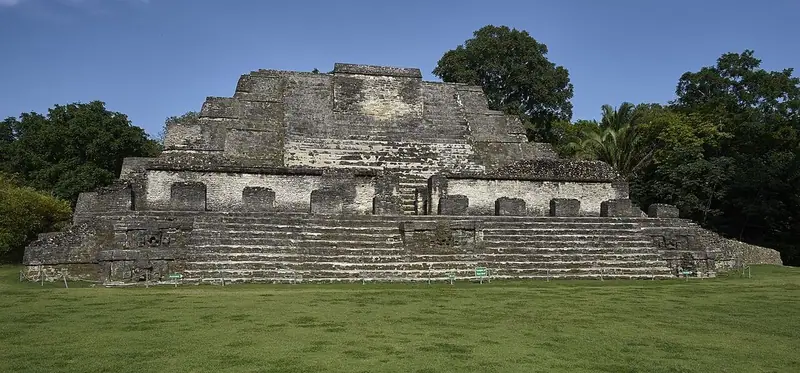 Maya7 stops · c. 900 BCE – 1000 CE
Altun Ha audio guide
Cross the two plazas of a Maya city on the coastal plain of Belize and climb the Temple of the Masonry Altars, where the Jade Head was found.
Every guide, in every country
Quiriguá and every other guide we publish, including future ones. One payment, no subscription.