Before you start
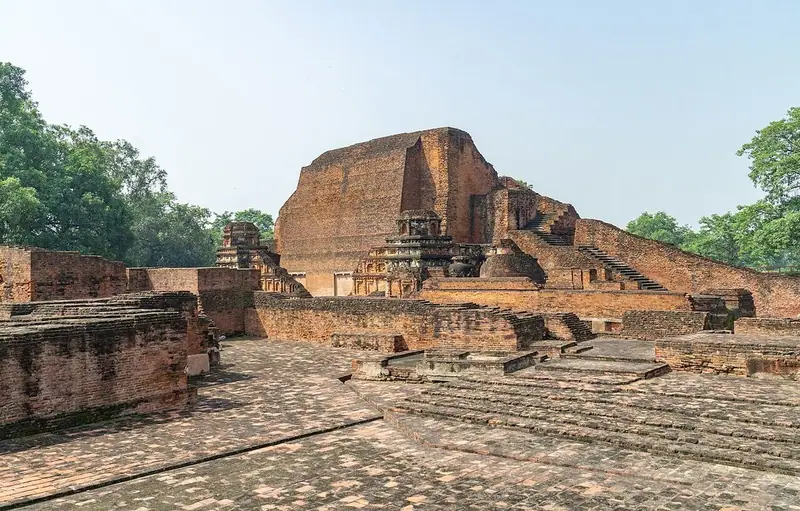
Nalanda, in the state of Bihar, about ninety kilometres south-east of Patna, was one of the great centres of learning of the ancient world. For some eight hundred years, from the fifth century to the thirteenth, monks and students came here from across Asia to study Buddhist philosophy, logic, grammar, medicine and much else. Today its red-brick ruins, spread over twenty-three hectares, reveal a long line of monasteries facing a row of great temples, along with stupas, shrines and fine works of stucco and stone. UNESCO inscribed the Archaeological Site of Nalanda Mahavihara as a World Heritage Site in 2016. This guide follows the excavated site from the monasteries to the temples, and ends at the museum.
Use it as a self-guided tour of Nalanda: 9 stops in visit order, each played when you’re ready, at your own pace.
 Free preview · Stop 1
The Great Monastery
Begin at the entrance and look along the excavated site. Nalanda is often called the world’s first residential university, a place where students lived and studied together for years under famous teachers. The remains extend about four hundred and eighty-eight metres from north to south. A broad passage, some thirty metres wide, runs down the middle, with the monasteries, or viharas, on its east side and the temples on its west. UNESCO notes that this ordered, linear plan replaced the earlier habit of grouping buildings around a single stupa, and that it later inspired other great monasteries such as Vikramashila and Paharpur. Most buildings show several periods of construction, each raised on the ruins of the last. Much of the ancient complex still lies unexcavated beneath the fields and the village of Bargaon to the east.
Photo: Sumitsurai · CC BY-SA 4.0 · Wikimedia Commons
What to see at Nalanda: 9 stops, in visit order
- 01
 The Great MonasteryA university of brickFree preview
- 02
 Monastery 1Nine levels of buildingIn the guide
- 03
 The Monks' CellsDaily life of the scholarsIn the guide
- 04
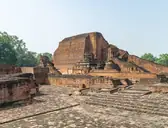 Temple 3, the Sariputta StupaSeven temples in oneIn the guide
- 05
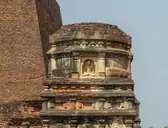 Stucco and Votive StupasGupta art in plasterIn the guide
- 06
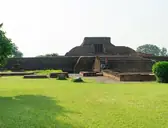 Temples 12 and 13Furnaces and bronzeIn the guide
- 07
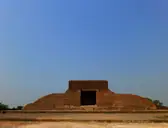 Temple 14The last painted fragmentsIn the guide
- 08
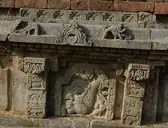 Temple 2Gods and dancers in stoneIn the guide
- 09
 Fire, Ruin and RediscoveryThe library and the museumIn the guide
Site map of Nalanda
History of Nalanda
Nalanda grew near Rajagriha, now Rajgir, a city linked with the Buddha and with Mahavira, the great teacher of the Jains. Coins and seals suggest that the monastery was founded under the Gupta emperor Kumaragupta I, who reigned in the fifth century, and later Gupta kings added monasteries and temples. In the seventh century it was supported by King Harsha, and the Chinese pilgrims Xuanzang and Yijing studied here and wrote detailed accounts. From the eighth to the twelfth century the Buddhist Pala kings of eastern India were its main patrons, and a king of Srivijaya, in Sumatra, paid for a monastery. Around 1200 Nalanda was sacked by troops of Bakhtiyar Khalji, and the institution soon declined and was abandoned. Rediscovered in the nineteenth century, it was excavated by the Archaeological Survey of India between 1915 and 1937, and again from 1974 to 1982.
Nalanda guide: questions
How many stops does the Nalanda guide have?
9 stops, in visit order: 1. The Great Monastery; 2. Monastery 1; 3. The Monks' Cells; 4. Temple 3, the Sariputta Stupa; 5. Stucco and Votive Stupas; 6. Temples 12 and 13; 7. Temple 14; 8. Temple 2; 9. Fire, Ruin and Rediscovery.
Can I do a self-guided tour of Nalanda with this guide?
Yes. The guide is made for a self-guided tour: 9 stops in visit order, each with a photo, a story and a voice, so you can explore Nalanda at your own pace, without joining a group. Download it before you go and it works offline.
How long do you need at Nalanda?
We suggest allowing about 2–3 hours. The 9 stops add up to about 7 minutes of listening, and you play each one when you’re ready, so you can linger wherever you like.
How long is each guide?
The 9 stops add up to about 7 minutes of listening in total. You play each stop when you’re ready, so you can go at your own pace.
Does the guide work offline?
Yes, once it’s downloaded. The guide is a single self-contained web page (about 8.5 MB) with the photos, text and audio built in. Download it to your phone before you go (Wi-Fi is best); after that it opens in any modern browser on iPhone or Android, with no app, account or mobile signal needed.
Does it use GPS or need my location?
No. The guide doesn’t use GPS and doesn’t know where you are: you play each stop when you reach it. It works on iPhone and Android in any modern browser, and it’s in English.
What’s included?
One self-contained HTML guide: 9 stops in visit order, each with a photo, text and a voice, plus the story of who built the site.
Who built Nalanda?
Nalanda grew near Rajagriha, now Rajgir, a city linked with the Buddha and with Mahavira, the great teacher of the Jains. Coins and seals suggest that the monastery was founded under the Gupta emperor Kumaragupta I, who reigned in the fifth century, and later Gupta kings added monasteries and temples.
Where is Nalanda?
Nalanda, in the state of Bihar, about ninety kilometres south-east of Patna, was one of the great centres of learning of the ancient world.
Is there a free audio guide to Nalanda?
The first stop, The Great Monastery, is free to read and hear on this page, so you can try the Nalanda audio tour before you buy. The full guide, with all 9 stops, is a one-off purchase: download it once and it’s yours to keep, working offline.
Is the Nalanda guide worth it?
If you’d like to know what you’re looking at, yes. For $10 you get 9 stops in visit order, each with a photo, a short history and a voice you play when you’re ready, plus a site map of the stops, and about 7 minutes of listening in all. It’s short on purpose, so you spend your time looking, not listening. It’s yours to keep, works offline and needs no app. The first stop is free on this page, so you can try it before you buy. If you’d like hours of detail, a guided tour will go deeper.
Audio guide or guided tour?
It depends how you like to visit. This guide lets you explore Nalanda at your own pace, at any time, for a one-off price. A guided tour gives you a live expert you can ask questions, but at fixed times and usually for a higher price. Many people use both: a tour for the big picture, and the guide to read beforehand or to revisit the stops in their own time.
Is this the official Nalanda guide?
No. It’s an independent guide by The Historian Guide, not affiliated with or endorsed by the operator of Nalanda. For tickets and opening hours, check the official site operator before you go.
Does the guide include entry tickets or opening hours?
No. The guide is a digital companion only. Admission to Nalanda is separate, so check the official site operator for current tickets and opening hours before you go.
- Stop 1 · The Great Monastery: Sumitsurai · CC BY-SA 4.0 · Wikimedia Commons · resized
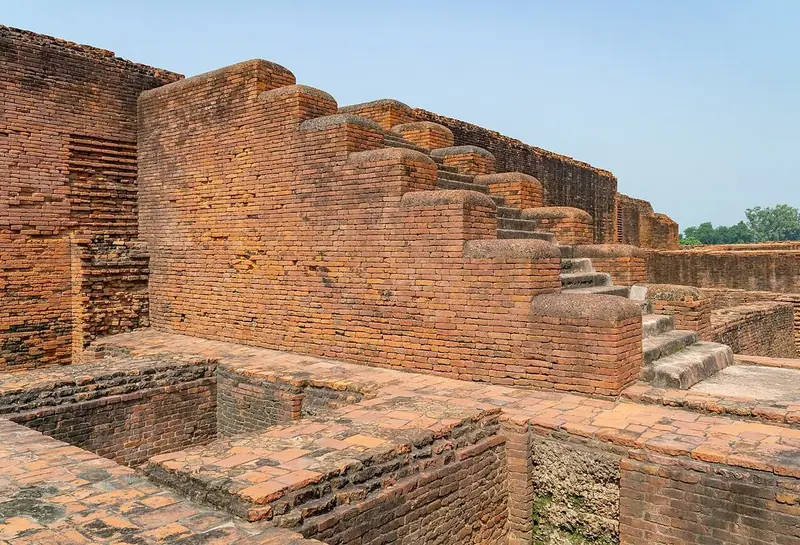
- Stop 2 · Monastery 1: Sumitsurai · CC BY-SA 4.0 · Wikimedia Commons · resized
- Stop 3 · The Monks' Cells: Sumitsurai · CC BY-SA 4.0 · Wikimedia Commons · resized
- Stop 4 · Temple 3, the Sariputta Stupa (also the cover): Sumitsurai · CC BY-SA 4.0 · Wikimedia Commons · resized
- Stop 5 · Stucco and Votive Stupas: Sumitsurai · CC BY-SA 4.0 · Wikimedia Commons · resized
- Stop 6 · Temples 12 and 13: Sumitsurai · CC BY-SA 4.0 · Wikimedia Commons · resized
- Stop 7 · Temple 14: Photo Dharma from Penang, Malaysia · CC BY 2.0 · Wikimedia Commons · resized
- Stop 8 · Temple 2: Amitabha Gupta · CC BY 4.0 · Wikimedia Commons · resized
- Stop 9 · Fire, Ruin and Rediscovery: Sumitsurai · CC BY-SA 4.0 · Wikimedia Commons · resized


All photographs from Wikimedia Commons under the licences shown.
More guides in India
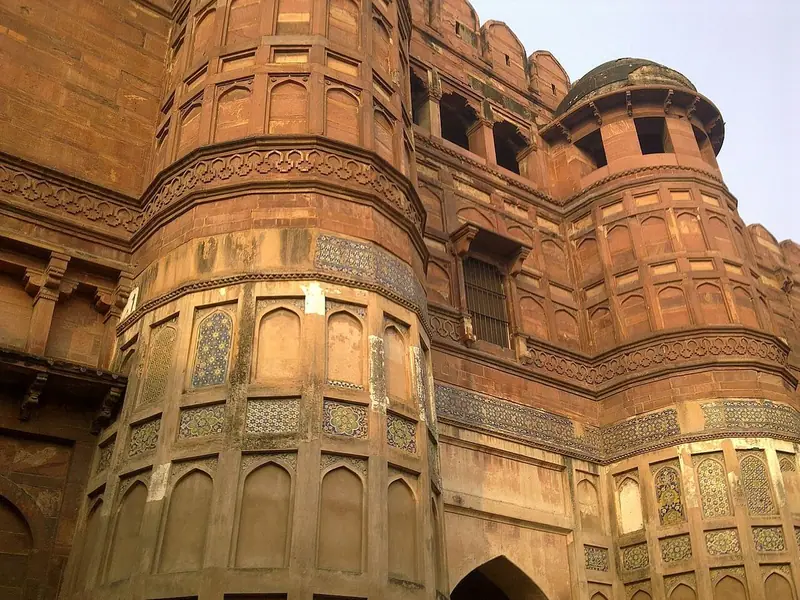 Mughal7 stops · 1565–1640s
Agra Fort audio guide
Red sandstone ramparts and marble palaces, with the Taj Mahal in view from the riverside terraces.
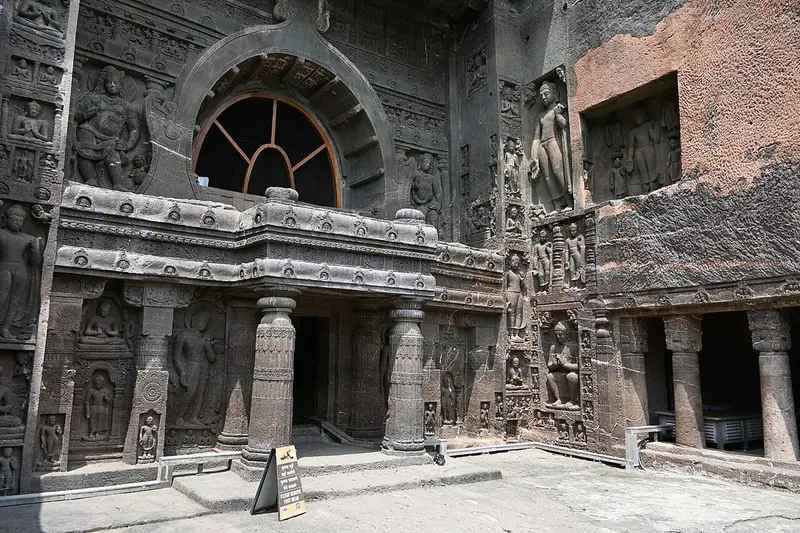 Deccan8 stops · 2nd century BCE – 5th century CE
Ajanta Caves audio guide
Thirty caves cut into a curving cliff above the Waghora river, their prayer halls and monasteries painted and carved by Buddhist monks and their patrons.
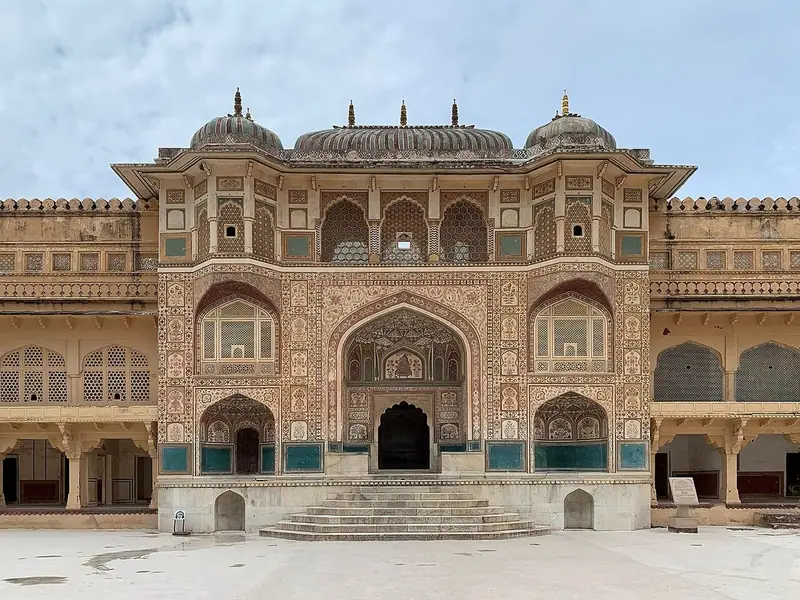 Rajput8 stops · 1592–18th century
Amber Fort audio guide
Up from Maota Lake through the great gates and courtyards to the Sheesh Mahal, palace of the Kachhwaha Rajputs.
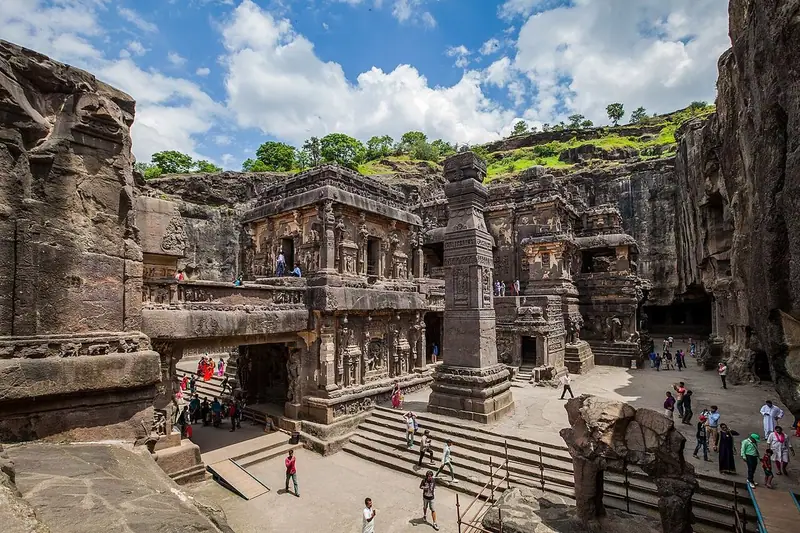 Deccan8 stops · c. 600–1000 CE
Ellora Caves audio guide
Thirty-four Buddhist, Hindu and Jain caves cut into a basalt escarpment, crowned by the Kailasa Temple.
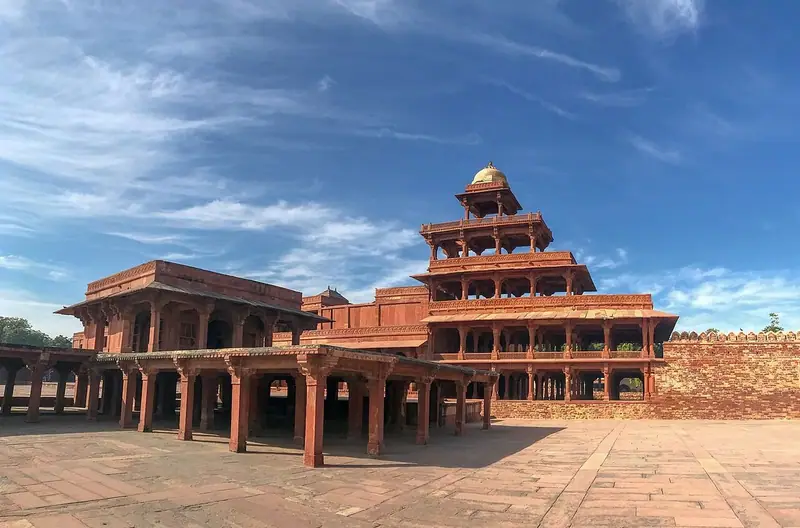 Mughal8 stops · 1571–1585
Fatehpur Sikri audio guide
Akbar’s short-lived red sandstone capital: the Panch Mahal, the Diwan-i-Khas and the tomb of Salim Chishti.
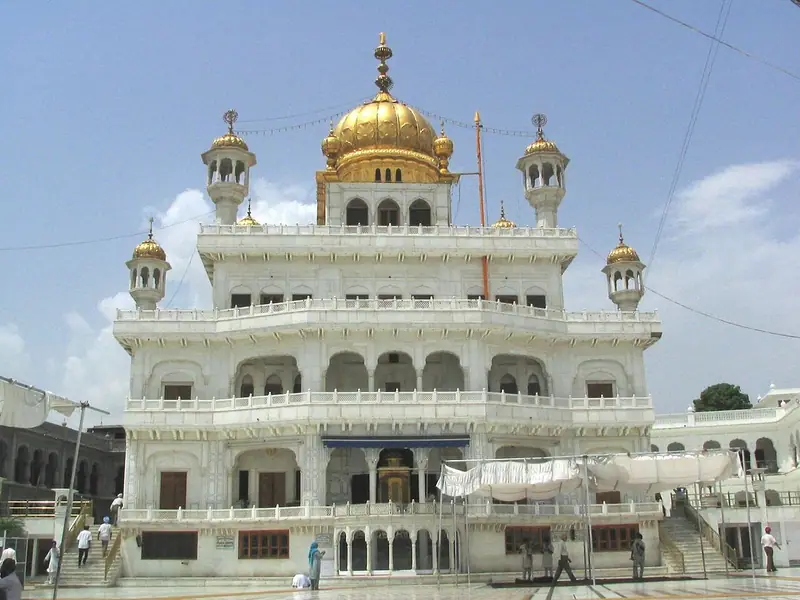 Sikh9 stops · Sikh Gurus and Sikh Empire
The Golden Temple audio guide
Follow the marble path around the sacred pool, cross the causeway to the gilded Harmandir Sahib, and share a meal at the Guru ka Langar.
Every guide, in every country
Nalanda and every other guide we publish, including future ones. One payment, no subscription.