Before you start
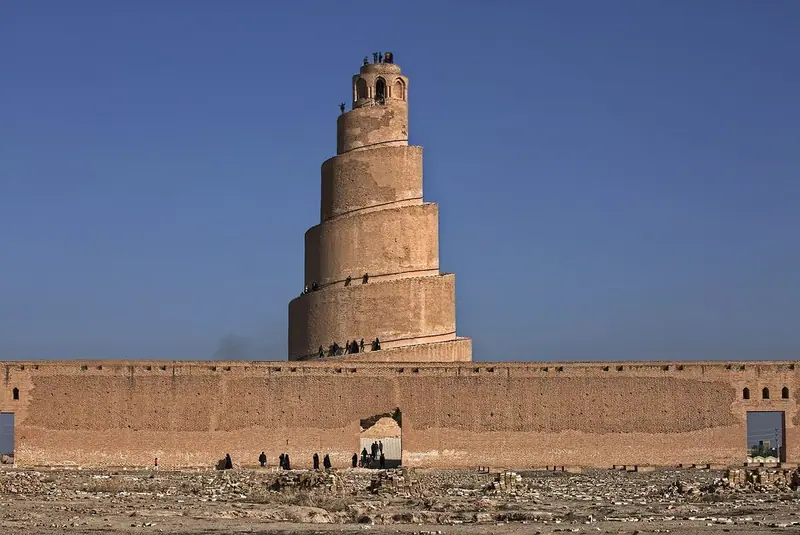
Samarra lies on the Tigris about 130 kilometres north of Baghdad. For a little over half a century, from 836 to 892, it was the capital of the Abbasid caliphs, whose empire stretched from North Africa to Central Asia, and the ruins of their city spread for kilometres along the river. UNESCO inscribed the Samarra Archaeological City as a World Heritage Site in 2007, and at the same time placed it on the List of World Heritage in Danger. Most of the ancient city has never been excavated. Samarra suffered in the conflicts after 2003: an explosion damaged the top of its famous spiral minaret in 2005, and bombings destroyed the golden dome of the al-Askari Shrine in 2006 and its minarets in 2007. The shrine has since been rebuilt. Check your government’s current travel advice before you plan a visit.
Use it as a self-guided tour of Samarra Archaeological City: 8 stops in visit order, each played when you’re ready, at your own pace.
 Free preview · Stop 1
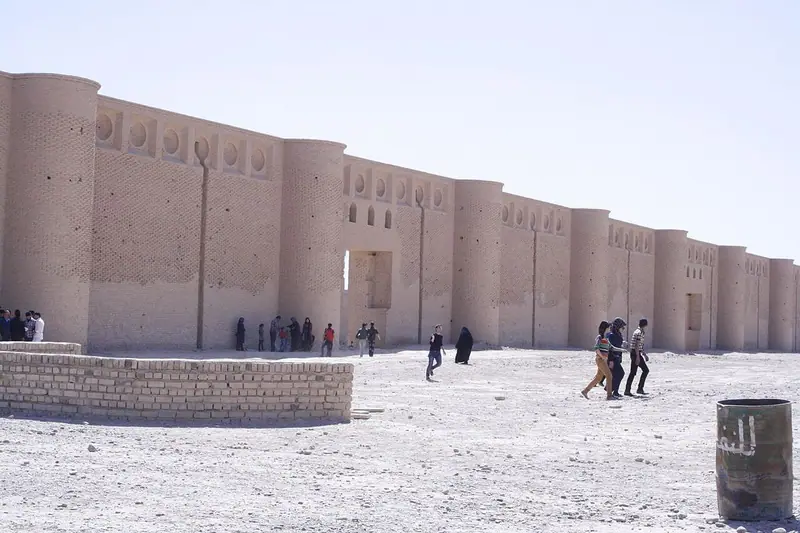
The Great Mosque
Begin at the Great Mosque of al-Mutawakkil, built between 848 and 851. For a time it was the largest mosque in the world: its outer walls of baked brick enclose a rectangle of roughly 240 by 160 metres, and it is often said to have held tens of thousands of worshippers at Friday prayers. Walk along the walls and notice the rounded towers that buttress them at regular intervals, and the row of small decorative openings near the top. The walls you see were restored in the twentieth century; inside, the roof and the forest of brick piers that once supported it have gone. Al-Mutawakkil employed builders and artists from across the empire, and excavators are said to have found fragments of marble and glass mosaic here. Stand back and take in the scale of a mosque built for an imperial capital.
Photo: Ikhlas2 · CC BY-SA 4.0 · Wikimedia Commons. Taken in 2012
What to see at Samarra Archaeological City: 8 stops, in visit order
- 01
 The Great MosqueWalls of a vanished congregationFree preview
- 02
 The MalwiyaThe spiral minaretIn the guide
- 03
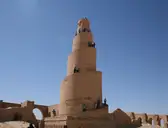 Climbing the SpiralA ramp without a railingIn the guide
- 04
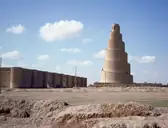 The Mosque CourtyardAn open space for prayerIn the guide
- 05
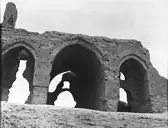 The Gate of the Caliph’s PalaceBab al-Amma above the TigrisIn the guide
- 06
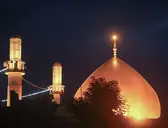 The al-Askari ShrineThe golden dome of two imamsIn the guide
- 07
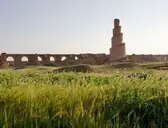 The Abu Dulaf MosqueA second spiral to the northIn the guide
- 08
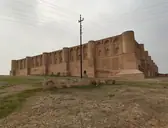 Qasr al-AshiqThe palace of the belovedIn the guide
History of Samarra Archaeological City
In 836 the Abbasid caliph al-Mu’tasim left Baghdad and founded a new capital here, partly to house his new army regiments, many of them Turkic soldiers from Central Asia. His successors built ever larger palaces, and the caliph al-Mutawakkil, who reigned from 847 to 861, added the Great Mosque and a new city to the north. His murder by his own guards in 861 began a decade of turmoil known as the Anarchy at Samarra. In 892 the caliph al-Mu’tadid moved the capital back to Baghdad, and most of the city was abandoned, though a town survived around the shrine of two Shia imams. Ernst Herzfeld excavated here from 1911 to 1913, and Iraqi archaeologists have worked here since the 1930s.
Samarra Archaeological City guide: questions
How many stops does the Samarra Archaeological City guide have?
8 stops, in visit order: 1. The Great Mosque; 2. The Malwiya; 3. Climbing the Spiral; 4. The Mosque Courtyard; 5. The Gate of the Caliph’s Palace; 6. The al-Askari Shrine; 7. The Abu Dulaf Mosque; 8. Qasr al-Ashiq.
Can I do a self-guided tour of Samarra Archaeological City with this guide?
Yes. The guide is made for a self-guided tour: 8 stops in visit order, each with a photo, a story and a voice, so you can explore Samarra Archaeological City at your own pace, without joining a group. Download it before you go and it works offline.
How long do you need at Samarra Archaeological City?
We suggest allowing A full day. The 8 stops add up to about 6 minutes of listening, and you play each one when you’re ready, so you can linger wherever you like.
How long is each guide?
The 8 stops add up to about 6 minutes of listening in total. You play each stop when you’re ready, so you can go at your own pace.
Does the guide work offline?
Yes, once it’s downloaded. The guide is a single self-contained web page (about 6.4 MB) with the photos, text and audio built in. Download it to your phone before you go (Wi-Fi is best); after that it opens in any modern browser on iPhone or Android, with no app, account or mobile signal needed.
Does it use GPS or need my location?
No. The guide doesn’t use GPS and doesn’t know where you are: you play each stop when you reach it. It works on iPhone and Android in any modern browser, and it’s in English.
What’s included?
One self-contained HTML guide: 8 stops in visit order, each with a photo, text and a voice, plus the story of who built the site.
Who built Samarra Archaeological City?
In 836 the Abbasid caliph al-Mu’tasim left Baghdad and founded a new capital here, partly to house his new army regiments, many of them Turkic soldiers from Central Asia. His successors built ever larger palaces, and the caliph al-Mutawakkil, who reigned from 847 to 861, added the Great Mosque and a new city to the north.
Where is Samarra Archaeological City?
Samarra lies on the Tigris about 130 kilometres north of Baghdad.
Is there a free audio guide to Samarra Archaeological City?
The first stop, The Great Mosque, is free to read and hear on this page, so you can try the Samarra Archaeological City audio tour before you buy. The full guide, with all 8 stops, is a one-off purchase: download it once and it’s yours to keep, working offline.
Is the Samarra Archaeological City guide worth it?
If you’d like to know what you’re looking at, yes. For $10 you get 8 stops in visit order, each with a photo, a short history and a voice you play when you’re ready, about 6 minutes of listening in all. It’s short on purpose, so you spend your time looking, not listening. It’s yours to keep, works offline and needs no app. The first stop is free on this page, so you can try it before you buy. If you’d like hours of detail, a guided tour will go deeper.
Audio guide or guided tour?
It depends how you like to visit. This guide lets you explore Samarra Archaeological City at your own pace, at any time, for a one-off price. A guided tour gives you a live expert you can ask questions, but at fixed times and usually for a higher price. Many people use both: a tour for the big picture, and the guide to read beforehand or to revisit the stops in their own time.
Is this the official Samarra Archaeological City guide?
No. It’s an independent guide by The Historian Guide, not affiliated with or endorsed by the operator of Samarra Archaeological City. For tickets and opening hours, check the official site operator before you go.
Does the guide include entry tickets or opening hours?
No. The guide is a digital companion only. Admission to Samarra Archaeological City is separate, so check the official site operator for current tickets and opening hours before you go.
- Stop 1 · The Great Mosque: Ikhlas2 · CC BY-SA 4.0 · Wikimedia Commons · resized
- Stop 2 · The Malwiya (also the cover): Taisir Mahdi · CC BY-SA 4.0 · Wikimedia Commons · resized
- Stop 3 · Climbing the Spiral: Ikhlas2 · CC BY-SA 4.0 · Wikimedia Commons · resized
- Stop 4 · The Mosque Courtyard: Chris Hoare · CC BY 2.0 · Wikimedia Commons · resized
- Stop 5 · The Gate of the Caliph’s Palace: Gertrude Bell · Public domain · Wikimedia Commons
- Stop 6 · The al-Askari Shrine: Anas moheb · CC BY-SA 4.0 · Wikimedia Commons · resized
- Stop 7 · The Abu Dulaf Mosque: Samir Al-Ibrahem · CC BY-SA 4.0 · Wikimedia Commons · resized
- Stop 8 · Qasr al-Ashiq: Tariqz321 · CC BY-SA 4.0 · Wikimedia Commons · resized


All photographs from Wikimedia Commons under the licences shown.
More guides in Iraq
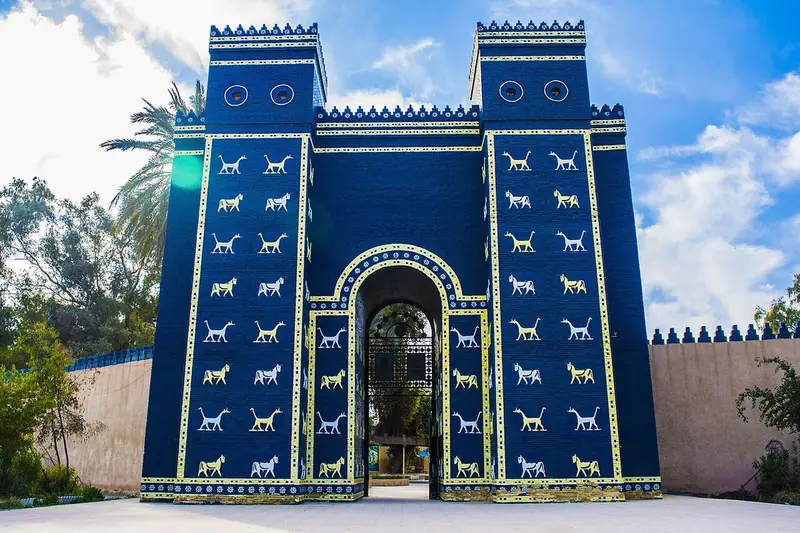 Babylonian9 stops · c. 1800 – 300 BCE (height under Nebuchadnezzar II, 605–562 BCE)
Babylon audio guide
Nebuchadnezzar’s city on the Euphrates: the Ishtar Gate’s dragons and bulls, the Processional Way, the Lion of Babylon and the legend of the Hanging Gardens, with modern reconstructions explained.
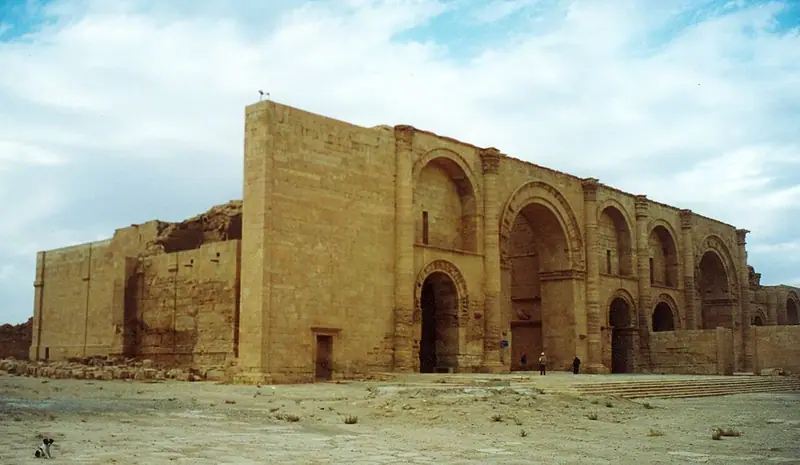 Parthian8 stops · 1st – 3rd century CE
Hatra audio guide
A round desert city that defied two Roman emperors: the Great Iwans, a Greek-style temple and carved faces, with the damage of 2015 and the city’s recovery since 2017.
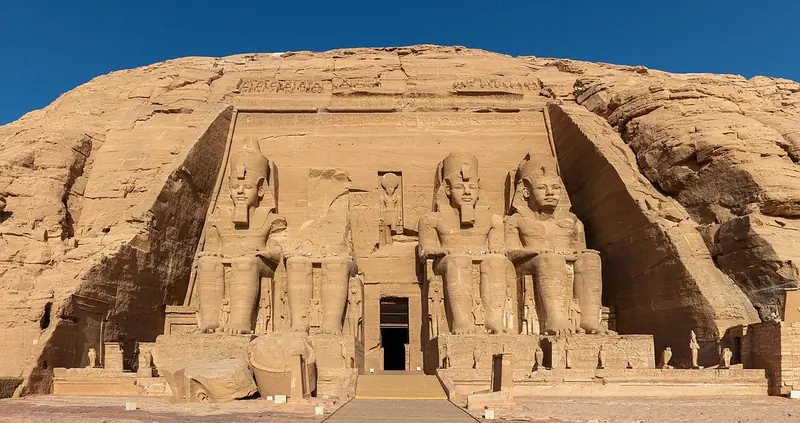 Ancient Egyptian8 stops · 13th century BCE
Abu Simbel audio guide
Ramesses II’s colossal temple façade, the Temple of Nefertari, and how both were rescued from the waters of Lake Nasser.
Every guide, in every country
Samarra Archaeological City and every other guide we publish, including future ones. One payment, no subscription.