Before you start
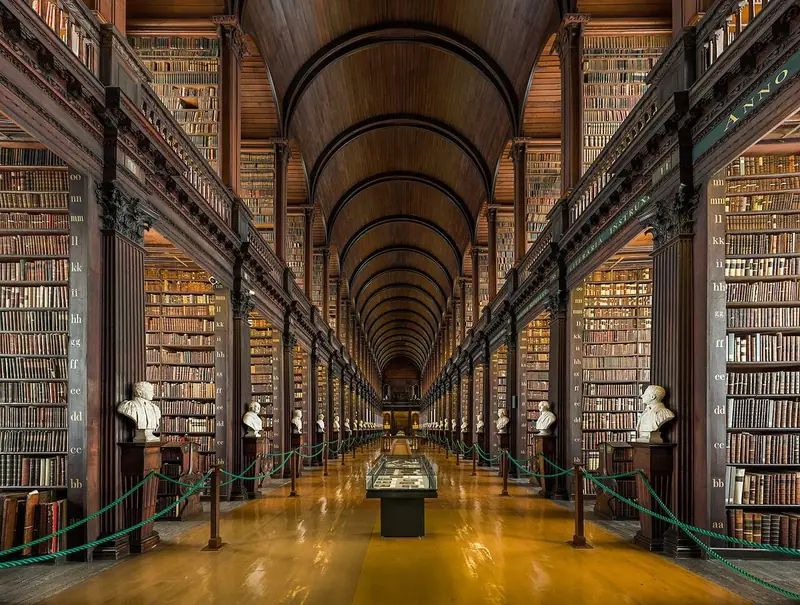
Trinity College Dublin, Ireland’s oldest university, stands in the heart of the city, its cobbled squares and grand stone buildings a calm world behind the busy streets of College Green. It is home to the Book of Kells, the most famous illuminated manuscript in the world, and to the Long Room of the Old Library, one of the great library halls of Europe. This guide leads from the Front Gate through the college squares to the Old Library, and ends with a modern sculpture outside. Entry to the Book of Kells and the Old Library is by timed ticket, best booked online, while the college grounds are free to walk through. Photography is not allowed in the room where the Book of Kells is shown, and remember that this is a working university, so respect students and staff.
Use it as a self-guided tour of Trinity College Dublin: 8 stops in visit order, each played when you’re ready, at your own pace.
 Free preview · Stop 1
The Front Gate
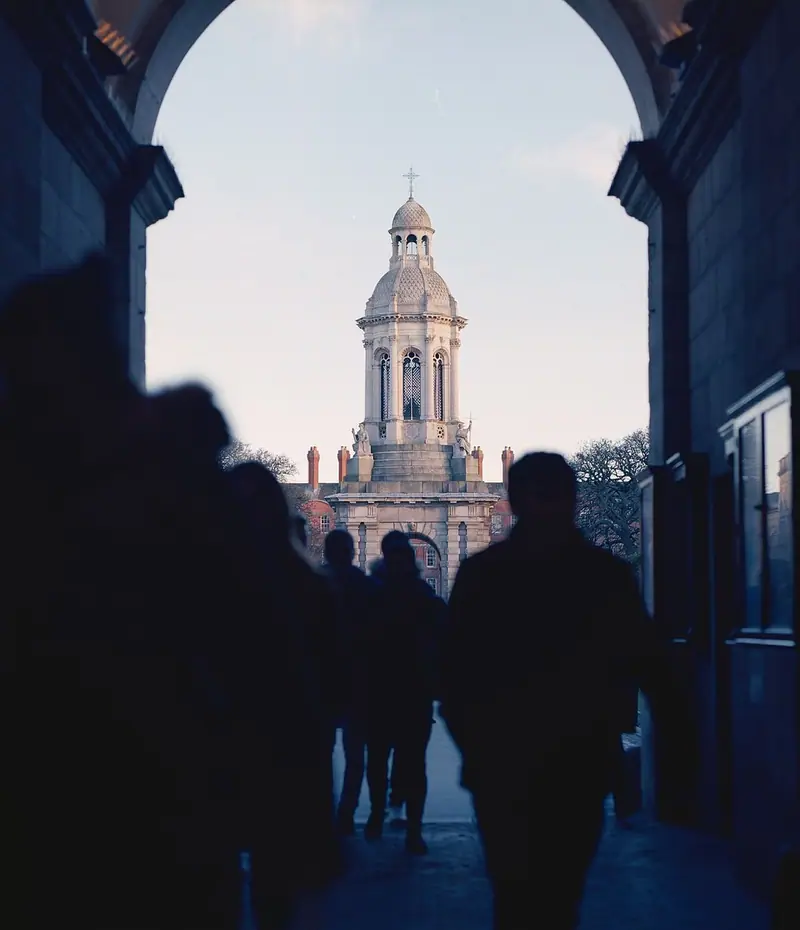
Begin on College Green, facing the long stone front of the college, built in the eighteenth century, with its columns and central pediment. On either side of the gate stand bronze statues of two famous former students, the writer Oliver Goldsmith and the statesman and philosopher Edmund Burke, both by the Irish sculptor John Henry Foley. Walk through the Front Gate and the dark, echoing passage beyond it, and notice how the noise of the city falls away. Other famous students of Trinity include Jonathan Swift, Oscar Wilde, Bram Stoker and Samuel Beckett. As you emerge, the view opens on to the great cobbled square in front of you, with the bell tower of the Campanile rising in the centre. Pause here, under the arch, to take in one of the finest views in Dublin.
Photo: Rob Hurson · CC BY-SA 4.0 · Wikimedia Commons
What to see at Trinity College Dublin: 8 stops, in visit order
- 01
 The Front GateThrough the ArchFree preview
- 02
 Parliament SquareThe Chapel and the Exam HallIn the guide
- 03
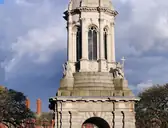 The CampanileThe Bell TowerIn the guide
- 04
 The RubricsThe Oldest BuildingIn the guide
- 05
 The Old LibraryBurgh’s MasterpieceIn the guide
- 06
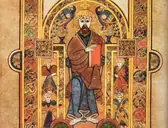 The Book of KellsIreland’s Greatest TreasureIn the guide
- 07
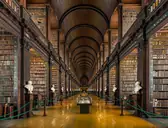 The Long RoomA Cathedral of BooksIn the guide
- 08
 Sphere Within SphereA Modern EndingIn the guide
Site map of Trinity College Dublin
History of Trinity College Dublin
Trinity College was founded in 1592 by a royal charter of Queen Elizabeth I, in the Tudor Kingdom of Ireland, on the site of the former Priory of All Hallows, closed by her father, Henry VIII. For more than two centuries it was the university of the Protestant ruling class, and the Irish Parliament, which met across College Green, gave generous grants for its eighteenth-century buildings. The Old Library was built between 1712 and 1732, and the great squares took shape over the rest of the century. The college received the Book of Kells in 1661, and today, in the Republic of Ireland, it is a university open to all.
Trinity College Dublin guide: questions
How many stops does the Trinity College Dublin guide have?
8 stops, in visit order: 1. The Front Gate; 2. Parliament Square; 3. The Campanile; 4. The Rubrics; 5. The Old Library; 6. The Book of Kells; 7. The Long Room; 8. Sphere Within Sphere.
Can I do a self-guided tour of Trinity College Dublin with this guide?
Yes. The guide is made for a self-guided tour: 8 stops in visit order, each with a photo, a story and a voice, so you can explore Trinity College Dublin at your own pace, without joining a group. Download it before you go and it works offline.
How long is each guide?
The 8 stops add up to about 5 minutes of listening in total. You play each stop when you’re ready, so you can go at your own pace.
Does the guide work offline?
Yes, once it’s downloaded. The guide is a single self-contained web page (about 8.0 MB) with the photos, text and audio built in. Download it to your phone before you go (Wi-Fi is best); after that it opens in any modern browser on iPhone or Android, with no app, account or mobile signal needed.
Does it use GPS or need my location?
No. The guide doesn’t use GPS and doesn’t know where you are: you play each stop when you reach it. It works on iPhone and Android in any modern browser, and it’s in English.
What’s included?
One self-contained HTML guide: 8 stops in visit order, each with a photo, text and a voice, plus the story of who built the site.
Who built Trinity College Dublin?
Trinity College was founded in 1592 by a royal charter of Queen Elizabeth I, in the Tudor Kingdom of Ireland, on the site of the former Priory of All Hallows, closed by her father, Henry VIII. For more than two centuries it was the university of the Protestant ruling class, and the Irish Parliament, which met across College Green, gave generous grants for its eighteenth-century buildings.
Where is Trinity College Dublin?
Trinity College Dublin, Ireland’s oldest university, stands in the heart of the city, its cobbled squares and grand stone buildings a calm world behind the busy streets of College Green.
Is there a free audio guide to Trinity College Dublin?
The first stop, The Front Gate, is free to read and hear on this page, so you can try the Trinity College Dublin audio tour before you buy. The full guide, with all 8 stops, is a one-off purchase: download it once and it’s yours to keep, working offline.
Is the Trinity College Dublin guide worth it?
If you’d like to know what you’re looking at, yes. For $10 you get 8 stops in visit order, each with a photo, a short history and a voice you play when you’re ready, plus a site map of the stops, and about 5 minutes of listening in all. It’s short on purpose, so you spend your time looking, not listening. It’s yours to keep, works offline and needs no app. The first stop is free on this page, so you can try it before you buy. If you’d like hours of detail, a guided tour will go deeper.
Audio guide or guided tour?
It depends how you like to visit. This guide lets you explore Trinity College Dublin at your own pace, at any time, for a one-off price. A guided tour gives you a live expert you can ask questions, but at fixed times and usually for a higher price. Many people use both: a tour for the big picture, and the guide to read beforehand or to revisit the stops in their own time.
Is this the official Trinity College Dublin guide?
No. It’s an independent guide by The Historian Guide, not affiliated with or endorsed by the operator of Trinity College Dublin. For tickets and opening hours, check the official site operator before you go.
Does the guide include entry tickets or opening hours?
No. The guide is a digital companion only. Admission to Trinity College Dublin is separate, so check the official site operator for current tickets and opening hours before you go.
- Stop 1 · The Front Gate: Rob Hurson · CC BY-SA 4.0 · Wikimedia Commons · resized
- Stop 2 · Parliament Square: Andrew Parnell · CC BY 2.0 · Wikimedia Commons · resized
- Stop 3 · The Campanile: Bjørn Christian Tørrissen · CC BY-SA 3.0 · Wikimedia Commons · resized
- Stop 4 · The Rubrics: J.-H. Janßen · CC BY-SA 3.0 · Wikimedia Commons · resized
- Stop 5 · The Old Library: Barcex · CC BY-SA 3.0 · Wikimedia Commons · resized
- Stop 6 · The Book of Kells: Unattributed · Public domain · Wikimedia Commons · resized
- Stop 7 · The Long Room (also the cover): Diliff · CC BY-SA 4.0 · Wikimedia Commons · resized
- Stop 8 · Sphere Within Sphere: Sonse · CC BY 2.0 · Wikimedia Commons · resized


All photographs from Wikimedia Commons under the licences shown.
More guides in Ireland
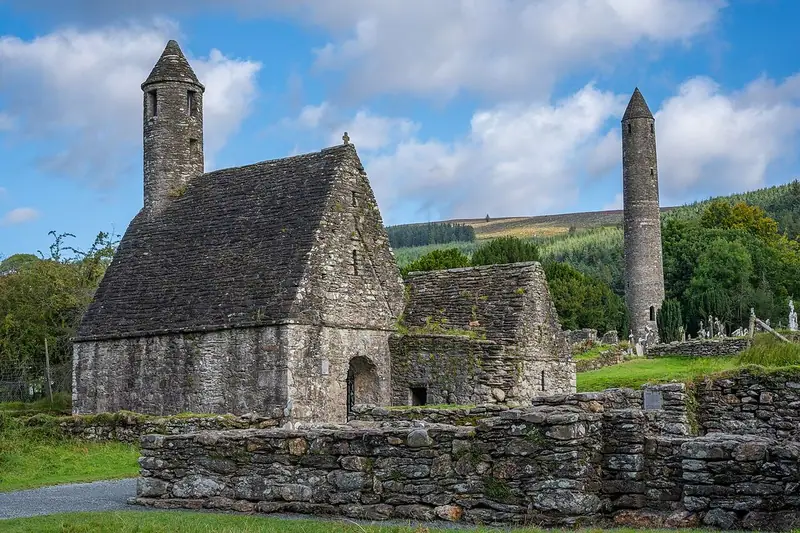 Early Christian Irish8 stops · 6th–14th century CE
Glendalough audio guide
Saint Kevin’s valley of the two lakes in the Wicklow Mountains, with the round tower, stone churches and crosses of his monastery.
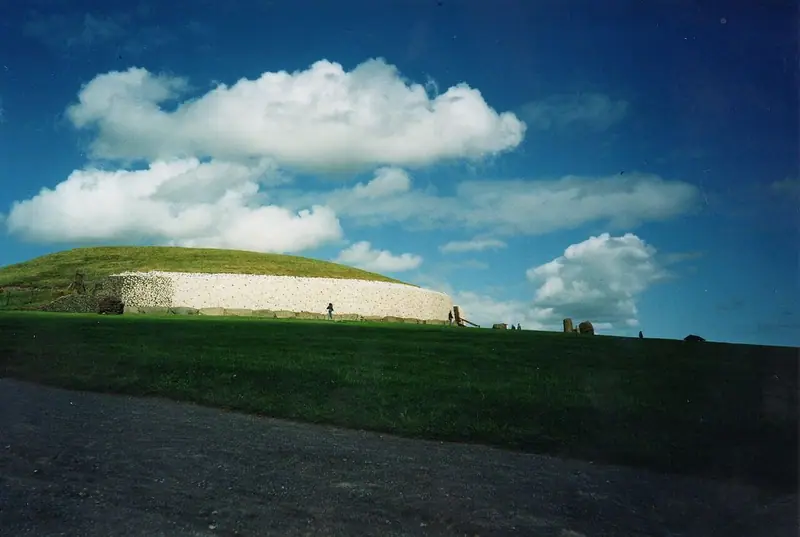 Neolithic8 stops · c. 3100 BCE
Newgrange audio guide
A great Neolithic tomb above the Boyne, older than Stonehenge: its quartz façade, carved entrance stone and passage to the chamber.
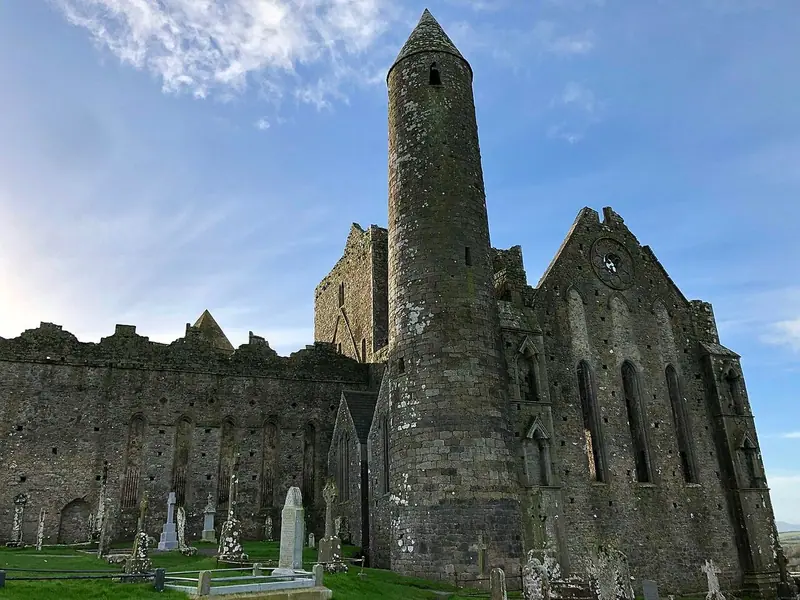 Medieval7 stops · 12th–13th century CE
Rock of Cashel audio guide
Climb to the seat of the kings of Munster, crowned by a round tower, Cormac’s Romanesque chapel and a roofless Gothic cathedral.
Every guide, in every country
Trinity College Dublin and every other guide we publish, including future ones. One payment, no subscription.