Before you start
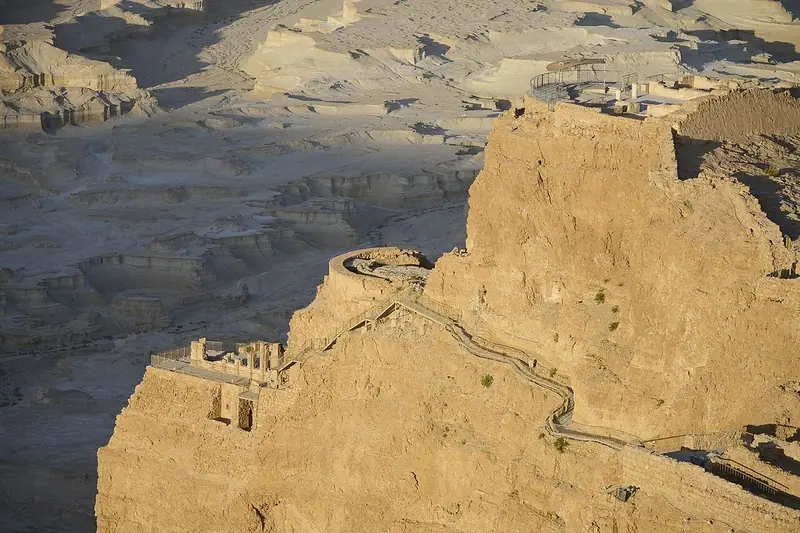
Masada is a fortress on top of an isolated rock plateau in the Judaean Desert, overlooking the western shore of the Dead Sea. Its cliffs fall about four hundred metres to the east, and the flat summit measures roughly five hundred and fifty by two hundred and seventy metres. King Herod the Great built palaces here, and in 73 or 74 CE it was the last stronghold of Jewish rebels against Rome. In 2001 UNESCO inscribed Masada as a World Heritage Site, above all for the Roman siege works that surround it, the most complete of their kind to survive. You can reach the summit by cable car, or on foot by the steep Snake Path from the east or the Ramp Path from the west. This route starts at the Snake Path Gate on the eastern edge, explores the northern palaces, and returns by the western side of the plateau.
Use it as a self-guided tour of Masada: 8 stops in visit order, each played when you’re ready, at your own pace.
 Free preview · Stop 1
The Snake Path Gate
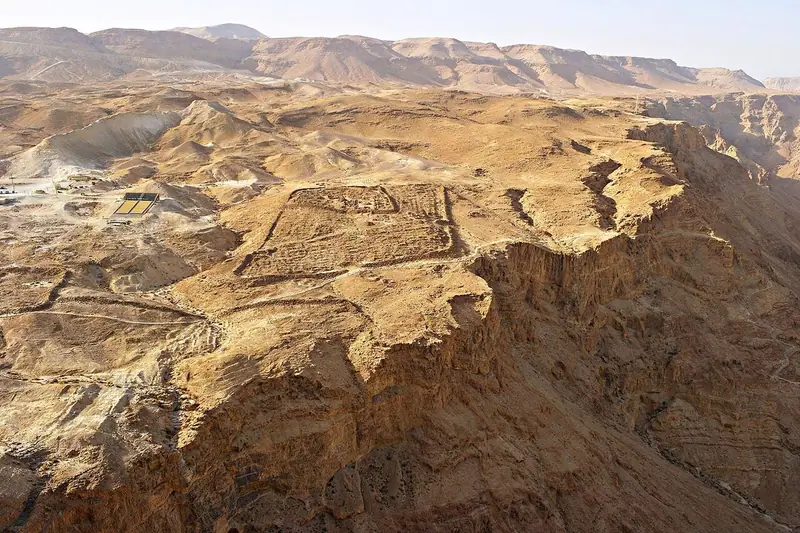
Begin at the Snake Path Gate, on the eastern edge of the summit, close to the top station of the cable car. Herod enclosed the plateau with a casemate wall about thirteen hundred metres long, a double wall divided into rooms, strengthened by towers. Walk to the edge and look down. Below, the remains of a low wall run around the foot of the mountain: this is the circumvallation wall built by the Roman army to stop anyone escaping. Look for the square outlines of Roman camps beside it; eight siege camps survive around Masada. Beyond them stretches the Dead Sea, with the mountains of Jordan on the far shore. As you explore, notice the black line painted on many walls. It marks the level of the original remains; the stones above it were added in modern restoration. Then walk north towards the storerooms.
Photo: Wei Ya · CC BY-SA 4.0 · Wikimedia Commons
What to see at Masada: 8 stops, in visit order
- 01
 The Snake Path GateThe view of the Roman campsFree preview
- 02
 The StoreroomsSupplies for a desert fortressIn the guide
- 03
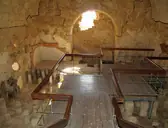 The Large BathhouseRoman comfort in the desertIn the guide
- 04
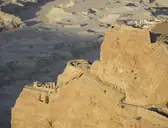 The Northern PalaceA palace on the cliff edgeIn the guide
- 05
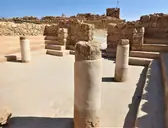 The SynagogueOne of the oldest in the worldIn the guide
- 06
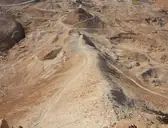 The Roman Siege RampThe way in for the legionIn the guide
- 07
 The Byzantine ChurchMonks on the mountainIn the guide
- 08
 The Western PalaceThe king’s residenceIn the guide
Site map of Masada
History of Masada
Masada’s great buildings were the work of Herod the Great, who ruled Judaea as a client king of Rome from 37 to 4 BCE. According to the historian Josephus, the site had first been fortified by the Hasmonean ruler Alexander Jannaeus, though no Hasmonean buildings have been found. Herod turned it into a desert refuge in three building phases, from about 35 to 15 BCE, adding palaces, storerooms, bathhouses, a casemate wall and great cisterns. In 66 CE, at the start of the First Jewish–Roman War, Jewish rebels known as the Sicarii seized the fortress. After the fall of Jerusalem, it held out until the Roman Tenth Legion besieged and took it. Monks lived here in the Byzantine period, and in 1963 to 1965 the archaeologist Yigael Yadin led major excavations.
Masada guide: questions
How many stops does the Masada guide have?
8 stops, in visit order: 1. The Snake Path Gate; 2. The Storerooms; 3. The Large Bathhouse; 4. The Northern Palace; 5. The Synagogue; 6. The Roman Siege Ramp; 7. The Byzantine Church; 8. The Western Palace.
Can I do a self-guided tour of Masada with this guide?
Yes. The guide is made for a self-guided tour: 8 stops in visit order, each with a photo, a story and a voice, so you can explore Masada at your own pace, without joining a group. Download it before you go and it works offline.
How long is each guide?
The 8 stops add up to about 6 minutes of listening in total. You play each stop when you’re ready, so you can go at your own pace.
Does the guide work offline?
Yes, once it’s downloaded. The guide is a single self-contained web page (about 7.6 MB) with the photos, text and audio built in. Download it to your phone before you go (Wi-Fi is best); after that it opens in any modern browser on iPhone or Android, with no app, account or mobile signal needed.
Does it use GPS or need my location?
No. The guide doesn’t use GPS and doesn’t know where you are: you play each stop when you reach it. It works on iPhone and Android in any modern browser, and it’s in English.
What’s included?
One self-contained HTML guide: 8 stops in visit order, each with a photo, text and a voice, plus the story of who built the site.
Who built Masada?
Masada’s great buildings were the work of Herod the Great, who ruled Judaea as a client king of Rome from 37 to 4 BCE. According to the historian Josephus, the site had first been fortified by the Hasmonean ruler Alexander Jannaeus, though no Hasmonean buildings have been found.
Where is Masada?
Masada is a fortress on top of an isolated rock plateau in the Judaean Desert, overlooking the western shore of the Dead Sea.
Is there a free audio guide to Masada?
The first stop, The Snake Path Gate, is free to read and hear on this page, so you can try the Masada audio tour before you buy. The full guide, with all 8 stops, is a one-off purchase: download it once and it’s yours to keep, working offline.
Is the Masada guide worth it?
If you’d like to know what you’re looking at, yes. For $10 you get 8 stops in visit order, each with a photo, a short history and a voice you play when you’re ready, plus a site map of the stops, and about 6 minutes of listening in all. It’s short on purpose, so you spend your time looking, not listening. It’s yours to keep, works offline and needs no app. The first stop is free on this page, so you can try it before you buy. If you’d like hours of detail, a guided tour will go deeper.
Audio guide or guided tour?
It depends how you like to visit. This guide lets you explore Masada at your own pace, at any time, for a one-off price. A guided tour gives you a live expert you can ask questions, but at fixed times and usually for a higher price. Many people use both: a tour for the big picture, and the guide to read beforehand or to revisit the stops in their own time.
Is this the official Masada guide?
No. It’s an independent guide by The Historian Guide, not affiliated with or endorsed by the operator of Masada. For tickets and opening hours, check the official site operator before you go.
Does the guide include entry tickets or opening hours?
No. The guide is a digital companion only. Admission to Masada is separate, so check the official site operator for current tickets and opening hours before you go.
- Stop 1 · The Snake Path Gate: Wei Ya · CC BY-SA 4.0 · Wikimedia Commons · resized
- Stop 2 · The Storerooms: Tiia Monto · CC BY-SA 3.0 · Wikimedia Commons · resized
- Stop 3 · The Large Bathhouse: David Shankbone · CC BY-SA 3.0 · Wikimedia Commons · resized
- Stop 4 · The Northern Palace (also the cover): Andrew Shiva / Wikipedia · CC BY-SA 4.0 · Wikimedia Commons · resized
- Stop 5 · The Synagogue: Chris06 · CC BY-SA 4.0 · Wikimedia Commons · resized
- Stop 6 · The Roman Siege Ramp: Carole Raddato from FRANKFURT, Germany · CC BY-SA 2.0 · Wikimedia Commons · resized
- Stop 7 · The Byzantine Church: Radosław Botev · CC BY 3.0 pl · Wikimedia Commons · resized
- Stop 8 · The Western Palace: Carole Raddato from FRANKFURT, Germany · CC BY-SA 2.0 · Wikimedia Commons · resized


All photographs from Wikimedia Commons under the licences shown.
More guides in Israel
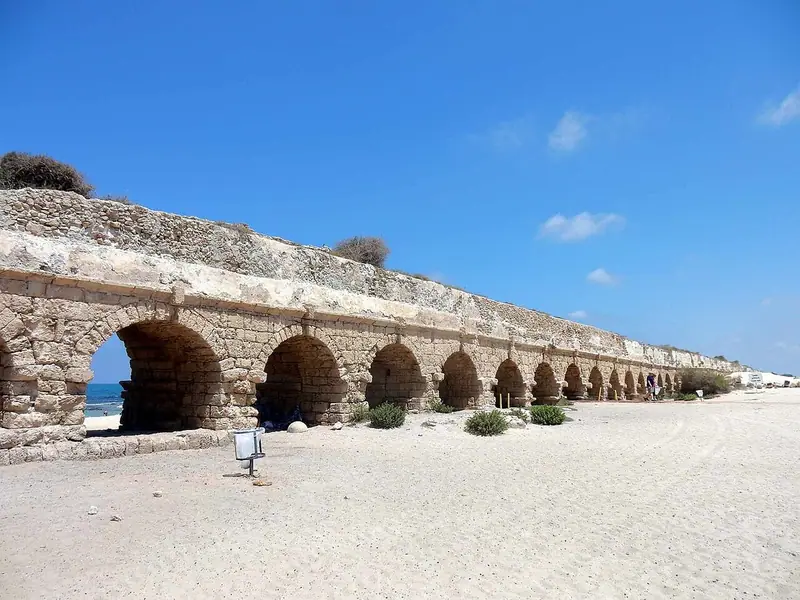 Roman6 stops · 22 BCE – 640 CE
Caesarea audio guide
Explore Herod the Great’s showpiece port on the Mediterranean, from the Roman theatre and his promontory palace to the Crusader walls and the high-level aqueduct.
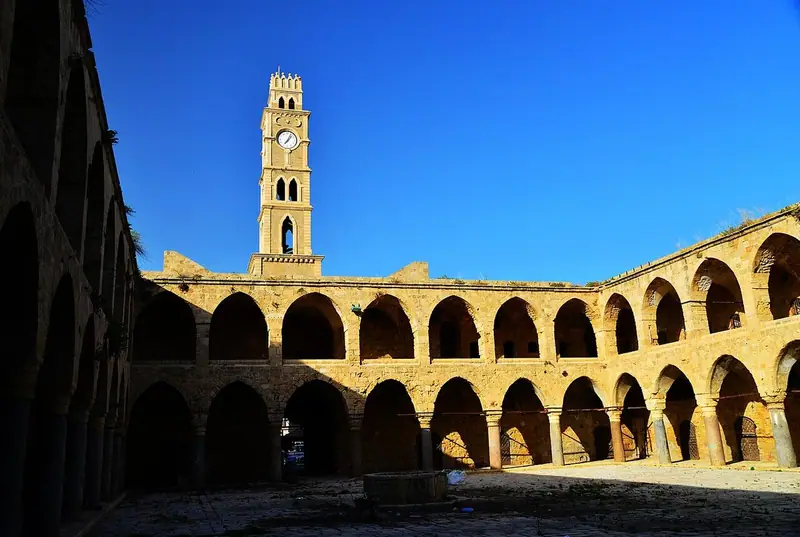 Crusader6 stops · 1104–19th century CE
Old City of Acre audio guide
Explore a walled Ottoman port built over an intact Crusader town, from the Hospitaller Fortress to the Templars’ Tunnel.
 Ancient Egyptian8 stops · 13th century BCE
Abu Simbel audio guide
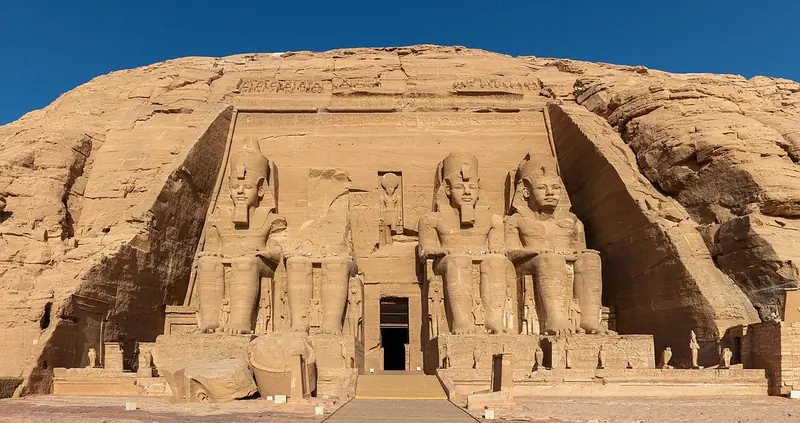
Ramesses II’s colossal temple façade, the Temple of Nefertari, and how both were rescued from the waters of Lake Nasser.
Every guide, in every country
Masada and every other guide we publish, including future ones. One payment, no subscription.