Before you start
The Amalfi Coast is famous for its cliffs, lemon terraces and towns stacked above the sea, but behind the views lies a remarkable history. Roman aristocrats built seaside villas here, and in the early Middle Ages the little town of Amalfi became the capital of a maritime republic whose ships traded across the Mediterranean, from Constantinople to North Africa. Its merchants built churches, palaces and towers that still stand. This guide follows the coast road from west to east, from Positano to Amalfi, up to the hill town of Ravello and down to Minori and Maiori, about thirty kilometres in all. The road is narrow and slow, and in summer it is very busy, so allow a full day and consider using the buses and the ferries that link the towns.
Use it as a self-guided tour of the Amalfi Coast: 5 stops in visit order, each played when you’re ready, at your own pace.
 Free preview · Stop 1
Positano
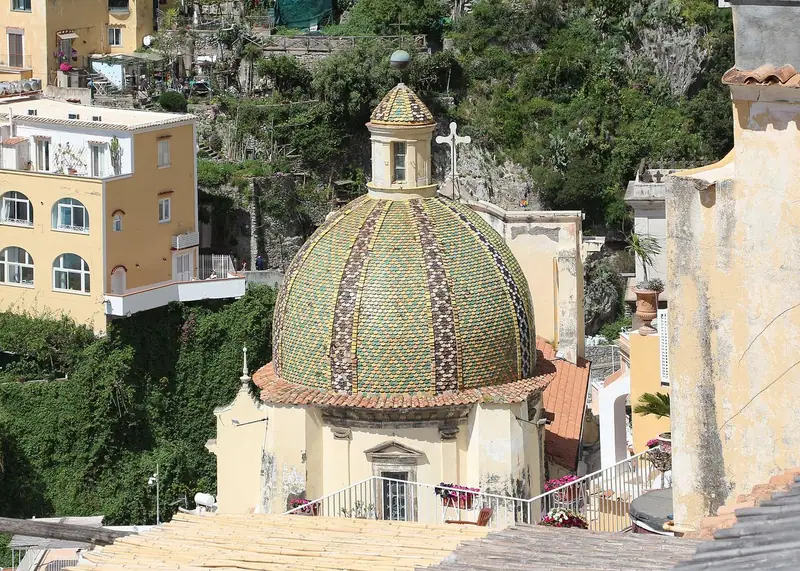
Positano tumbles down a steep valley to the sea, its houses linked by long stairways. Wealthy Romans built seaside villas here from the first century BCE, and beneath the church of Santa Maria Assunta, the church with the majolica-tiled dome on the beach, excavations since 2003 have uncovered part of a Roman villa buried by the eruption of Vesuvius in 79 CE. Its painted walls, with brilliant colours and mythological scenes, can be visited in the underground museum opened in 2018. In the Middle Ages Positano was part of the republic of Amalfi, and its own merchants traded across the Mediterranean. The church keeps a Byzantine icon of the Black Madonna from the thirteenth century. Local legend says that pirates were carrying it by sea when a storm stopped their ship, and a voice was heard saying ‘Posa, posa’, set it down, so they brought it ashore and the storm ceased. By the early twentieth century Positano was a poor fishing village. In 1953 the American writer John Steinbeck published an essay about the town, and visitors began to come. From Positano, follow the coast road east to Amalfi.
Photo: Bernard Gagnon · CC BY 4.0 · Wikimedia Commons
What to see at the Amalfi Coast: 5 stops, in visit order
- 01
 PositanoA Roman villa beneath the churchFree preview
- 02
 Amalfi CathedralThe capital of the republicIn the guide
- 03
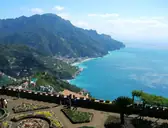 RavelloVilla Rufolo and the cathedralIn the guide
- 04
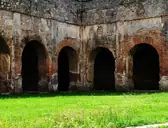 The Roman villa at MinoriA seaside palace of the first centuryIn the guide
- 05
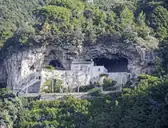 Maiori and Santa Maria de OleariaThe hermits’ abbeyIn the guide
Site map of the Amalfi Coast
History of the Amalfi Coast
Romans built luxury villas along this coast from the first century BCE. After the fall of Rome, the towns of the coast came under the Byzantine Empire, and in 839 Amalfi broke away to become a self-governing republic, electing its first duke in 958. With almost no farmland, its people turned to the sea. Their ships carried timber, grain, silks and spices between Italy, Byzantium and the Islamic world, and Amalfi had trading colonies in Constantinople and the Holy Land. The Amalfi Tables, a code of maritime law, were long used by sailors across the Mediterranean, and local tradition credits an Amalfitan with bringing the mariner’s compass to Europe. In 1073 the Normans took the city, in 1131 it was conquered by King Roger the Second of Sicily, and soon afterwards Pisan raiders sacked it.
The full history continues in the guide.
The Amalfi Coast guide: questions
How many stops does the Amalfi Coast guide have?
5 stops, in visit order: 1. Positano; 2. Amalfi Cathedral; 3. Ravello; 4. The Roman villa at Minori; 5. Maiori and Santa Maria de Olearia.
Can I do a self-guided tour of the Amalfi Coast with this guide?
Yes. The guide is made for a self-guided tour: 5 stops in visit order, each with a photo, a story and a voice, so you can explore the Amalfi Coast at your own pace, without joining a group. Download it before you go and it works offline.
How long is each guide?
The 5 stops add up to about 5 minutes of listening in total. You play each stop when you’re ready, so you can go at your own pace.
Does the guide work offline?
Yes, once it’s downloaded. The guide is a single self-contained web page (about 6.7 MB) with the photos, text and audio built in. Download it to your phone before you go (Wi-Fi is best); after that it opens in any modern browser on iPhone or Android, with no app, account or mobile signal needed.
Does it use GPS or need my location?
No. The guide doesn’t use GPS and doesn’t know where you are: you play each stop when you reach it. It works on iPhone and Android in any modern browser, and it’s in English.
What’s included?
One self-contained HTML guide: 5 stops in visit order, each with a photo, text and a voice, plus the story of who built the site.
Who built the Amalfi Coast?
Romans built luxury villas along this coast from the first century BCE. After the fall of Rome, the towns of the coast came under the Byzantine Empire, and in 839 Amalfi broke away to become a self-governing republic, electing its first duke in 958.
Where is the Amalfi Coast?
The Amalfi Coast is famous for its cliffs, lemon terraces and towns stacked above the sea, but behind the views lies a remarkable history.
Is there a free audio guide to the Amalfi Coast?
The first stop, Positano, is free to read and hear on this page, so you can try the Amalfi Coast audio tour before you buy. The full guide, with all 5 stops, is a one-off purchase: download it once and it’s yours to keep, working offline.
Is the Amalfi Coast guide worth it?
If you’d like to know what you’re looking at, yes. For $10 you get 5 stops in visit order, each with a photo, a short history and a voice you play when you’re ready, plus a site map of the stops, and about 5 minutes of listening in all. It’s short on purpose, so you spend your time looking, not listening. It’s yours to keep, works offline and needs no app. The first stop is free on this page, so you can try it before you buy. If you’d like hours of detail, a guided tour will go deeper.
Audio guide or guided tour?
It depends how you like to visit. This guide lets you explore the Amalfi Coast at your own pace, at any time, for a one-off price. A guided tour gives you a live expert you can ask questions, but at fixed times and usually for a higher price. Many people use both: a tour for the big picture, and the guide to read beforehand or to revisit the stops in their own time.
Is this the official Amalfi Coast guide?
No. It’s an independent guide by The Historian Guide, not affiliated with or endorsed by the operator of the Amalfi Coast. For tickets and opening hours, check the official site operator before you go.
Does the guide include entry tickets or opening hours?
No. The guide is a digital companion only. Admission to the Amalfi Coast is separate, so check the official site operator for current tickets and opening hours before you go.
- Stop 1 · Positano: Bernard Gagnon · CC BY 4.0 · Wikimedia Commons · resized
- Stop 2 · Amalfi Cathedral: Bernard Gagnon · CC BY 4.0 · Wikimedia Commons · resized
- Stop 3 · Ravello: Mentnafunangann · CC BY-SA 3.0 · Wikimedia Commons · resized
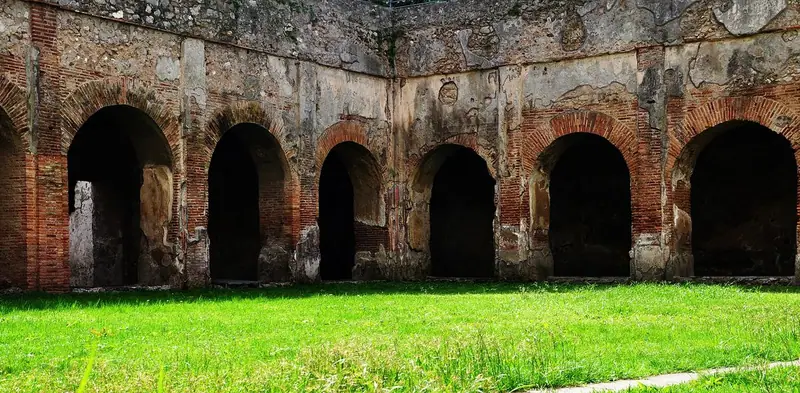
- Stop 4 · The Roman villa at Minori (also the cover): Anna Socci · CC BY-SA 3.0 · Wikimedia Commons · resized
- Stop 5 · Maiori and Santa Maria de Olearia: © Ra Boe / Wikipedia · CC BY-SA 3.0 de · Wikimedia Commons · resized


All photographs from Wikimedia Commons under the licences shown.
More guides in Italy
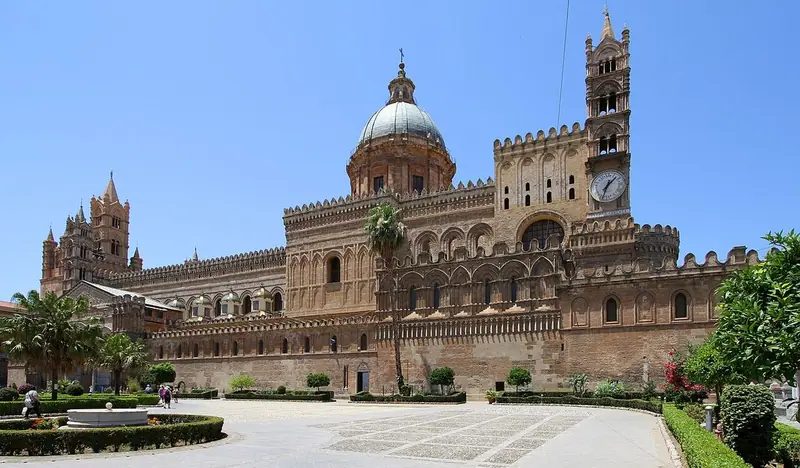 Arab-Norman11 stops · 1130 – 1194 (Norman kings of Sicily)
Arab-Norman Palermo, Monreale and Cefalù audio guide
Norman kings, Byzantine mosaicists and Arab craftsmen together: the Palatine Chapel, red-domed churches, the Zisa palace and the golden cathedrals of Monreale and Cefalù.
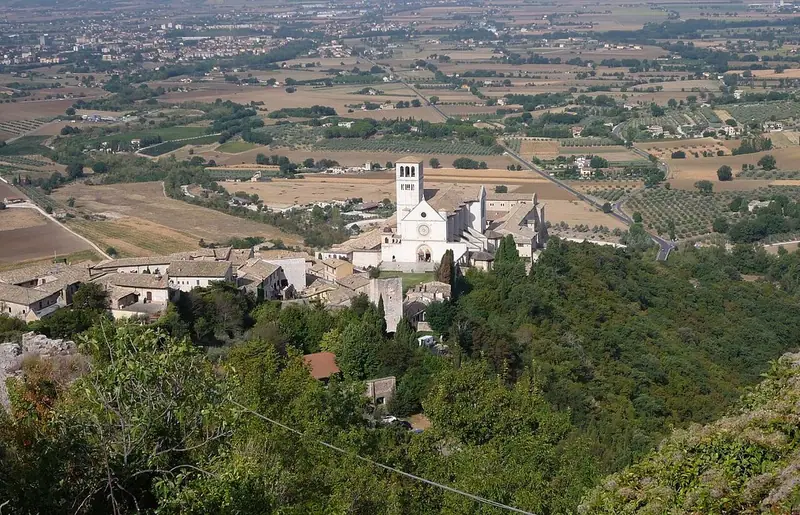 Franciscan10 stops · 1182 – 1253 (lives of Francis and Clare; basilica begun 1228)
Assisi audio guide
The hill town of Saint Francis: the double basilica with Giotto’s frescoes, his tomb, Santa Chiara, San Damiano and a Roman temple on the main square.
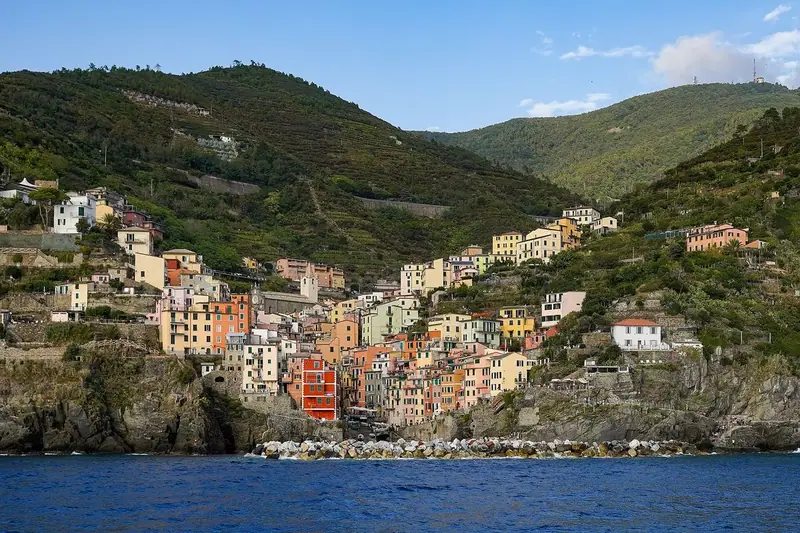 Republic of Genoa6 stops · 1080–1870s
Cinque Terre audio guide
From Monterosso to Riomaggiore through the five terraced villages of the Ligurian coast, ending at the Genoese sea fortress of Porto Venere.
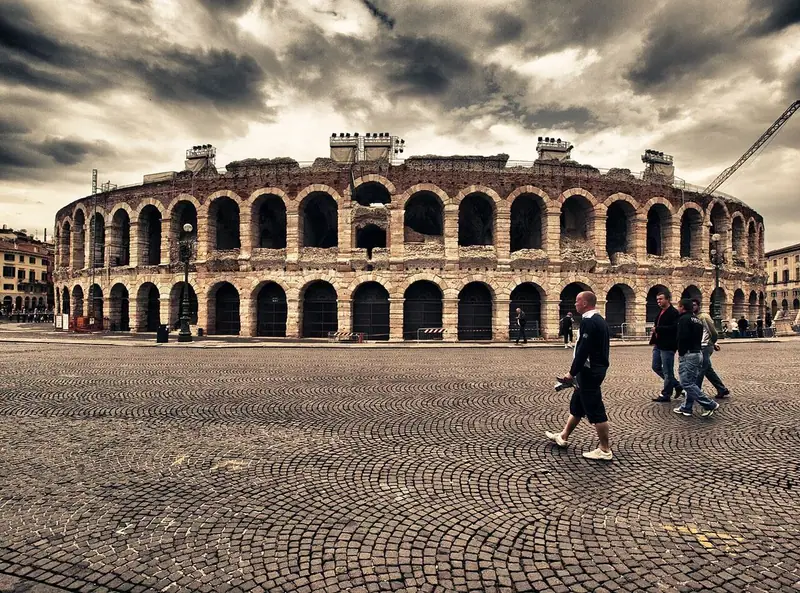 Roman11 stops · 1st c. BCE – 1797 (Roman colony to the end of Venetian rule)
City of Verona audio guide
A Roman arena still used for opera, the towers and tombs of the della Scala lords, and the Romanesque splendour of San Zeno, in a bend of the Adige.
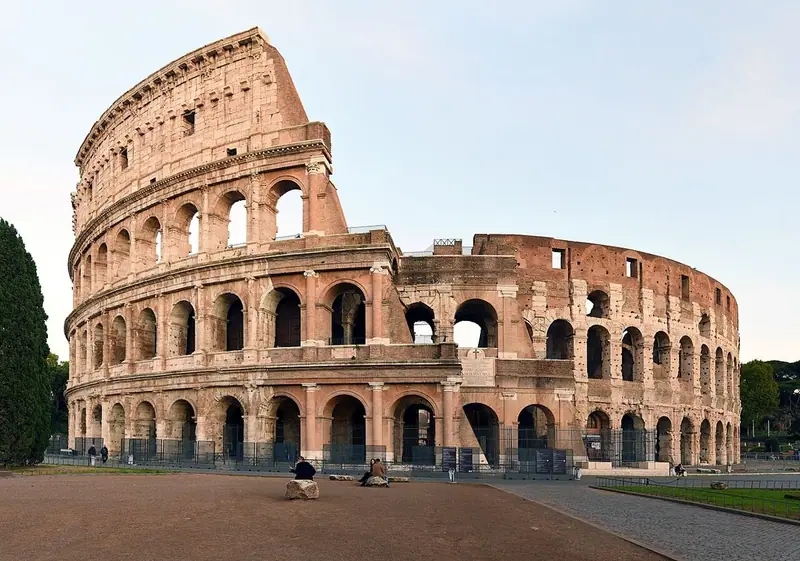 Roman7 stops · 70–80 CE
Colosseum audio guide
From the outer façade into the corridors and seating, then down to the arena floor and the hypogeum beneath it.
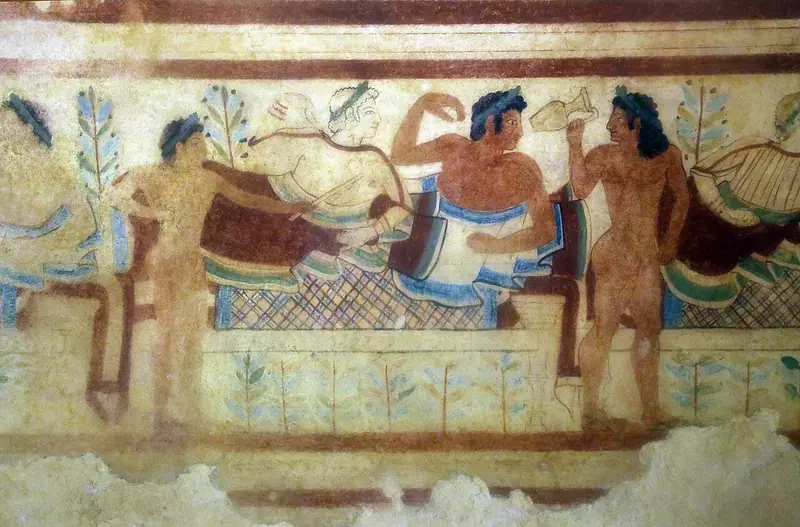 Etruscan9 stops · 9th – 3rd century BCE
Etruscan Necropolises of Cerveteri and Tarquinia audio guide
The Etruscan cities of the dead: the tumuli and tomb streets of the Banditaccia at Cerveteri, the Tomb of the Reliefs, and the painted tombs of Tarquinia’s Monterozzi necropolis.
Every guide, in every country
The Amalfi Coast and every other guide we publish, including future ones. One payment, no subscription.