Before you start
Naples is one of the oldest continuously inhabited cities in Europe. Greek settlers from Cumae founded Parthenope on the Pizzofalcone hill, and around 470 BCE a new city, Neapolis, was laid out beside it on a regular grid of streets that still shapes the old centre today. Over the following two and a half thousand years Romans, Byzantines, Normans, Swabians, Angevins, Aragonese, Spanish viceroys and Bourbons each left their mark, so that Gothic churches stand on Roman markets and Baroque chapels hide Greek walls. UNESCO inscribed the Historic Centre of Naples as a World Heritage Site in 1995. This guide follows the ancient main streets from the Gesù Nuovo to the cathedral, then goes down to the royal city by the sea. The old centre is crowded, lively and very much lived in, so keep your belongings close and take your time.
Use it as a self-guided tour of the Historic Centre of Naples: 11 stops in visit order, each played when you’re ready, at your own pace.
 Free preview · Stop 1
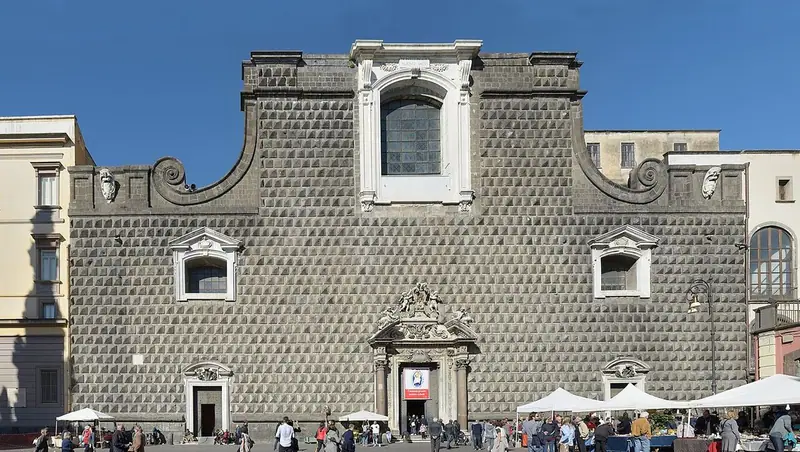
The Gesù Nuovo
Begin in the Piazza del Gesù Nuovo, before a façade unlike any other church front in Italy. Its grey stone is cut into rows of sharp diamond points, because the building began life in 1470 as the palace of Roberto Sanseverino, Prince of Salerno. After the family fell from favour, the palace was sold to the Jesuits in the 1580s, and between 1584 and 1601 the architect Giuseppe Valeriano turned it into a church, keeping the old front. Behind it lies one of the richest Baroque interiors in Naples, with frescoes, coloured marbles and a great painted entrance wall. The church also holds the tomb of Saint Giuseppe Moscati, a doctor who cared for the poor and was canonised in 1987. In the middle of the square rises the eighteenth-century spire of the Immaculate Virgin, crowded with saints and angels.
Photo: Wolfgang Moroder · CC BY-SA 3.0 · Wikimedia Commons
What to see at the Historic Centre of Naples: 11 stops, in visit order
- 01
 The Gesù NuovoA palace turned churchFree preview
- 02
 Santa ChiaraThe queen’s Gothic churchIn the guide
- 03
 Spaccanapoli and San Domenico MaggioreThe street that splits NaplesIn the guide
- 04
 The Sansevero ChapelThe Veiled ChristIn the guide
- 05
 Via San Gregorio ArmenoThe street of the cribsIn the guide
- 06
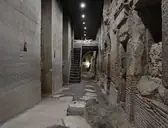 San Lorenzo MaggioreA market beneath a churchIn the guide
- 07
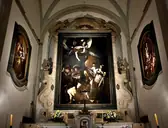 Pio Monte della MisericordiaCaravaggio’s Seven Works of MercyIn the guide
- 08
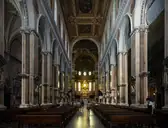 Naples CathedralThe blood of San GennaroIn the guide
- 09
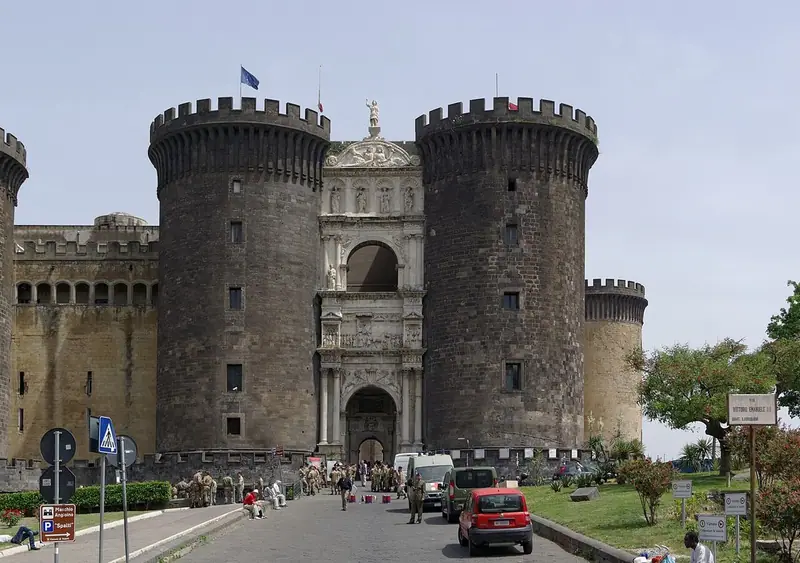
 Castel NuovoThe Angevin keepIn the guide
- 10
 Piazza del Plebiscito and the Royal PalaceThe city of kingsIn the guide
- 11
 Castel dell’OvoThe egg castleIn the guide
Site map of the Historic Centre of Naples
History of the Historic Centre of Naples
Naples was founded by Greeks and remained proudly Greek in language and custom long after it allied with Rome in 326 BCE; the Romans valued it as a place of learning and leisure. In the sixth century it passed to the Byzantine Empire and became an independent duchy, until the Normans absorbed it into their Kingdom of Sicily in 1139. After Charles I of Anjou won the crown in 1266 he made Naples his capital, and the Angevin kings filled it with great Gothic churches. The Aragonese took the city in 1442, and from 1503 it was ruled for two centuries by viceroys of the Spanish crown, when it grew into one of the largest cities in Europe. From 1734 the Bourbons made it the capital of an independent kingdom, which ended with the plebiscite of 1860 that joined Naples to a united Italy. Each of these rulers built on top of what came before, which is why the city reads like a book of layers.
Historic Centre of Naples guide: questions
How many stops does the Historic Centre of Naples guide have?
11 stops, in visit order: 1. The Gesù Nuovo; 2. Santa Chiara; 3. Spaccanapoli and San Domenico Maggiore; 4. The Sansevero Chapel; 5. Via San Gregorio Armeno; 6. San Lorenzo Maggiore; 7. Pio Monte della Misericordia; 8. Naples Cathedral; 9. Castel Nuovo; 10. Piazza del Plebiscito and the Royal Palace; 11. Castel dell’Ovo.
Can I do a self-guided tour of the Historic Centre of Naples with this guide?
Yes. The guide is made for a self-guided tour: 11 stops in visit order, each with a photo, a story and a voice, so you can explore the Historic Centre of Naples at your own pace, without joining a group. Download it before you go and it works offline.
How long do you need at the Historic Centre of Naples?
We suggest allowing A full day. The 11 stops add up to about 9 minutes of listening, and you play each one when you’re ready, so you can linger wherever you like.
How long is each guide?
The 11 stops add up to about 9 minutes of listening in total. You play each stop when you’re ready, so you can go at your own pace.
Does the guide work offline?
Yes, once it’s downloaded. The guide is a single self-contained web page (about 9.8 MB) with the photos, text and audio built in. Download it to your phone before you go (Wi-Fi is best); after that it opens in any modern browser on iPhone or Android, with no app, account or mobile signal needed.
Does it use GPS or need my location?
No. The guide doesn’t use GPS and doesn’t know where you are: you play each stop when you reach it. It works on iPhone and Android in any modern browser, and it’s in English.
What’s included?
One self-contained HTML guide: 11 stops in visit order, each with a photo, text and a voice, plus the story of who built the site.
Who built the Historic Centre of Naples?
Naples was founded by Greeks and remained proudly Greek in language and custom long after it allied with Rome in 326 BCE; the Romans valued it as a place of learning and leisure. In the sixth century it passed to the Byzantine Empire and became an independent duchy, until the Normans absorbed it into their Kingdom of Sicily in 1139.
Where is the Historic Centre of Naples?
Naples is one of the oldest continuously inhabited cities in Europe.
Is there a free audio guide to the Historic Centre of Naples?
The first stop, The Gesù Nuovo, is free to read and hear on this page, so you can try the Historic Centre of Naples audio tour before you buy. The full guide, with all 11 stops, is a one-off purchase: download it once and it’s yours to keep, working offline.
Is the Historic Centre of Naples guide worth it?
If you’d like to know what you’re looking at, yes. For $10 you get 11 stops in visit order, each with a photo, a short history and a voice you play when you’re ready, plus a site map of the stops, and about 9 minutes of listening in all. It’s short on purpose, so you spend your time looking, not listening. It’s yours to keep, works offline and needs no app. The first stop is free on this page, so you can try it before you buy. If you’d like hours of detail, a guided tour will go deeper.
Audio guide or guided tour?
It depends how you like to visit. This guide lets you explore the Historic Centre of Naples at your own pace, at any time, for a one-off price. A guided tour gives you a live expert you can ask questions, but at fixed times and usually for a higher price. Many people use both: a tour for the big picture, and the guide to read beforehand or to revisit the stops in their own time.
Is this the official Historic Centre of Naples guide?
No. It’s an independent guide by The Historian Guide, not affiliated with or endorsed by the operator of the Historic Centre of Naples. For tickets and opening hours, check the official site operator before you go.
Does the guide include entry tickets or opening hours?
No. The guide is a digital companion only. Admission to the Historic Centre of Naples is separate, so check the official site operator for current tickets and opening hours before you go.
- Stop 1 · The Gesù Nuovo: Wolfgang Moroder · CC BY-SA 3.0 · Wikimedia Commons · resized
- Stop 2 · Santa Chiara: Berthold Werner · CC BY-SA 3.0 · Wikimedia Commons · resized
- Stop 3 · Spaccanapoli and San Domenico Maggiore: Lalupa · Public domain · Wikimedia Commons · resized
- Stop 4 · The Sansevero Chapel: David Sivyer from United Kingdom · CC BY-SA 2.0 · Wikimedia Commons · resized
- Stop 5 · Via San Gregorio Armeno: Palickap · CC BY-SA 4.0 · Wikimedia Commons · resized
- Stop 6 · San Lorenzo Maggiore: MentNFG · CC BY-SA 4.0 · Wikimedia Commons · resized
- Stop 7 · Pio Monte della Misericordia: Giuseppe Guida · CC BY-SA 4.0 · Wikimedia Commons · resized
- Stop 8 · Naples Cathedral: Marco Ober · CC BY-SA 4.0 · Wikimedia Commons · resized
- Stop 9 · Castel Nuovo (also the cover): Berthold Werner · CC BY-SA 3.0 · Wikimedia Commons · resized
- Stop 10 · Piazza del Plebiscito and the Royal Palace: MAURIZIOFOTOGRAFIA · CC BY-SA 4.0 · Wikimedia Commons · resized
- Stop 11 · Castel dell’Ovo: PaestumPaestum · CC BY-SA 4.0 · Wikimedia Commons · resized


All photographs from Wikimedia Commons under the licences shown.
More guides in Italy
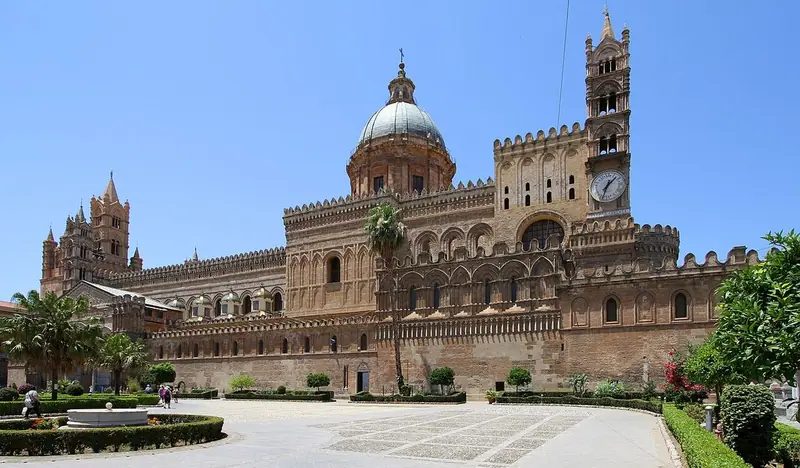 Arab-Norman11 stops · 1130 – 1194 (Norman kings of Sicily)
Arab-Norman Palermo, Monreale and Cefalù audio guide
Norman kings, Byzantine mosaicists and Arab craftsmen together: the Palatine Chapel, red-domed churches, the Zisa palace and the golden cathedrals of Monreale and Cefalù.
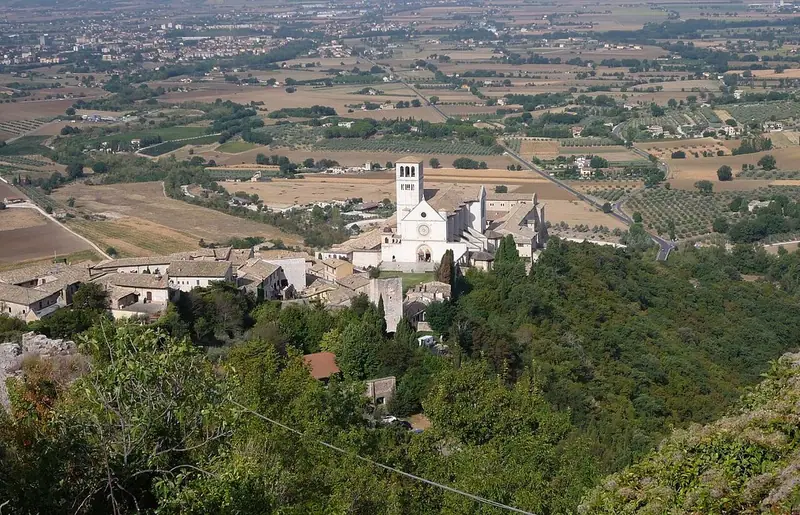 Franciscan10 stops · 1182 – 1253 (lives of Francis and Clare; basilica begun 1228)
Assisi audio guide
The hill town of Saint Francis: the double basilica with Giotto’s frescoes, his tomb, Santa Chiara, San Damiano and a Roman temple on the main square.
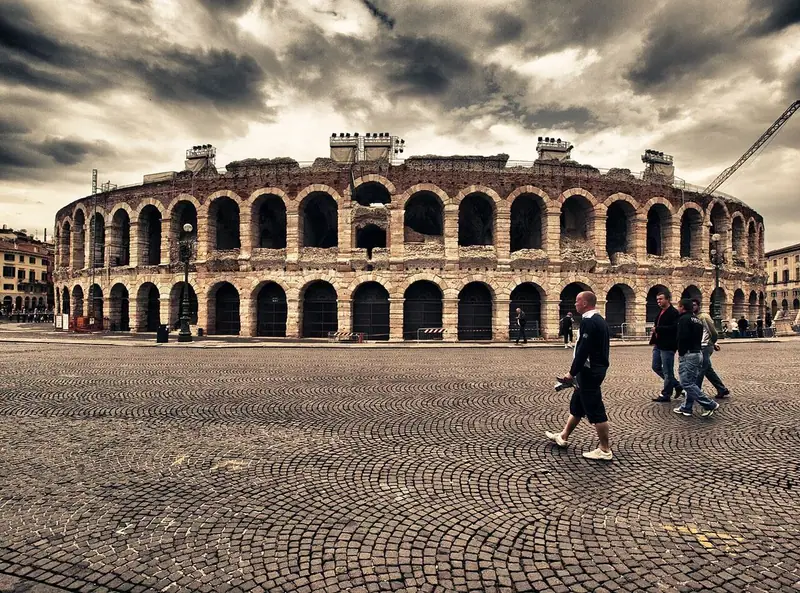 Roman11 stops · 1st c. BCE – 1797 (Roman colony to the end of Venetian rule)
City of Verona audio guide
A Roman arena still used for opera, the towers and tombs of the della Scala lords, and the Romanesque splendour of San Zeno, in a bend of the Adige.
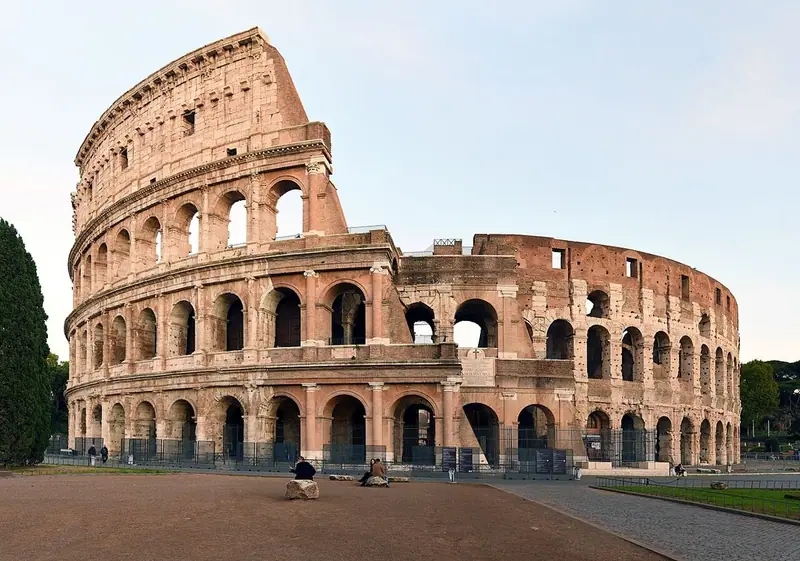 Roman7 stops · 70–80 CE
Colosseum audio guide
From the outer façade into the corridors and seating, then down to the arena floor and the hypogeum beneath it.
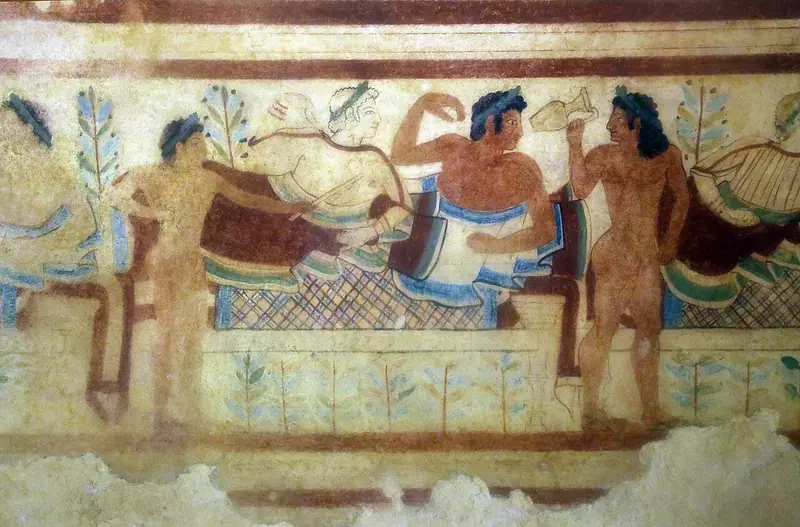 Etruscan9 stops · 9th – 3rd century BCE
Etruscan Necropolises of Cerveteri and Tarquinia audio guide
The Etruscan cities of the dead: the tumuli and tomb streets of the Banditaccia at Cerveteri, the Tomb of the Reliefs, and the painted tombs of Tarquinia’s Monterozzi necropolis.
 Renaissance7 stops · 1296–1436
Florence Duomo audio guide
The Gates of Paradise, Giotto’s Campanile and Brunelleschi’s dome, the great monument of Renaissance Florence.
Every guide, in every country
Historic Centre of Naples and every other guide we publish, including future ones. One payment, no subscription.