Before you start
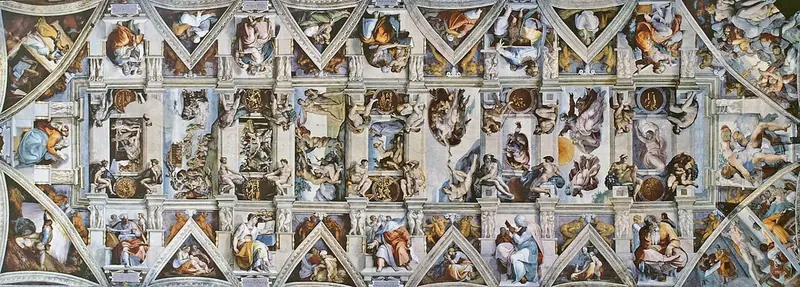
The Vatican Museums occupy the papal palaces of Vatican City, the world’s smallest independent state, surrounded on all sides by Rome. The entrance is on Viale Vaticano, beside the city walls, about ten minutes’ walk from Ottaviano metro station. Vatican City as a whole has been a UNESCO World Heritage Site since 1984, and the museums are run by the Holy See’s Directorate of the Vatican Museums. The collections stretch for kilometres, so this guide follows the classic one-way route to the Sistine Chapel: the Cortile della Pigna, the ancient sculpture of the Pio-Clementino Museum, the Gallery of Maps, Raphael’s Rooms, and finally Michelangelo’s ceiling and his Last Judgement. Signs point the way, and the route is busy, so keep this guide handy for the moments you stop to look.
Use it as a self-guided tour of the Vatican Museums: 8 stops in visit order, each played when you’re ready, at your own pace.
 Free preview · Stop 1
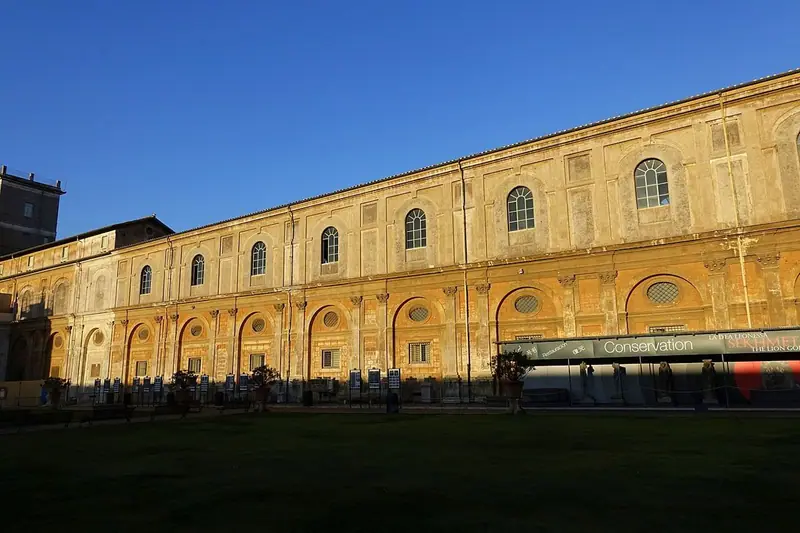
Cortile della Pigna
Begin outdoors, in the great courtyard named after its giant bronze pine cone, the Pigna. Almost four metres tall, it was made in the first or second century CE and probably once spouted water as a fountain near the Pantheon; it stood for centuries in the forecourt of Old St Peter’s before being moved here in 1608 and set in Bramante’s great niche, flanked by two bronze peacocks. The courtyard itself is part of Bramante’s Belvedere Courtyard, designed for Julius II in the early 1500s to link the papal palace with a villa on the hill. In the middle sits a modern contrast: Arnaldo Pomodoro’s bronze Sphere within Sphere, installed in 1990, which slowly turns to reveal its cracked inner world. This is a good place to pause, look at the map, and gather yourself before the crowds of the galleries.
Photo: Daderot · CC0 · Wikimedia Commons
What to see at the Vatican Museums: 8 stops, in visit order
- 01
 Cortile della PignaLa Pigna di bronzoFree preview
- 02
 LaocoönLaocoonteIn the guide
- 03
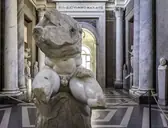 Belvedere TorsoTorso del BelvedereIn the guide
- 04
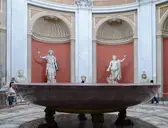 Sala RotondaLa sala circolare del Pio-ClementinoIn the guide
- 05
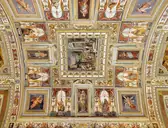 Gallery of MapsGalleria delle Carte GeograficheIn the guide
- 06
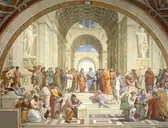 The School of AthensScuola di AteneIn the guide
- 07
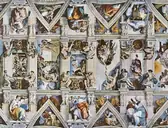 The Sistine CeilingVolta della Cappella SistinaIn the guide
- 08
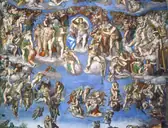 The Last JudgementGiudizio UniversaleIn the guide
History of the Vatican Museums
The museums were built by the popes and the artists they employed, and they grew out of papal Rome, one of the longest-lived institutions in Europe. Christian tradition holds that St Peter was martyred and buried here on the Vatican Hill in the first century CE, and Constantine built the first basilica over his tomb in the 320s. The popes became rulers of the Papal States in central Italy from the eighth century, traditionally from the Donation of Pepin in 756, and governed them until Italian troops took Rome in 1870. After nearly sixty years of dispute, the Lateran Treaty of 1929 created today’s sovereign Vatican City State. The collections began in 1506, when Pope Julius II displayed the newly discovered Laocoön in the Belvedere courtyard; under him, Bramante, Raphael and Michelangelo all worked here at the height of the High Renaissance.
The full history continues in the guide.
Vatican Museums guide: questions
How many stops does the Vatican Museums guide have?
8 stops, in visit order: 1. Cortile della Pigna; 2. Laocoön; 3. Belvedere Torso; 4. Sala Rotonda; 5. Gallery of Maps; 6. The School of Athens; 7. The Sistine Ceiling; 8. The Last Judgement.
Can I do a self-guided tour of the Vatican Museums with this guide?
Yes. The guide is made for a self-guided tour: 8 stops in visit order, each with a photo, a story and a voice, so you can explore the Vatican Museums at your own pace, without joining a group. Download it before you go and it works offline.
How long is each guide?
The 8 stops add up to about 7 minutes of listening in total. You play each stop when you’re ready, so you can go at your own pace.
Does the guide work offline?
Yes, once it’s downloaded. The guide is a single self-contained web page (about 8.6 MB) with the photos, text and audio built in. Download it to your phone before you go (Wi-Fi is best); after that it opens in any modern browser on iPhone or Android, with no app, account or mobile signal needed.
Does it use GPS or need my location?
No. The guide doesn’t use GPS and doesn’t know where you are: you play each stop when you reach it. It works on iPhone and Android in any modern browser, and it’s in English.
What’s included?
One self-contained HTML guide: 8 stops in visit order, each with a photo, text and a voice, plus the story of who built the site.
Who built the Vatican Museums?
The museums were built by the popes and the artists they employed, and they grew out of papal Rome, one of the longest-lived institutions in Europe. Christian tradition holds that St Peter was martyred and buried here on the Vatican Hill in the first century CE, and Constantine built the first basilica over his tomb in the 320s.
Where is the Vatican Museums?
The Vatican Museums occupy the papal palaces of Vatican City, the world’s smallest independent state, surrounded on all sides by Rome.
Is there a free audio guide to the Vatican Museums?
The first stop, Cortile della Pigna, is free to read and hear on this page, so you can try the Vatican Museums audio tour before you buy. The full guide, with all 8 stops, is a one-off purchase: download it once and it’s yours to keep, working offline.
Is the Vatican Museums guide worth it?
If you’d like to know what you’re looking at, yes. For $10 you get 8 stops in visit order, each with a photo, a short history and a voice you play when you’re ready, about 7 minutes of listening in all. It’s short on purpose, so you spend your time looking, not listening. It’s yours to keep, works offline and needs no app. The first stop is free on this page, so you can try it before you buy. If you’d like hours of detail, a guided tour will go deeper.
Audio guide or guided tour?
It depends how you like to visit. This guide lets you explore the Vatican Museums at your own pace, at any time, for a one-off price. A guided tour gives you a live expert you can ask questions, but at fixed times and usually for a higher price. Many people use both: a tour for the big picture, and the guide to read beforehand or to revisit the stops in their own time.
Is this the official Vatican Museums guide?
No. It’s an independent guide by The Historian Guide, not affiliated with or endorsed by the operator of the Vatican Museums. For tickets and opening hours, check the official site operator before you go.
Does the guide include entry tickets or opening hours?
No. The guide is a digital companion only. Admission to the Vatican Museums is separate, so check the official site operator for current tickets and opening hours before you go.
- Stop 1 · Cortile della Pigna: Daderot · CC0 · Wikimedia Commons · resized
- Stop 2 · Laocoön: Wilfredor · CC0 · Wikimedia Commons · resized
- Stop 3 · Belvedere Torso: Emiliovillegas24 · CC BY-SA 3.0 · Wikimedia Commons · resized
- Stop 4 · Sala Rotonda: Alvesgaspar · CC BY-SA 4.0 · Wikimedia Commons · resized
- Stop 5 · Gallery of Maps: Alvesgaspar · CC BY-SA 4.0 · Wikimedia Commons · resized
- Stop 6 · The School of Athens: Raphael · Public domain · Wikimedia Commons · resized
- Stop 7 · The Sistine Ceiling (also the cover): Michelangelo · CC BY-SA 3.0 · Wikimedia Commons · resized
- Stop 8 · The Last Judgement: Michelangelo · Public domain · Wikimedia Commons · resized


All photographs from Wikimedia Commons under the licences shown.
More guides in Italy
 Arab-Norman11 stops · 1130 – 1194 (Norman kings of Sicily)
Arab-Norman Palermo, Monreale and Cefalù audio guide
Norman kings, Byzantine mosaicists and Arab craftsmen together: the Palatine Chapel, red-domed churches, the Zisa palace and the golden cathedrals of Monreale and Cefalù.
 Franciscan10 stops · 1182 – 1253 (lives of Francis and Clare; basilica begun 1228)
Assisi audio guide
The hill town of Saint Francis: the double basilica with Giotto’s frescoes, his tomb, Santa Chiara, San Damiano and a Roman temple on the main square.
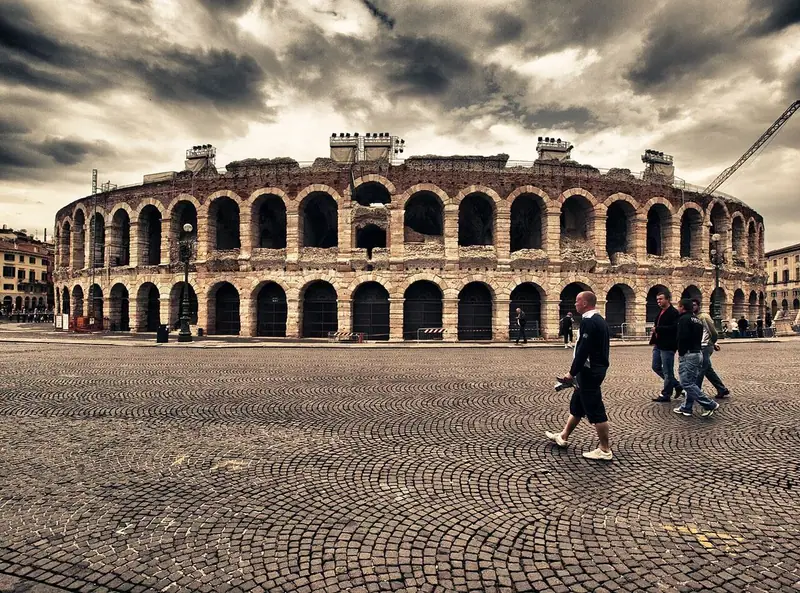 Roman11 stops · 1st c. BCE – 1797 (Roman colony to the end of Venetian rule)
City of Verona audio guide
A Roman arena still used for opera, the towers and tombs of the della Scala lords, and the Romanesque splendour of San Zeno, in a bend of the Adige.
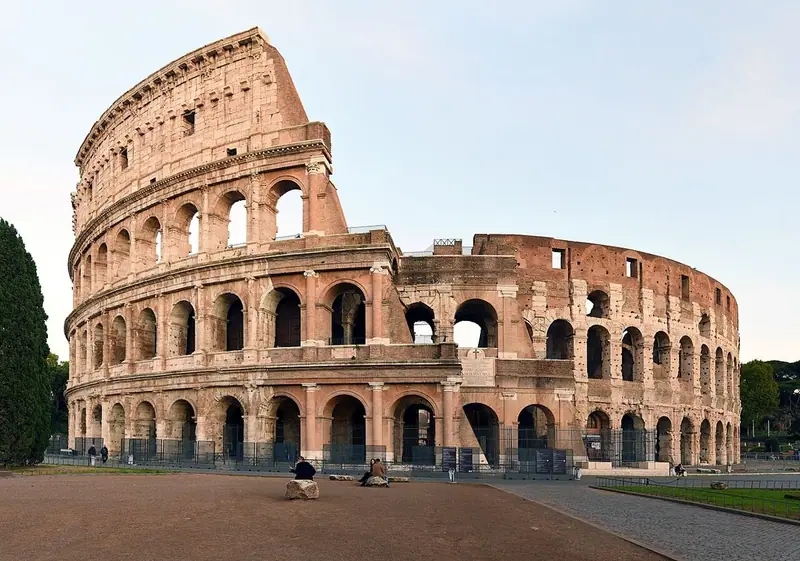 Roman7 stops · 70–80 CE
Colosseum audio guide
From the outer façade into the corridors and seating, then down to the arena floor and the hypogeum beneath it.
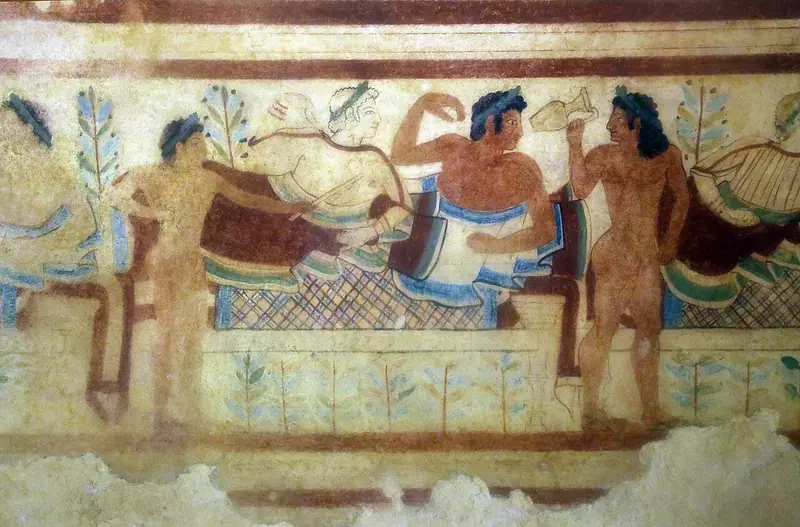 Etruscan9 stops · 9th – 3rd century BCE
Etruscan Necropolises of Cerveteri and Tarquinia audio guide
The Etruscan cities of the dead: the tumuli and tomb streets of the Banditaccia at Cerveteri, the Tomb of the Reliefs, and the painted tombs of Tarquinia’s Monterozzi necropolis.
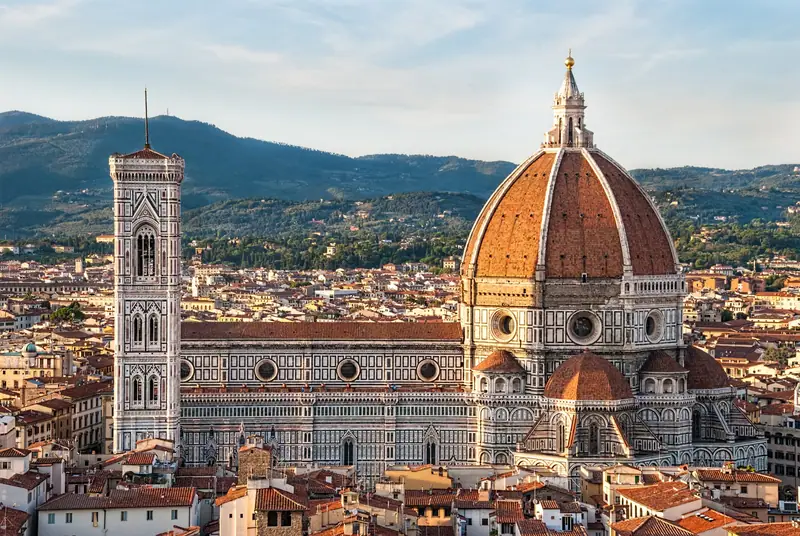 Renaissance7 stops · 1296–1436
Florence Duomo audio guide
The Gates of Paradise, Giotto’s Campanile and Brunelleschi’s dome, the great monument of Renaissance Florence.
Every guide, in every country
Vatican Museums and every other guide we publish, including future ones. One payment, no subscription.