Before you start
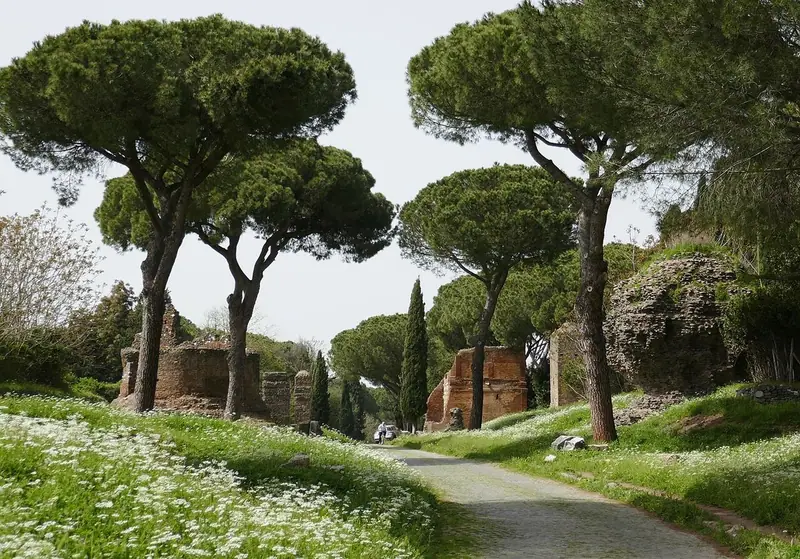
The Via Appia was the first great road of Rome, begun in 312 BCE to link the city with Capua and later extended across southern Italy to the port of Brundisium, modern Brindisi. The Romans called it the regina viarum, the queen of roads, and for centuries armies, merchants, pilgrims and travellers on the Grand Tour passed along it. Because Roman law forbade burials inside the city, its first miles outside the walls were lined with tombs, and later with Christian catacombs, imperial villas and medieval towers. In 2024 UNESCO inscribed the whole route as a World Heritage Site, Via Appia. Regina Viarum. This guide follows the first six miles out of Rome, through the Appia Antica Regional Park, from the gate in the Aurelian Walls to the great tomb of Casal Rotondo, where long stretches of the old paving still survive.
Use it as a self-guided tour of the Via Appia Antica: 10 stops in visit order, each played when you’re ready, at your own pace.
 Free preview · Stop 1
Porta San Sebastiano
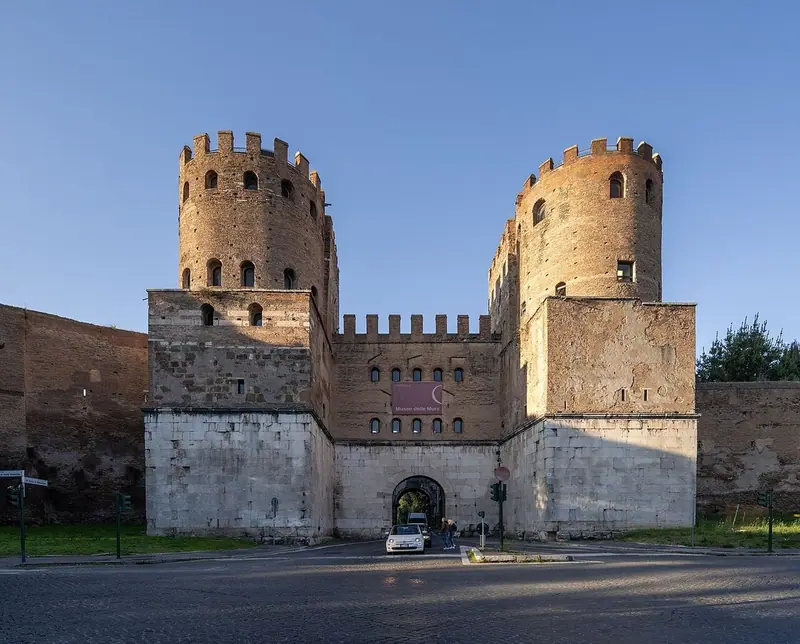
Begin at Porta San Sebastiano, the largest and one of the best preserved gates of the Aurelian Walls. The emperor Aurelian built the walls around 275 CE, when Rome felt threatened by invaders, and the gate was then called the Porta Appia, because the road passed through it. Around 401 and 402 the emperor Honorius raised and strengthened it, giving it the two massive towers faced with marble that stand today. Just inside stands an older arch, known as the Arch of Drusus, which was incorporated into the defences. The road itself began more than a kilometre further back, at the Porta Capena in the city’s older walls. Inside the gate, the Museum of the Walls tells the story of Rome’s defences, and you can walk along a stretch of the wall walk for a view down the start of the Via Appia Antica.
Photo: Ardeatino · CC BY 4.0 · Wikimedia Commons
What to see at the Via Appia Antica: 10 stops, in visit order
- 01
 Porta San SebastianoThe gate of the Appian WayFree preview
- 02
 Domine Quo VadisLord, where are you going?In the guide
- 03
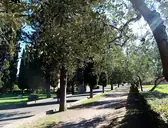 The Catacombs of San CallistoThe crypt of the popesIn the guide
- 04
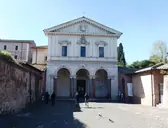 San SebastianoThe first catacombsIn the guide
- 05
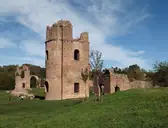 The Circus of MaxentiusA racetrack for an emperorIn the guide
- 06
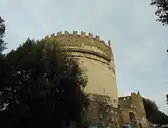 The Tomb of Caecilia MetellaA tomb that became a castleIn the guide
- 07
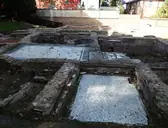 Capo di BoveThe baths of Herodes AtticusIn the guide
- 08
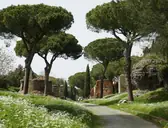 The Tombs of the Fifth MileA street of the deadIn the guide
- 09
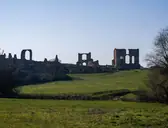 The Villa of the QuintiliiAn emperor’s envyIn the guide
- 10
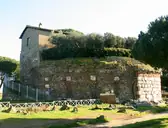 Casal RotondoA farmhouse on a tombIn the guide
Site map of the Via Appia Antica
History of the Via Appia Antica
The road was built under the censor Appius Claudius Caecus, who gave it his name and also built Rome’s first aqueduct. Its purpose was military: to move legions quickly south during Rome’s wars against the Samnites, by the most direct route possible, across marshes and hills. As Rome expanded, the road was carried on through Beneventum and Tarentum to Brundisium, the gateway to Greece and the East, and in 109 CE the emperor Trajan opened a shorter branch, the Via Traiana. The Romans laid it on a deep foundation, topped with tightly fitted blocks of hard volcanic basalt, and lined it with milestones, fountains and inns. In the Middle Ages its tombs were turned into towers and fortresses by noble families, and its stones were taken for building. From the nineteenth century the first miles were excavated and landscaped, and after long campaigns to protect them from building, the Appia Antica Regional Park was created in 1988.
Via Appia Antica guide: questions
How many stops does the Via Appia Antica guide have?
10 stops, in visit order: 1. Porta San Sebastiano; 2. Domine Quo Vadis; 3. The Catacombs of San Callisto; 4. San Sebastiano; 5. The Circus of Maxentius; 6. The Tomb of Caecilia Metella; 7. Capo di Bove; 8. The Tombs of the Fifth Mile; 9. The Villa of the Quintilii; 10. Casal Rotondo.
Can I do a self-guided tour of the Via Appia Antica with this guide?
Yes. The guide is made for a self-guided tour: 10 stops in visit order, each with a photo, a story and a voice, so you can explore the Via Appia Antica at your own pace, without joining a group. Download it before you go and it works offline.
How long do you need at the Via Appia Antica?
We suggest allowing A full day. The 10 stops add up to about 8 minutes of listening, and you play each one when you’re ready, so you can linger wherever you like.
How long is each guide?
The 10 stops add up to about 8 minutes of listening in total. You play each stop when you’re ready, so you can go at your own pace.
Does the guide work offline?
Yes, once it’s downloaded. The guide is a single self-contained web page (about 9.5 MB) with the photos, text and audio built in. Download it to your phone before you go (Wi-Fi is best); after that it opens in any modern browser on iPhone or Android, with no app, account or mobile signal needed.
Does it use GPS or need my location?
No. The guide doesn’t use GPS and doesn’t know where you are: you play each stop when you reach it. It works on iPhone and Android in any modern browser, and it’s in English.
What’s included?
One self-contained HTML guide: 10 stops in visit order, each with a photo, text and a voice, plus the story of who built the site.
Who built the Via Appia Antica?
The road was built under the censor Appius Claudius Caecus, who gave it his name and also built Rome’s first aqueduct. Its purpose was military: to move legions quickly south during Rome’s wars against the Samnites, by the most direct route possible, across marshes and hills.
Where is the Via Appia Antica?
The Via Appia was the first great road of Rome, begun in 312 BCE to link the city with Capua and later extended across southern Italy to the port of Brundisium, modern Brindisi.
Is there a free audio guide to the Via Appia Antica?
The first stop, Porta San Sebastiano, is free to read and hear on this page, so you can try the Via Appia Antica audio tour before you buy. The full guide, with all 10 stops, is a one-off purchase: download it once and it’s yours to keep, working offline.
Is the Via Appia Antica guide worth it?
If you’d like to know what you’re looking at, yes. For $10 you get 10 stops in visit order, each with a photo, a short history and a voice you play when you’re ready, plus a site map of the stops, and about 8 minutes of listening in all. It’s short on purpose, so you spend your time looking, not listening. It’s yours to keep, works offline and needs no app. The first stop is free on this page, so you can try it before you buy. If you’d like hours of detail, a guided tour will go deeper.
Audio guide or guided tour?
It depends how you like to visit. This guide lets you explore the Via Appia Antica at your own pace, at any time, for a one-off price. A guided tour gives you a live expert you can ask questions, but at fixed times and usually for a higher price. Many people use both: a tour for the big picture, and the guide to read beforehand or to revisit the stops in their own time.
Is this the official Via Appia Antica guide?
No. It’s an independent guide by The Historian Guide, not affiliated with or endorsed by the operator of the Via Appia Antica. For tickets and opening hours, check the official site operator before you go.
Does the guide include entry tickets or opening hours?
No. The guide is a digital companion only. Admission to the Via Appia Antica is separate, so check the official site operator for current tickets and opening hours before you go.
- Stop 1 · Porta San Sebastiano: Ardeatino · CC BY 4.0 · Wikimedia Commons · resized
- Stop 2 · Domine Quo Vadis: LPLT · CC BY-SA 3.0 · Wikimedia Commons · resized
- Stop 3 · The Catacombs of San Callisto: Palickap · CC BY-SA 4.0 · Wikimedia Commons · resized
- Stop 4 · San Sebastiano: Palickap · CC BY-SA 4.0 · Wikimedia Commons · resized
- Stop 5 · The Circus of Maxentius: Palickap · CC BY-SA 4.0 · Wikimedia Commons · resized
- Stop 6 · The Tomb of Caecilia Metella: Cristina Cumbo · CC BY-SA 4.0 · Wikimedia Commons · resized
- Stop 7 · Capo di Bove: Palickap · CC BY-SA 4.0 · Wikimedia Commons · resized
- Stop 8 · The Tombs of the Fifth Mile (also the cover): Rudolfo Kithera · CC0 · Wikimedia Commons · resized
- Stop 9 · The Villa of the Quintilii: PubblicUsername · CC BY 4.0 · Wikimedia Commons · resized
- Stop 10 · Casal Rotondo: Roundtheworld · CC BY 3.0 · Wikimedia Commons · resized


All photographs from Wikimedia Commons under the licences shown.
More guides in Italy
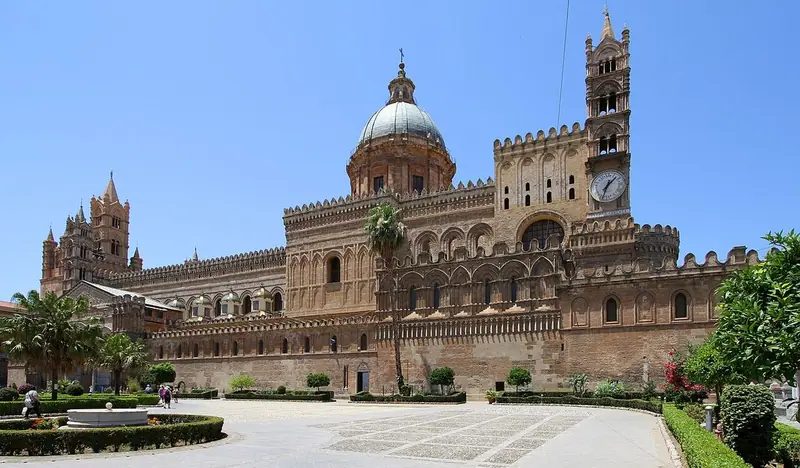 Arab-Norman11 stops · 1130 – 1194 (Norman kings of Sicily)
Arab-Norman Palermo, Monreale and Cefalù audio guide
Norman kings, Byzantine mosaicists and Arab craftsmen together: the Palatine Chapel, red-domed churches, the Zisa palace and the golden cathedrals of Monreale and Cefalù.
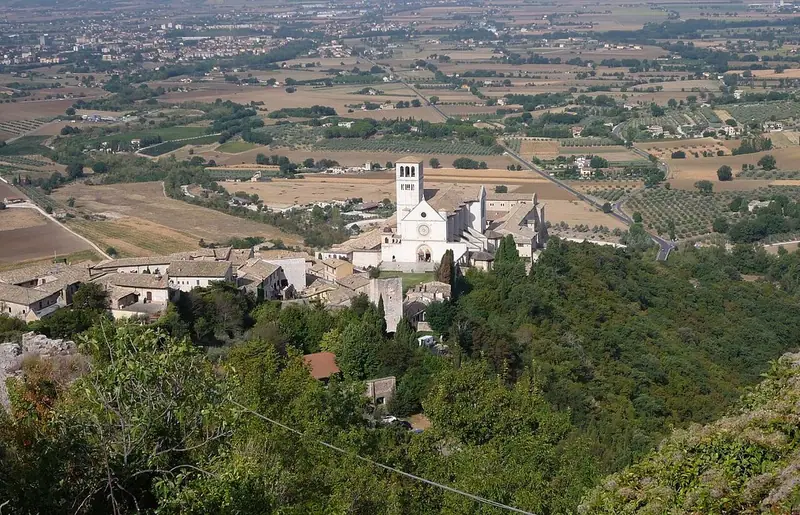 Franciscan10 stops · 1182 – 1253 (lives of Francis and Clare; basilica begun 1228)
Assisi audio guide
The hill town of Saint Francis: the double basilica with Giotto’s frescoes, his tomb, Santa Chiara, San Damiano and a Roman temple on the main square.
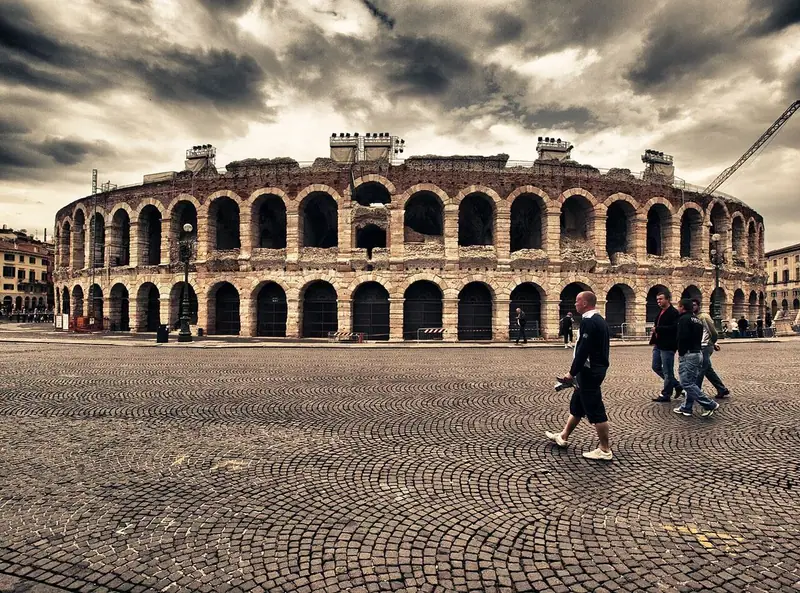 Roman11 stops · 1st c. BCE – 1797 (Roman colony to the end of Venetian rule)
City of Verona audio guide
A Roman arena still used for opera, the towers and tombs of the della Scala lords, and the Romanesque splendour of San Zeno, in a bend of the Adige.
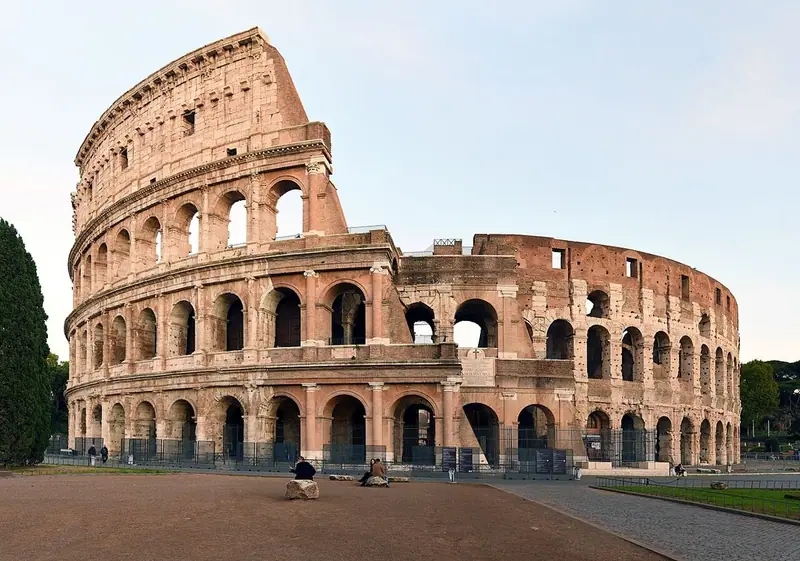 Roman7 stops · 70–80 CE
Colosseum audio guide
From the outer façade into the corridors and seating, then down to the arena floor and the hypogeum beneath it.
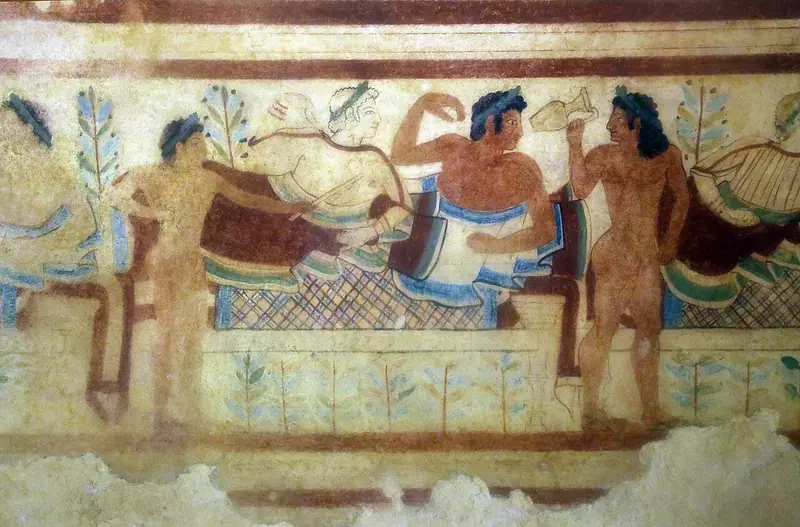 Etruscan9 stops · 9th – 3rd century BCE
Etruscan Necropolises of Cerveteri and Tarquinia audio guide
The Etruscan cities of the dead: the tumuli and tomb streets of the Banditaccia at Cerveteri, the Tomb of the Reliefs, and the painted tombs of Tarquinia’s Monterozzi necropolis.
 Renaissance7 stops · 1296–1436
Florence Duomo audio guide
The Gates of Paradise, Giotto’s Campanile and Brunelleschi’s dome, the great monument of Renaissance Florence.
Every guide, in every country
Via Appia Antica and every other guide we publish, including future ones. One payment, no subscription.