Before you start
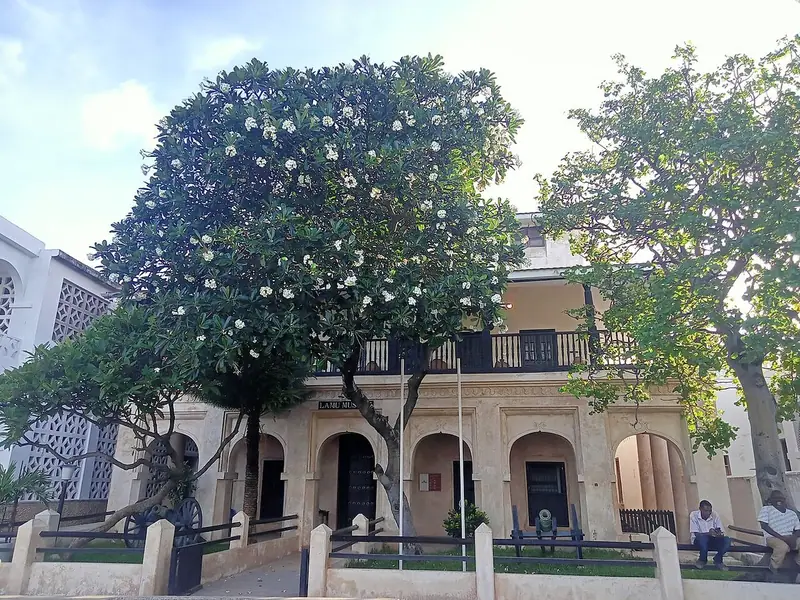
Lamu Old Town, on an island off the north coast of Kenya, is described by UNESCO as the oldest and best-preserved Swahili settlement in East Africa. It has been lived in since at least the fourteenth century, and its narrow lanes of coral-stone houses, carved doors and mosques have changed little in two hundred years. There are almost no cars on the island, so people get around on foot, by donkey or by boat. The route begins on the waterfront, visits the Lamu Museum and the donkey sanctuary, explores a Swahili house and the lanes, then passes the fort and ends at the Riyadha Mosque in the south of the town. Lamu is a conservative Muslim town, so dress modestly.
Use it as a self-guided tour of Lamu Old Town: 7 stops in visit order, each played when you’re ready, at your own pace.
 Free preview · Stop 1
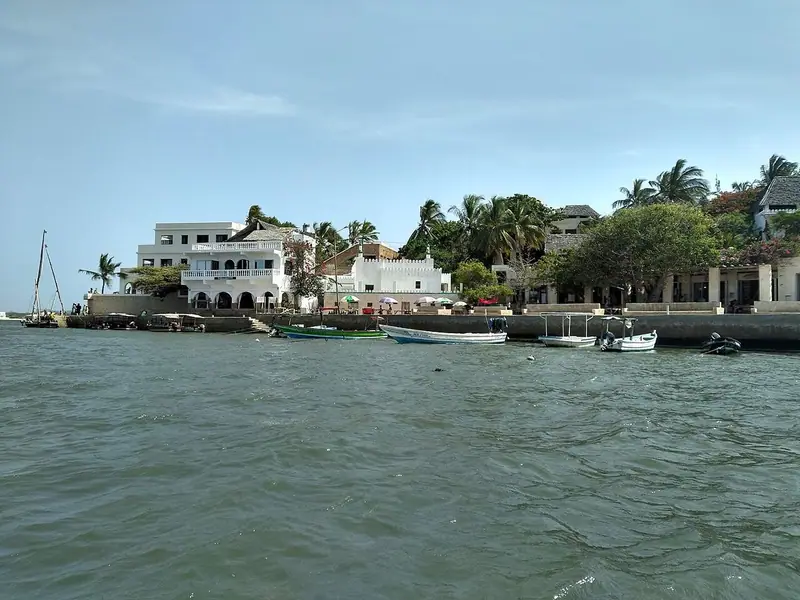
The Waterfront
Begin on the waterfront, by the main jetty, where boats arrive from the airport on Manda Island across the channel. Look along the shore at the dhows, the traditional wooden sailing boats of the Indian Ocean, with their tall triangular sails. Boat building is still an important craft on Lamu, and in the past, dhows carried mangrove poles, ivory and other goods from here to Arabia and India, sailing with the monsoon winds. Look at the long row of buildings along the seafront, many of them with arcades and balconies. Notice the porters and donkeys carrying goods from the boats, since there are almost no motor vehicles on the island. In the evening, the waterfront fills with people, and you can sit and watch the boats come and go. This is the busiest place in town, so take a moment to get your bearings.
Photo: Ahmedshayo14 · CC BY-SA 4.0 · Wikimedia Commons
What to see at Lamu Old Town: 7 stops, in visit order
- 01
 The WaterfrontDhows and boatsFree preview
- 02
 The Lamu MuseumSwahili cultureIn the guide
- 03
 The Donkey SanctuaryWorking animalsIn the guide
- 04
 The Swahili HouseNiches and courtyardsIn the guide
- 05
 The LanesA town of stoneIn the guide
- 06
 The FortFrom fortress to prisonIn the guide
- 07
 The Riyadha MosqueA centre of learningIn the guide
Site map of Lamu Old Town
History of Lamu Old Town
From around the ninth century, trading towns grew up along the East African coast, where African, Arab, Persian and Indian traders met, and the Swahili language and culture took shape. Lamu was one of these towns, trading in ivory, mangrove poles and, for centuries, enslaved people. In the sixteenth century the Portuguese forced Lamu to pay tribute. With Omani help it threw off their control, and from the late seventeenth to the early nineteenth century it enjoyed a golden age, governed by a council of elders. It later came under the sultan of Zanzibar, then Britain in 1890, and became part of independent Kenya in 1963.
Lamu Old Town guide: questions
How many stops does the Lamu Old Town guide have?
7 stops, in visit order: 1. The Waterfront; 2. The Lamu Museum; 3. The Donkey Sanctuary; 4. The Swahili House; 5. The Lanes; 6. The Fort; 7. The Riyadha Mosque.
Can I do a self-guided tour of Lamu Old Town with this guide?
Yes. The guide is made for a self-guided tour: 7 stops in visit order, each with a photo, a story and a voice, so you can explore Lamu Old Town at your own pace, without joining a group. Download it before you go and it works offline.
How long is each guide?
The 7 stops add up to about 5 minutes of listening in total. You play each stop when you’re ready, so you can go at your own pace.
Does the guide work offline?
Yes, once it’s downloaded. The guide is a single self-contained web page (about 6.4 MB) with the photos, text and audio built in. Download it to your phone before you go (Wi-Fi is best); after that it opens in any modern browser on iPhone or Android, with no app, account or mobile signal needed.
Does it use GPS or need my location?
No. The guide doesn’t use GPS and doesn’t know where you are: you play each stop when you reach it. It works on iPhone and Android in any modern browser, and it’s in English.
What’s included?
One self-contained HTML guide: 7 stops in visit order, each with a photo, text and a voice, plus the story of who built the site.
Who built Lamu Old Town?
From around the ninth century, trading towns grew up along the East African coast, where African, Arab, Persian and Indian traders met, and the Swahili language and culture took shape. Lamu was one of these towns, trading in ivory, mangrove poles and, for centuries, enslaved people.
Where is Lamu Old Town?
Lamu Old Town, on an island off the north coast of Kenya, is described by UNESCO as the oldest and best-preserved Swahili settlement in East Africa.
Is there a free audio guide to Lamu Old Town?
The first stop, The Waterfront, is free to read and hear on this page, so you can try the Lamu Old Town audio tour before you buy. The full guide, with all 7 stops, is a one-off purchase: download it once and it’s yours to keep, working offline.
Is the Lamu Old Town guide worth it?
If you’d like to know what you’re looking at, yes. For $10 you get 7 stops in visit order, each with a photo, a short history and a voice you play when you’re ready, plus a site map of the stops, and about 5 minutes of listening in all. It’s short on purpose, so you spend your time looking, not listening. It’s yours to keep, works offline and needs no app. The first stop is free on this page, so you can try it before you buy. If you’d like hours of detail, a guided tour will go deeper.
Audio guide or guided tour?
It depends how you like to visit. This guide lets you explore Lamu Old Town at your own pace, at any time, for a one-off price. A guided tour gives you a live expert you can ask questions, but at fixed times and usually for a higher price. Many people use both: a tour for the big picture, and the guide to read beforehand or to revisit the stops in their own time.
Is this the official Lamu Old Town guide?
No. It’s an independent guide by The Historian Guide, not affiliated with or endorsed by the operator of Lamu Old Town. For tickets and opening hours, check the official site operator before you go.
Does the guide include entry tickets or opening hours?
No. The guide is a digital companion only. Admission to Lamu Old Town is separate, so check the official site operator for current tickets and opening hours before you go.
- Stop 1 · The Waterfront: Ahmedshayo14 · CC BY-SA 4.0 · Wikimedia Commons · resized
- Stop 2 · The Lamu Museum (also the cover): Almaddy2022 · CC BY-SA 4.0 · Wikimedia Commons · resized
- Stop 3 · The Donkey Sanctuary: Almaddy2022 · CC BY-SA 4.0 · Wikimedia Commons · resized
- Stop 4 · The Swahili House: Almaddy2022 · CC BY-SA 4.0 · Wikimedia Commons · resized
- Stop 5 · The Lanes: Abubakarsule533 · CC BY-SA 4.0 · Wikimedia Commons · resized
- Stop 6 · The Fort: Ahmedshayo14 · CC BY-SA 4.0 · Wikimedia Commons · resized
- Stop 7 · The Riyadha Mosque: Kevin Borland at the English-language Wikipedia · CC BY-SA 3.0 · Wikimedia Commons · resized


All photographs from Wikimedia Commons under the licences shown.
More guides in Kenya
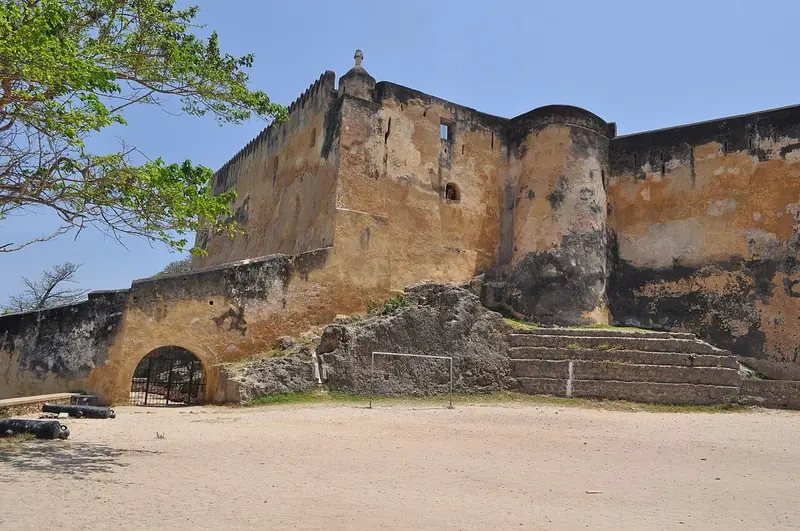 Portuguese8 stops · 1593 – 19th century
Fort Jesus and Old Mombasa audio guide
Explore the Portuguese ramparts of Fort Jesus, then wander the narrow streets of carved doors, wooden balconies and small mosques of Old Mombasa.
 Swahili7 stops · 11th–17th century
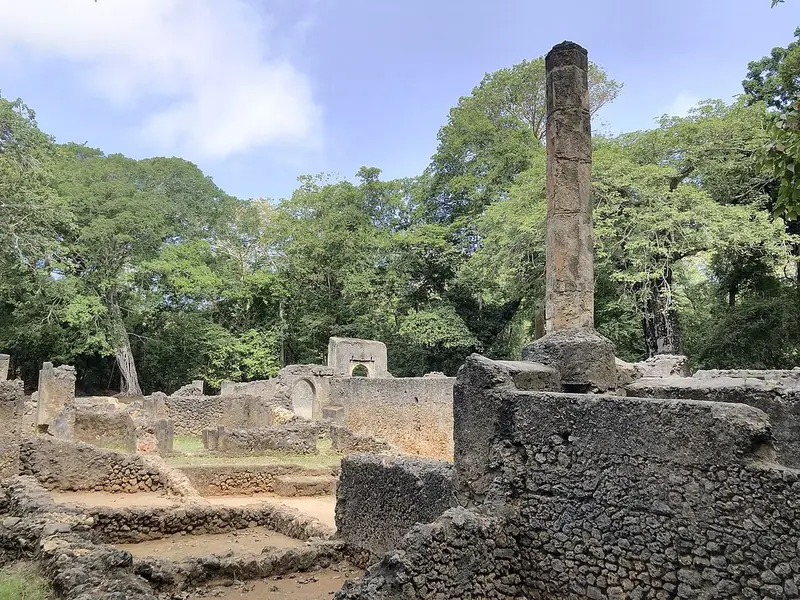
The Ruins of Gedi audio guide
Follow paths through the coastal forest to a Swahili town of coral stone, its Great Mosque, palace and houses wrapped in great trees.
 Swahili7 stops · 9th–16th century
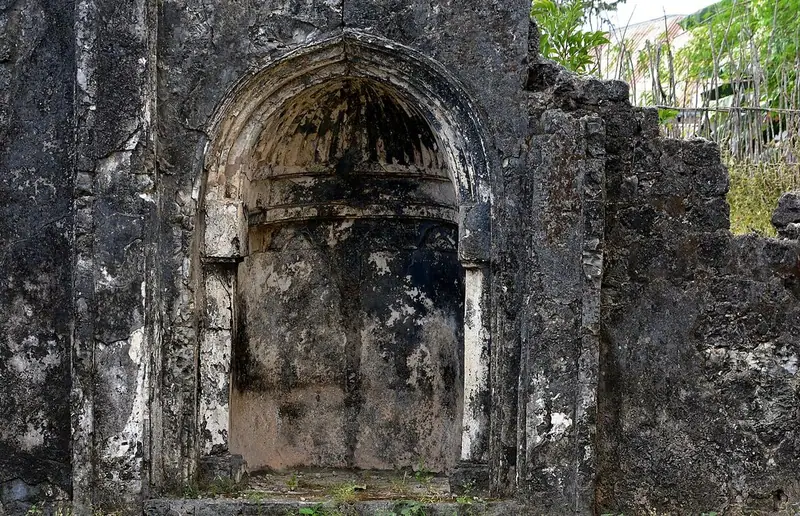
Kilwa Kisiwani audio guide
Take a boat to the coral-stone ruins of a great Swahili trading city, from the Great Mosque and its domes to the palace of Husuni Kubwa.
Every guide, in every country
Lamu Old Town and every other guide we publish, including future ones. One payment, no subscription.