Before you start
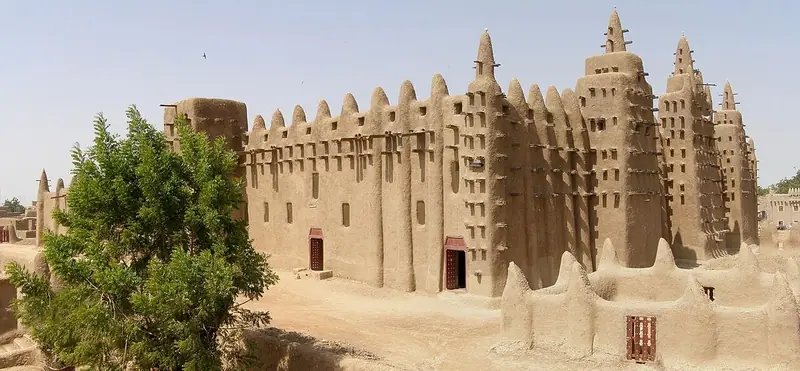
Djenné stands on the floodplain of the Bani River in the inland delta of the Niger, about one hundred and thirty kilometres south-west of Mopti. When the waters rise each year, the town becomes an island. UNESCO inscribed the Old Towns of Djenné as a World Heritage Site in 1988: the earthen town itself, with its Great Mosque and nearly two thousand traditional houses, and four archaeological sites, among them Djenné-Djeno, one of the oldest known towns in sub-Saharan Africa. In 2016 the site was placed on the List of World Heritage in Danger, because insecurity in the region was preventing work to tackle the decay of earthen buildings, unplanned building and the erosion of the archaeological sites. Central Mali has been affected by armed conflict for more than a decade, and few visitors now come. Nothing here has been deliberately destroyed; the threat is slow decay. Check your government’s current travel advice before you plan a visit.
Use it as a self-guided tour of Djenné: 9 stops in visit order, each played when you’re ready, at your own pace.
 Free preview · Stop 1
The Bani Crossing
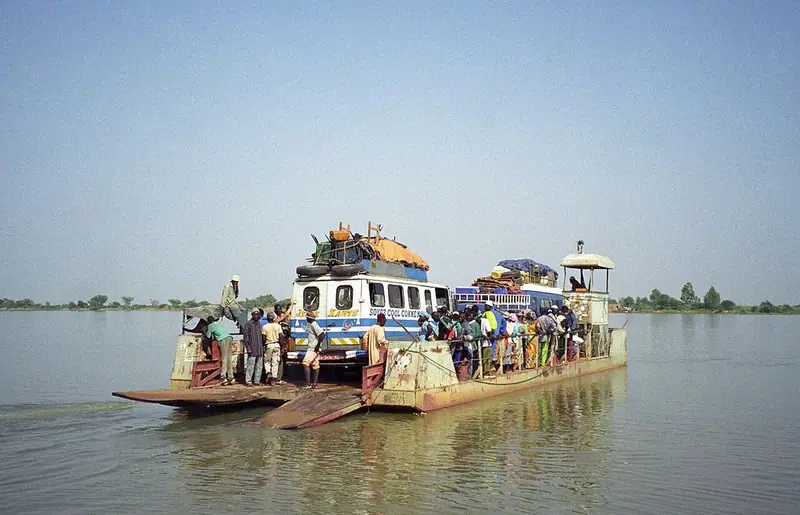
Begin at the water’s edge. Djenné lies between the Bani and Niger rivers, on a floodplain that the rains submerge each year, and for much of the year visitors reach the town by crossing a river channel, often by ferry. The chronicler al-Sadi, writing in the seventeenth century, described how the town became an island when the river was in flood, and called it one of the great markets of the Muslims, where traders in salt met traders in gold. The houses of the old town are built on raised mounds, called toguere, to keep them above the floods. From here the river carried goods, grain and people downstream to Timbuktu. The photograph of the ferry was taken in 2005. Look towards the town, a low skyline of earth broken by the towers of the Great Mosque.
Photo: upyernoz · CC BY 2.0 · Wikimedia Commons
What to see at Djenné: 9 stops, in visit order
- 01
 The Bani CrossingAn island in the floodFree preview
- 02
 Djenné-DjenoThe old town of the deltaIn the guide
- 03
 The Tomb of Tapama DjenepoA legend of sacrificeIn the guide
- 04
 The Great MosqueThe largest mud-brick building in the worldIn the guide
- 05
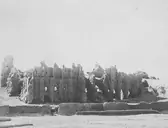 Three Mosques on One SiteThe ruins of 1894 and the work of 1907In the guide
- 06
 The Mosque RoofVents, bowls and towersIn the guide
- 07
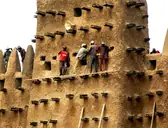 The CrépissageA town replasters its mosqueIn the guide
- 08
 The Monday MarketTrade beneath the towersIn the guide
- 09
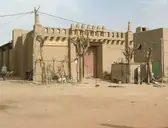 The Houses of DjennéFaçades of earthIn the guide
Site map of Djenné
History of Djenné
Djenné grew from Djenné-Djeno, an older town about two and a half kilometres to the south-east, which was settled around the third century BCE and had become a large walled town by the first millennium CE. The present town was settled after about 1000. Local tradition credits its founding to Bozo fishermen and Soninke traders, and says that a ruler named Koy Konboro became a Muslim and turned his palace into the first mosque. Djenné became a great market where salt from the Sahara was exchanged for gold from the south, linked by river to Timbuktu, and a centre of Islamic learning. It came under the Songhai Empire in the fifteenth century, under Moroccan rule after 1591, then under the Fulani state of Massina in the nineteenth century and the Toucouleur Empire in 1862. French forces occupied it in 1893.
The full history continues in the guide.
Djenné guide: questions
How many stops does the Djenné guide have?
9 stops, in visit order: 1. The Bani Crossing; 2. Djenné-Djeno; 3. The Tomb of Tapama Djenepo; 4. The Great Mosque; 5. Three Mosques on One Site; 6. The Mosque Roof; 7. The Crépissage; 8. The Monday Market; 9. The Houses of Djenné.
Can I do a self-guided tour of Djenné with this guide?
Yes. The guide is made for a self-guided tour: 9 stops in visit order, each with a photo, a story and a voice, so you can explore Djenné at your own pace, without joining a group. Download it before you go and it works offline.
How long do you need at Djenné?
We suggest allowing A day. The 9 stops add up to about 7 minutes of listening, and you play each one when you’re ready, so you can linger wherever you like.
How long is each guide?
The 9 stops add up to about 7 minutes of listening in total. You play each stop when you’re ready, so you can go at your own pace.
Does the guide work offline?
Yes, once it’s downloaded. The guide is a single self-contained web page (about 7.6 MB) with the photos, text and audio built in. Download it to your phone before you go (Wi-Fi is best); after that it opens in any modern browser on iPhone or Android, with no app, account or mobile signal needed.
Does it use GPS or need my location?
No. The guide doesn’t use GPS and doesn’t know where you are: you play each stop when you reach it. It works on iPhone and Android in any modern browser, and it’s in English.
What’s included?
One self-contained HTML guide: 9 stops in visit order, each with a photo, text and a voice, plus the story of who built the site.
Who built Djenné?
Djenné grew from Djenné-Djeno, an older town about two and a half kilometres to the south-east, which was settled around the third century BCE and had become a large walled town by the first millennium CE. The present town was settled after about 1000.
Is there a free audio guide to Djenné?
The first stop, The Bani Crossing, is free to read and hear on this page, so you can try the Djenné audio tour before you buy. The full guide, with all 9 stops, is a one-off purchase: download it once and it’s yours to keep, working offline.
Is the Djenné guide worth it?
If you’d like to know what you’re looking at, yes. For $10 you get 9 stops in visit order, each with a photo, a short history and a voice you play when you’re ready, plus a site map of the stops, and about 7 minutes of listening in all. It’s short on purpose, so you spend your time looking, not listening. It’s yours to keep, works offline and needs no app. The first stop is free on this page, so you can try it before you buy. If you’d like hours of detail, a guided tour will go deeper.
Audio guide or guided tour?
It depends how you like to visit. This guide lets you explore Djenné at your own pace, at any time, for a one-off price. A guided tour gives you a live expert you can ask questions, but at fixed times and usually for a higher price. Many people use both: a tour for the big picture, and the guide to read beforehand or to revisit the stops in their own time.
Is this the official Djenné guide?
No. It’s an independent guide by The Historian Guide, not affiliated with or endorsed by the operator of Djenné. For tickets and opening hours, check the official site operator before you go.
Does the guide include entry tickets or opening hours?
No. The guide is a digital companion only. Admission to Djenné is separate, so check the official site operator for current tickets and opening hours before you go.
- Stop 1 · The Bani Crossing: upyernoz from Haverford, USA · CC BY 2.0 · Wikimedia Commons · resized
- Stop 2 · Djenné-Djeno: Metropolitan Museum of Art · CC0 · Wikimedia Commons · resized
- Stop 3 · The Tomb of Tapama Djenepo: Gilles MAIRET · CC BY-SA 3.0 · Wikimedia Commons · resized
- Stop 4 · The Great Mosque (also the cover): BluesyPete · CC BY-SA 3.0 · Wikimedia Commons · resized
- Stop 5 · Three Mosques on One Site: Albert Rousseau · Public domain · Wikimedia Commons · resized
- Stop 6 · The Mosque Roof: Gilles MAIRET · CC BY-SA 3.0 · Wikimedia Commons · resized
- Stop 7 · The Crépissage: Ralf Steinberger from Northern Italy and Berlin · CC BY 2.0 · Wikimedia Commons · resized
- Stop 8 · The Monday Market: Ferdinand Reus from Arnhem, Holland · CC BY-SA 2.0 · Wikimedia Commons · resized
- Stop 9 · The Houses of Djenné: Francesco Bandarin · CC BY-SA 3.0 igo · Wikimedia Commons · resized


All photographs from Wikimedia Commons under the licences shown.
More guides in Mali
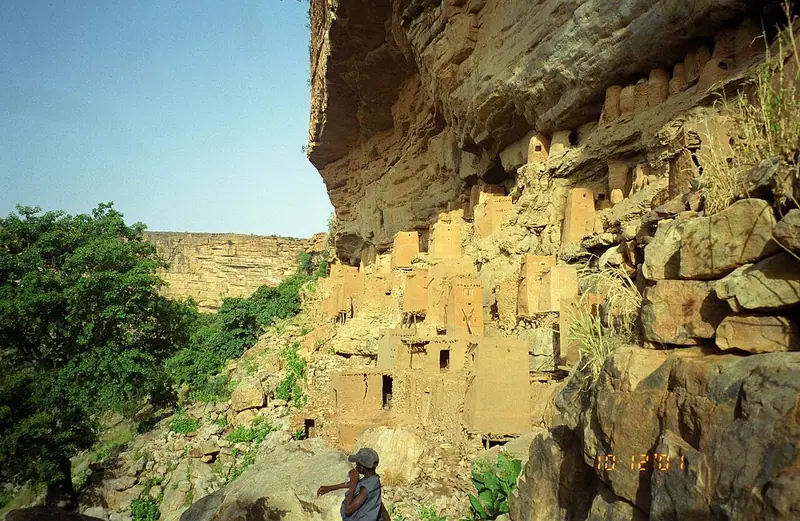 Dogon9 stops · 11th century CE – present
Cliff of Bandiagara audio guide
A long sandstone escarpment where Dogon villages, granaries and toguna shelters cling below the cliff, beneath the cave dwellings of the Tellem.
 Mali and Songhai9 stops · 12th – 16th century CE
Timbuktu audio guide
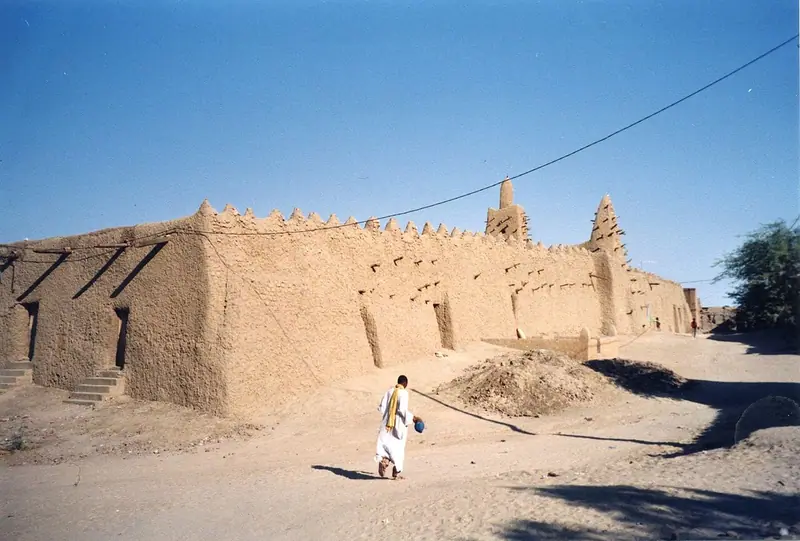
The desert city of scholars on the edge of the Sahara: the earthen mosques of Djingareyber, Sankoré and Sidi Yahia, the rebuilt mausoleums of its saints, and its manuscript libraries.
 Ancient Egyptian8 stops · 13th century BCE
Abu Simbel audio guide
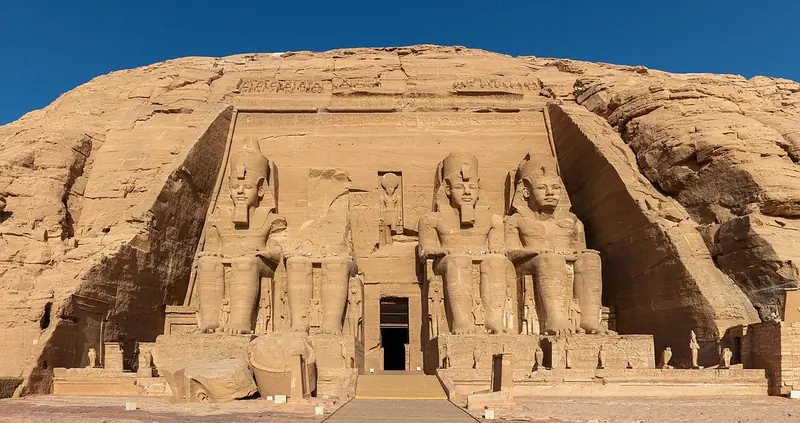
Ramesses II’s colossal temple façade, the Temple of Nefertari, and how both were rescued from the waters of Lake Nasser.
Every guide, in every country
Djenné and every other guide we publish, including future ones. One payment, no subscription.