Before you start
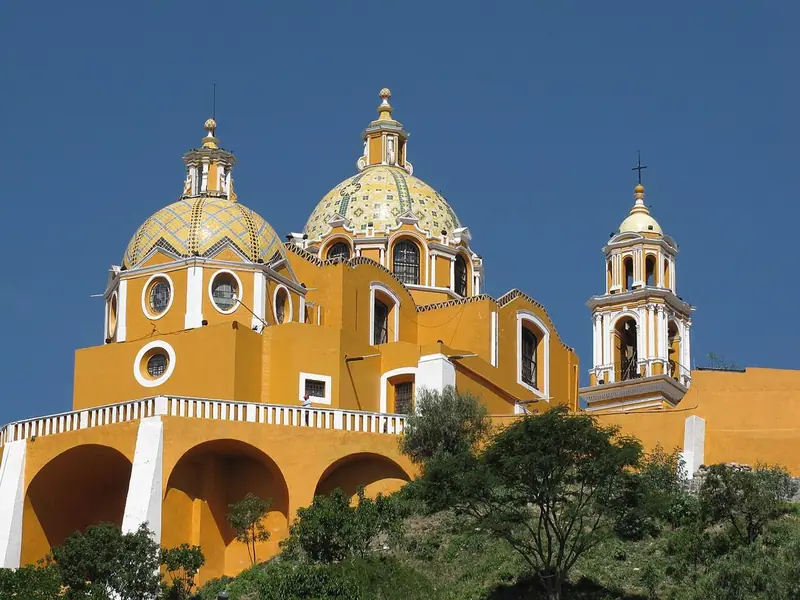
Cholula lies on the high plain of Puebla, about ten kilometres west of the city of Puebla, with the volcanoes Popocatépetl and Iztaccíhuatl on the horizon. Its Great Pyramid is not itself a UNESCO World Heritage Site, though the historic centre of nearby Puebla is; the archaeological zone is managed by INAH, Mexico’s National Institute of Anthropology and History. This guide starts at the site museum across the road from the pyramid, goes through the archaeologists’ tunnels inside it, comes out at the Patio of the Altars on the south side, and then climbs the hill to the church on the summit, ending with the view of the volcanoes.
Use it as a self-guided tour of Cholula: 6 stops in visit order, each played when you’re ready, at your own pace.
 Free preview · Stop 1
Site museum
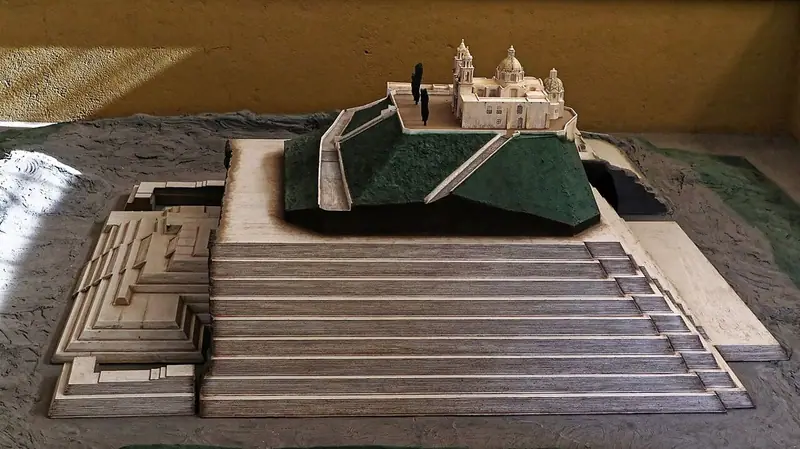
Begin at the small site museum, on the opposite side of the main road from the pyramid. It sets the scene with pottery, sculpture and a cut-away model showing the different building stages of the pyramid, one inside the other. The highlight is a full-size reproduction of the Mural of the Drinkers, Los Bebedores. The original, found in 1969 on one of the pyramid’s inner buildings, runs for some 50 metres and shows dozens of figures drinking pulque, the fermented sap of the maguey plant, in what seems to be a ritual celebration. It is one of the longest murals known from ancient Mexico, and it dates to the Classic period. Look closely at the lively faces and gestures. The original is not normally open to visitors, so this replica is the best way to appreciate it. Then cross the road to the tunnel entrance.
Photo: Burkhard Mücke · CC BY-SA 4.0 · Wikimedia Commons
What to see at Cholula: 6 stops, in visit order
- 01
 Site museumMuseo de SitioFree preview
- 02
 The tunnelsLos TúnelesIn the guide
- 03
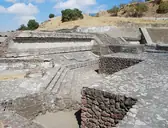 Patio of the AltarsPatio de los AltaresIn the guide
- 04
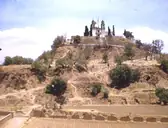 The climbSubida al SantuarioIn the guide
- 05
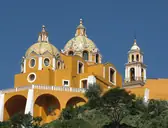 Church of Los RemediosNuestra Señora de los RemediosIn the guide
- 06
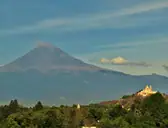 View of the volcanoesPopocatépetlIn the guide
Site map of Cholula
History of Cholula
Cholula belongs to the long story of Mesoamerican civilisation. Farming villages spread from around 2000 BCE; the Olmecs raised the first great ceremonial centres from about 1200 BCE; the Classic period (roughly 200–900 CE) saw great cities such as Teotihuacán; and the Postclassic ended with the Spanish conquest in 1521. Cholula is one of the oldest continuously inhabited cities in the Americas, and its pyramid was the work of many peoples over many centuries. Its Nahuatl name, Tlachihualtepetl, means ‘artificial mountain’. Building began in the last centuries BCE, and the pyramid was enlarged in several major stages over roughly a thousand years, reaching its greatest size in the Classic period; later the Olmeca-Xicalanca, and from the twelfth century Nahuatl-speaking Toltec-Chichimecs, ruled the city.
The full history continues in the guide.
Cholula guide: questions
How many stops does the Cholula guide have?
6 stops, in visit order: 1. Site museum; 2. The tunnels; 3. Patio of the Altars; 4. The climb; 5. Church of Los Remedios; 6. View of the volcanoes.
Can I do a self-guided tour of Cholula with this guide?
Yes. The guide is made for a self-guided tour: 6 stops in visit order, each with a photo, a story and a voice, so you can explore Cholula at your own pace, without joining a group. Download it before you go and it works offline.
How long is each guide?
The 6 stops add up to about 6 minutes of listening in total. You play each stop when you’re ready, so you can go at your own pace.
Does the guide work offline?
Yes, once it’s downloaded. The guide is a single self-contained web page (about 6.2 MB) with the photos, text and audio built in. Download it to your phone before you go (Wi-Fi is best); after that it opens in any modern browser on iPhone or Android, with no app, account or mobile signal needed.
Does it use GPS or need my location?
No. The guide doesn’t use GPS and doesn’t know where you are: you play each stop when you reach it. It works on iPhone and Android in any modern browser, and it’s in English.
What’s included?
One self-contained HTML guide: 6 stops in visit order, each with a photo, text and a voice, plus the story of who built the site.
Who built Cholula?
Cholula belongs to the long story of Mesoamerican civilisation. Farming villages spread from around 2000 BCE; the Olmecs raised the first great ceremonial centres from about 1200 BCE; the Classic period (roughly 200–900 CE) saw great cities such as Teotihuacán; and the Postclassic ended with the Spanish conquest in 1521.
Where is Cholula?
Cholula lies on the high plain of Puebla, about ten kilometres west of the city of Puebla, with the volcanoes Popocatépetl and Iztaccíhuatl on the horizon.
Is there a free audio guide to Cholula?
The first stop, Site museum, is free to read and hear on this page, so you can try the Cholula audio tour before you buy. The full guide, with all 6 stops, is a one-off purchase: download it once and it’s yours to keep, working offline.
Is the Cholula guide worth it?
If you’d like to know what you’re looking at, yes. For $10 you get 6 stops in visit order, each with a photo, a short history and a voice you play when you’re ready, plus a site map of the stops, and about 6 minutes of listening in all. It’s short on purpose, so you spend your time looking, not listening. It’s yours to keep, works offline and needs no app. The first stop is free on this page, so you can try it before you buy. If you’d like hours of detail, a guided tour will go deeper.
Audio guide or guided tour?
It depends how you like to visit. This guide lets you explore Cholula at your own pace, at any time, for a one-off price. A guided tour gives you a live expert you can ask questions, but at fixed times and usually for a higher price. Many people use both: a tour for the big picture, and the guide to read beforehand or to revisit the stops in their own time.
Is this the official Cholula guide?
No. It’s an independent guide by The Historian Guide, not affiliated with or endorsed by the operator of Cholula. For tickets and opening hours, check the official site operator before you go.
Does the guide include entry tickets or opening hours?
No. The guide is a digital companion only. Admission to Cholula is separate, so check the official site operator for current tickets and opening hours before you go.
- Stop 1 · Site museum: Burkhard Mücke · CC BY-SA 4.0 · Wikimedia Commons · resized
- Stop 2 · The tunnels: AlejandroLinaresGarcia · CC BY-SA 4.0 · Wikimedia Commons · resized
- Stop 3 · Patio of the Altars: AlejandroLinaresGarcia · CC BY-SA 4.0 · Wikimedia Commons · resized
- Stop 4 · The climb: Janice Waltzer · CC BY 2.0 · Wikimedia Commons · resized
- Stop 5 · Church of Los Remedios (also the cover): Gerardo Noriega · CC BY-SA 3.0 · Wikimedia Commons · resized
- Stop 6 · View of the volcanoes: Luis Alvaz · CC BY-SA 4.0 · Wikimedia Commons · resized


All photographs from Wikimedia Commons under the licences shown.
More guides in Mexico
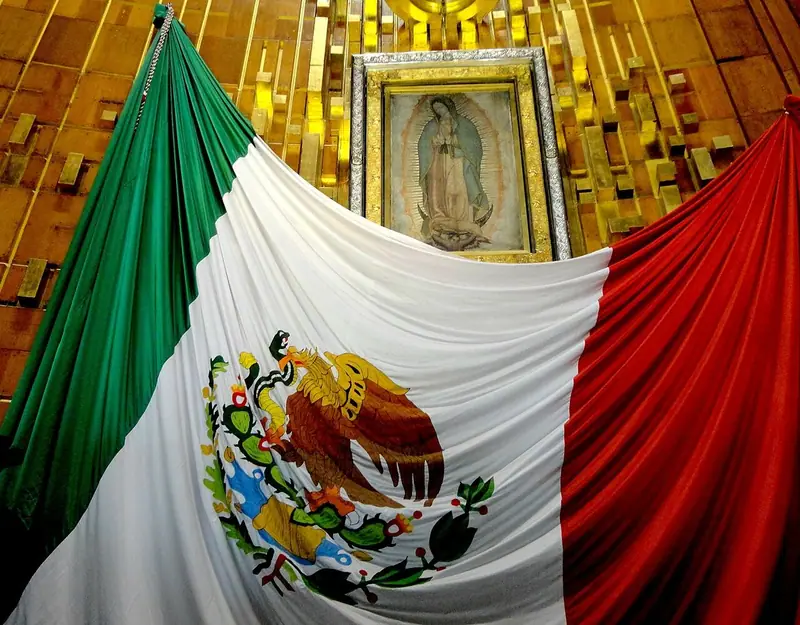 New Spain and Mexico8 stops · Colonial and modern Mexico
The Basilica of Guadalupe audio guide
Cross the great plaza of the world’s most visited Catholic shrine to see the image of Our Lady of Guadalupe, then climb the hill of Tepeyac.
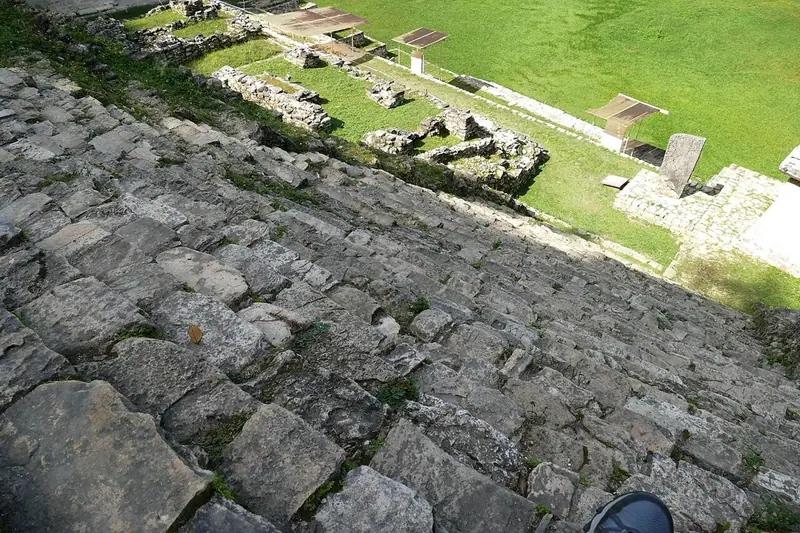 Maya6 stops · c. 600–800 CE
Bonampak audio guide
Three small rooms in the Lacandon forest painted with vivid Maya murals: a royal court, a battle and a celebration.
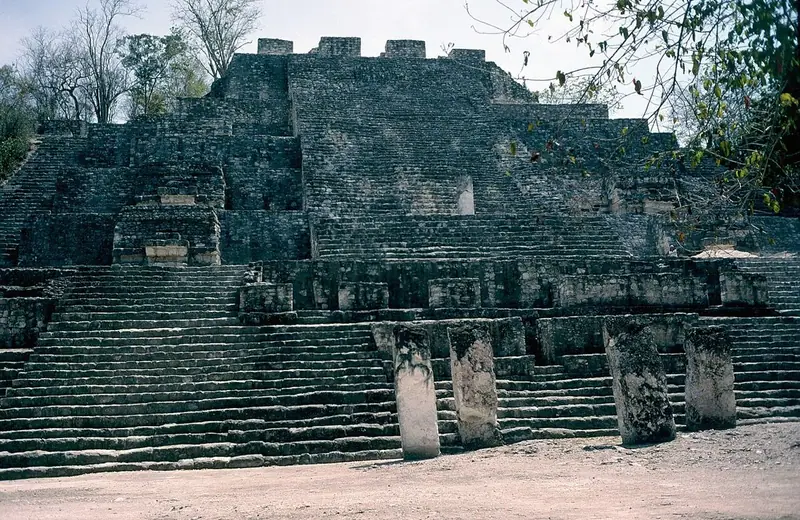 Maya6 stops · c. 250–900 CE
Calakmul audio guide
Capital of the Snake Kingdom, rising out of the Campeche rainforest.
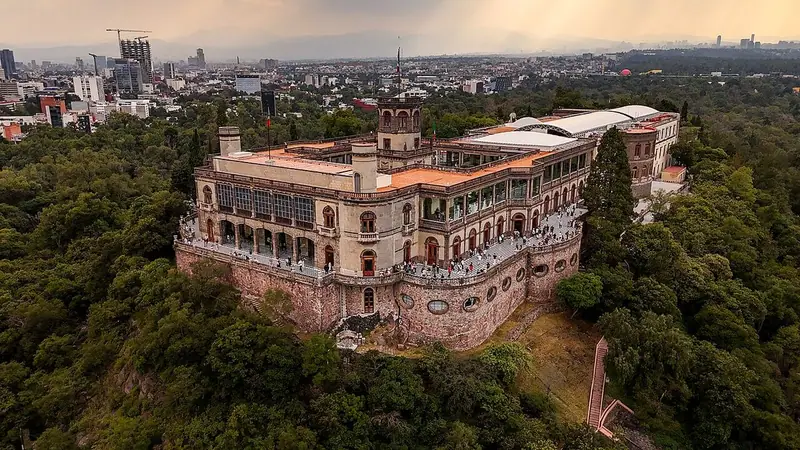 New Spain and Mexico8 stops · Second Mexican Empire
Chapultepec Castle audio guide
Climb the hill of Chapultepec to the castle of a viceroy, an emperor and presidents, now the National Museum of History.
 Maya8 stops · c. 600–1200 CE
Chichén Itzá audio guide
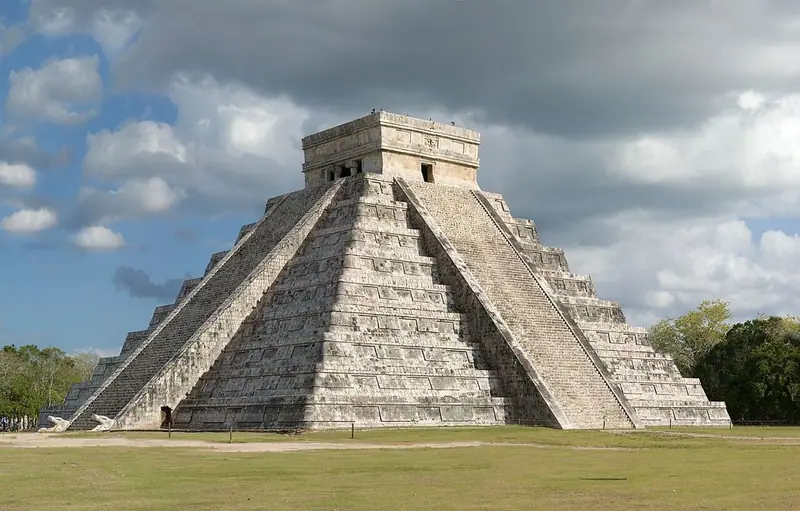
El Castillo and its serpent of light, the greatest ballcourt in Mesoamerica and the Sacred Cenote.
 Maya6 stops · c. 500–900 CE
Cobá audio guide
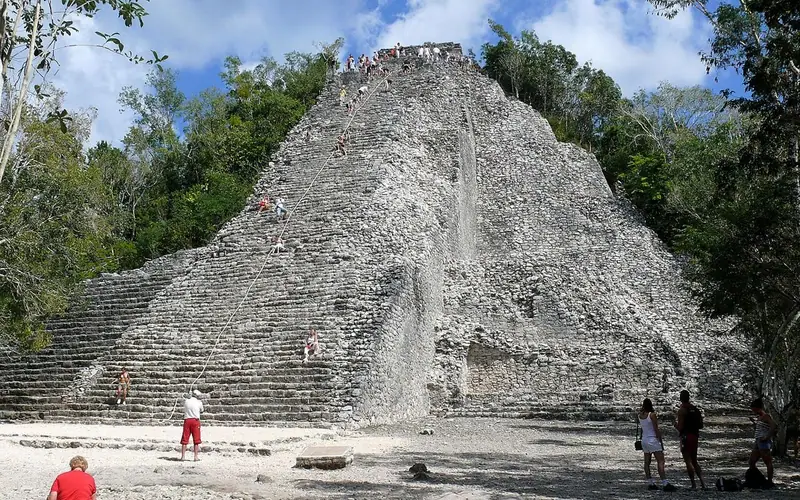
Jungle lakes, raised white roads and the towering Nohoch Mul.
Every guide, in every country
Cholula and every other guide we publish, including future ones. One payment, no subscription.