Before you start
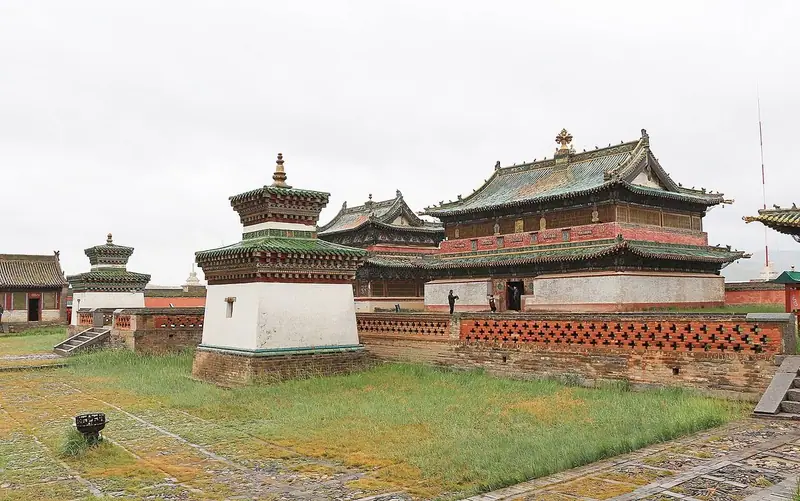
In the broad Orkhon Valley of central Mongolia, beside the small town of Kharkhorin, lie the remains of Karakorum, the capital of the Mongol Empire in the thirteenth century. Beside them stands Erdene Zuu, probably the oldest surviving Buddhist monastery in Mongolia, built partly from the stones of the vanished city. The route goes round the monastery’s long wall of stupas, through its temples and past the tombs of its founders, then out to the site of the old capital, a stone turtle, and the museum. The ground is flat, but distances are large and the weather is changeable. Allow at least half a day.
Use it as a self-guided tour of Karakorum and Erdene Zuu: 7 stops in visit order, each played when you’re ready, at your own pace.
 Free preview · Stop 1
The Stupa Wall
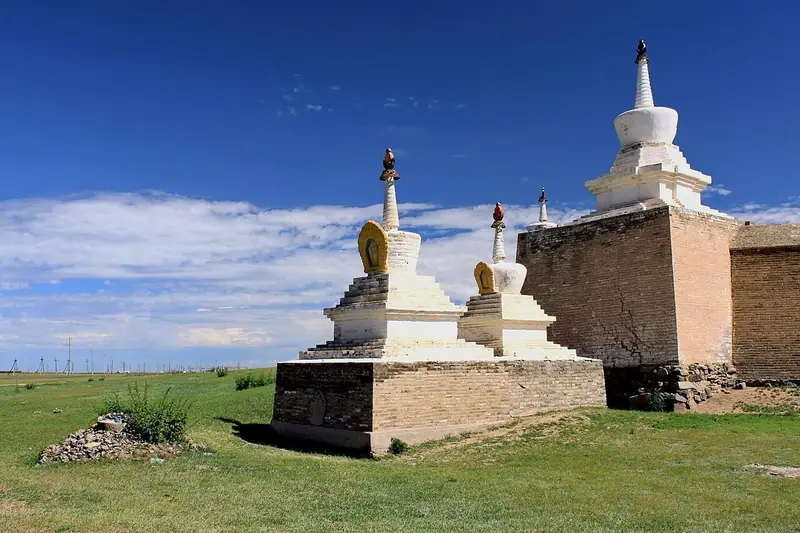
Begin outside the great wall that encloses Erdene Zuu, a square enclosure about four hundred metres on each side. Along it stand rows of small white stupas, the dome-shaped Buddhist shrines that hold relics and offerings. The planners are said to have wanted a wall like a Buddhist rosary, with 108 stupas, since 108 is a sacred number in Buddhism, but this was probably never fully achieved. Abtai Sain Khan founded the monastery in 1585, and its builders used stones and bricks taken from the ruins of Karakorum close by. Archaeologists have found walls of the thirteenth century beneath the monastery, and some scholars think the Khan’s palace stood on this very spot, though this is still debated. Walk in through the gate, and notice the space within, where once there were dozens of temples.
Photo: Marcin Konsek · CC BY-SA 4.0 · Wikimedia Commons
What to see at Karakorum and Erdene Zuu: 7 stops, in visit order
- 01
 The Stupa WallA rosary of white stupasFree preview
- 02
 The Three Zuu TemplesTemples of the Buddha’s lifeIn the guide
- 03
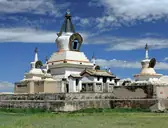 The Golden StupaThe tombs of the khansIn the guide
- 04
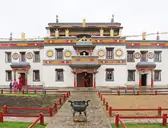 The Lavrin TempleA living monasteryIn the guide
- 05
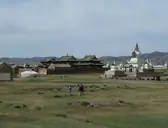 The Site of KarakorumThe capital of the worldIn the guide
- 06
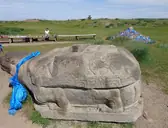 The Stone TurtleA guardian of the old cityIn the guide
- 07
 The Kharkhorum MuseumThe finds of the capitalIn the guide
Site map of Karakorum and Erdene Zuu
History of Karakorum and Erdene Zuu
The Orkhon Valley was a centre of power long before the Mongols, for the Xiongnu, the Göktürks and the Uyghurs. Genghis Khan gathered his army at Karakorum, and the city is usually said to have been founded in 1220. His son and successor Ögedei built walls and a palace from 1235, and it was the imperial capital until about 1260, when Kublai Khan moved the seat of power to what is now Beijing. Ming armies destroyed the city in 1380, and it was later abandoned. In 1585 the Khalkha ruler Abtai Sain Khan founded Erdene Zuu among its ruins, as Tibetan Buddhism spread among the Mongols. The monastery was largely destroyed under communist rule in 1939, and it was returned to the monks after 1990.
Karakorum and Erdene Zuu guide: questions
How many stops does the Karakorum and Erdene Zuu guide have?
7 stops, in visit order: 1. The Stupa Wall; 2. The Three Zuu Temples; 3. The Golden Stupa; 4. The Lavrin Temple; 5. The Site of Karakorum; 6. The Stone Turtle; 7. The Kharkhorum Museum.
Can I do a self-guided tour of Karakorum and Erdene Zuu with this guide?
Yes. The guide is made for a self-guided tour: 7 stops in visit order, each with a photo, a story and a voice, so you can explore Karakorum and Erdene Zuu at your own pace, without joining a group. Download it before you go and it works offline.
How long is each guide?
The 7 stops add up to about 5 minutes of listening in total. You play each stop when you’re ready, so you can go at your own pace.
Does the guide work offline?
Yes, once it’s downloaded. The guide is a single self-contained web page (about 6.4 MB) with the photos, text and audio built in. Download it to your phone before you go (Wi-Fi is best); after that it opens in any modern browser on iPhone or Android, with no app, account or mobile signal needed.
Does it use GPS or need my location?
No. The guide doesn’t use GPS and doesn’t know where you are: you play each stop when you reach it. It works on iPhone and Android in any modern browser, and it’s in English.
What’s included?
One self-contained HTML guide: 7 stops in visit order, each with a photo, text and a voice, plus the story of who built the site.
Who built Karakorum and Erdene Zuu?
The Orkhon Valley was a centre of power long before the Mongols, for the Xiongnu, the Göktürks and the Uyghurs. Genghis Khan gathered his army at Karakorum, and the city is usually said to have been founded in 1220.
Where is Karakorum and Erdene Zuu?
In the broad Orkhon Valley of central Mongolia, beside the small town of Kharkhorin, lie the remains of Karakorum, the capital of the Mongol Empire in the thirteenth century.
Is there a free audio guide to Karakorum and Erdene Zuu?
The first stop, The Stupa Wall, is free to read and hear on this page, so you can try the Karakorum and Erdene Zuu audio tour before you buy. The full guide, with all 7 stops, is a one-off purchase: download it once and it’s yours to keep, working offline.
Is the Karakorum and Erdene Zuu guide worth it?
If you’d like to know what you’re looking at, yes. For $10 you get 7 stops in visit order, each with a photo, a short history and a voice you play when you’re ready, plus a site map of the stops, and about 5 minutes of listening in all. It’s short on purpose, so you spend your time looking, not listening. It’s yours to keep, works offline and needs no app. The first stop is free on this page, so you can try it before you buy. If you’d like hours of detail, a guided tour will go deeper.
Audio guide or guided tour?
It depends how you like to visit. This guide lets you explore Karakorum and Erdene Zuu at your own pace, at any time, for a one-off price. A guided tour gives you a live expert you can ask questions, but at fixed times and usually for a higher price. Many people use both: a tour for the big picture, and the guide to read beforehand or to revisit the stops in their own time.
Is this the official Karakorum and Erdene Zuu guide?
No. It’s an independent guide by The Historian Guide, not affiliated with or endorsed by the operator of Karakorum and Erdene Zuu. For tickets and opening hours, check the official site operator before you go.
Does the guide include entry tickets or opening hours?
No. The guide is a digital companion only. Admission to Karakorum and Erdene Zuu is separate, so check the official site operator for current tickets and opening hours before you go.
- Stop 1 · The Stupa Wall: Photo: Marcin Konsek / Wikimedia Commons · CC BY-SA 4.0 · Wikimedia Commons · resized
- Stop 2 · The Three Zuu Temples (also the cover): Bernard Gagnon · CC0 · Wikimedia Commons · resized
- Stop 3 · The Golden Stupa: Photo: Marcin Konsek / Wikimedia Commons · CC BY-SA 4.0 · Wikimedia Commons · resized
- Stop 4 · The Lavrin Temple: Bernard Gagnon · CC0 · Wikimedia Commons · resized
- Stop 5 · The Site of Karakorum: Gyula Péter · CC BY 3.0 · Wikimedia Commons · resized
- Stop 6 · The Stone Turtle: SamarMagicTours1 · CC BY-SA 4.0 · Wikimedia Commons · resized
- Stop 7 · The Kharkhorum Museum: Batu · CC BY-SA 3.0 · Wikimedia Commons · resized


All photographs from Wikimedia Commons under the licences shown.
More guides in Mongolia
 Mongol7 stops · 1809–1913
Gandan Monastery audio guide
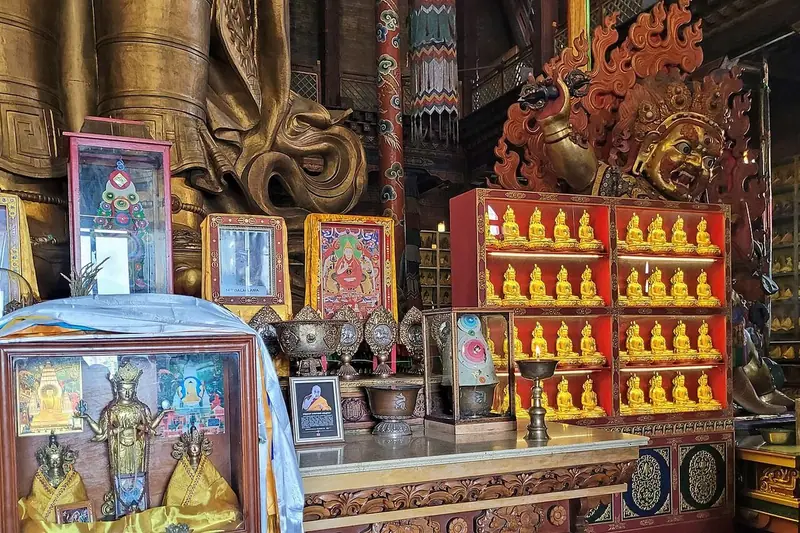
Pass through the gates of the centre of Buddhism in Mongolia, past prayer wheels to the towering Avalokiteshvara of Megzed Janraiseg.
 Ancient Egyptian8 stops · 13th century BCE
Abu Simbel audio guide
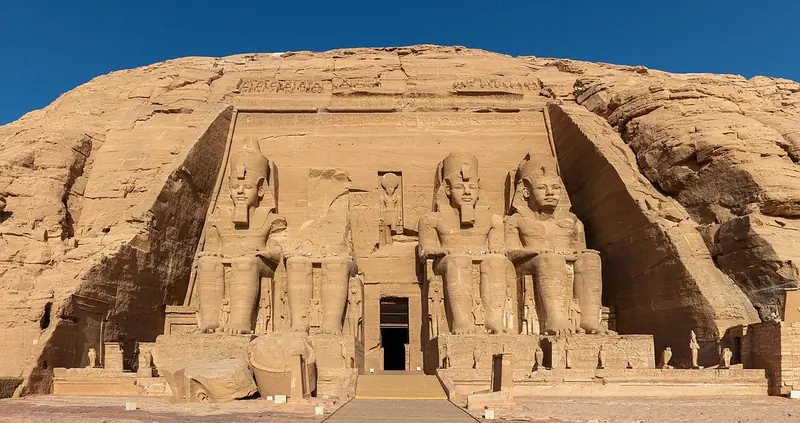
Ramesses II’s colossal temple façade, the Temple of Nefertari, and how both were rescued from the waters of Lake Nasser.
 Ga7 stops · 1649–1957
Old Accra audio guide
From the old forts and lighthouse of Jamestown, through the Ga fishing quarter, to the monuments of Ghana’s independence and Osu Castle.
Every guide, in every country
Karakorum and Erdene Zuu and every other guide we publish, including future ones. One payment, no subscription.