Before you start
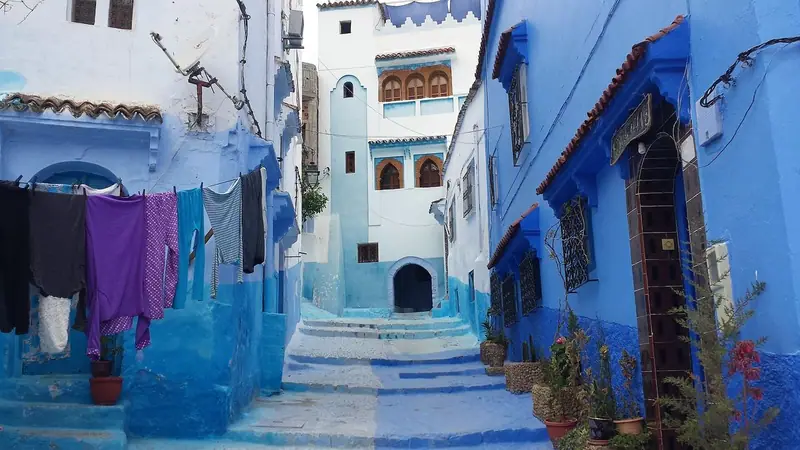
Chefchaouen was founded in 1471 as a fortress against the Portuguese, high in the Rif mountains of northern Morocco, and it grew into a refuge for Muslims and Jews driven out of Spain. For centuries it was a closed town, rarely visited by outsiders, and its Andalusian houses, mosques and fountains still crowd the slopes below two mountain peaks. Today it is famous for the blue-washed walls of its old town. This guide enters the medina by the Bab el-Ain, wanders up through the blue lanes to the main square, the Grand Mosque and the Kasbah, climbs to the spring of Ras el-Maa and ends at the Spanish Mosque on the hill above the town.
Use it as a self-guided tour of Chefchaouen: 7 stops in visit order, each played when you’re ready, at your own pace.
 Free preview · Stop 1
The Walls and Bab el-Ain
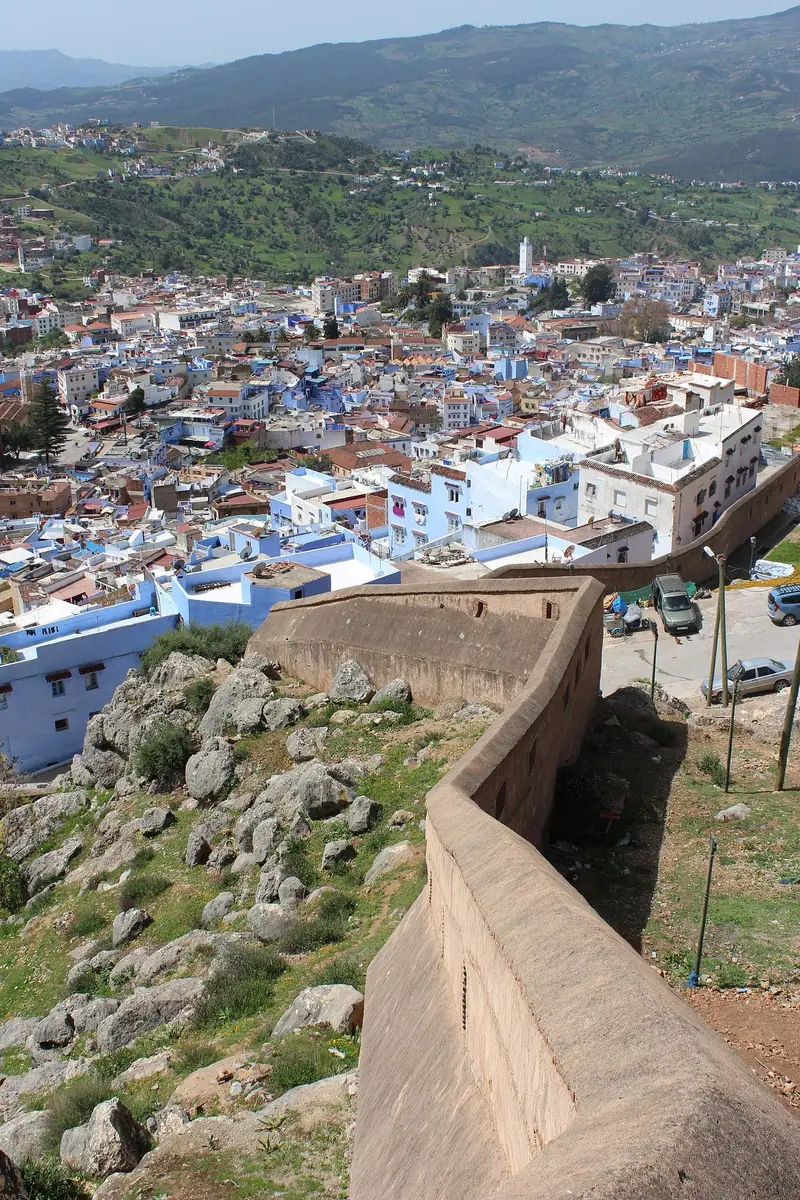
Begin at the Bab el-Ain, the main gate on the western side of the old walled town, or medina. Stretches of the old town walls still climb the hillside around the medina. The walls and their gates were built in the town’s early centuries, to protect the refugees from Spain and the people of the surrounding Jebala tribes who came here to trade. Its name means the gate of the spring. In the past the gates were closed at night, and strangers were rarely allowed inside; until the Spanish arrived in 1920, only a handful of Europeans had ever set foot in the town. Through the gate the streets narrow at once into stepped lanes, climbing towards the heart of the medina. From here, follow the main lane uphill into the blue quarters.
Photo: William John Gauthier · CC BY-SA 2.0 · Wikimedia Commons
What to see at Chefchaouen: 7 stops, in visit order
- 01
 The Walls and Bab el-AinThe gate of the springFree preview
- 02
 The Blue LanesAn Andalusian town in the mountainsIn the guide
- 03
 Outa el-HammamThe heart of the old townIn the guide
- 04
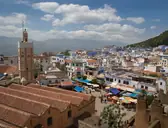 The Grand MosqueThe town’s first mosqueIn the guide
- 05
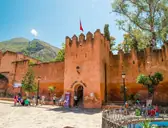 The KasbahThe first fortressIn the guide
- 06
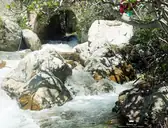 Ras el-MaaThe spring at the head of the townIn the guide
- 07
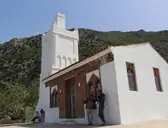 The Spanish MosqueA view over the blue townIn the guide
Site map of Chefchaouen
History of Chefchaouen
In the fifteenth century the Portuguese were seizing ports on the Moroccan coast, beginning with Ceuta in 1415. In 1471 Moulay Ali ibn Rashid, a local leader who claimed descent from the Prophet Muhammad and who had fought against the Christians in Granada, built a fortress here as a base for the holy war against them. After Granada fell to the Catholic kings in 1492, Muslims and Jews expelled from Spain settled in the new town, and they built it in the style of their lost homeland, with whitewashed houses, tiled roofs, courtyards and fountains. Ali ibn Rashid’s daughter, known as Sayyida al-Hurra, later ruled the nearby port of Tetouan. In 1920 the Spanish army occupied Chefchaouen as part of its protectorate in northern Morocco. During the Rif War the town was held for a time by the forces of the Rif leader Abd el-Krim, before Spain retook it in 1926.
The full history continues in the guide.
Chefchaouen guide: questions
How many stops does the Chefchaouen guide have?
7 stops, in visit order: 1. The Walls and Bab el-Ain; 2. The Blue Lanes; 3. Outa el-Hammam; 4. The Grand Mosque; 5. The Kasbah; 6. Ras el-Maa; 7. The Spanish Mosque.
Can I do a self-guided tour of Chefchaouen with this guide?
Yes. The guide is made for a self-guided tour: 7 stops in visit order, each with a photo, a story and a voice, so you can explore Chefchaouen at your own pace, without joining a group. Download it before you go and it works offline.
How long is each guide?
The 7 stops add up to about 5 minutes of listening in total. You play each stop when you’re ready, so you can go at your own pace.
Does the guide work offline?
Yes, once it’s downloaded. The guide is a single self-contained web page (about 7.1 MB) with the photos, text and audio built in. Download it to your phone before you go (Wi-Fi is best); after that it opens in any modern browser on iPhone or Android, with no app, account or mobile signal needed.
Does it use GPS or need my location?
No. The guide doesn’t use GPS and doesn’t know where you are: you play each stop when you reach it. It works on iPhone and Android in any modern browser, and it’s in English.
What’s included?
One self-contained HTML guide: 7 stops in visit order, each with a photo, text and a voice, plus the story of who built the site.
Who built Chefchaouen?
In the fifteenth century the Portuguese were seizing ports on the Moroccan coast, beginning with Ceuta in 1415. In 1471 Moulay Ali ibn Rashid, a local leader who claimed descent from the Prophet Muhammad and who had fought against the Christians in Granada, built a fortress here as a base for the holy war against them.
Where is Chefchaouen?
Chefchaouen was founded in 1471 as a fortress against the Portuguese, high in the Rif mountains of northern Morocco, and it grew into a refuge for Muslims and Jews driven out of Spain.
Is there a free audio guide to Chefchaouen?
The first stop, The Walls and Bab el-Ain, is free to read and hear on this page, so you can try the Chefchaouen audio tour before you buy. The full guide, with all 7 stops, is a one-off purchase: download it once and it’s yours to keep, working offline.
Is the Chefchaouen guide worth it?
If you’d like to know what you’re looking at, yes. For $10 you get 7 stops in visit order, each with a photo, a short history and a voice you play when you’re ready, plus a site map of the stops, and about 5 minutes of listening in all. It’s short on purpose, so you spend your time looking, not listening. It’s yours to keep, works offline and needs no app. The first stop is free on this page, so you can try it before you buy. If you’d like hours of detail, a guided tour will go deeper.
Audio guide or guided tour?
It depends how you like to visit. This guide lets you explore Chefchaouen at your own pace, at any time, for a one-off price. A guided tour gives you a live expert you can ask questions, but at fixed times and usually for a higher price. Many people use both: a tour for the big picture, and the guide to read beforehand or to revisit the stops in their own time.
Is this the official Chefchaouen guide?
No. It’s an independent guide by The Historian Guide, not affiliated with or endorsed by the operator of Chefchaouen. For tickets and opening hours, check the official site operator before you go.
Does the guide include entry tickets or opening hours?
No. The guide is a digital companion only. Admission to Chefchaouen is separate, so check the official site operator for current tickets and opening hours before you go.
- Stop 1 · The Walls and Bab el-Ain: William John Gauthier · CC BY-SA 2.0 · Wikimedia Commons · resized
- Stop 2 · The Blue Lanes (also the cover): Allenfleming · CC BY-SA 4.0 · Wikimedia Commons · resized
- Stop 3 · Outa el-Hammam: Jerzystrzelecki · CC BY 3.0 · Wikimedia Commons · resized
- Stop 4 · The Grand Mosque: Belbachirkamal · CC BY-SA 4.0 · Wikimedia Commons · resized
- Stop 5 · The Kasbah: Badr Rachadi · CC BY-SA 4.0 · Wikimedia Commons · resized
- Stop 6 · Ras el-Maa: Badrbina1 · CC BY-SA 4.0 · Wikimedia Commons · resized
- Stop 7 · The Spanish Mosque: William John Gauthier · CC BY-SA 2.0 · Wikimedia Commons · resized


All photographs from Wikimedia Commons under the licences shown.
More guides in Morocco
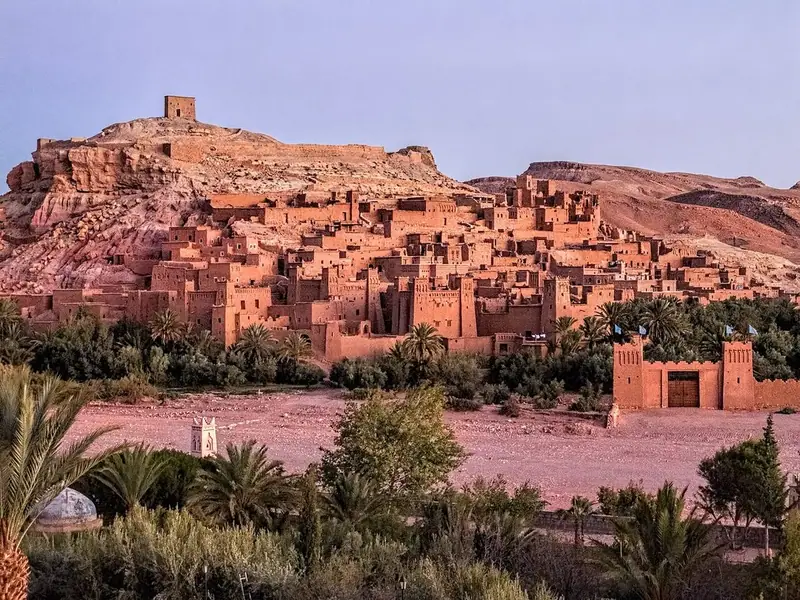 Amazigh6 stops · 17th–20th century
Aït Benhaddou audio guide
An earthen village of tower houses climbing a hill above the Ounila River, once a stop on the caravan road across the Atlas.
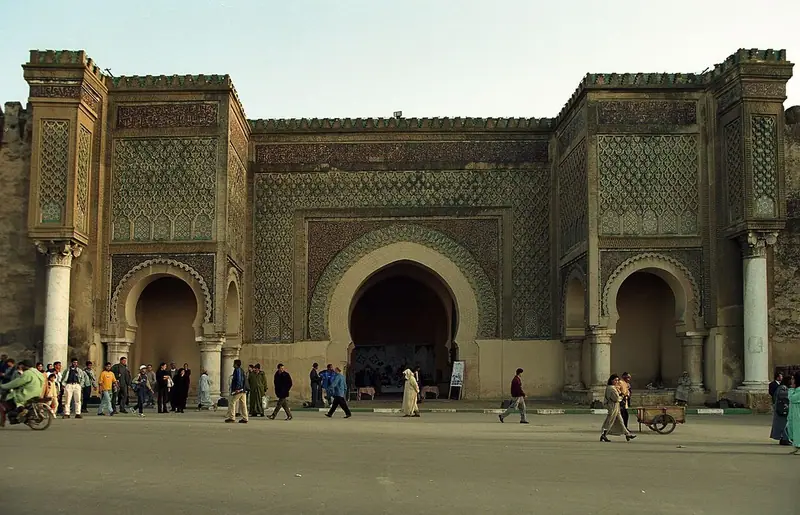 Alaouite8 stops · 1672–1727
Historic Meknes audio guide
Moulay Ismail’s imperial capital, from the great gate of Bab Mansour to his mausoleum, the vast granaries and the Agdal basin.
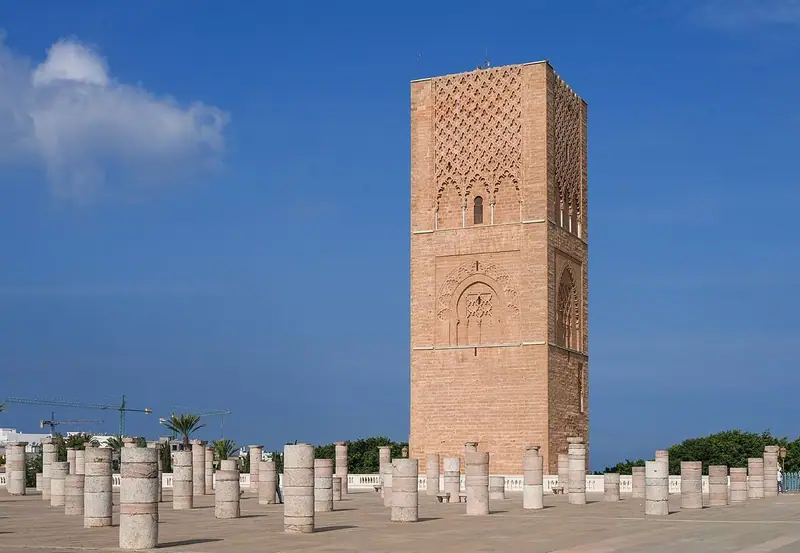 Almohad6 stops · c. 1150–1199
Historic Rabat audio guide
The unfinished Hassan Tower, the Mausoleum of Mohammed V, and through the Bab Oudaya to the Andalusian Garden.
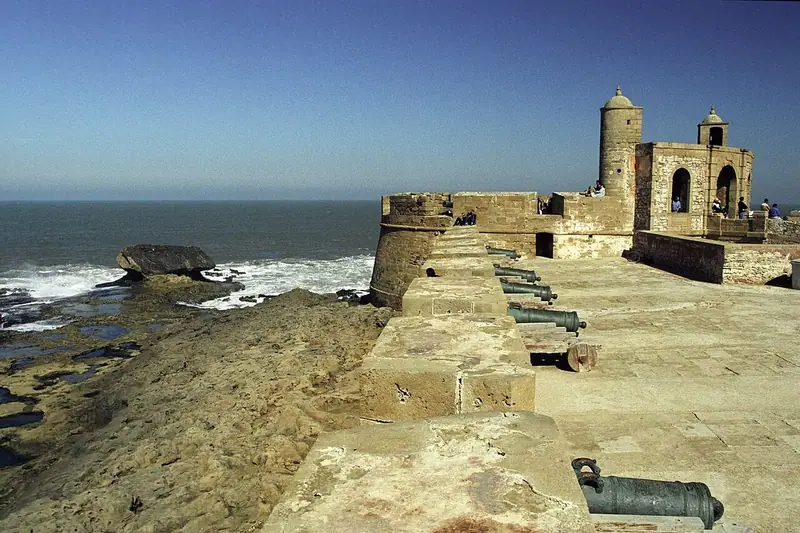 Alaouite8 stops · 1760s–19th century
Medina of Essaouira audio guide
Old Mogador on the Atlantic: blue boats in the harbour, cannons on the sea ramparts, the kasbah of the consuls and the old Jewish quarter.
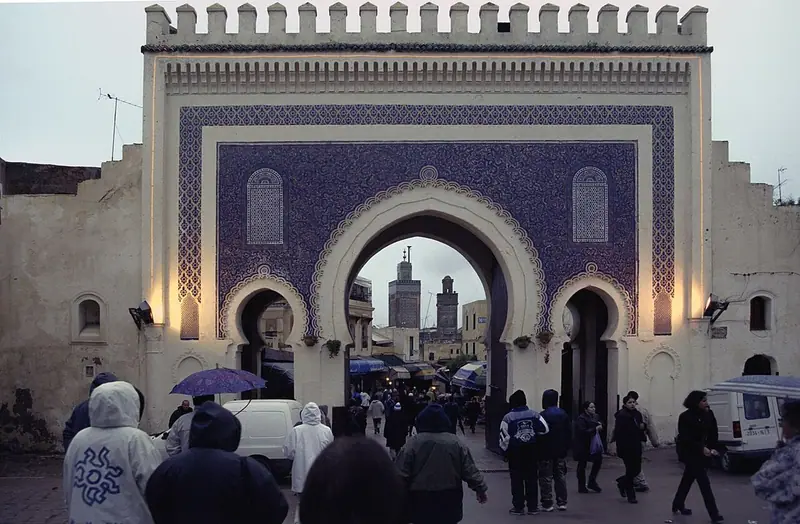 Marinid8 stops · 789–14th century
Medina of Fez audio guide
Through Bab Bou Jeloud into the lanes of Fes el-Bali, past jewel-box madrasas to the Chouara tannery.
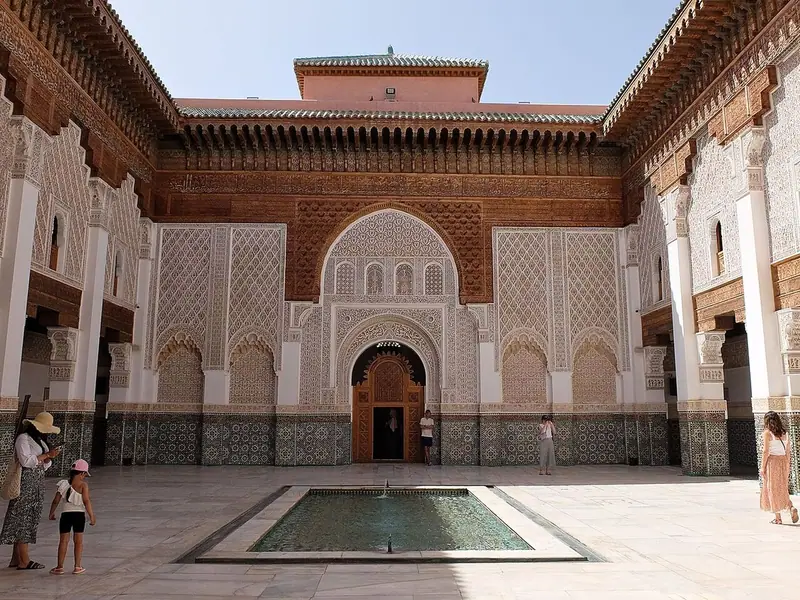 Almoravid & Almohad7 stops · c. 1070–16th century
Medina of Marrakech audio guide
From the Koutoubia minaret to Jemaa el-Fnaa, then into the souks and the courtyard of the Ben Youssef Madrasa.
Every guide, in every country
Chefchaouen and every other guide we publish, including future ones. One payment, no subscription.