Before you start
The Rijksmuseum, the national museum of the Netherlands, tells the story of Dutch art and history across eight centuries, and holds the greatest collection of paintings from the Dutch Golden Age, the seventeenth century, when a small republic became a world power in trade, science and art. Its collection numbers about a million objects, of which about eight thousand are on display. This guide looks at the building, then continues through the heart of the museum to a few of its most famous works, by Rembrandt, Vermeer and Frans Hals, and ends with a remarkable doll’s house. The museum is large and busy, so pick up a floor plan, as the displays are sometimes rearranged.
Use it as a self-guided tour of the Rijksmuseum: 8 stops in visit order, each played when you’re ready, at your own pace.
 Free preview · Stop 1
The Building
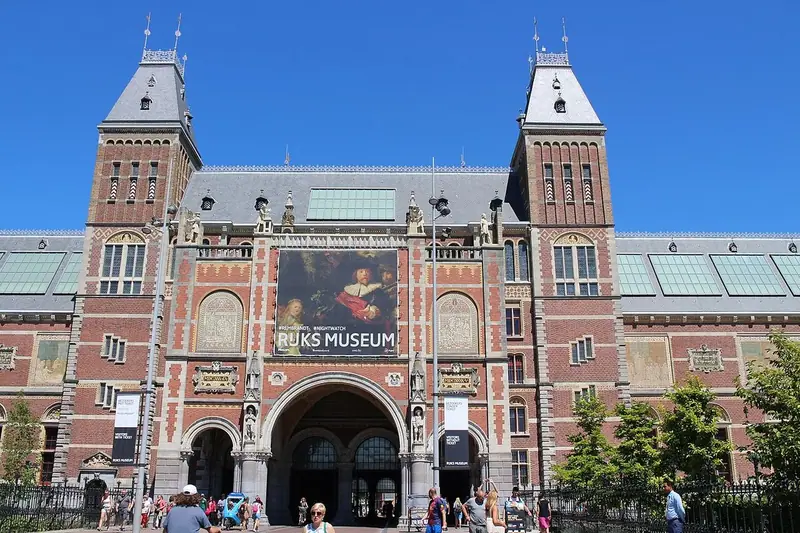
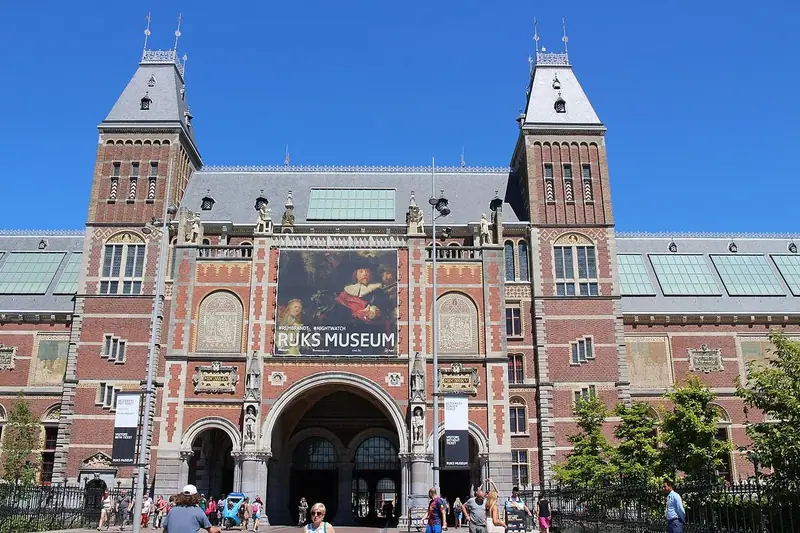
Begin outside, on the Museumplein side, and look at the great brick building designed by Pierre Cuypers and opened in 1885. With its towers, steep roofs and rich decoration, it combines Gothic and Renaissance styles, and critics at the time said it looked more like a cathedral than a museum. Look at the tile panels, sculptures and inscriptions on the facades, which celebrate Dutch art and history, with figures of famous artists. Walk through the passage that runs through the middle of the building, a public route for pedestrians and cyclists, where you may hear musicians playing. From the passage, enter the museum through the glass-roofed atrium, created in the two old courtyards during the recent renovation. Look up at the light falling into this vast space, with the old brick facades of the courtyards on either side.
Photo: Suicasmo · CC BY-SA 4.0 · Wikimedia Commons
What to see at the Rijksmuseum: 8 stops, in visit order
- 01
 The BuildingCuypers’ Cathedral of ArtFree preview
- 02
 The Great HallThe Story in GlassIn the guide
- 03
 The Gallery of HonourMasters of the Golden AgeIn the guide
- 04
 The MilkmaidVermeer’s Quiet MomentIn the guide
- 05
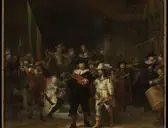 The Night WatchRembrandt’s MasterpieceIn the guide
- 06
 The LibraryThe Cuypers LibraryIn the guide
- 07
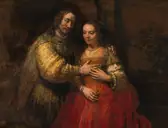 The Jewish BrideA Painting of LoveIn the guide
- 08
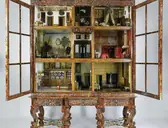 The Doll’s HousePetronella Oortman’s HouseIn the guide
History of the Rijksmuseum
The Rijksmuseum was founded in The Hague in 1798, in the Batavian Republic, on the model of the Louvre in Paris, and moved to Amsterdam in 1808 under King Louis Bonaparte, brother of Napoleon. Its greatest treasures come from the Dutch Republic of the seventeenth century, which won its independence from Spain in the Eighty Years’ War and grew rich on trade. The present building, by the architect Pierre Cuypers, opened in 1885, in the time of the Kingdom of the Netherlands, ruled by the House of Orange-Nassau. After a renovation lasting ten years, Queen Beatrix reopened it in 2013.
Rijksmuseum guide: questions
How many stops does the Rijksmuseum guide have?
8 stops, in visit order: 1. The Building; 2. The Great Hall; 3. The Gallery of Honour; 4. The Milkmaid; 5. The Night Watch; 6. The Library; 7. The Jewish Bride; 8. The Doll’s House.
Can I do a self-guided tour of the Rijksmuseum with this guide?
Yes. The guide is made for a self-guided tour: 8 stops in visit order, each with a photo, a story and a voice, so you can explore the Rijksmuseum at your own pace, without joining a group. Download it before you go and it works offline.
How long is each guide?
The 8 stops add up to about 5 minutes of listening in total. You play each stop when you’re ready, so you can go at your own pace.
Does the guide work offline?
Yes, once it’s downloaded. The guide is a single self-contained web page (about 7.9 MB) with the photos, text and audio built in. Download it to your phone before you go (Wi-Fi is best); after that it opens in any modern browser on iPhone or Android, with no app, account or mobile signal needed.
Does it use GPS or need my location?
No. The guide doesn’t use GPS and doesn’t know where you are: you play each stop when you reach it. It works on iPhone and Android in any modern browser, and it’s in English.
What’s included?
One self-contained HTML guide: 8 stops in visit order, each with a photo, text and a voice, plus the story of who built the site.
Who built the Rijksmuseum?
The Rijksmuseum was founded in The Hague in 1798, in the Batavian Republic, on the model of the Louvre in Paris, and moved to Amsterdam in 1808 under King Louis Bonaparte, brother of Napoleon. Its greatest treasures come from the Dutch Republic of the seventeenth century, which won its independence from Spain in the Eighty Years’ War and grew rich on trade.
Where is the Rijksmuseum?
The Rijksmuseum, the national museum of the Netherlands, tells the story of Dutch art and history across eight centuries, and holds the greatest collection of paintings from the Dutch Golden Age, the seventeenth century, when a small republic became a world power in trade, science and art.
Is there a free audio guide to the Rijksmuseum?
The first stop, The Building, is free to read and hear on this page, so you can try the Rijksmuseum audio tour before you buy. The full guide, with all 8 stops, is a one-off purchase: download it once and it’s yours to keep, working offline.
Is the Rijksmuseum guide worth it?
If you’d like to know what you’re looking at, yes. For $10 you get 8 stops in visit order, each with a photo, a short history and a voice you play when you’re ready, about 5 minutes of listening in all. It’s short on purpose, so you spend your time looking, not listening. It’s yours to keep, works offline and needs no app. The first stop is free on this page, so you can try it before you buy. If you’d like hours of detail, a guided tour will go deeper.
Audio guide or guided tour?
It depends how you like to visit. This guide lets you explore the Rijksmuseum at your own pace, at any time, for a one-off price. A guided tour gives you a live expert you can ask questions, but at fixed times and usually for a higher price. Many people use both: a tour for the big picture, and the guide to read beforehand or to revisit the stops in their own time.
Is this the official Rijksmuseum guide?
No. It’s an independent guide by The Historian Guide, not affiliated with or endorsed by the operator of the Rijksmuseum. For tickets and opening hours, check the official site operator before you go.
Does the guide include entry tickets or opening hours?
No. The guide is a digital companion only. Admission to the Rijksmuseum is separate, so check the official site operator for current tickets and opening hours before you go.
- Stop 1 · The Building (also the cover): Suicasmo · CC BY-SA 4.0 · Wikimedia Commons · resized
- Stop 2 · The Great Hall: Rijksmuseum · CC0 · Wikimedia Commons · resized
- Stop 3 · The Gallery of Honour: Rijksvastgoedbedrijf · CC0 · Wikimedia Commons · resized
- Stop 4 · The Milkmaid: Johannes Vermeer · Public domain · Wikimedia Commons · resized
- Stop 5 · The Night Watch: Rembrandt · Public domain · Wikimedia Commons · resized
- Stop 6 · The Library: Siepke van Keulen · CC BY 4.0 · Wikimedia Commons · resized
- Stop 7 · The Jewish Bride: Rembrandt · Public domain · Wikimedia Commons · resized
- Stop 8 · The Doll’s House: AnonymousUnknown author · Copyrighted free use · Wikimedia Commons · resized


All photographs from Wikimedia Commons under the licences shown.
More guides in Netherlands
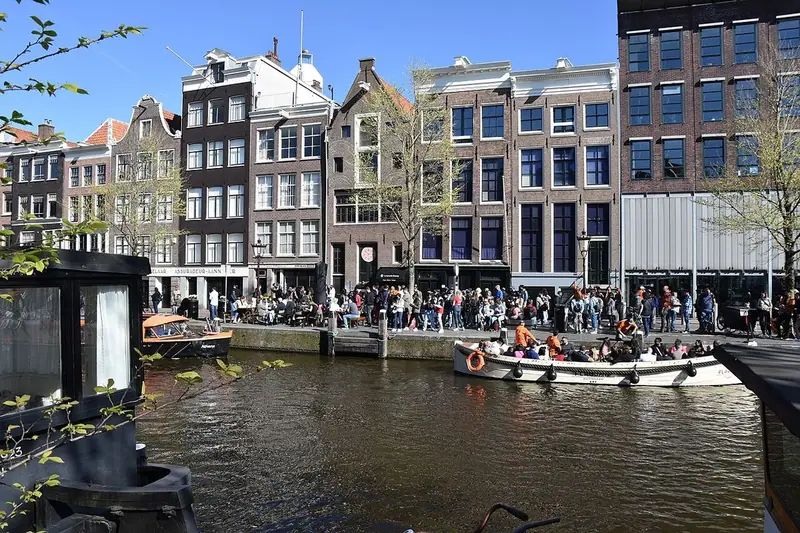 Modern7 stops · 1635 house; hiding 1942–1944
Anne Frank House audio guide
Pass behind the bookcase into the hiding place on the Prinsengracht where Anne Frank wrote her diary during the Second World War.
 Dutch Republic7 stops · 1360s–1868 CE
Kinderdijk audio guide
Dikes across a low polder between rows of windmills built in 1738 and 1740 to lift the water in stages, the largest group of old mills in the Netherlands.
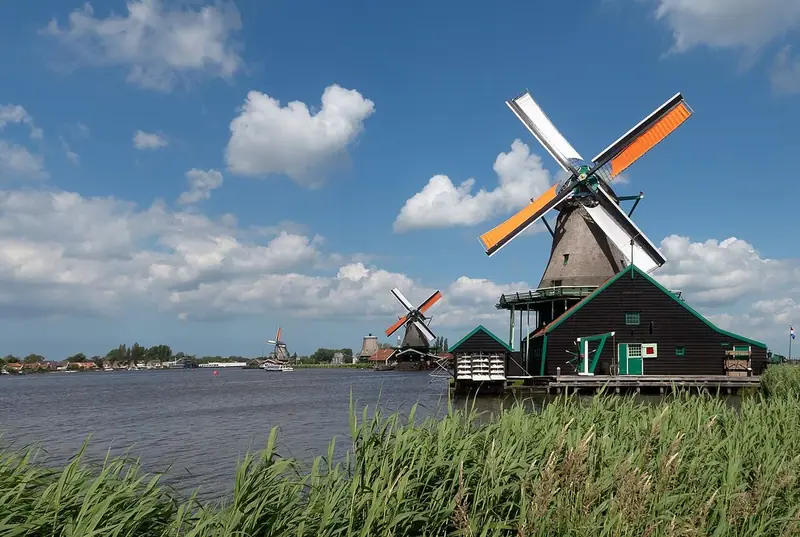 Dutch Republic7 stops · 17th–18th century CE
Zaanse Schans audio guide
The green wooden houses and working windmills of the Zaan, one of the earliest industrial regions in Europe.
Every guide, in every country
Rijksmuseum and every other guide we publish, including future ones. One payment, no subscription.