Before you start
Ohrid rises on two hills above the north-eastern shore of Lake Ohrid, in the south-west of North Macedonia, close to the border with Albania. The town has an airport, and buses run from Skopje and Bitola. UNESCO inscribed the lake as a World Heritage Site in 1979 and extended the site to the town’s cultural heritage in 1980, making it one of the few sites listed for both nature and culture; the Albanian shore was added in 2019. The old town is compact but steep, with cobbled lanes and steps, so wear sturdy shoes and bring water and a hat in summer. Churches are places of worship: dress modestly and ask before taking photographs inside. The route starts at the Upper Gate near the top of the old town, visits the theatre and the fortress, descends through the woods to Kaneo on the shore, and ends by the lake.
Use it as a self-guided tour of Ohrid: 8 stops in visit order, each played when you’re ready, at your own pace.
 Free preview · Stop 1
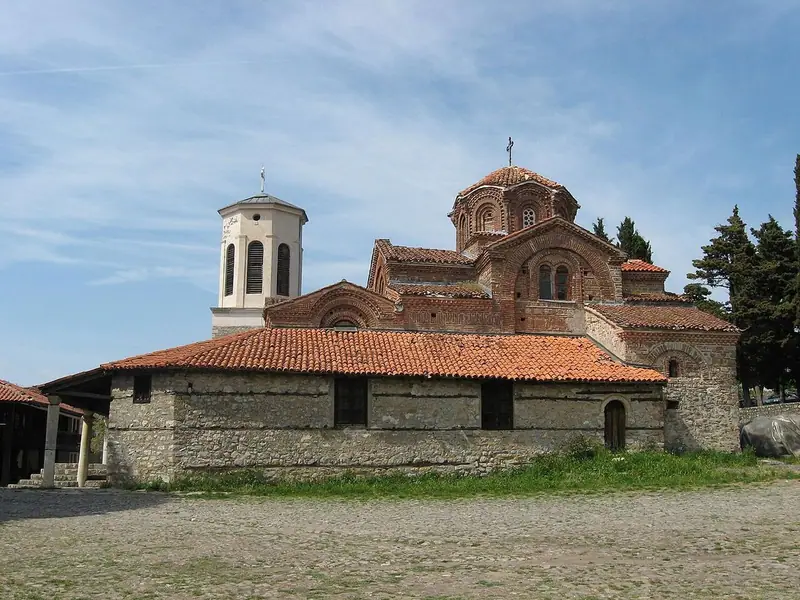
Holy Mother of God Peribleptos
Begin at the Upper Gate, one of the gates of the medieval walls, and step into the church just inside it. A Greek inscription above the western entrance records that it was built in 1295 by Progon Sgouros, a Byzantine aristocrat and relative of the emperor Andronikos II Palaiologos, and his wife Eudokia. It is dedicated to the Mother of God Peribleptos, meaning the one who is seen by all. Look for the signatures of the painters Michael Astrapas and Eutychios, leading artists of their day, hidden among the frescoes. When the Ottomans turned the church of Saint Clement into a mosque, his relics were brought here, and for centuries the church was known by his name. It served as the cathedral of the archbishops of Ohrid from the fifteenth to the eighteenth century. Nearby is the town’s Icon Gallery.
Photo: Explorer1940 · CC BY-SA 4.0 · Wikimedia Commons
What to see at Ohrid: 8 stops, in visit order
- 01
 Holy Mother of God PeribleptosFrescoes signed by their paintersFree preview
- 02
 Ancient TheatreLychnidos on the hillsideIn the guide
- 03
 Samuel’s FortressWalls above the lakeIn the guide
- 04
 PlaošnikWhere Saint Clement taughtIn the guide
- 05
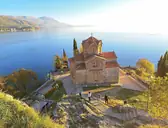 Saint John at KaneoA chapel on the cliffIn the guide
- 06
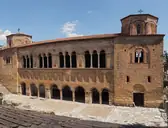 Saint SophiaThe cathedral of the archbishopsIn the guide
- 07
 Robev HouseA merchant family’s homeIn the guide
- 08
 Lake OhridOne of the oldest lakes on EarthIn the guide
Site map of Ohrid
History of Ohrid
Ohrid was built by many peoples over more than two thousand years. In antiquity it was Lychnidos, a town of the Illyrian Dassaretae, probably meaning city of light, and it was fortified by the fourth century BCE, perhaps under Philip II of Macedon. Under Rome it stood on the Via Egnatia, the great road from the Adriatic to Byzantium, and it became an early centre of Christianity. Slavs settled the region from the sixth century, and the town was taken by Bulgaria around 840. In 886 Saint Clement, a disciple of Saints Cyril and Methodius, founded a school here that spread Slavic literacy across the Balkans. Between 990 and 1015 Ohrid was the capital of Tsar Samuel.
The full history continues in the guide.
Ohrid guide: questions
How many stops does the Ohrid guide have?
8 stops, in visit order: 1. Holy Mother of God Peribleptos; 2. Ancient Theatre; 3. Samuel’s Fortress; 4. Plaošnik; 5. Saint John at Kaneo; 6. Saint Sophia; 7. Robev House; 8. Lake Ohrid.
Can I do a self-guided tour of Ohrid with this guide?
Yes. The guide is made for a self-guided tour: 8 stops in visit order, each with a photo, a story and a voice, so you can explore Ohrid at your own pace, without joining a group. Download it before you go and it works offline.
How long do you need at Ohrid?
We suggest allowing full day. The 8 stops add up to about 6 minutes of listening, and you play each one when you’re ready, so you can linger wherever you like.
How long is each guide?
The 8 stops add up to about 6 minutes of listening in total. You play each stop when you’re ready, so you can go at your own pace.
Does the guide work offline?
Yes, once it’s downloaded. The guide is a single self-contained web page (about 8.2 MB) with the photos, text and audio built in. Download it to your phone before you go (Wi-Fi is best); after that it opens in any modern browser on iPhone or Android, with no app, account or mobile signal needed.
Does it use GPS or need my location?
No. The guide doesn’t use GPS and doesn’t know where you are: you play each stop when you reach it. It works on iPhone and Android in any modern browser, and it’s in English.
What’s included?
One self-contained HTML guide: 8 stops in visit order, each with a photo, text and a voice, plus the story of who built the site.
Who built Ohrid?
Ohrid was built by many peoples over more than two thousand years. In antiquity it was Lychnidos, a town of the Illyrian Dassaretae, probably meaning city of light, and it was fortified by the fourth century BCE, perhaps under Philip II of Macedon.
Where is Ohrid?
Ohrid rises on two hills above the north-eastern shore of Lake Ohrid, in the south-west of North Macedonia, close to the border with Albania.
Is there a free audio guide to Ohrid?
The first stop, Holy Mother of God Peribleptos, is free to read and hear on this page, so you can try the Ohrid audio tour before you buy. The full guide, with all 8 stops, is a one-off purchase: download it once and it’s yours to keep, working offline.
Is the Ohrid guide worth it?
If you’d like to know what you’re looking at, yes. For $10 you get 8 stops in visit order, each with a photo, a short history and a voice you play when you’re ready, plus a site map of the stops, and about 6 minutes of listening in all. It’s short on purpose, so you spend your time looking, not listening. It’s yours to keep, works offline and needs no app. The first stop is free on this page, so you can try it before you buy. If you’d like hours of detail, a guided tour will go deeper.
Audio guide or guided tour?
It depends how you like to visit. This guide lets you explore Ohrid at your own pace, at any time, for a one-off price. A guided tour gives you a live expert you can ask questions, but at fixed times and usually for a higher price. Many people use both: a tour for the big picture, and the guide to read beforehand or to revisit the stops in their own time.
Is this the official Ohrid guide?
No. It’s an independent guide by The Historian Guide, not affiliated with or endorsed by the operator of Ohrid. For tickets and opening hours, check the official site operator before you go.
Does the guide include entry tickets or opening hours?
No. The guide is a digital companion only. Admission to Ohrid is separate, so check the official site operator for current tickets and opening hours before you go.
- Stop 1 · Holy Mother of God Peribleptos: Explorer1940 · CC BY-SA 4.0 · Wikimedia Commons · resized
- Stop 2 · Ancient Theatre: Sharon Hahn Darlin · CC BY 2.0 · Wikimedia Commons · resized
- Stop 3 · Samuel’s Fortress: kallerna · CC BY-SA 4.0 · Wikimedia Commons · resized
- Stop 4 · Plaošnik: This illustration was made by Rašo. An email to Rašo would be appreciated too. · CC BY-SA 3.0 · Wikimedia Commons · resized
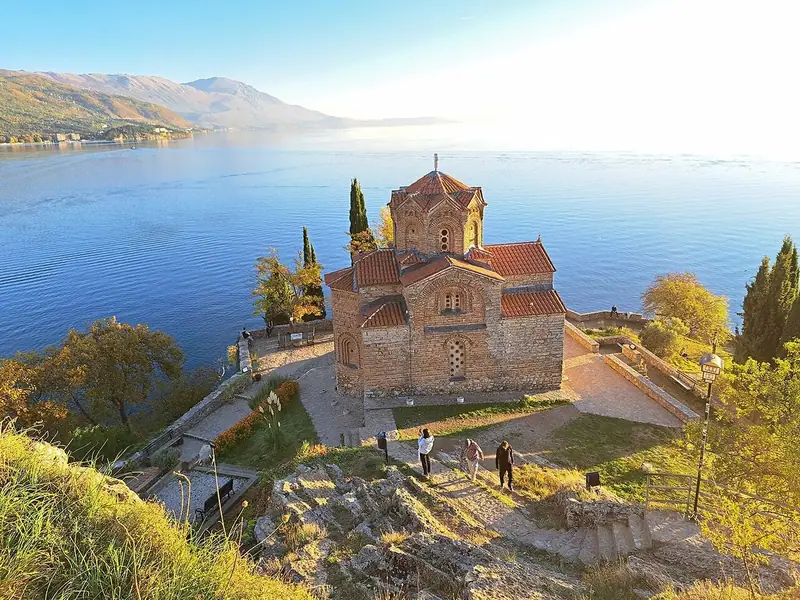
- Stop 5 · Saint John at Kaneo (also the cover): Tahir1434 · CC BY-SA 4.0 · Wikimedia Commons · resized
- Stop 6 · Saint Sophia: Petar Milošević · CC BY-SA 4.0 · Wikimedia Commons · resized
- Stop 7 · Robev House: Silfiriel · CC BY-SA 3.0 · Wikimedia Commons · resized
- Stop 8 · Lake Ohrid: MiroJP · CC BY-SA 4.0 · Wikimedia Commons · resized


All photographs from Wikimedia Commons under the licences shown.
More guides
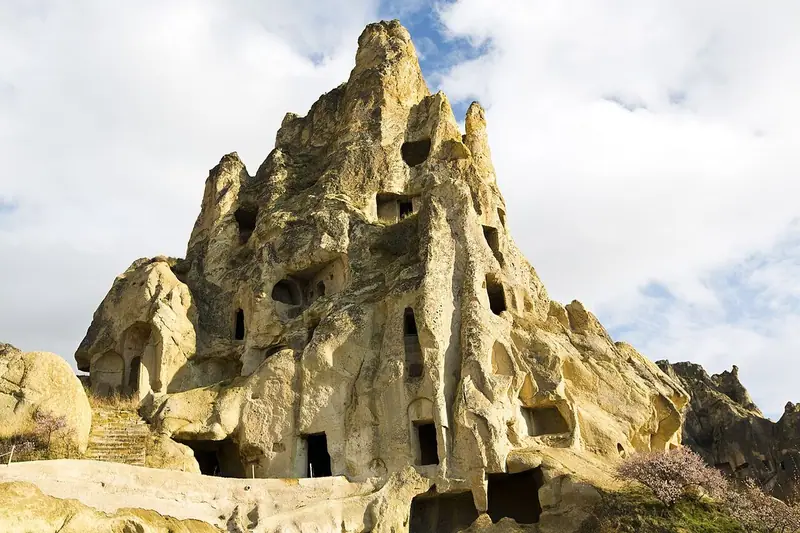 Byzantine8 stops · 10th–12th century
Cappadocia audio guide
Monks' churches and chapels cut into the soft rock of Göreme, among Cappadocia’s fairy chimneys.
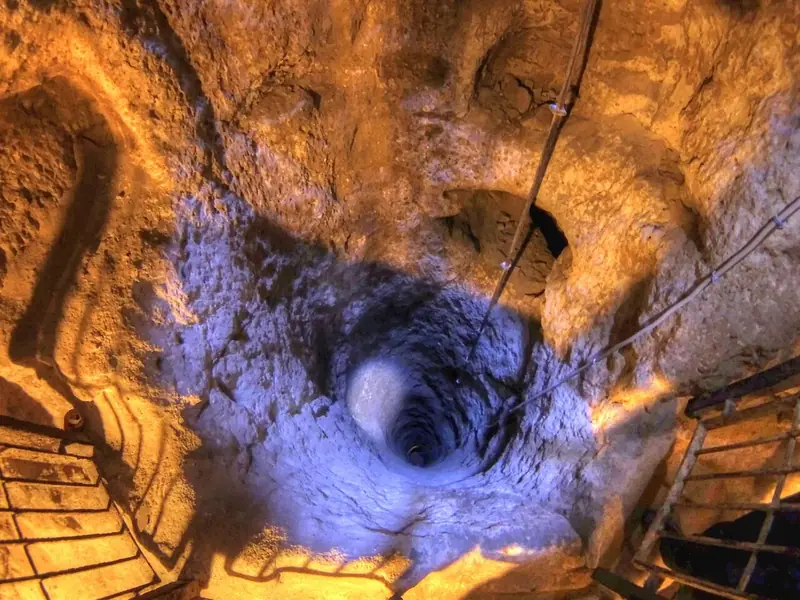 Byzantine7 stops · expanded c. 780–1180 CE
Derinkuyu audio guide
Descend through stables, kitchens and rolling stone doors into an underground city cut deep into the tuff.
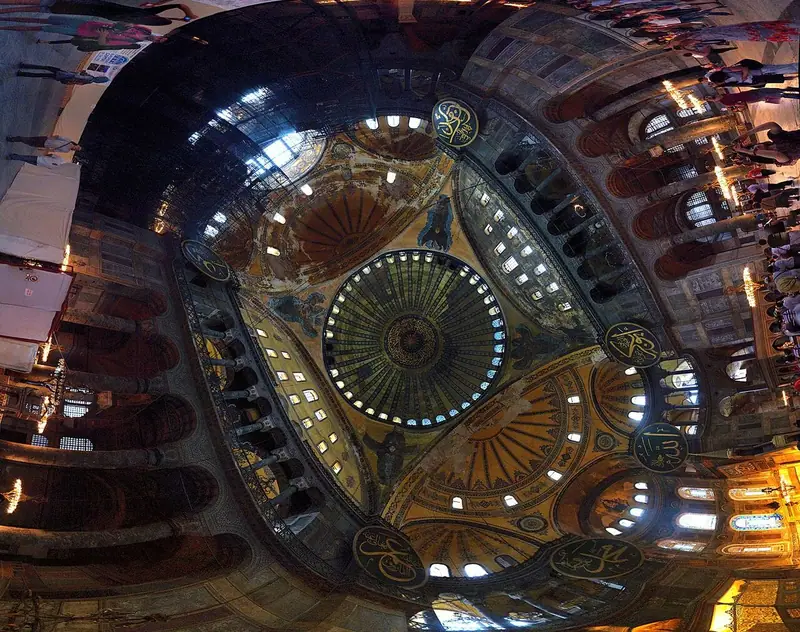 Byzantine8 stops · 532–537 CE
Hagia Sophia audio guide
Stand beneath Justinian’s great dome, then climb to the galleries for the Deesis mosaic and a Viking’s graffiti.
Every guide, in every country
Ohrid and every other guide we publish, including future ones. One payment, no subscription.