Before you start
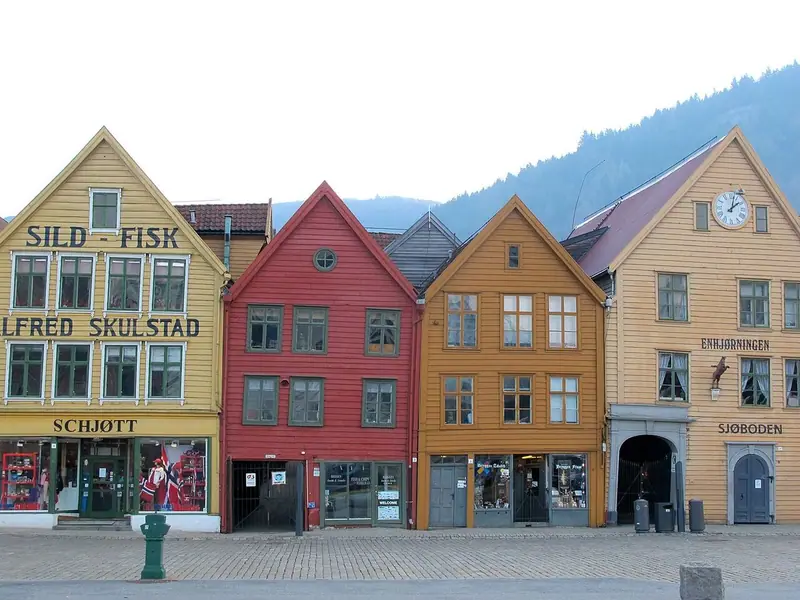
Bryggen, the old wharf of Bergen on Norway’s west coast, is a row of tall, gabled wooden buildings along the harbour, the remains of one of the great trading posts of the Hanseatic League. It was inscribed as a UNESCO World Heritage Site in 1979. Bergen is compact and walkable, and this route takes a few hours, though it often rains, so bring waterproofs and wear shoes with a good grip for the wet wooden passages. This guide starts at the fish market at the head of the harbour, turns into the narrow passages behind the wharf and walks along its front, visits Bryggens Museum, the assembly rooms and St Mary’s Church, and continues to the Bergenhus Fortress, ending at Håkon’s Hall.
Use it as a self-guided tour of Bryggen: 8 stops in visit order, each played when you’re ready, at your own pace.
 Free preview · Stop 1
The Fish Market
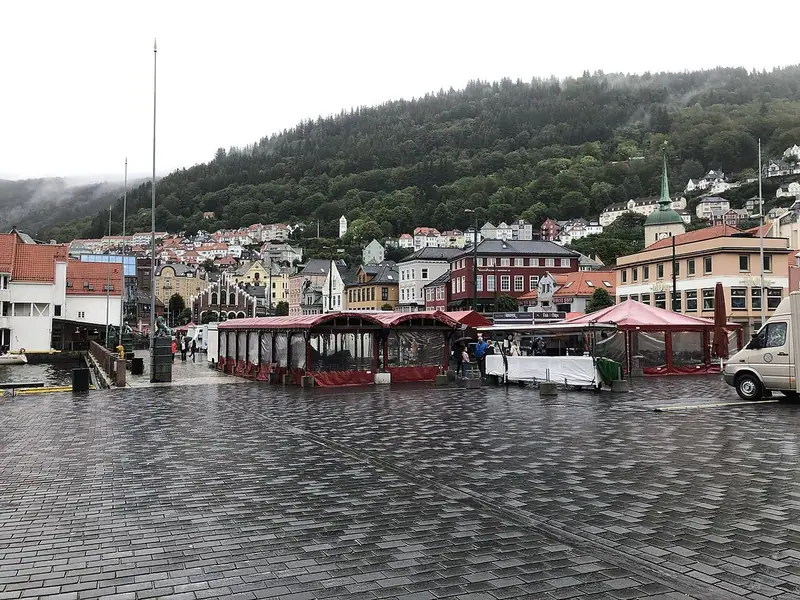
Begin at the Fish Market, Fisketorget, at the head of Vågen, the inner harbour of Bergen, where fish has been traded for centuries. Today the stalls sell fresh seafood, smoked salmon and fish soup, and there is an indoor market hall beside the water. Stand at the edge of the harbour and look along its eastern side, where the gabled wooden buildings of Bryggen line the quay, with the mountains of Fløyen rising behind them. For centuries this harbour was crowded with ships bringing dried fish from the north and grain from the Baltic. Across the water, on the western side, are the old warehouses of Bergen’s other merchants. If you have time, the Fløibanen funicular, a short walk away, climbs to a viewpoint above the city. Then walk north along the quay towards Bryggen.
Photo: Ssu · CC BY-SA 4.0 · Wikimedia Commons
What to see at Bryggen: 8 stops, in visit order
- 01
 The Fish MarketHead of the harbourFree preview
- 02
 Bryggen’s PassagesInside the tenementsIn the guide
- 03
 The Wharf FrontGables on the harbourIn the guide
- 04
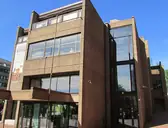 Bryggens MuseumWhat lay beneathIn the guide
- 05
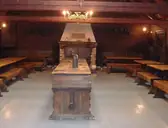 The Assembly RoomsSchøtstueneIn the guide
- 06
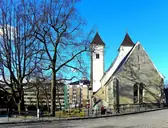 St Mary’s ChurchOldest building in BergenIn the guide
- 07
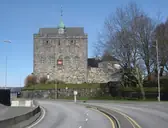 Rosenkrantz TowerA tower of powerIn the guide
- 08
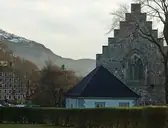 Håkon’s HallHall of the medieval kingsIn the guide
Site map of Bryggen
History of Bryggen
Bergen was founded in the eleventh century and became the largest town and, in the thirteenth century, the capital of the kingdom of Norway. Its wealth came from the trade in stockfish, dried cod from northern Norway, exchanged for grain and other goods. From the fourteenth century German merchants of the Hanseatic League dominated the trade, and by around 1360 they had set up one of their four great foreign trading offices, or Kontors, here, on the wharf. The Kontor lasted until the eighteenth century. Bryggen was destroyed by fire many times, most recently in 1702 and 1955, and was always rebuilt in the old way, on the same plots and along the same lines.
Bryggen guide: questions
How many stops does the Bryggen guide have?
8 stops, in visit order: 1. The Fish Market; 2. Bryggen’s Passages; 3. The Wharf Front; 4. Bryggens Museum; 5. The Assembly Rooms; 6. St Mary’s Church; 7. Rosenkrantz Tower; 8. Håkon’s Hall.
Can I do a self-guided tour of Bryggen with this guide?
Yes. The guide is made for a self-guided tour: 8 stops in visit order, each with a photo, a story and a voice, so you can explore Bryggen at your own pace, without joining a group. Download it before you go and it works offline.
How long is each guide?
The 8 stops add up to about 6 minutes of listening in total. You play each stop when you’re ready, so you can go at your own pace.
Does the guide work offline?
Yes, once it’s downloaded. The guide is a single self-contained web page (about 7.4 MB) with the photos, text and audio built in. Download it to your phone before you go (Wi-Fi is best); after that it opens in any modern browser on iPhone or Android, with no app, account or mobile signal needed.
Does it use GPS or need my location?
No. The guide doesn’t use GPS and doesn’t know where you are: you play each stop when you reach it. It works on iPhone and Android in any modern browser, and it’s in English.
What’s included?
One self-contained HTML guide: 8 stops in visit order, each with a photo, text and a voice, plus the story of who built the site.
Who built Bryggen?
Bergen was founded in the eleventh century and became the largest town and, in the thirteenth century, the capital of the kingdom of Norway. Its wealth came from the trade in stockfish, dried cod from northern Norway, exchanged for grain and other goods.
Where is Bryggen?
Bryggen, the old wharf of Bergen on Norway’s west coast, is a row of tall, gabled wooden buildings along the harbour, the remains of one of the great trading posts of the Hanseatic League.
Is there a free audio guide to Bryggen?
The first stop, The Fish Market, is free to read and hear on this page, so you can try the Bryggen audio tour before you buy. The full guide, with all 8 stops, is a one-off purchase: download it once and it’s yours to keep, working offline.
Is the Bryggen guide worth it?
If you’d like to know what you’re looking at, yes. For $10 you get 8 stops in visit order, each with a photo, a short history and a voice you play when you’re ready, plus a site map of the stops, and about 6 minutes of listening in all. It’s short on purpose, so you spend your time looking, not listening. It’s yours to keep, works offline and needs no app. The first stop is free on this page, so you can try it before you buy. If you’d like hours of detail, a guided tour will go deeper.
Audio guide or guided tour?
It depends how you like to visit. This guide lets you explore Bryggen at your own pace, at any time, for a one-off price. A guided tour gives you a live expert you can ask questions, but at fixed times and usually for a higher price. Many people use both: a tour for the big picture, and the guide to read beforehand or to revisit the stops in their own time.
Is this the official Bryggen guide?
No. It’s an independent guide by The Historian Guide, not affiliated with or endorsed by the operator of Bryggen. For tickets and opening hours, check the official site operator before you go.
Does the guide include entry tickets or opening hours?
No. The guide is a digital companion only. Admission to Bryggen is separate, so check the official site operator for current tickets and opening hours before you go.
- Stop 1 · The Fish Market: Ssu · CC BY-SA 4.0 · Wikimedia Commons · resized
- Stop 2 · Bryggen’s Passages: Zairon · CC BY-SA 3.0 · Wikimedia Commons · resized
- Stop 3 · The Wharf Front (also the cover): Acediscovery · CC BY 4.0 · Wikimedia Commons · resized
- Stop 4 · Bryggens Museum: יעקב · CC BY-SA 4.0 · Wikimedia Commons · resized
- Stop 5 · The Assembly Rooms: JopkeB · CC BY-SA 4.0 · Wikimedia Commons · resized
- Stop 6 · St Mary’s Church: Odd Roar Aalborg · CC BY-SA 4.0 · Wikimedia Commons · resized
- Stop 7 · Rosenkrantz Tower: Bernt Rostad from Oslo, Norway · CC BY 2.0 · Wikimedia Commons · resized
- Stop 8 · Håkon’s Hall: Aqwis · CC BY-SA 3.0 · Wikimedia Commons · resized


All photographs from Wikimedia Commons under the licences shown.
More guides in Norway
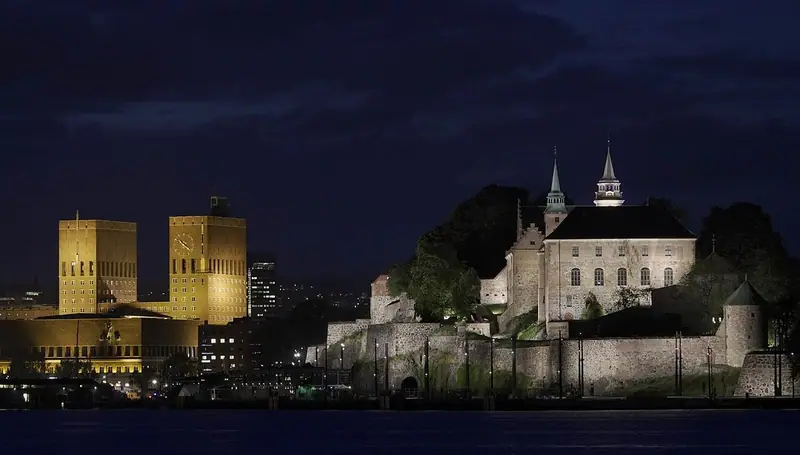 Kingdom of Norway7 stops · c. 1300–1945
Akershus Fortress audio guide
Pass through the gate and along the ramparts of Oslo’s headland fortress, into the castle halls and the tombs of Norway’s kings.
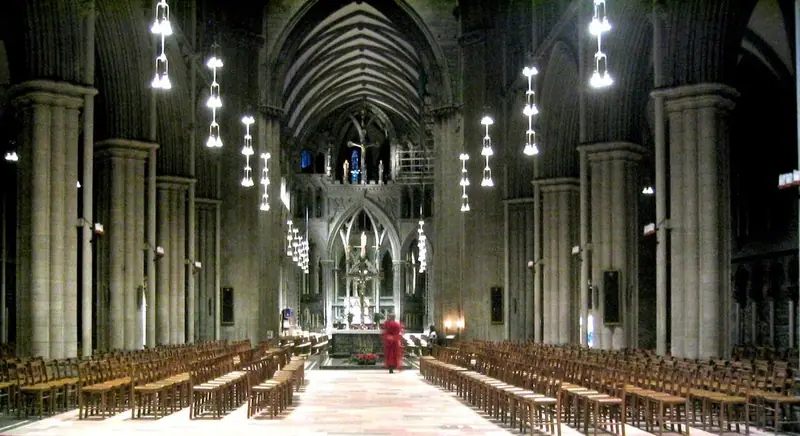 Norse8 stops · 997–1537
Nidaros and Old Trondheim audio guide
From the market square past the royal wooden palace to Nidaros Cathedral, shrine of Saint Olav, then across the Old Town Bridge to Bakklandet.
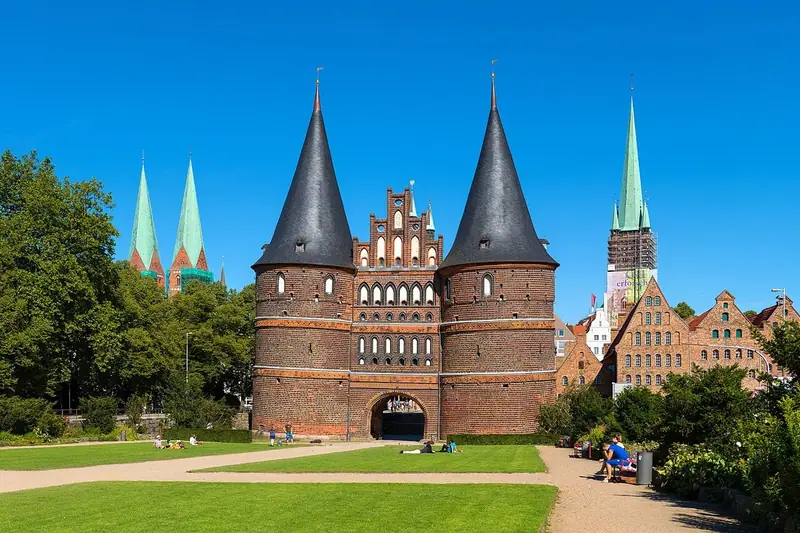 Hanseatic9 stops · 1143 – 16th century
Lübeck audio guide
The brick Gothic island city that led the Hanseatic League, with the Holstentor, the salt warehouses, St Mary’s Church and the town hall.
Every guide, in every country
Bryggen and every other guide we publish, including future ones. One payment, no subscription.