Before you start
Bahla is an oasis town at the foot of the Jebel Akhdar mountains in the interior of Oman, about twenty-five kilometres west of Nizwa. Its great fort of mud brick on stone foundations rises from a rocky outcrop above the palm groves, and in 1987 it became the first site in Oman to be inscribed on the UNESCO World Heritage List. The route takes you through the fort’s gate and courtyards, up into the oldest citadel and the later houses built within the walls, and then out to the Friday Mosque and the old souq below. There are steep stairs and uneven floors inside. Allow around two hours.
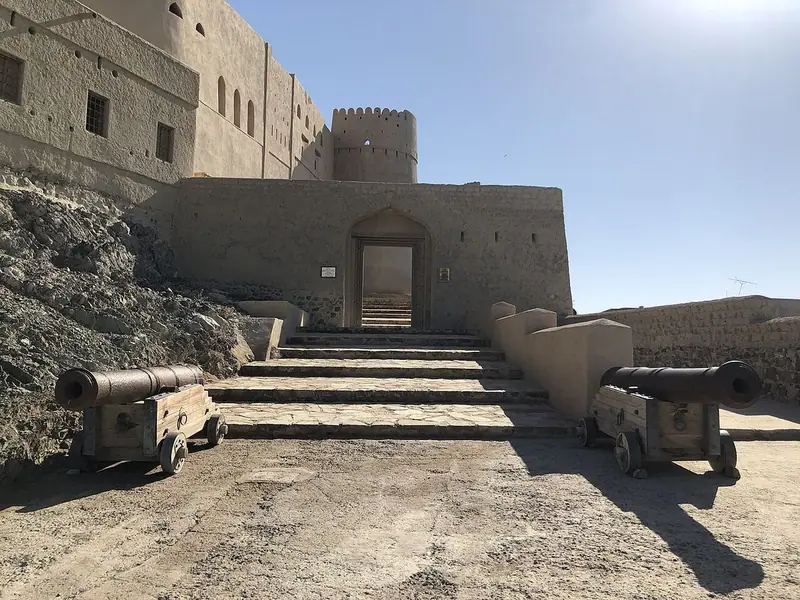
Use it as a self-guided tour of Bahla Fort: 7 stops in visit order, each played when you’re ready, at your own pace.
 Free preview · Stop 1
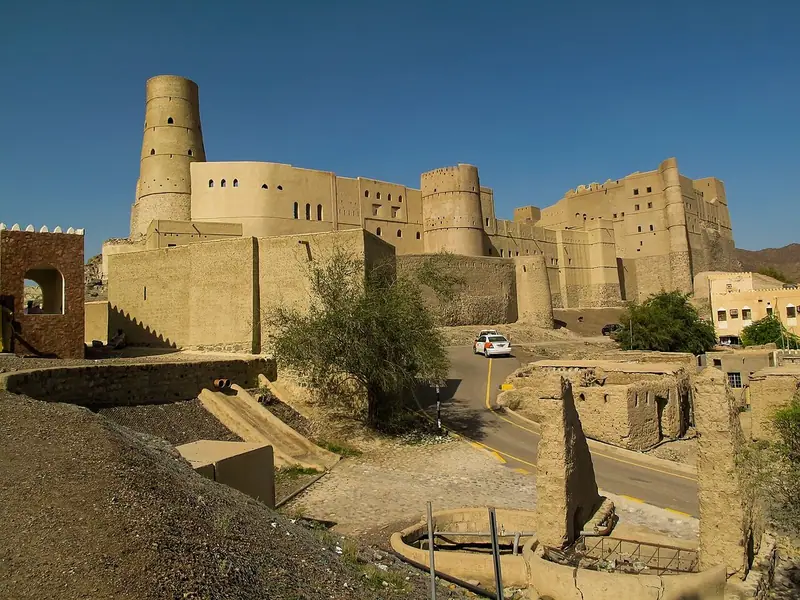
The Fort on the Rock
Begin outside, where you can take in the whole fort. It stands on a rocky outcrop above the town, its walls and rounded towers built of unbaked mud brick on foundations of stone. Notice the crenellated parapets along the tops of the walls. This is a fort designed before gunpowder changed warfare, when high walls and towers were enough to dominate the land around. From here the garrison could watch the town, the palm groves and the gates in the oasis wall. Mud brick is cheap and cool, but it is also fragile. When the fort was added to the World Heritage List, it was decaying rapidly after each rainy season, and in 1988 it was placed on the list of sites in danger. It was taken off that list in 2004, after years of careful work using earth-based materials.
Photo: Francisco Anzola · CC BY 2.0 · Wikimedia Commons
What to see at Bahla Fort: 7 stops, in visit order
- 01
 The Fort on the RockMud brick and stoneFree preview
- 02
 The CourtyardThrough the gateIn the guide
- 03
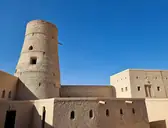 Al-QasabaThe oldest citadelIn the guide
- 04
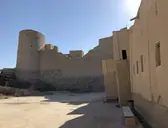 Bayt al-HadithThe new houseIn the guide
- 05
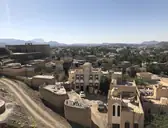 Bayt al-JabalView over the oasisIn the guide
- 06
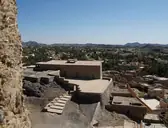 The Friday MosqueA carved prayer nicheIn the guide
- 07
 The Old SouqUnder the fort’s eyeIn the guide
Site map of Bahla Fort
History of Bahla Fort
The fort was built by the Banu Nebhan, a tribe who dominated central Oman and made Bahla their capital from the twelfth century to the end of the fifteenth. Bahla was also a centre of Ibadism, the branch of Islam on which the old Omani Imamates were based. After the Nebhani period, later rulers added to the fort, including the Ya’ruba dynasty, who ruled Oman from 1624 to 1743. The oasis was enclosed by a long wall, more than twelve kilometres around, and watered by falaj channels that still bring water to the palm groves. After decades of decay, the fort was restored with earthen materials and reopened to visitors in 2012.
Bahla Fort guide: questions
How many stops does the Bahla Fort guide have?
7 stops, in visit order: 1. The Fort on the Rock; 2. The Courtyard; 3. Al-Qasaba; 4. Bayt al-Hadith; 5. Bayt al-Jabal; 6. The Friday Mosque; 7. The Old Souq.
Can I do a self-guided tour of Bahla Fort with this guide?
Yes. The guide is made for a self-guided tour: 7 stops in visit order, each with a photo, a story and a voice, so you can explore Bahla Fort at your own pace, without joining a group. Download it before you go and it works offline.
How long is each guide?
The 7 stops add up to about 5 minutes of listening in total. You play each stop when you’re ready, so you can go at your own pace.
Does the guide work offline?
Yes, once it’s downloaded. The guide is a single self-contained web page (about 6.3 MB) with the photos, text and audio built in. Download it to your phone before you go (Wi-Fi is best); after that it opens in any modern browser on iPhone or Android, with no app, account or mobile signal needed.
Does it use GPS or need my location?
No. The guide doesn’t use GPS and doesn’t know where you are: you play each stop when you reach it. It works on iPhone and Android in any modern browser, and it’s in English.
What’s included?
One self-contained HTML guide: 7 stops in visit order, each with a photo, text and a voice, plus the story of who built the site.
Who built Bahla Fort?
The fort was built by the Banu Nebhan, a tribe who dominated central Oman and made Bahla their capital from the twelfth century to the end of the fifteenth. Bahla was also a centre of Ibadism, the branch of Islam on which the old Omani Imamates were based.
Where is Bahla Fort?
Bahla is an oasis town at the foot of the Jebel Akhdar mountains in the interior of Oman, about twenty-five kilometres west of Nizwa.
Is there a free audio guide to Bahla Fort?
The first stop, The Fort on the Rock, is free to read and hear on this page, so you can try the Bahla Fort audio tour before you buy. The full guide, with all 7 stops, is a one-off purchase: download it once and it’s yours to keep, working offline.
Is the Bahla Fort guide worth it?
If you’d like to know what you’re looking at, yes. For $10 you get 7 stops in visit order, each with a photo, a short history and a voice you play when you’re ready, plus a site map of the stops, and about 5 minutes of listening in all. It’s short on purpose, so you spend your time looking, not listening. It’s yours to keep, works offline and needs no app. The first stop is free on this page, so you can try it before you buy. If you’d like hours of detail, a guided tour will go deeper.
Audio guide or guided tour?
It depends how you like to visit. This guide lets you explore Bahla Fort at your own pace, at any time, for a one-off price. A guided tour gives you a live expert you can ask questions, but at fixed times and usually for a higher price. Many people use both: a tour for the big picture, and the guide to read beforehand or to revisit the stops in their own time.
Is this the official Bahla Fort guide?
No. It’s an independent guide by The Historian Guide, not affiliated with or endorsed by the operator of Bahla Fort. For tickets and opening hours, check the official site operator before you go.
Does the guide include entry tickets or opening hours?
No. The guide is a digital companion only. Admission to Bahla Fort is separate, so check the official site operator for current tickets and opening hours before you go.
- Stop 1 · The Fort on the Rock: Francisco Anzola · CC BY 2.0 · Wikimedia Commons · resized
- Stop 2 · The Courtyard (also the cover): Davide Mauro · CC BY-SA 4.0 · Wikimedia Commons · resized
- Stop 3 · Al-Qasaba: Prof. Mortel · CC BY 2.0 · Wikimedia Commons · resized
- Stop 4 · Bayt al-Hadith: Davide Mauro · CC BY-SA 4.0 · Wikimedia Commons · resized
- Stop 5 · Bayt al-Jabal: Davide Mauro · CC BY-SA 4.0 · Wikimedia Commons · resized
- Stop 6 · The Friday Mosque: Albinfo · CC BY 4.0 · Wikimedia Commons · resized
- Stop 7 · The Old Souq: Peter · CC BY 2.0 · Wikimedia Commons · resized


All photographs from Wikimedia Commons under the licences shown.
More guides in Oman
 Omani7 stops · 1650s
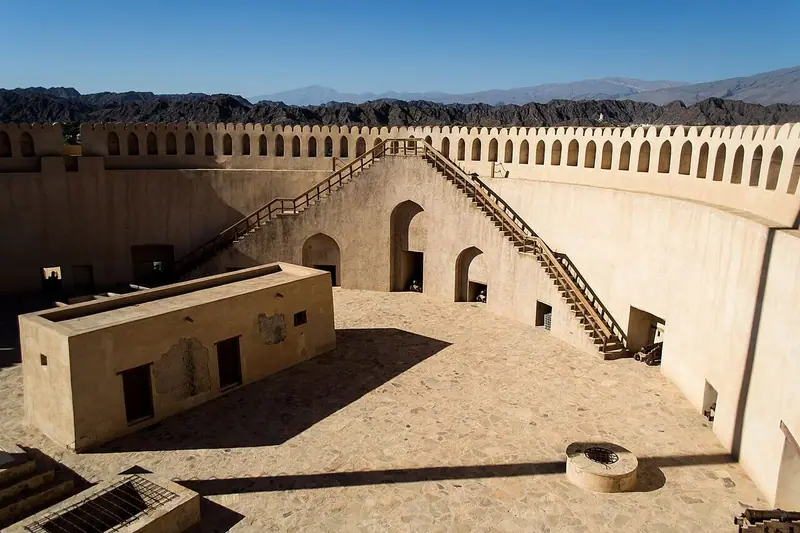
Nizwa Fort and Souq audio guide
The date and silver souqs of the oasis town of Nizwa, and the stairs of its great round tower.
 Ancient Egyptian8 stops · 13th century BCE
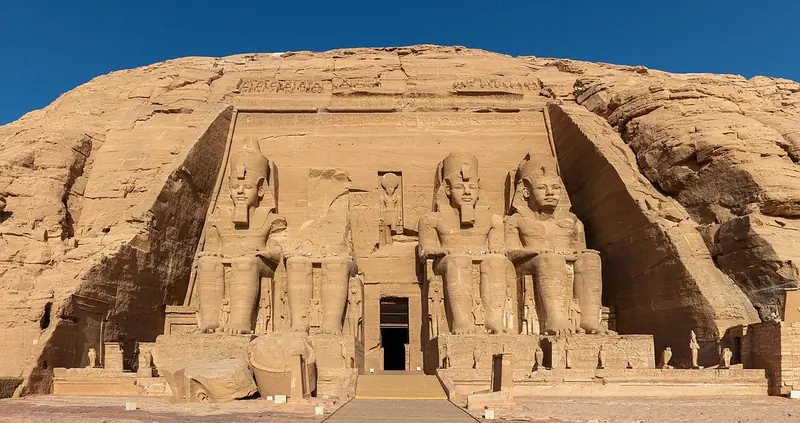
Abu Simbel audio guide
Ramesses II’s colossal temple façade, the Temple of Nefertari, and how both were rescued from the waters of Lake Nasser.
 Ga7 stops · 1649–1957
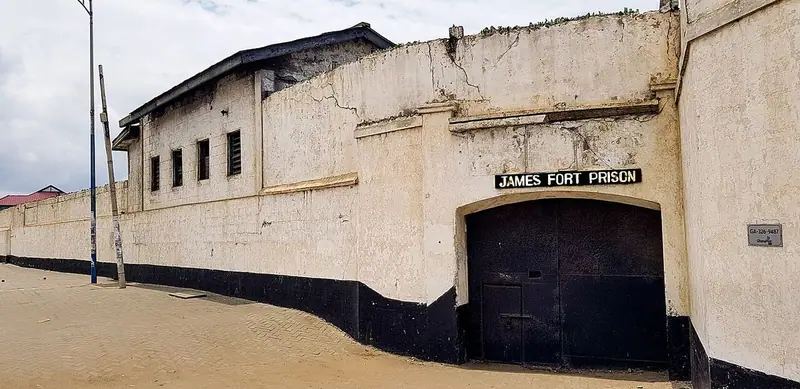
Old Accra audio guide
From the old forts and lighthouse of Jamestown, through the Ga fishing quarter, to the monuments of Ghana’s independence and Osu Castle.
Every guide, in every country
Bahla Fort and every other guide we publish, including future ones. One payment, no subscription.