Before you start
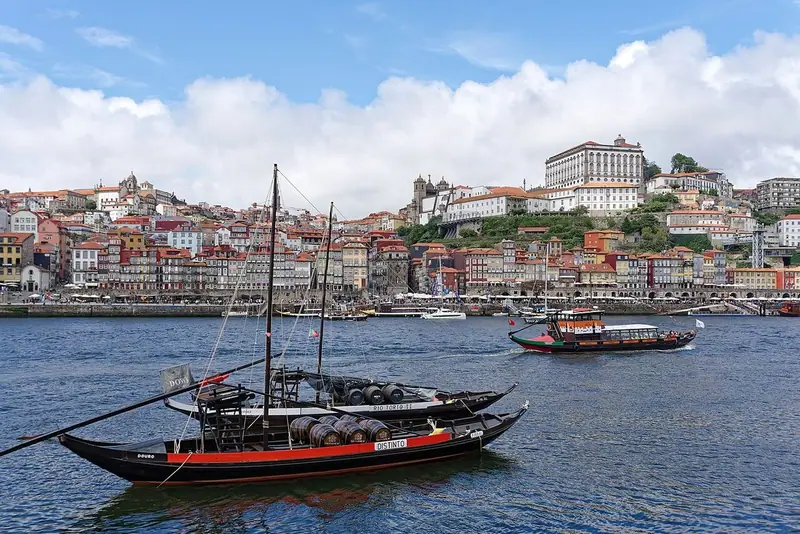
Porto climbs the steep granite banks of the River Douro, close to where it meets the Atlantic, in the north of Portugal. A trading port since Roman times, it gave its name, through the Latin Portus Cale, to the country itself. Its old centre is a dense web of steep lanes, stairways and tiled houses, crowned by the cathedral and running down to the busy riverfront. UNESCO inscribed the Historic Centre of Oporto, the Luiz I Bridge and the Monastery of Serra do Pilar as a World Heritage Site in 1996, for an urban fabric that has grown over two thousand years with the river and the sea. This guide begins at the Clérigos Tower, descends through the cathedral quarter to the merchants' palaces and the Ribeira, and ends across the great iron bridge at the monastery of Serra do Pilar.
Use it as a self-guided tour of the Historic Centre of Porto: 10 stops in visit order, each played when you’re ready, at your own pace.
 Free preview · Stop 1
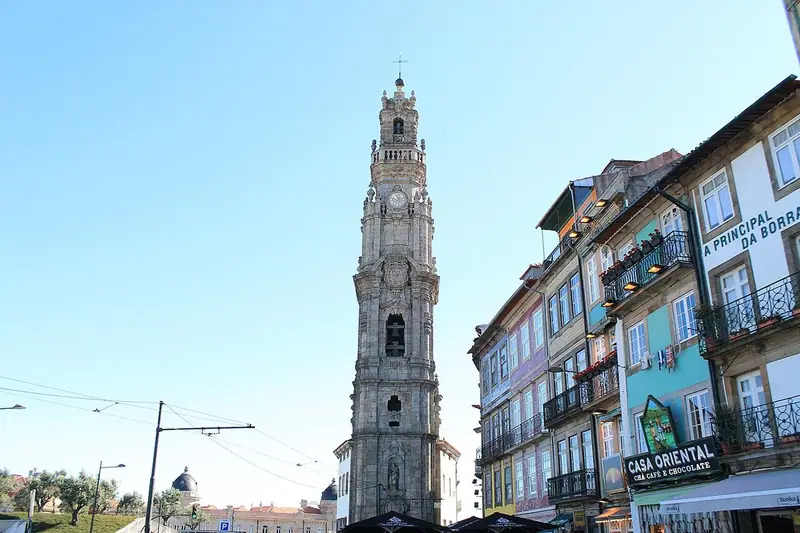
The Clérigos Church and Tower
Begin at the Clérigos Church, whose tall granite tower rises above the rooftops and is visible from much of the city. The church was built between 1732 and 1750 for a brotherhood of clergy, to a design by Nicolau Nasoni, an Italian architect and painter who spent most of his career in northern Portugal. Its richly carved façade, with garlands and shells, and its oval nave were among the first fully Baroque designs in Portugal. The tower, added behind the church between 1754 and 1763, is about 75 metres high and was inspired by the bell towers of Italy. Climb its roughly 240 steps for a superb view over the roofs, the river and the hills beyond. Nasoni joined the brotherhood and, at his own request, was buried in the crypt of the church, though the exact place of his grave is unknown.
Photo: John Samuel · CC BY-SA 4.0 · Wikimedia Commons
What to see at the Historic Centre of Porto: 10 stops, in visit order
- 01
 The Clérigos Church and TowerNasoni’s Baroque landmarkFree preview
- 02
 São Bento StationA history told in tilesIn the guide
- 03
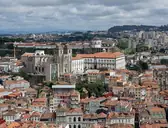 Porto CathedralA fortress church on the hillIn the guide
- 04
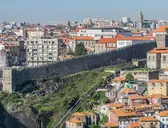 The Fernandine WallsThe medieval defencesIn the guide
- 05
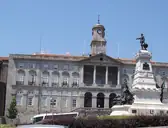 The Stock Exchange PalaceMerchants' splendourIn the guide
- 06
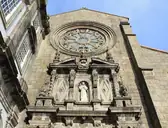 The Church of São FranciscoA Gothic church lined with goldIn the guide
- 07
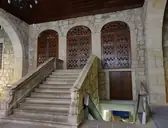 The Casa do InfanteA prince’s birthplaceIn the guide
- 08
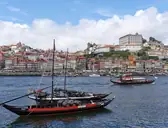 The RibeiraThe heart of the old portIn the guide
- 09
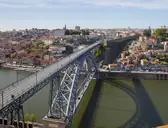 The Dom Luís I BridgeIron across the gorgeIn the guide
- 10
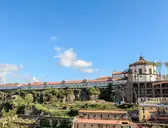 The Monastery of Serra do PilarA round church above the riverIn the guide
Site map of the Historic Centre of Porto
History of the Historic Centre of Porto
A settlement stood on the cathedral hill before the Romans, who developed a river port here called Portus Cale. In the twelfth century the town was granted to its bishop, and it became the seat of a powerful merchant community. In 1387 King John I married the English princess Philippa of Lancaster in the cathedral, sealing a long alliance between the two kingdoms, and their son, Prince Henry the Navigator, is traditionally said to have been born in Porto. From the eighteenth century, the trade in port wine from the Douro valley brought great wealth, and the Italian architect Nicolau Nasoni filled the city with Baroque churches. In the nineteenth century, Porto resisted a long siege for the liberal cause, its merchants built the Stock Exchange, and engineers threw iron bridges across the gorge.
Historic Centre of Porto guide: questions
How many stops does the Historic Centre of Porto guide have?
10 stops, in visit order: 1. The Clérigos Church and Tower; 2. São Bento Station; 3. Porto Cathedral; 4. The Fernandine Walls; 5. The Stock Exchange Palace; 6. The Church of São Francisco; 7. The Casa do Infante; 8. The Ribeira; 9. The Dom Luís I Bridge; 10. The Monastery of Serra do Pilar.
Can I do a self-guided tour of the Historic Centre of Porto with this guide?
Yes. The guide is made for a self-guided tour: 10 stops in visit order, each with a photo, a story and a voice, so you can explore the Historic Centre of Porto at your own pace, without joining a group. Download it before you go and it works offline.
How long do you need at the Historic Centre of Porto?
We suggest allowing A full day. The 10 stops add up to about 7 minutes of listening, and you play each one when you’re ready, so you can linger wherever you like.
How long is each guide?
The 10 stops add up to about 7 minutes of listening in total. You play each stop when you’re ready, so you can go at your own pace.
Does the guide work offline?
Yes, once it’s downloaded. The guide is a single self-contained web page (about 9.0 MB) with the photos, text and audio built in. Download it to your phone before you go (Wi-Fi is best); after that it opens in any modern browser on iPhone or Android, with no app, account or mobile signal needed.
Does it use GPS or need my location?
No. The guide doesn’t use GPS and doesn’t know where you are: you play each stop when you reach it. It works on iPhone and Android in any modern browser, and it’s in English.
What’s included?
One self-contained HTML guide: 10 stops in visit order, each with a photo, text and a voice, plus the story of who built the site.
Who built the Historic Centre of Porto?
A settlement stood on the cathedral hill before the Romans, who developed a river port here called Portus Cale. In the twelfth century the town was granted to its bishop, and it became the seat of a powerful merchant community.
Where is the Historic Centre of Porto?
Porto climbs the steep granite banks of the River Douro, close to where it meets the Atlantic, in the north of Portugal.
Is there a free audio guide to the Historic Centre of Porto?
The first stop, The Clérigos Church and Tower, is free to read and hear on this page, so you can try the Historic Centre of Porto audio tour before you buy. The full guide, with all 10 stops, is a one-off purchase: download it once and it’s yours to keep, working offline.
Is the Historic Centre of Porto guide worth it?
If you’d like to know what you’re looking at, yes. For $10 you get 10 stops in visit order, each with a photo, a short history and a voice you play when you’re ready, plus a site map of the stops, and about 7 minutes of listening in all. It’s short on purpose, so you spend your time looking, not listening. It’s yours to keep, works offline and needs no app. The first stop is free on this page, so you can try it before you buy. If you’d like hours of detail, a guided tour will go deeper.
Audio guide or guided tour?
It depends how you like to visit. This guide lets you explore the Historic Centre of Porto at your own pace, at any time, for a one-off price. A guided tour gives you a live expert you can ask questions, but at fixed times and usually for a higher price. Many people use both: a tour for the big picture, and the guide to read beforehand or to revisit the stops in their own time.
Is this the official Historic Centre of Porto guide?
No. It’s an independent guide by The Historian Guide, not affiliated with or endorsed by the operator of the Historic Centre of Porto. For tickets and opening hours, check the official site operator before you go.
Does the guide include entry tickets or opening hours?
No. The guide is a digital companion only. Admission to the Historic Centre of Porto is separate, so check the official site operator for current tickets and opening hours before you go.
- Stop 1 · The Clérigos Church and Tower: John Samuel · CC BY-SA 4.0 · Wikimedia Commons · resized
- Stop 2 · São Bento Station: jad99 from Graz, Austria · CC BY-SA 2.0 · Wikimedia Commons · resized
- Stop 3 · Porto Cathedral: Jakub Hałun · CC BY 4.0 · Wikimedia Commons · resized
- Stop 4 · The Fernandine Walls: Krzysztof Golik · CC BY-SA 4.0 · Wikimedia Commons · resized
- Stop 5 · The Stock Exchange Palace: Arlindo1951 · CC BY-SA 4.0 · Wikimedia Commons · resized
- Stop 6 · The Church of São Francisco: John Samuel · CC BY-SA 4.0 · Wikimedia Commons · resized
- Stop 7 · The Casa do Infante: Joseolgon · CC BY-SA 4.0 · Wikimedia Commons · resized
- Stop 8 · The Ribeira (also the cover): Jakub Hałun · CC BY 4.0 · Wikimedia Commons · resized
- Stop 9 · The Dom Luís I Bridge: Diego Delso · CC BY-SA 3.0 · Wikimedia Commons · resized
- Stop 10 · The Monastery of Serra do Pilar: Rodrigo Tetsuo Argenton · CC BY-SA 4.0 · Wikimedia Commons · resized


All photographs from Wikimedia Commons under the licences shown.
More guides in Portugal
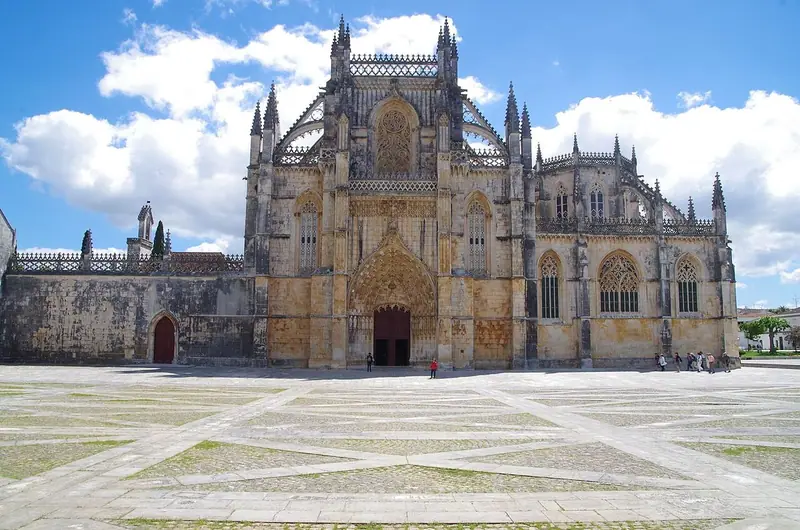 Gothic8 stops · from 1387 CE
Batalha Monastery audio guide
The golden limestone abbey King João I founded after Aljubarrota, from its late Gothic portal to the Unfinished Chapels, open to the sky.
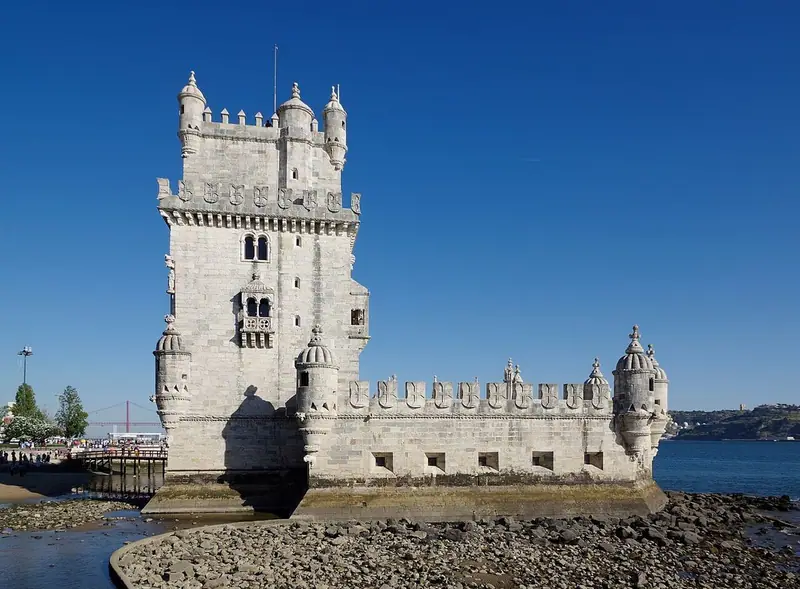 Manueline6 stops · 1514–1520
Belém Tower audio guide
A riverside fortress on the Tagus, built in Portugal’s Age of Discovery, from the bastion up to the loggia.
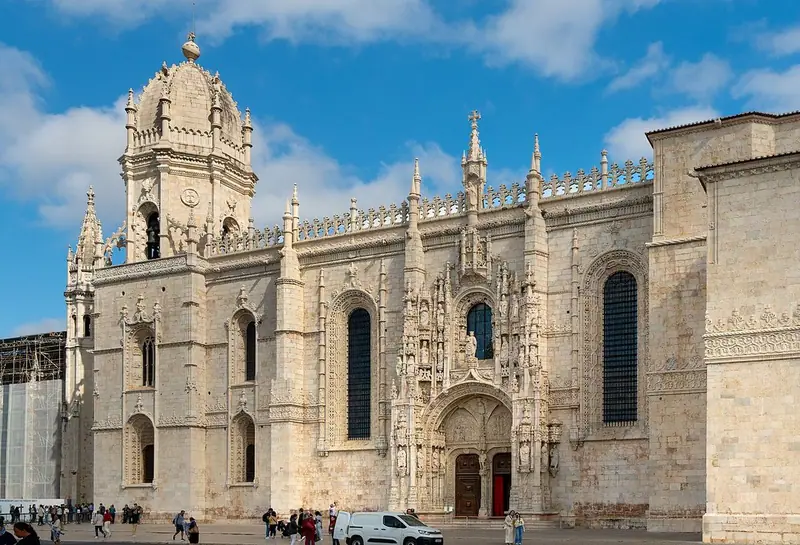 Manueline7 stops · 1501–1601
Jerónimos Monastery audio guide
Carved portals, the tombs of Vasco da Gama and Camões, and the great two-storey cloister.
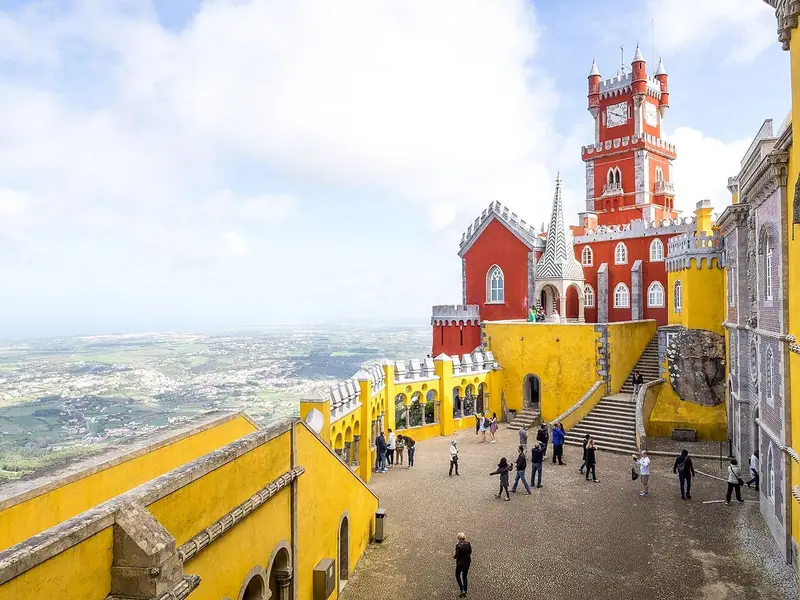 Romantic7 stops · 1842–1854
Pena Palace audio guide
A hilltop palace above Sintra, with the Triton, a Manueline cloister, the royal apartments and the Queen’s Terrace.
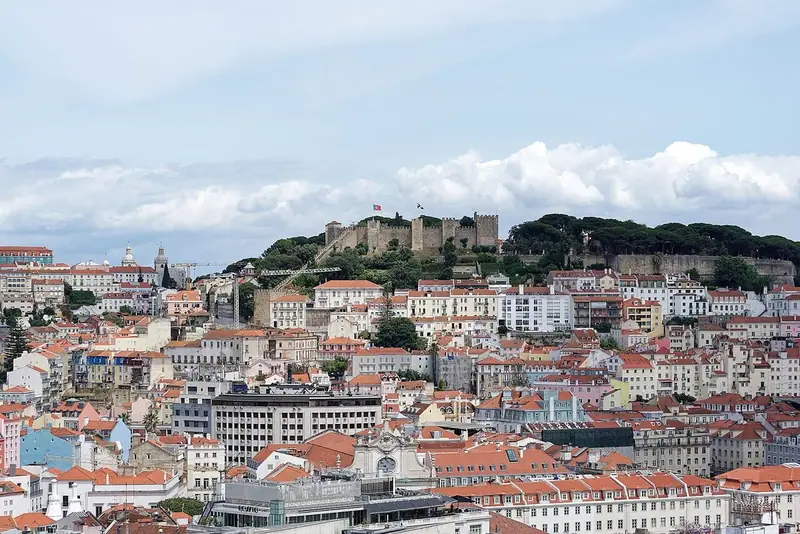 Medieval7 stops · 8th–14th century CE
São Jorge Castle audio guide
Climb Lisbon’s castle hill above the Alfama to walls first raised under Islamic rule and towers shaped by Portugal’s medieval kings.
Every guide, in every country
Historic Centre of Porto and every other guide we publish, including future ones. One payment, no subscription.