Before you start
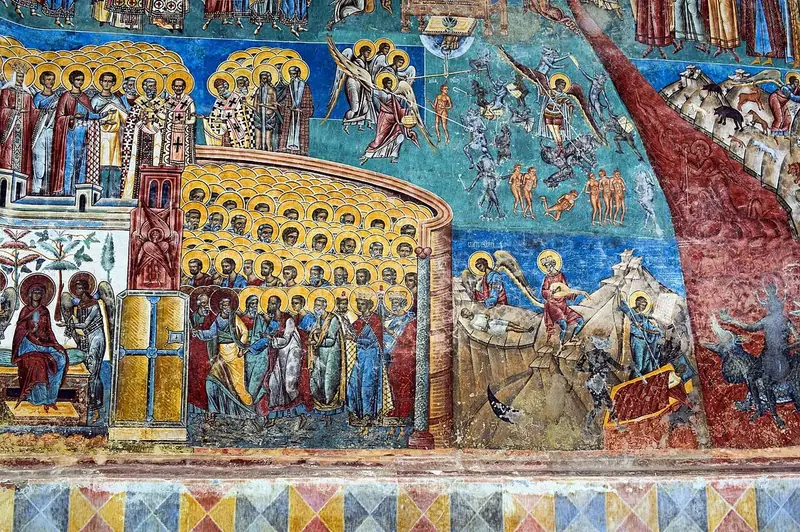
The painted churches of Bucovina stand in the valleys and villages of Suceava County, in the far north-east of Romania, in the green foothills of the Carpathians. They lie up to a couple of hours' drive apart, so the easiest way to see them is by car or on a tour from Suceava or Gura Humorului. UNESCO inscribed seven of the churches as a World Heritage Site in 1993, and added the church of Sucevița in 2010. Most belong to working monasteries or parishes, so dress modestly, with shoulders and knees covered, keep your voice low, and ask before taking photographs inside. Paths are short and level, but weather in the hills changes quickly, so bring a layer. The route begins at Probota in the south-east, passes through Suceava, the old capital, and Pătrăuți, then heads north and west through Arbore, Sucevița and Moldovița, and ends at Humor and Voroneț.
Use it as a self-guided tour of the Painted Churches of Bucovina: 8 stops in visit order, each played when you’re ready, at your own pace.
 Free preview · Stop 1
Probota
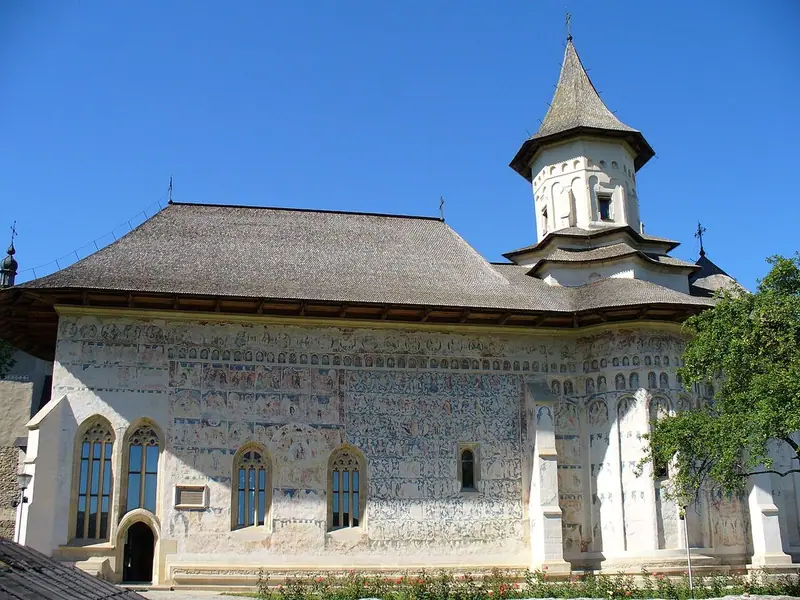
Begin at Probota, on a plateau above the valley of the Siret. Petru Rareș built the church of Saint Nicholas here in 1530, and it was painted inside and out in 1532, among the earliest churches in Moldavia to be painted on the outside. The painters had not yet mastered the technique, and much of the outer painting has faded. Inside, it was the burial place of the princely family: Petru Rareș lies here, with his wife Elena and their son Ștefan. Look up in the porch at the Last Judgement painted on the vault, and in the narthex at the seven councils of the Church on the arches. In 1925 a monk who tried to clean the porch paintings with wet cloths destroyed some of the faces. Later, an international team of restorers working in a UNESCO programme uncovered the original frescoes of 1532 inside.
Photo: MirNicRai · CC BY-SA 4.0 · Wikimedia Commons
What to see at the Painted Churches of Bucovina: 8 stops, in visit order
- 01
 ProbotaA princely tomb in the Siret valleyFree preview
- 02
 Saint John the New, SuceavaThe cathedral of the old capitalIn the guide
- 03
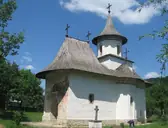 PătrăuțiStephen the Great’s oldest churchIn the guide
- 04
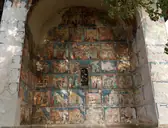 ArboreA nobleman’s church and a master painterIn the guide
- 05
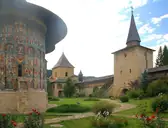 SucevițaThe last of the painted monasteriesIn the guide
- 06
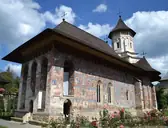 MoldovițaYellow and blue under a deep roofIn the guide
- 07
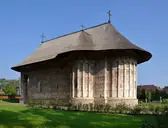 HumorA red church in a quiet valleyIn the guide
- 08
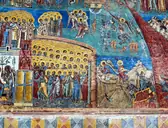 VoronețThe blue of VoronețIn the guide
Site map of the Painted Churches of Bucovina
History of the Painted Churches of Bucovina
The churches were built by the princes and nobles of Moldavia, an Orthodox principality between the Carpathians and the Black Sea. Stephen the Great, who ruled from 1457 to 1504, fought many wars against the Ottoman Empire and built churches in thanks for his victories. His illegitimate son, Petru Rareș, who ruled from 1527 to 1538 and again from 1541 to 1546, promoted a new idea: covering the outer walls of churches with frescoes, from the eaves almost to the ground. Painters worked in a Byzantine tradition, but the churches combine Byzantine plans with Gothic doorways and windows and the deep roofs of Moldavian architecture. The last great painted church, Sucevița, was decorated around 1601. In 1775 the Habsburg monarchy annexed this northern part of Moldavia, which it called Bukovina, and closed many of the monasteries.
The full history continues in the guide.
Painted Churches of Bucovina guide: questions
How many stops does the Painted Churches of Bucovina guide have?
8 stops, in visit order: 1. Probota; 2. Saint John the New, Suceava; 3. Pătrăuți; 4. Arbore; 5. Sucevița; 6. Moldovița; 7. Humor; 8. Voroneț.
Can I do a self-guided tour of the Painted Churches of Bucovina with this guide?
Yes. The guide is made for a self-guided tour: 8 stops in visit order, each with a photo, a story and a voice, so you can explore the Painted Churches of Bucovina at your own pace, without joining a group. Download it before you go and it works offline.
How long do you need at the Painted Churches of Bucovina?
We suggest allowing 2 days. The 8 stops add up to about 6 minutes of listening, and you play each one when you’re ready, so you can linger wherever you like.
How long is each guide?
The 8 stops add up to about 6 minutes of listening in total. You play each stop when you’re ready, so you can go at your own pace.
Does the guide work offline?
Yes, once it’s downloaded. The guide is a single self-contained web page (about 8.2 MB) with the photos, text and audio built in. Download it to your phone before you go (Wi-Fi is best); after that it opens in any modern browser on iPhone or Android, with no app, account or mobile signal needed.
Does it use GPS or need my location?
No. The guide doesn’t use GPS and doesn’t know where you are: you play each stop when you reach it. It works on iPhone and Android in any modern browser, and it’s in English.
What’s included?
One self-contained HTML guide: 8 stops in visit order, each with a photo, text and a voice, plus the story of who built the site.
Who built the Painted Churches of Bucovina?
The churches were built by the princes and nobles of Moldavia, an Orthodox principality between the Carpathians and the Black Sea. Stephen the Great, who ruled from 1457 to 1504, fought many wars against the Ottoman Empire and built churches in thanks for his victories.
Where is the Painted Churches of Bucovina?
The painted churches of Bucovina stand in the valleys and villages of Suceava County, in the far north-east of Romania, in the green foothills of the Carpathians.
Is there a free audio guide to the Painted Churches of Bucovina?
The first stop, Probota, is free to read and hear on this page, so you can try the Painted Churches of Bucovina audio tour before you buy. The full guide, with all 8 stops, is a one-off purchase: download it once and it’s yours to keep, working offline.
Is the Painted Churches of Bucovina guide worth it?
If you’d like to know what you’re looking at, yes. For $10 you get 8 stops in visit order, each with a photo, a short history and a voice you play when you’re ready, plus a site map of the stops, and about 6 minutes of listening in all. It’s short on purpose, so you spend your time looking, not listening. It’s yours to keep, works offline and needs no app. The first stop is free on this page, so you can try it before you buy. If you’d like hours of detail, a guided tour will go deeper.
Audio guide or guided tour?
It depends how you like to visit. This guide lets you explore the Painted Churches of Bucovina at your own pace, at any time, for a one-off price. A guided tour gives you a live expert you can ask questions, but at fixed times and usually for a higher price. Many people use both: a tour for the big picture, and the guide to read beforehand or to revisit the stops in their own time.
Is this the official Painted Churches of Bucovina guide?
No. It’s an independent guide by The Historian Guide, not affiliated with or endorsed by the operator of the Painted Churches of Bucovina. For tickets and opening hours, check the official site operator before you go.
Does the guide include entry tickets or opening hours?
No. The guide is a digital companion only. Admission to the Painted Churches of Bucovina is separate, so check the official site operator for current tickets and opening hours before you go.
- Stop 1 · Probota: MirNicRai · CC BY-SA 4.0 · Wikimedia Commons · resized
- Stop 2 · Saint John the New, Suceava: Cezar Suceveanu · CC BY 3.0 · Wikimedia Commons · resized
- Stop 3 · Pătrăuți: Cezar Suceveanu · CC BY-SA 3.0 · Wikimedia Commons · resized
- Stop 4 · Arbore: Dinu Arateanu · CC BY-SA 3.0 ro · Wikimedia Commons · resized
- Stop 5 · Sucevița: Stanislav Dusík · CC BY-SA 4.0 · Wikimedia Commons · resized
- Stop 6 · Moldovița: Rolly00 · CC BY-SA 4.0 · Wikimedia Commons · resized
- Stop 7 · Humor: Pudelek · CC BY-SA 4.0 · Wikimedia Commons · resized
- Stop 8 · Voroneț (also the cover): Jocelyn Erskine-Kellie · CC BY-SA 4.0 · Wikimedia Commons · resized


All photographs from Wikimedia Commons under the licences shown.
More guides in Romania
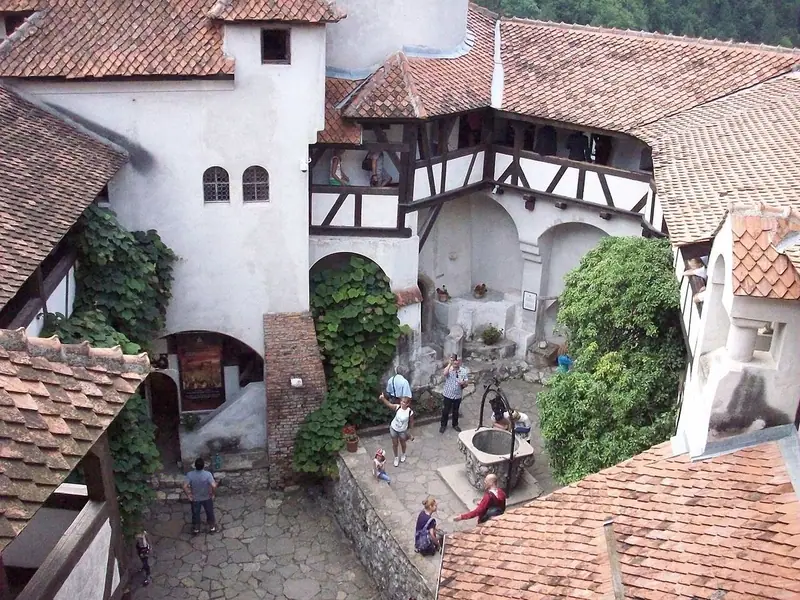 Transylvanian Saxon7 stops · 1377–20th century
Bran Castle audio guide
Climb from the Carpathian pass to the castle on the rock, and find the real story of Saxon townsmen and Queen Marie behind the Dracula legend.
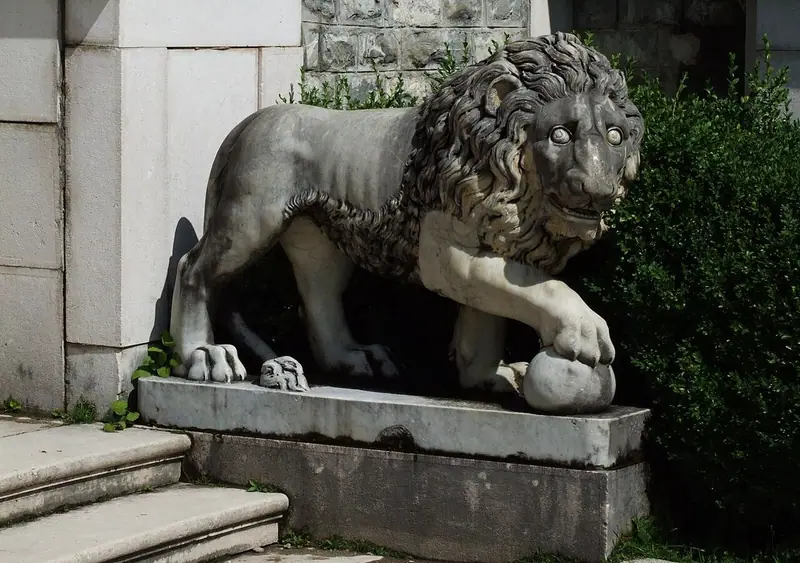 Kingdom of Romania8 stops · 1873–1947
Peleș Castle audio guide
Climb through the royal estate to Carol I’s palace of towers and timber, from the Hall of Honour to the armouries and theatre.
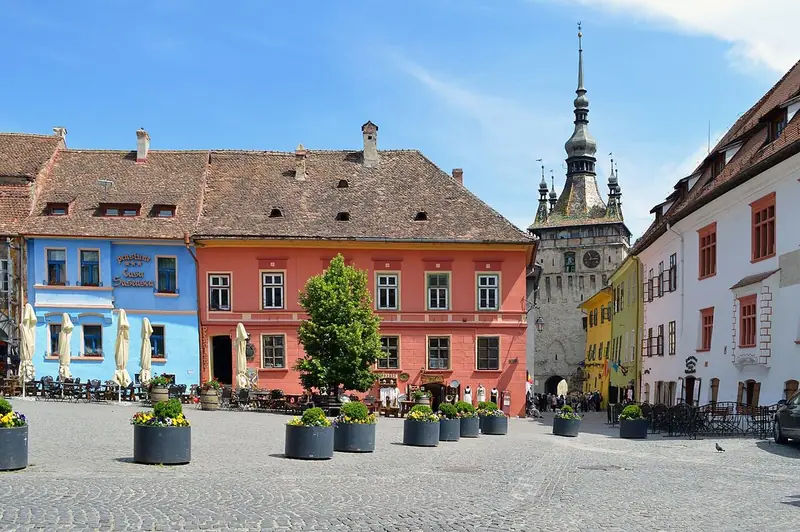 Medieval8 stops · 13th–16th century
Sighișoara audio guide
The hilltop citadel of Sighișoara, from the clock tower up the Scholars’ Stairs to the Church on the Hill and the guild towers.
Every guide, in every country
Painted Churches of Bucovina and every other guide we publish, including future ones. One payment, no subscription.