Before you start
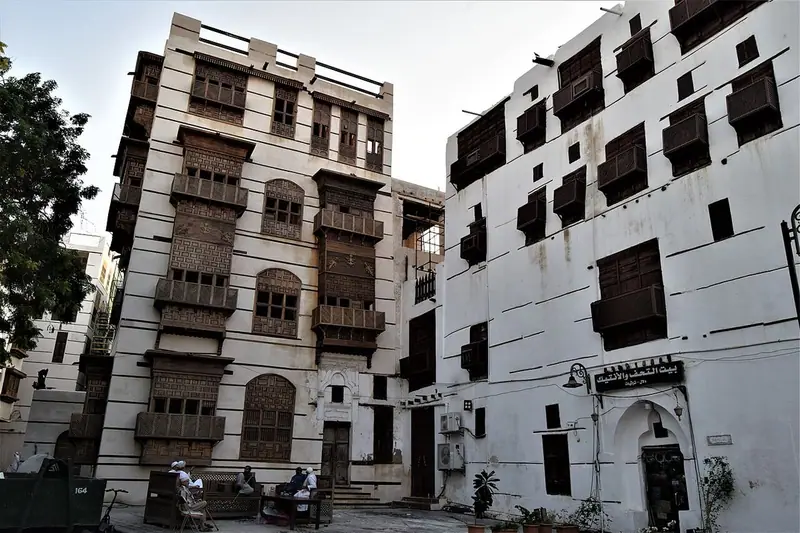
Al-Balad, the town, is the old heart of Jeddah. For centuries it was the gateway through which pilgrims from across the Muslim world passed on their way to Makkah. Its tall coral-stone houses, with their great wooden bay windows, are the last surviving city of the old Red Sea style, and a World Heritage Site since 2014. The route enters by the Makkah Gate and follows the old market street west. It visits the oldest mosque, the Nasseef House and the tower houses, and ends at the old sea gates. Allow half a day, and walk in the cooler hours.
Use it as a self-guided tour of Historic Jeddah, Al-Balad: 7 stops in visit order, each played when you’re ready, at your own pace.
 Free preview · Stop 1
Bab Makkah
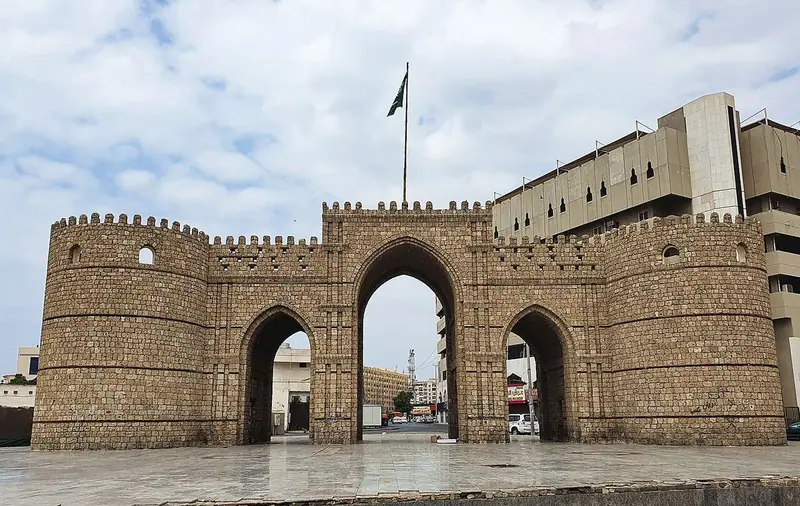
Begin at Bab Makkah, the eastern gate of the old city, where the road set out across the desert to Makkah. For centuries, caravans and travellers came and went here on the road to Makkah, and funerals passed through on their way to the cemetery outside the walls. Jeddah was once ringed by a wall with several gates. Its date is debated. Some sources credit the last Mamluk sultan around 1509, others the Ottomans after the Portuguese attack of 1517. Either way, it was built to protect the town from the Portuguese, who were then trying to control the Indian Ocean trade. By the twentieth century the city had outgrown it, and in 1947 the wall was pulled down. A few gates, Bab Makkah among them, still stand, though they have been much restored. Outside the gate was the Bedouin market, where people from the desert brought their goods.
Photo: Richard Mortel from Riyadh, Saudi Arabia · CC BY 2.0 · Wikimedia Commons
What to see at Historic Jeddah, Al-Balad: 7 stops, in visit order
- 01
 Bab MakkahThe Makkah GateFree preview
- 02
 Souq al-AlawiThe pilgrims’ market streetIn the guide
- 03
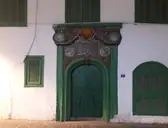 Harat al-MazloumThe quarter of the wronged manIn the guide
- 04
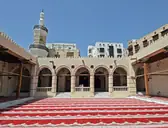 Al-Shafi’i MosqueThe old mosqueIn the guide
- 05
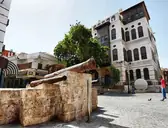 Bayt NasseefThe house with the treeIn the guide
- 06
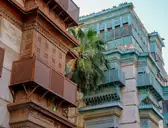 The Roshan HousesWood, coral and the sea breezeIn the guide
- 07
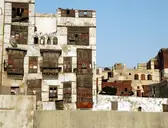 The Sea GatesWhere the pilgrims landedIn the guide
Site map of Historic Jeddah, Al-Balad
History of Historic Jeddah, Al-Balad
People were fishing and trading on this coast long before Islam. Jeddah rose to importance in 647, when the Caliph Uthman ibn Affan made it the port of Makkah, about sixty-five kilometres inland. Under the Mamluks and then the Ottomans, who took it in 1517, it grew rich on the Red Sea trade and on the pilgrims who landed here every year. Walls were built early in the sixteenth century against Portuguese attack. After the Suez Canal opened in 1869, steamships brought more trade and pilgrims, and merchant families built the great tower houses. In 1925 the city surrendered to Abdulaziz Ibn Saud, and it became part of what is now Saudi Arabia.
Historic Jeddah, Al-Balad guide: questions
How many stops does the Historic Jeddah, Al-Balad guide have?
7 stops, in visit order: 1. Bab Makkah; 2. Souq al-Alawi; 3. Harat al-Mazloum; 4. Al-Shafi’i Mosque; 5. Bayt Nasseef; 6. The Roshan Houses; 7. The Sea Gates.
Can I do a self-guided tour of Historic Jeddah, Al-Balad with this guide?
Yes. The guide is made for a self-guided tour: 7 stops in visit order, each with a photo, a story and a voice, so you can explore Historic Jeddah, Al-Balad at your own pace, without joining a group. Download it before you go and it works offline.
How long is each guide?
The 7 stops add up to about 5 minutes of listening in total. You play each stop when you’re ready, so you can go at your own pace.
Does the guide work offline?
Yes, once it’s downloaded. The guide is a single self-contained web page (about 6.6 MB) with the photos, text and audio built in. Download it to your phone before you go (Wi-Fi is best); after that it opens in any modern browser on iPhone or Android, with no app, account or mobile signal needed.
Does it use GPS or need my location?
No. The guide doesn’t use GPS and doesn’t know where you are: you play each stop when you reach it. It works on iPhone and Android in any modern browser, and it’s in English.
What’s included?
One self-contained HTML guide: 7 stops in visit order, each with a photo, text and a voice, plus the story of who built the site.
Who built Historic Jeddah, Al-Balad?
People were fishing and trading on this coast long before Islam. Jeddah rose to importance in 647, when the Caliph Uthman ibn Affan made it the port of Makkah, about sixty-five kilometres inland.
Where is Historic Jeddah, Al-Balad?
Al-Balad, the town, is the old heart of Jeddah.
Is there a free audio guide to Historic Jeddah, Al-Balad?
The first stop, Bab Makkah, is free to read and hear on this page, so you can try the Historic Jeddah, Al-Balad audio tour before you buy. The full guide, with all 7 stops, is a one-off purchase: download it once and it’s yours to keep, working offline.
Is the Historic Jeddah, Al-Balad guide worth it?
If you’d like to know what you’re looking at, yes. For $10 you get 7 stops in visit order, each with a photo, a short history and a voice you play when you’re ready, plus a site map of the stops, and about 5 minutes of listening in all. It’s short on purpose, so you spend your time looking, not listening. It’s yours to keep, works offline and needs no app. The first stop is free on this page, so you can try it before you buy. If you’d like hours of detail, a guided tour will go deeper.
Audio guide or guided tour?
It depends how you like to visit. This guide lets you explore Historic Jeddah, Al-Balad at your own pace, at any time, for a one-off price. A guided tour gives you a live expert you can ask questions, but at fixed times and usually for a higher price. Many people use both: a tour for the big picture, and the guide to read beforehand or to revisit the stops in their own time.
Is this the official Historic Jeddah, Al-Balad guide?
No. It’s an independent guide by The Historian Guide, not affiliated with or endorsed by the operator of Historic Jeddah, Al-Balad. For tickets and opening hours, check the official site operator before you go.
Does the guide include entry tickets or opening hours?
No. The guide is a digital companion only. Admission to Historic Jeddah, Al-Balad is separate, so check the official site operator for current tickets and opening hours before you go.
- Stop 1 · Bab Makkah: Richard Mortel from Riyadh, Saudi Arabia · CC BY 2.0 · Wikimedia Commons · resized
- Stop 2 · Souq al-Alawi (also the cover): Anne and David · Public domain · Wikimedia Commons · resized
- Stop 3 · Harat al-Mazloum: Tahir mq · CC BY-SA 4.0 · Wikimedia Commons · resized
- Stop 4 · Al-Shafi’i Mosque: Ahmad AlHasanat · CC BY-SA 4.0 · Wikimedia Commons · resized
- Stop 5 · Bayt Nasseef: Ahmad AlHasanat · CC BY-SA 4.0 · Wikimedia Commons · resized
- Stop 6 · The Roshan Houses: Francisco Anzola · CC BY 2.0 · Wikimedia Commons · resized
- Stop 7 · The Sea Gates: User: (WT-shared) Jpatokal at wts wikivoyage · CC BY-SA 4.0 · Wikimedia Commons · resized


All photographs from Wikimedia Commons under the licences shown.
More guides in Saudi Arabia
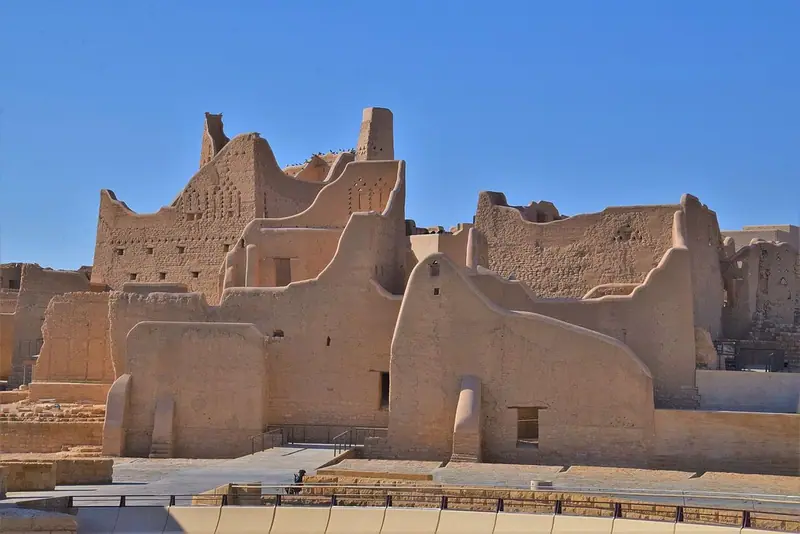 First Saudi State8 stops · 1727–1818
Diriyah and At-Turaif audio guide
The mud-brick palaces and mosques of At-Turaif above Wadi Hanifa, capital of the First Saudi State and home of the House of Saud.
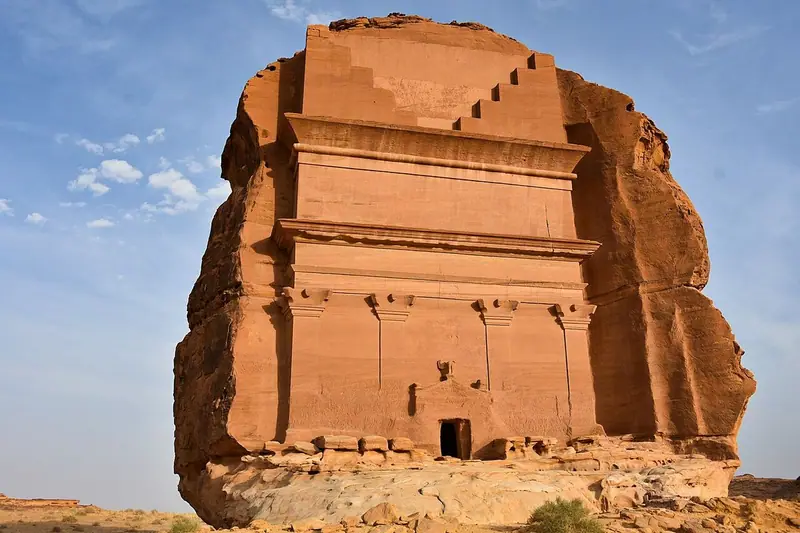 Nabataean6 stops · 1st century BCE – 1st century CE
Hegra audio guide
Tour the desert near AlUla among more than a hundred monumental Nabataean tombs carved into outcrops of golden sandstone.
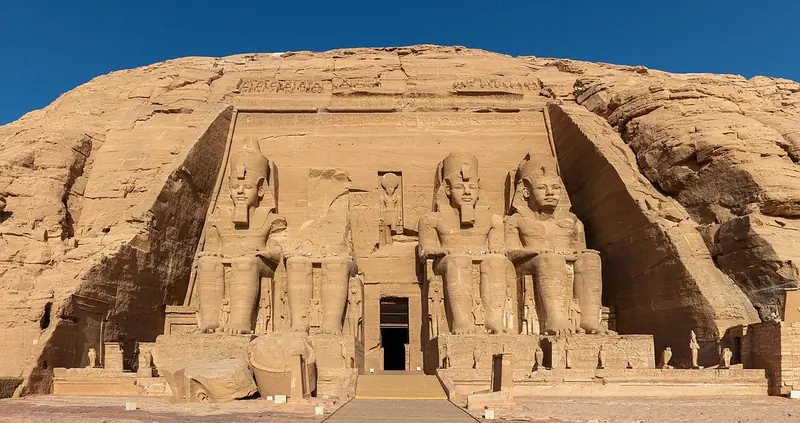 Ancient Egyptian8 stops · 13th century BCE
Abu Simbel audio guide
Ramesses II’s colossal temple façade, the Temple of Nefertari, and how both were rescued from the waters of Lake Nasser.
Every guide, in every country
Historic Jeddah, Al-Balad and every other guide we publish, including future ones. One payment, no subscription.