Before you start
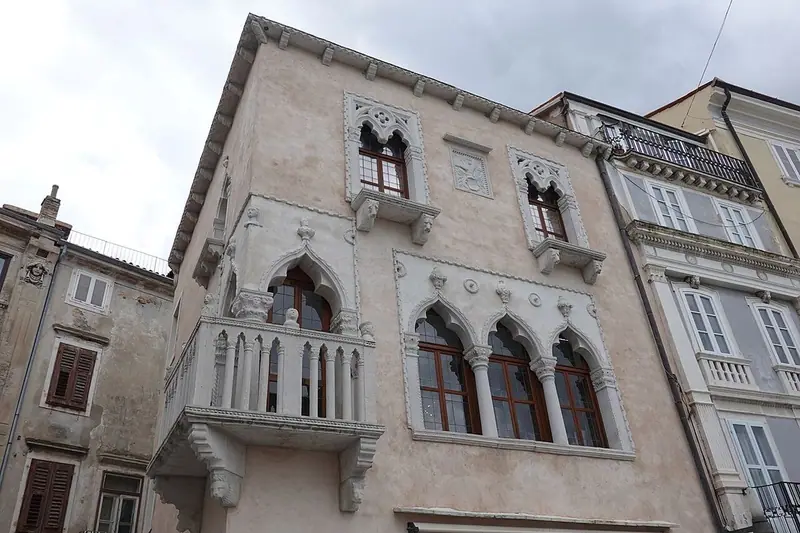
Piran sits on a narrow peninsula at the tip of Slovenia’s short Adriatic coast, its red roofs and church tower crowded together above the sea. For five centuries it belonged to the Republic of Venice, and it still looks like a small Venetian town. The guide opens on Tartini Square and visits the Venetian House, the maritime museum and the Franciscan monastery. It climbs to the town walls and the Church of Saint George, and ends at the point of the peninsula. Allow half a day. The lanes are steep in places.
Use it as a self-guided tour of Piran: 7 stops in visit order, each played when you’re ready, at your own pace.
 Free preview · Stop 1
Tartini Square
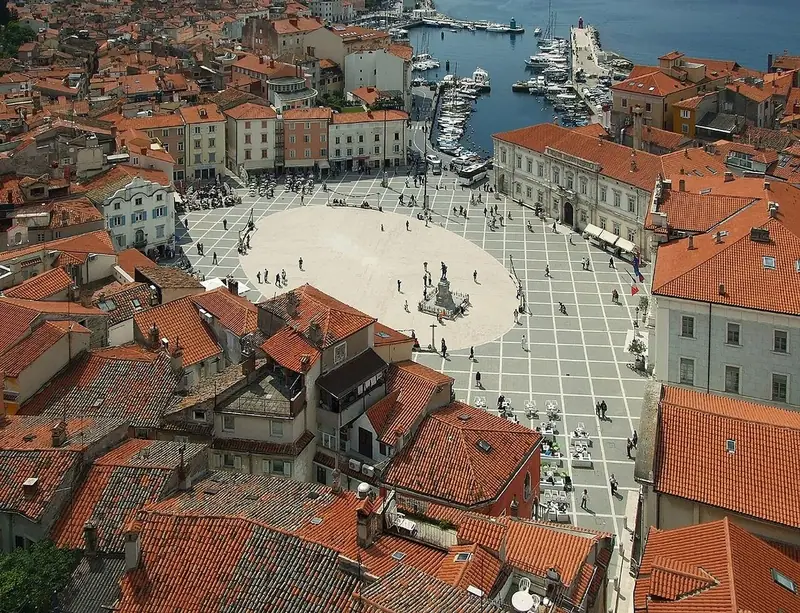
Begin on Tartini Square, the oval heart of the town. Until the late nineteenth century this was an inner harbour where fishing boats moored. It had become dirty and too small, and in 1894 it was filled in to make a square. In the middle stands a larger-than-life bronze of Giuseppe Tartini, the violinist and composer, who was born in Piran in 1692. The statue, by the Venetian sculptor Antonio Dal Zotto, was unveiled in 1896. Tartini’s most famous work is the Devil’s Trill Sonata. According to legend, it came to him in a dream in which the Devil played the violin. The white stone ellipse in the paving was laid out by the architect Boris Podrecca for the three-hundredth anniversary of Tartini’s birth. It recalls the old harbour and the turning loop of the tram that ran here until 1953. On the north side stands the town hall.
Photo: Plamen Agov (user:MrPanyGoff) · CC BY-SA 3.0 · Wikimedia Commons
What to see at Piran: 7 stops, in visit order
- 01
 Tartini SquareFrom harbour to piazzaFree preview
- 02
 The Venetian HouseLet them talkIn the guide
- 03
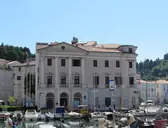 The Maritime MuseumSalt, fish and the seaIn the guide
- 04
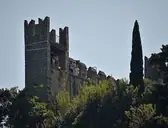 The Town WallsThree rings of stoneIn the guide
- 05
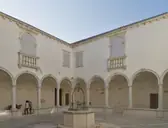 The Franciscan MonasteryA cloister of musicIn the guide
- 06
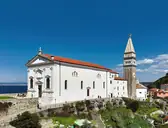 The Church of Saint GeorgeThe saint on the towerIn the guide
- 07
 The PointWhere the fire burnedIn the guide
Site map of Piran
History of Piran
In ancient times the hills around Piran belonged to the Histri, a people of Istria who were also known as pirates. The Romans conquered the peninsula in 178 and 177 before Christ. As the Roman world collapsed, people withdrew to easily defended places like this one, and by the seventh century Piran was a fortified Byzantine town. From 1283 until 1797 it was ruled by Venice, which gave it its churches, palaces and walls. Then came Austria, Napoleon, Austria again and, after the First World War, Italy. After the Second World War it passed to Yugoslavia, and most of its Italian population left.
The full history continues in the guide.
Piran guide: questions
How many stops does the Piran guide have?
7 stops, in visit order: 1. Tartini Square; 2. The Venetian House; 3. The Maritime Museum; 4. The Town Walls; 5. The Franciscan Monastery; 6. The Church of Saint George; 7. The Point.
Can I do a self-guided tour of Piran with this guide?
Yes. The guide is made for a self-guided tour: 7 stops in visit order, each with a photo, a story and a voice, so you can explore Piran at your own pace, without joining a group. Download it before you go and it works offline.
How long is each guide?
The 7 stops add up to about 5 minutes of listening in total. You play each stop when you’re ready, so you can go at your own pace.
Does the guide work offline?
Yes, once it’s downloaded. The guide is a single self-contained web page (about 6.2 MB) with the photos, text and audio built in. Download it to your phone before you go (Wi-Fi is best); after that it opens in any modern browser on iPhone or Android, with no app, account or mobile signal needed.
Does it use GPS or need my location?
No. The guide doesn’t use GPS and doesn’t know where you are: you play each stop when you reach it. It works on iPhone and Android in any modern browser, and it’s in English.
What’s included?
One self-contained HTML guide: 7 stops in visit order, each with a photo, text and a voice, plus the story of who built the site.
Who built Piran?
In ancient times the hills around Piran belonged to the Histri, a people of Istria who were also known as pirates. The Romans conquered the peninsula in 178 and 177 before Christ.
Where is Piran?
Piran sits on a narrow peninsula at the tip of Slovenia’s short Adriatic coast, its red roofs and church tower crowded together above the sea.
Is there a free audio guide to Piran?
The first stop, Tartini Square, is free to read and hear on this page, so you can try the Piran audio tour before you buy. The full guide, with all 7 stops, is a one-off purchase: download it once and it’s yours to keep, working offline.
Is the Piran guide worth it?
If you’d like to know what you’re looking at, yes. For $10 you get 7 stops in visit order, each with a photo, a short history and a voice you play when you’re ready, plus a site map of the stops, and about 5 minutes of listening in all. It’s short on purpose, so you spend your time looking, not listening. It’s yours to keep, works offline and needs no app. The first stop is free on this page, so you can try it before you buy. If you’d like hours of detail, a guided tour will go deeper.
Audio guide or guided tour?
It depends how you like to visit. This guide lets you explore Piran at your own pace, at any time, for a one-off price. A guided tour gives you a live expert you can ask questions, but at fixed times and usually for a higher price. Many people use both: a tour for the big picture, and the guide to read beforehand or to revisit the stops in their own time.
Is this the official Piran guide?
No. It’s an independent guide by The Historian Guide, not affiliated with or endorsed by the operator of Piran. For tickets and opening hours, check the official site operator before you go.
Does the guide include entry tickets or opening hours?
No. The guide is a digital companion only. Admission to Piran is separate, so check the official site operator for current tickets and opening hours before you go.
- Stop 1 · Tartini Square: Plamen Agov • studiolemontree.com · CC BY-SA 3.0 · Wikimedia Commons · resized
- Stop 2 · The Venetian House (also the cover): Edelmauswaldgeist · CC0 · Wikimedia Commons · resized
- Stop 3 · The Maritime Museum: Ajznponar · CC0 · Wikimedia Commons · resized
- Stop 4 · The Town Walls: Thomas Dahlstrøm Nielsen · CC BY 4.0 · Wikimedia Commons · resized
- Stop 5 · The Franciscan Monastery: Ajznponar · CC0 · Wikimedia Commons · resized
- Stop 6 · The Church of Saint George: Petar Milošević · CC BY-SA 4.0 · Wikimedia Commons · resized
- Stop 7 · The Point: Isiwal/Wikimedia Commons · CC BY-SA 4.0 · Wikimedia Commons · resized


All photographs from Wikimedia Commons under the licences shown.
More guides in Slovenia
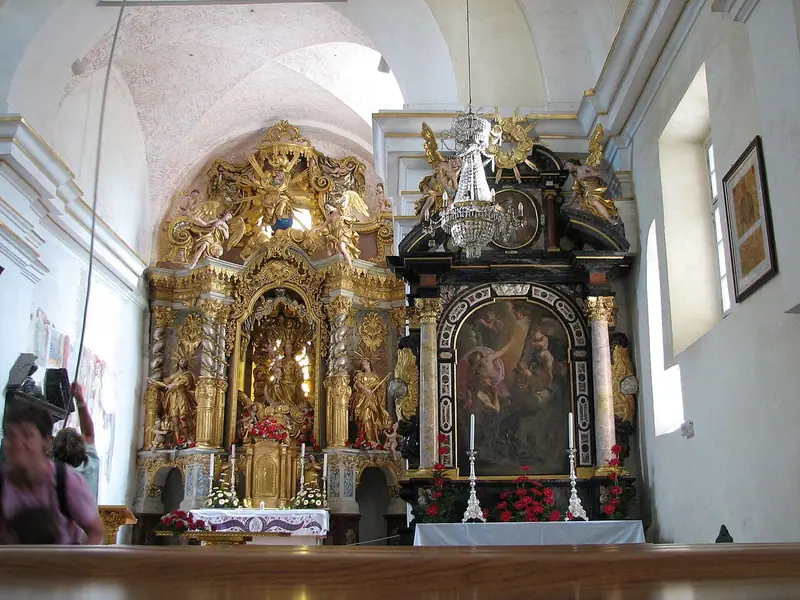 Holy Roman Empire7 stops · 1011–1918
Bled Castle and Island audio guide
Row across Lake Bled in a traditional pletna, climb the ninety-nine steps to the island church, then visit the cliff-top castle.
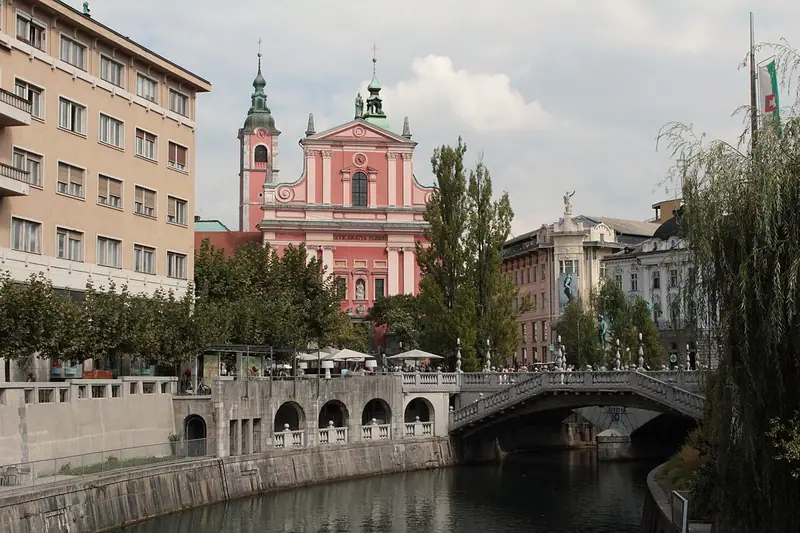 Baroque8 stops · 17th–20th century
Old Ljubljana audio guide
Cross Plečnik’s Triple Bridge into Ljubljana’s Baroque old town, then visit the market and climb to the hilltop castle.
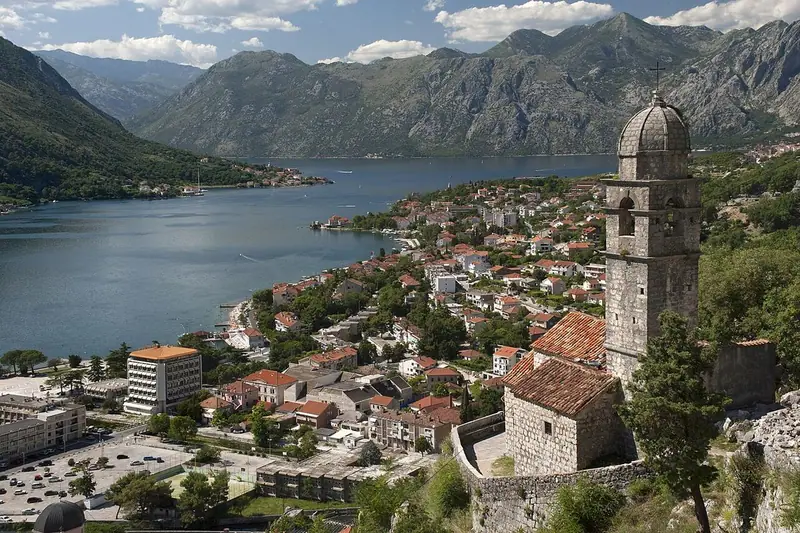 Venetian7 stops · 9th–18th century
Kotor Old Town audio guide
Enter by the Sea Gate into Kotor’s marble-paved lanes, then climb the zigzagging walls to the Fortress of St John above the bay.
Every guide, in every country
Piran and every other guide we publish, including future ones. One payment, no subscription.