Before you start
Ávila is still encircled by its medieval walls: a complete circuit of granite and sandstone, with eighty-eight towers and nine gates, standing on a high plateau of Castile. This guide begins at the Puerta del Alcázar, walks the cathedral whose apse is built into the wall itself, and visits the great Romanesque basilica of San Vicente just outside the gates. Inside the walls it crosses the market square and the convent built over the birthplace of Teresa of Ávila, and it ends at Los Cuatro Postes, the four-posted shrine west of the river, where the whole circuit of walls can be seen at once. The route is about two and a half kilometres, plus a short walk or drive to the viewpoint, and takes two to three hours with visits.
Use it as a self-guided tour of Ávila: 6 stops in visit order, each played when you’re ready, at your own pace.
 Free preview · Stop 1
The City Walls and the Puerta del Alcázar
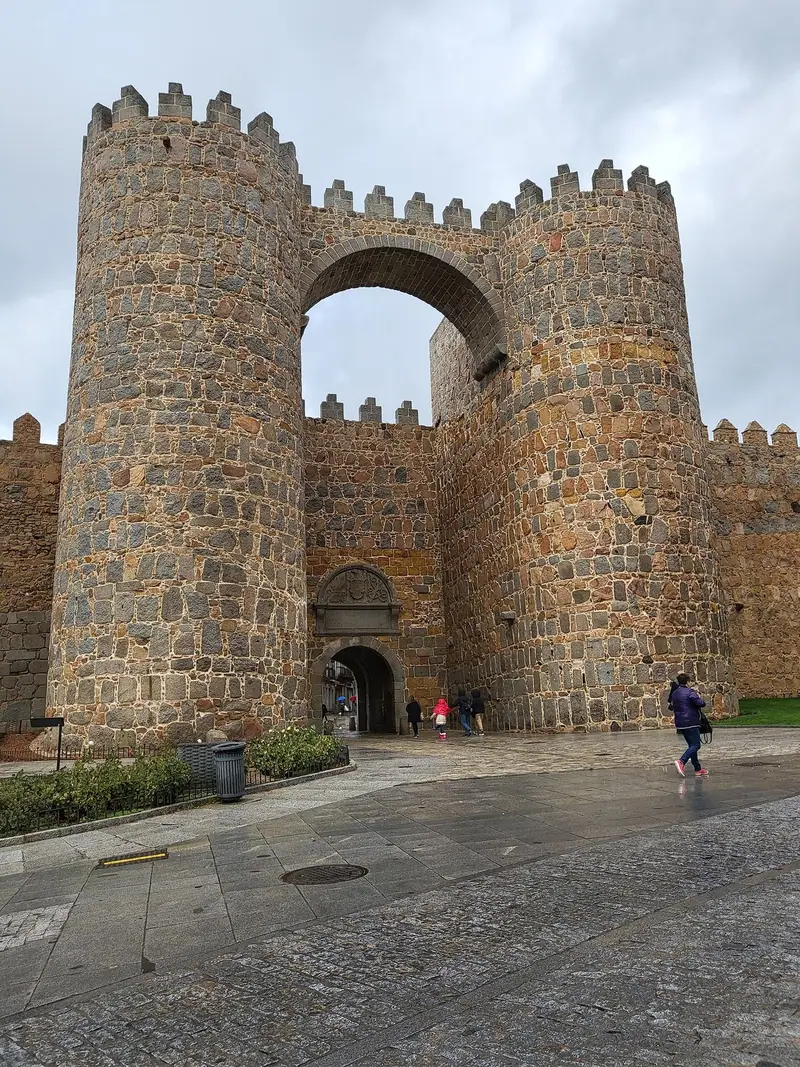
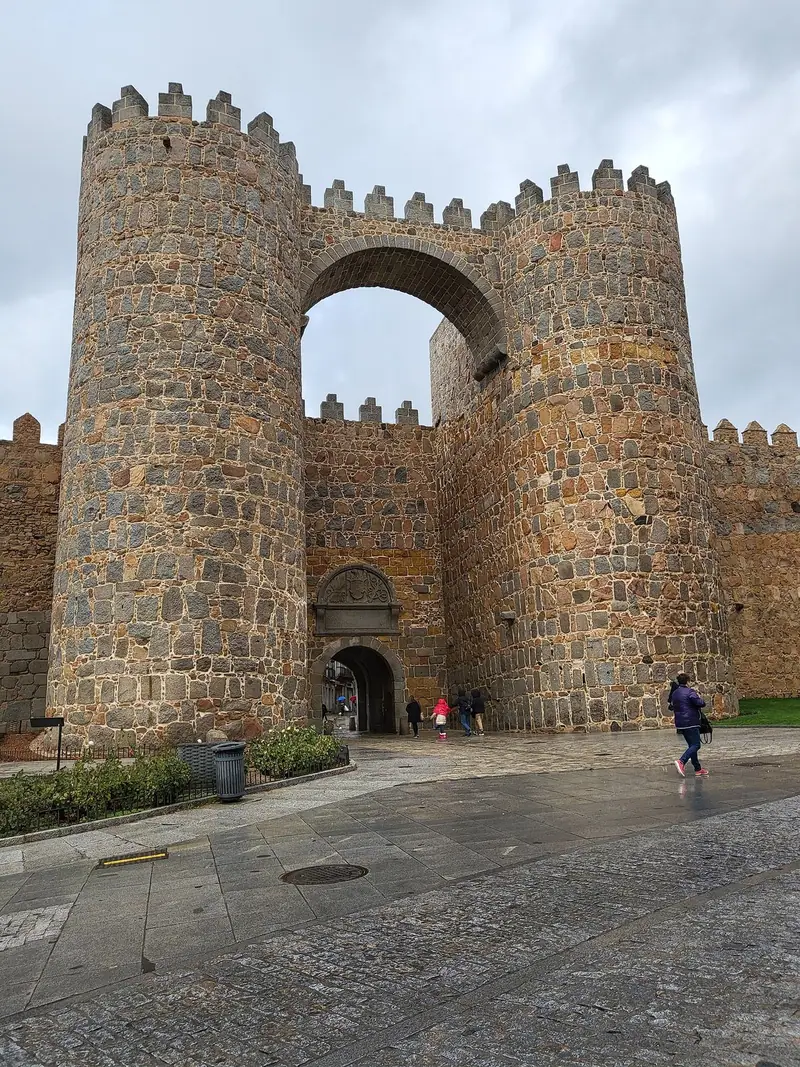
The walls of Ávila run for some two and a half kilometres, with eighty-eight semicircular towers and nine gates, a complete military enclosure still standing to its full height. They were begun around 1090, when the town was being resettled after its return to Christian rule, and they are built of granite and a warmer sandstone, with a walk along the top that can be followed for much of the circuit. The Puerta del Alcázar, the Gate of the Citadel, is one of the principal entrances, a twin-towered gate on the south-east, facing what was once the citadel and the main approach. From here the wall and the apse of the cathedral are seen together, church and fortress in a single mass. Enter the town and go to the cathedral, whose east end forms part of the wall itself.
Photo: Xemenendura · CC BY-SA 4.0 · Wikimedia Commons
What to see at Ávila: 6 stops, in visit order
- 01
 The City Walls and the Puerta del AlcázarThe circuit of ÁvilaFree preview
- 02
 Ávila CathedralA church that is also a bastionIn the guide
- 03
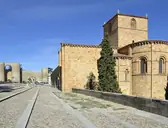 The Basilica of San VicenteThe martyrs outside the wallsIn the guide
- 04
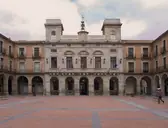 Plaza del Mercado ChicoThe civic squareIn the guide
- 05
 The Convent of Saint TeresaThe birthplace of a reformerIn the guide
- 06
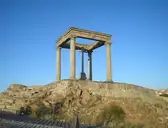 Los Cuatro PostesThe four postsIn the guide
Site map of Ávila
History of Ávila
A Roman town, Obila or Abila, already stood here, but the Ávila we walk around was refounded in the later eleventh century, as the Christian kingdoms of the north pushed south and settled the high ground of Old Castile. The walls were begun around 1090, in the reign of Alfonso VI, and they have been repaired ever since, without ever being pulled down. The cathedral, one of the first Gothic churches in Spain, was started in the twelfth century and built, in part, as a fortress at the eastern gate. In the sixteenth century Ávila became famous through Teresa of Ávila, the Carmelite reformer and writer, who was born inside these walls in 1515. The old town and the churches just outside the walls were declared a World Heritage Site in 1985.
Ávila guide: questions
How many stops does the Ávila guide have?
6 stops, in visit order: 1. The City Walls and the Puerta del Alcázar; 2. Ávila Cathedral; 3. The Basilica of San Vicente; 4. Plaza del Mercado Chico; 5. The Convent of Saint Teresa; 6. Los Cuatro Postes.
Can I do a self-guided tour of Ávila with this guide?
Yes. The guide is made for a self-guided tour: 6 stops in visit order, each with a photo, a story and a voice, so you can explore Ávila at your own pace, without joining a group. Download it before you go and it works offline.
How long is each guide?
The 6 stops add up to about 4 minutes of listening in total. You play each stop when you’re ready, so you can go at your own pace.
Does the guide work offline?
Yes, once it’s downloaded. The guide is a single self-contained web page (about 6.4 MB) with the photos, text and audio built in. Download it to your phone before you go (Wi-Fi is best); after that it opens in any modern browser on iPhone or Android, with no app, account or mobile signal needed.
Does it use GPS or need my location?
No. The guide doesn’t use GPS and doesn’t know where you are: you play each stop when you reach it. It works on iPhone and Android in any modern browser, and it’s in English.
What’s included?
One self-contained HTML guide: 6 stops in visit order, each with a photo, text and a voice, plus the story of who built the site.
Who built Ávila?
A Roman town, Obila or Abila, already stood here, but the Ávila we walk around was refounded in the later eleventh century, as the Christian kingdoms of the north pushed south and settled the high ground of Old Castile. The walls were begun around 1090, in the reign of Alfonso VI, and they have been repaired ever since, without ever being pulled down.
Where is Ávila?
Ávila is still encircled by its medieval walls: a complete circuit of granite and sandstone, with eighty-eight towers and nine gates, standing on a high plateau of Castile.
Is there a free audio guide to Ávila?
The first stop, The City Walls and the Puerta del Alcázar, is free to read and hear on this page, so you can try the Ávila audio tour before you buy. The full guide, with all 6 stops, is a one-off purchase: download it once and it’s yours to keep, working offline.
Is the Ávila guide worth it?
If you’d like to know what you’re looking at, yes. For $10 you get 6 stops in visit order, each with a photo, a short history and a voice you play when you’re ready, plus a site map of the stops, and about 4 minutes of listening in all. It’s short on purpose, so you spend your time looking, not listening. It’s yours to keep, works offline and needs no app. The first stop is free on this page, so you can try it before you buy. If you’d like hours of detail, a guided tour will go deeper.
Audio guide or guided tour?
It depends how you like to visit. This guide lets you explore Ávila at your own pace, at any time, for a one-off price. A guided tour gives you a live expert you can ask questions, but at fixed times and usually for a higher price. Many people use both: a tour for the big picture, and the guide to read beforehand or to revisit the stops in their own time.
Is this the official Ávila guide?
No. It’s an independent guide by The Historian Guide, not affiliated with or endorsed by the operator of Ávila. For tickets and opening hours, check the official site operator before you go.
Does the guide include entry tickets or opening hours?
No. The guide is a digital companion only. Admission to Ávila is separate, so check the official site operator for current tickets and opening hours before you go.
- Stop 1 · The City Walls and the Puerta del Alcázar (also the cover): Xemenendura · CC BY-SA 4.0 · Wikimedia Commons · resized
- Stop 2 · Ávila Cathedral: Palickap · CC BY-SA 4.0 · Wikimedia Commons · resized
- Stop 3 · The Basilica of San Vicente: Selbymay · CC BY-SA 3.0 · Wikimedia Commons · resized
- Stop 4 · Plaza del Mercado Chico: Jl FilpoC · CC BY-SA 4.0 · Wikimedia Commons · resized
- Stop 5 · The Convent of Saint Teresa: JoJan · Public domain · Wikimedia Commons · resized
- Stop 6 · Los Cuatro Postes: Aloriel · CC BY-SA 3.0 · Wikimedia Commons · resized


All photographs from Wikimedia Commons under the licences shown.
More guides in Spain
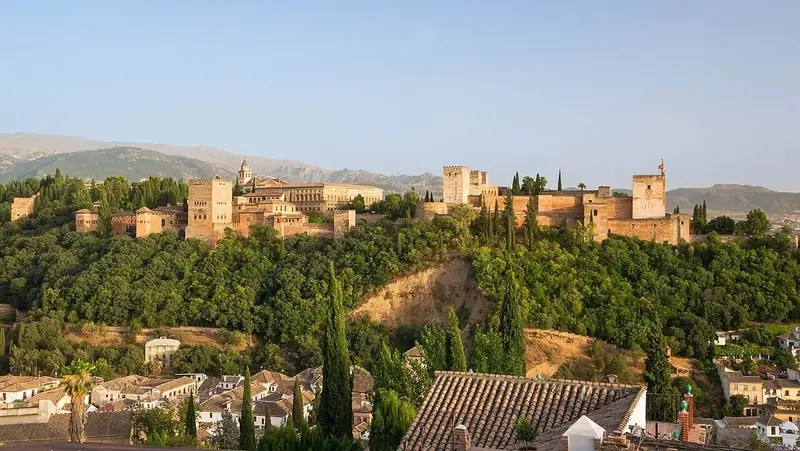 Nasrid9 stops · 13th–15th century CE
Alhambra audio guide
Climb to the Nasrid royal city above Granada, from the Alcazaba through the Court of the Myrtles and the Court of the Lions to the gardens of the Generalife.
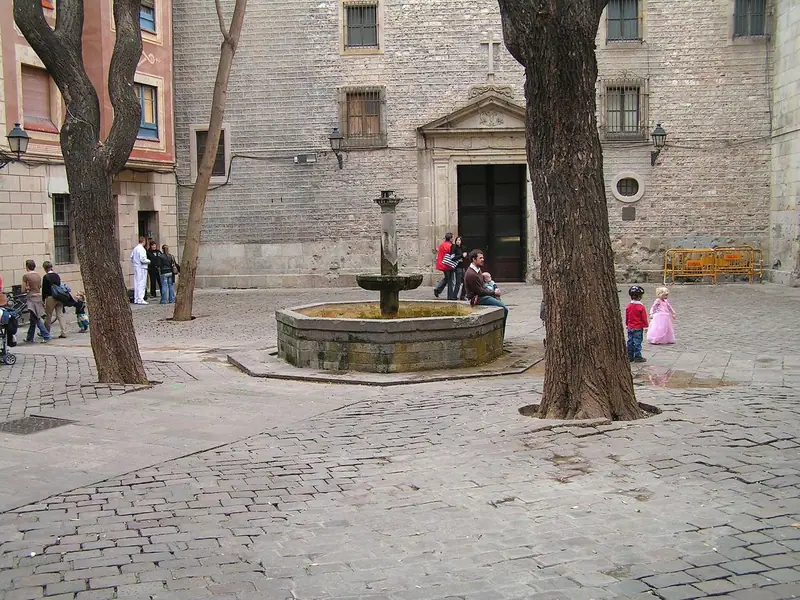 Roman and Medieval Catalonia7 stops · 1st century BCE–1714
Barcelona’s Gothic Quarter audio guide
From the Roman gate in the Plaça Nova past the cathedral, Sant Felip Neri and the Plaça de Sant Jaume to the Temple of Augustus, the royal palace and Santa Maria del Mar.
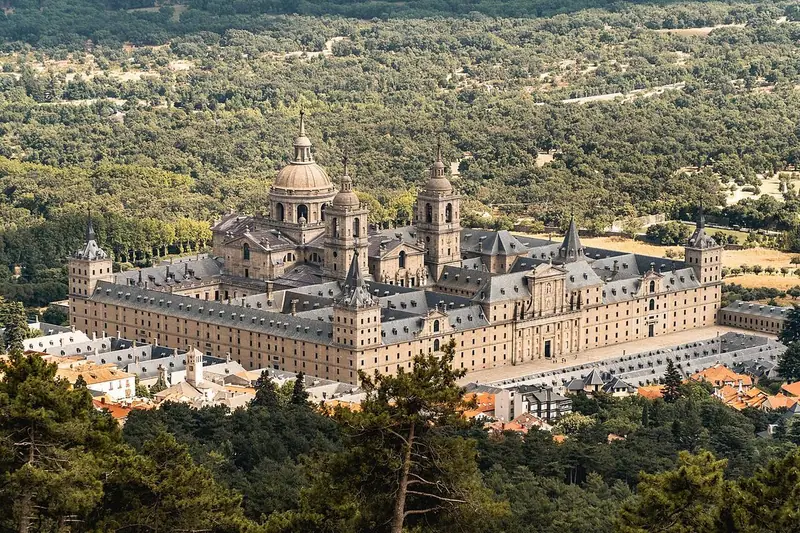 Habsburg7 stops · from 1563 CE
El Escorial audio guide
Explore Philip II’s monastery-palace at the foot of the Guadarrama, from the royal pantheon and the basilica to the painted library.
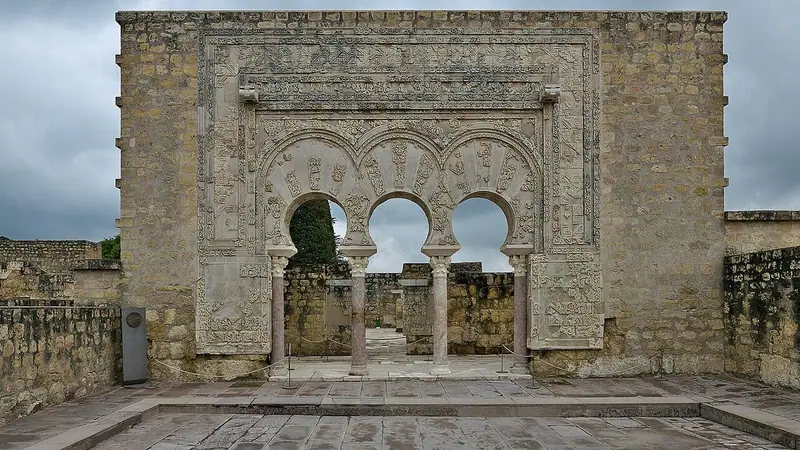 Umayyad9 stops · 936 – 1013 CE
Medina Azahara audio guide
The palace-city of the caliphs of Córdoba on the slopes of the Sierra Morena: the North Gate, the royal house, the House of Ja’far, the great portico, the Salón Rico and the caliph’s mosque.
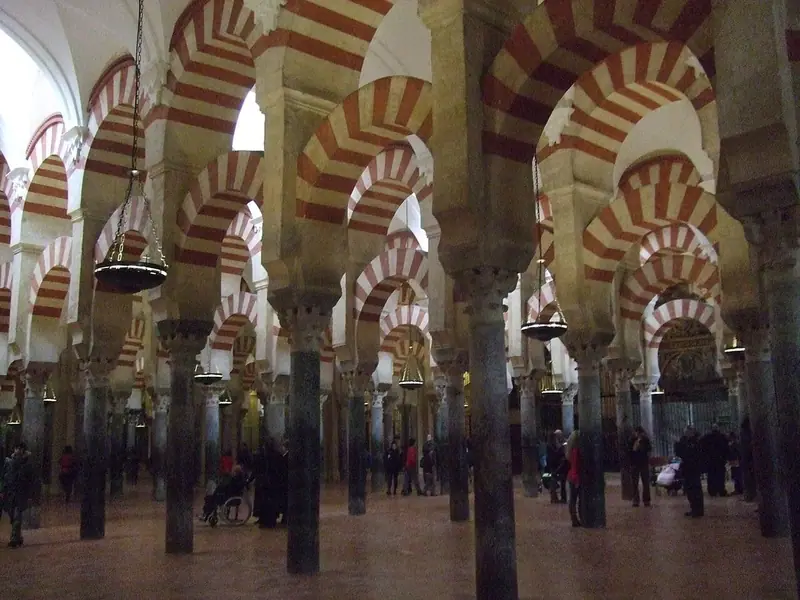 Umayyad8 stops · c. 785–1236 CE
Mosque-Cathedral of Córdoba audio guide
From the Court of the Orange Trees into a forest of columns and arches to the mihrab of the Umayyad mosque that became a cathedral.
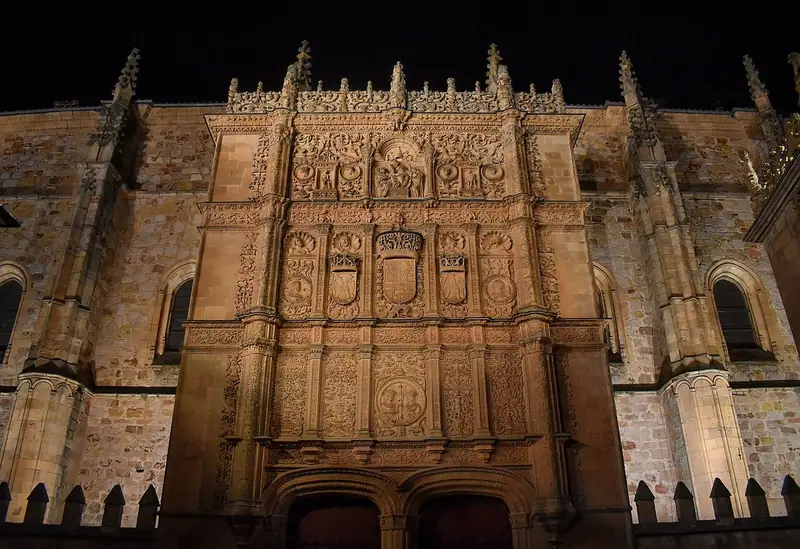 Renaissance11 stops · 1218 – 1755 (university founded to Plaza Mayor completed)
Old City of Salamanca audio guide
A golden-stone university city: the Plateresque university façade, two cathedrals side by side, the House of Shells, the Roman bridge and a Baroque Plaza Mayor.
Every guide, in every country
Ávila and every other guide we publish, including future ones. One payment, no subscription.