Before you start
Park Güell is a hillside park in the Gràcia district of Barcelona, in Catalonia, designed by Antoni Gaudí. It is part of the UNESCO World Heritage Site of the Works of Antoni Gaudí. The nearest metro stations, Lesseps and Vallcarca, are a steep uphill walk of about fifteen to twenty minutes, and several city buses stop closer to the entrances. The park has two parts: the Monumental Zone, with the most famous works, which needs a timed ticket booked in advance, and the wider park around it. Arrive on time for your slot, as late entry may be refused. This guide starts at the main entrance on Carrer d’Olot, explores the Monumental Zone, and then climbs through the wider park to the viewpoint at the top. Wear comfortable shoes, as the paths are steep.
Use it as a self-guided tour of Park Güell: 7 stops in visit order, each played when you’re ready, at your own pace.
 Free preview · Stop 1
The Entrance Pavilions
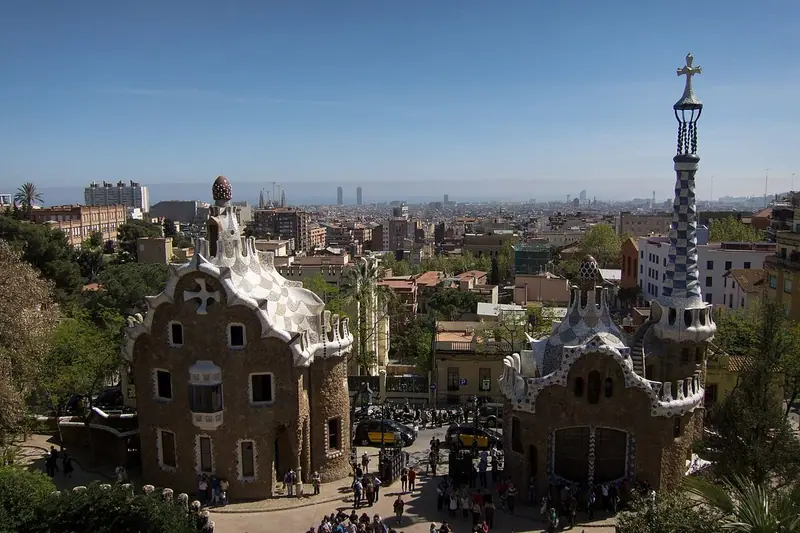
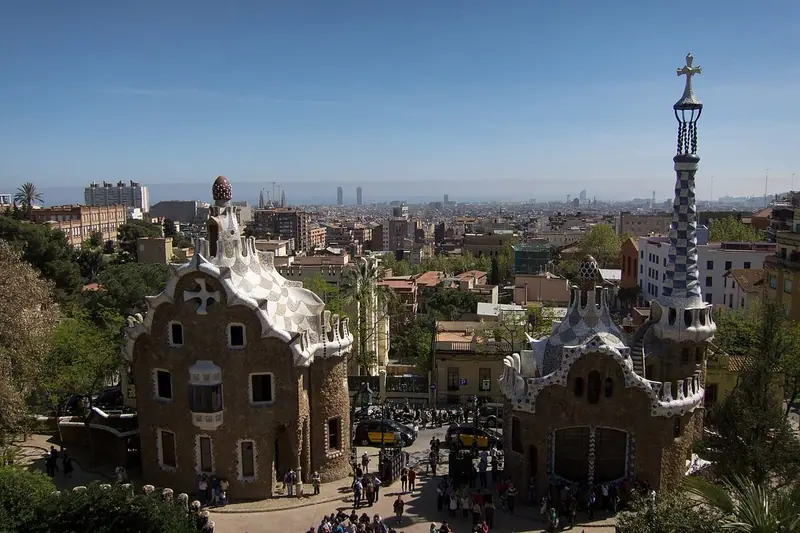
Begin at the main entrance on Carrer d’Olot, at the bottom of the park. Look at the two pavilions on either side of the gate. Their walls are built of stone, and their roofs are covered with curving shapes and patterns of broken tiles, a technique called trencadís, which Gaudí used throughout the park. The tall tower on one of them is topped by a cross with four arms, a symbol often found in Gaudí’s work. These pavilions were designed as a porter’s lodge and a waiting room for the planned garden city. Many visitors say they look like the houses in a fairy tale. One of them now holds an exhibition about the history of the park. Look also at the wall around the park, decorated with medallions bearing the words Park Güell, written in the English way.
Photo: Thomas Quine · CC BY 2.0 · Wikimedia Commons
What to see at Park Güell: 7 stops, in visit order
- 01
 The Entrance PavilionsGaudí’s fairy-tale gateFree preview
- 02
 The Dragon StairwayThe famous lizardIn the guide
- 03
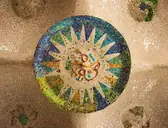 The Hypostyle RoomA forest of columnsIn the guide
- 04
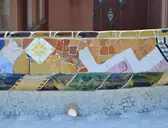 The Nature SquareThe serpentine benchIn the guide
- 05
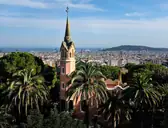 The Gaudí House MuseumWhere Gaudí livedIn the guide
- 06
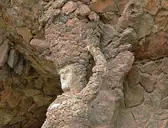 The ViaductsPaths among the treesIn the guide
- 07
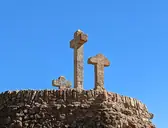 The Three CrossesThe highest pointIn the guide
Site map of Park Güell
History of Park Güell
Park Güell was built by the people of modern Catalonia, as part of Catalan Modernisme, the movement in art and architecture that flourished in Barcelona from the late nineteenth century until the early twentieth. Modernisme was part of a wider revival of Catalan culture, language and identity. The park was commissioned by the industrialist Eusebi Güell, Gaudí’s friend and patron, who planned a garden city here for wealthy families, with houses set among gardens. Gaudí worked on it from 1900 to 1914, with the help of other architects and craftsmen, including Josep Maria Jujol. The housing scheme failed, and only two houses were built. After Güell’s death, the city of Barcelona bought the estate, and it opened as a public park in 1926.
Park Güell guide: questions
How many stops does the Park Güell guide have?
7 stops, in visit order: 1. The Entrance Pavilions; 2. The Dragon Stairway; 3. The Hypostyle Room; 4. The Nature Square; 5. The Gaudí House Museum; 6. The Viaducts; 7. The Three Crosses.
Can I do a self-guided tour of Park Güell with this guide?
Yes. The guide is made for a self-guided tour: 7 stops in visit order, each with a photo, a story and a voice, so you can explore Park Güell at your own pace, without joining a group. Download it before you go and it works offline.
How long is each guide?
The 7 stops add up to about 5 minutes of listening in total. You play each stop when you’re ready, so you can go at your own pace.
Does the guide work offline?
Yes, once it’s downloaded. The guide is a single self-contained web page (about 6.6 MB) with the photos, text and audio built in. Download it to your phone before you go (Wi-Fi is best); after that it opens in any modern browser on iPhone or Android, with no app, account or mobile signal needed.
Does it use GPS or need my location?
No. The guide doesn’t use GPS and doesn’t know where you are: you play each stop when you reach it. It works on iPhone and Android in any modern browser, and it’s in English.
What’s included?
One self-contained HTML guide: 7 stops in visit order, each with a photo, text and a voice, plus the story of who built the site.
Who built Park Güell?
Park Güell was built by the people of modern Catalonia, as part of Catalan Modernisme, the movement in art and architecture that flourished in Barcelona from the late nineteenth century until the early twentieth. Modernisme was part of a wider revival of Catalan culture, language and identity.
Where is Park Güell?
Park Güell is a hillside park in the Gràcia district of Barcelona, in Catalonia, designed by Antoni Gaudí.
Is there a free audio guide to Park Güell?
The first stop, The Entrance Pavilions, is free to read and hear on this page, so you can try the Park Güell audio tour before you buy. The full guide, with all 7 stops, is a one-off purchase: download it once and it’s yours to keep, working offline.
Is the Park Güell guide worth it?
If you’d like to know what you’re looking at, yes. For $10 you get 7 stops in visit order, each with a photo, a short history and a voice you play when you’re ready, plus a site map of the stops, and about 5 minutes of listening in all. It’s short on purpose, so you spend your time looking, not listening. It’s yours to keep, works offline and needs no app. The first stop is free on this page, so you can try it before you buy. If you’d like hours of detail, a guided tour will go deeper.
Audio guide or guided tour?
It depends how you like to visit. This guide lets you explore Park Güell at your own pace, at any time, for a one-off price. A guided tour gives you a live expert you can ask questions, but at fixed times and usually for a higher price. Many people use both: a tour for the big picture, and the guide to read beforehand or to revisit the stops in their own time.
Is this the official Park Güell guide?
No. It’s an independent guide by The Historian Guide, not affiliated with or endorsed by the operator of Park Güell. For tickets and opening hours, check the official site operator before you go.
Does the guide include entry tickets or opening hours?
No. The guide is a digital companion only. Admission to Park Güell is separate, so check the official site operator for current tickets and opening hours before you go.
- Stop 1 · The Entrance Pavilions (also the cover): Thomas Quine · CC BY 2.0 · Wikimedia Commons · resized
- Stop 2 · The Dragon Stairway: Fiachs at the English-language Wikipedia · CC BY-SA 3.0 · Wikimedia Commons · resized
- Stop 3 · The Hypostyle Room: Delialendeczki · CC BY-SA 3.0 · Wikimedia Commons · resized
- Stop 4 · The Nature Square: DimiTalen · CC0 · Wikimedia Commons · resized
- Stop 5 · The Gaudí House Museum: Kristoffer Trolle from Copenhagen, Denmark · CC BY 2.0 · Wikimedia Commons · resized
- Stop 6 · The Viaducts: Harvey Barrison from Massapequa, NY, USA · CC BY-SA 2.0 · Wikimedia Commons · resized
- Stop 7 · The Three Crosses: The ed17 · CC BY-SA 4.0 · Wikimedia Commons · resized


All photographs from Wikimedia Commons under the licences shown.
More guides in Spain
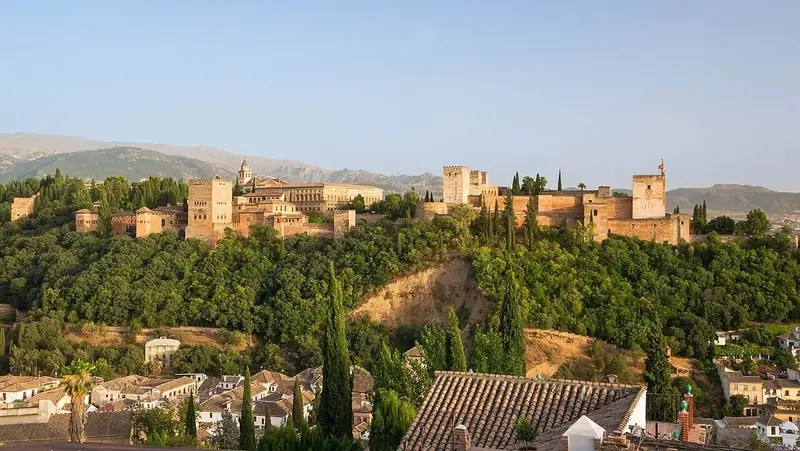 Nasrid9 stops · 13th–15th century CE
Alhambra audio guide
Climb to the Nasrid royal city above Granada, from the Alcazaba through the Court of the Myrtles and the Court of the Lions to the gardens of the Generalife.
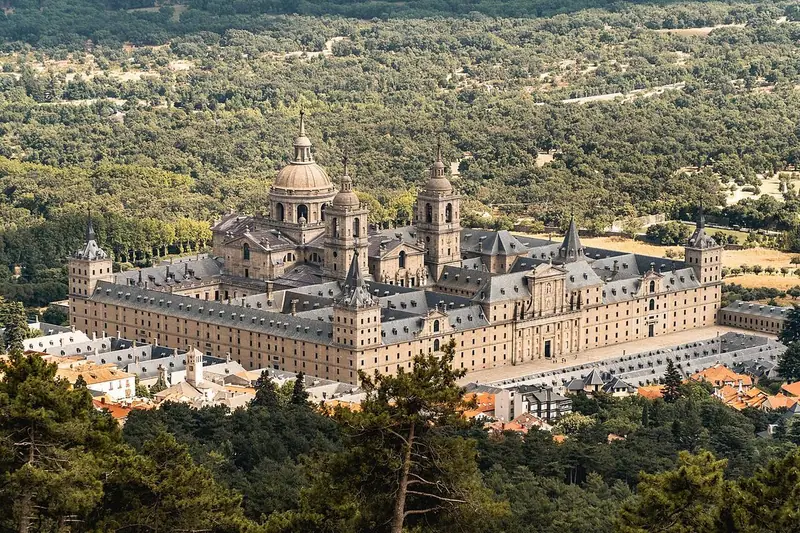 Habsburg7 stops · from 1563 CE
El Escorial audio guide
Explore Philip II’s monastery-palace at the foot of the Guadarrama, from the royal pantheon and the basilica to the painted library.
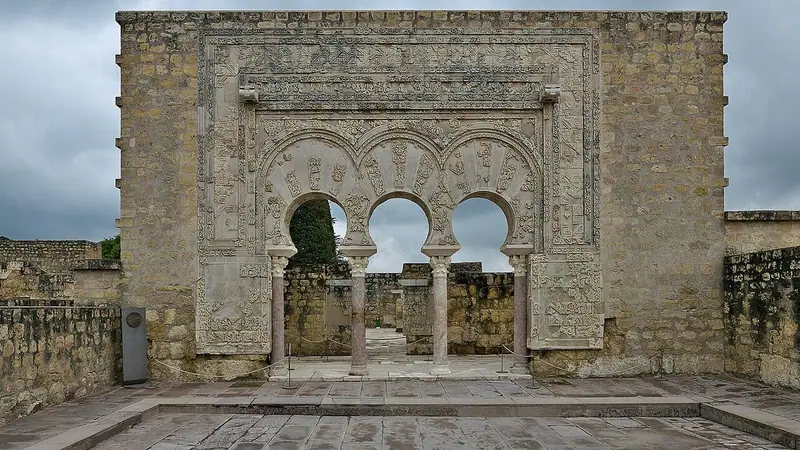 Umayyad9 stops · 936 – 1013 CE
Medina Azahara audio guide
The palace-city of the caliphs of Córdoba on the slopes of the Sierra Morena: the North Gate, the royal house, the House of Ja’far, the great portico, the Salón Rico and the caliph’s mosque.
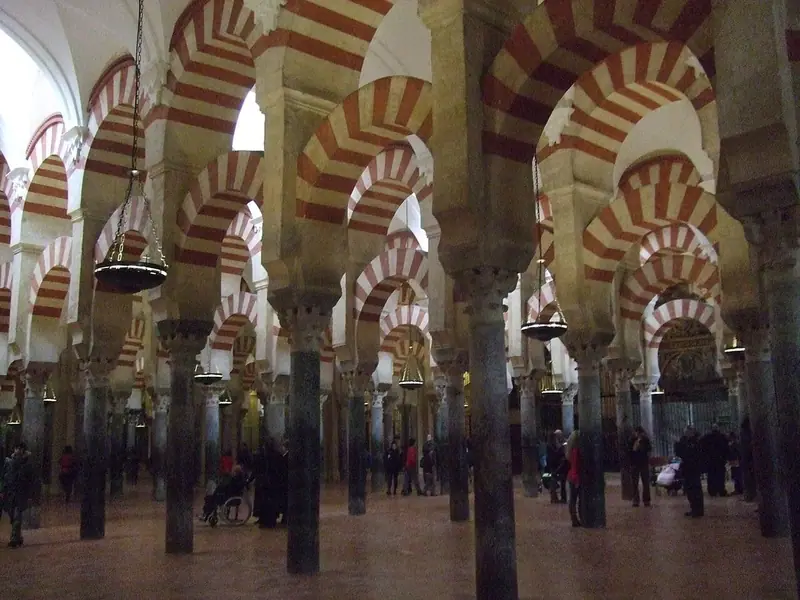 Umayyad8 stops · c. 785–1236 CE
Mosque-Cathedral of Córdoba audio guide
From the Court of the Orange Trees into a forest of columns and arches to the mihrab of the Umayyad mosque that became a cathedral.
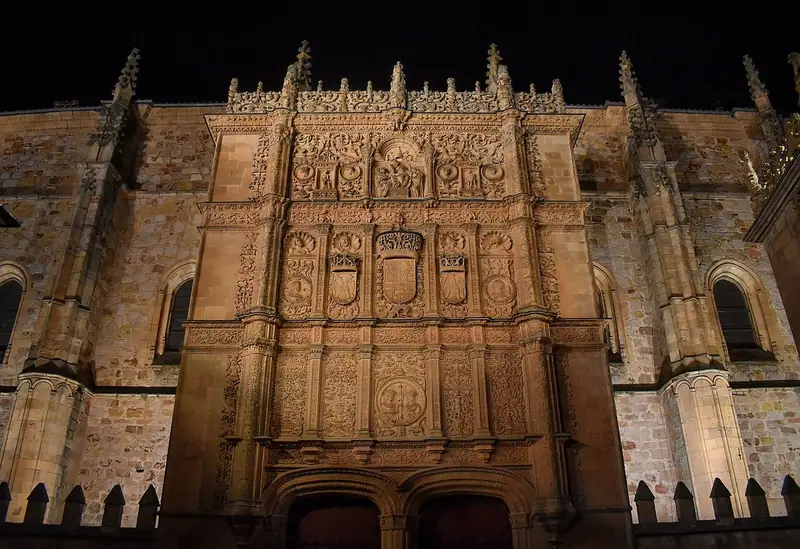 Renaissance11 stops · 1218 – 1755 (university founded to Plaza Mayor completed)
Old City of Salamanca audio guide
A golden-stone university city: the Plateresque university façade, two cathedrals side by side, the House of Shells, the Roman bridge and a Baroque Plaza Mayor.
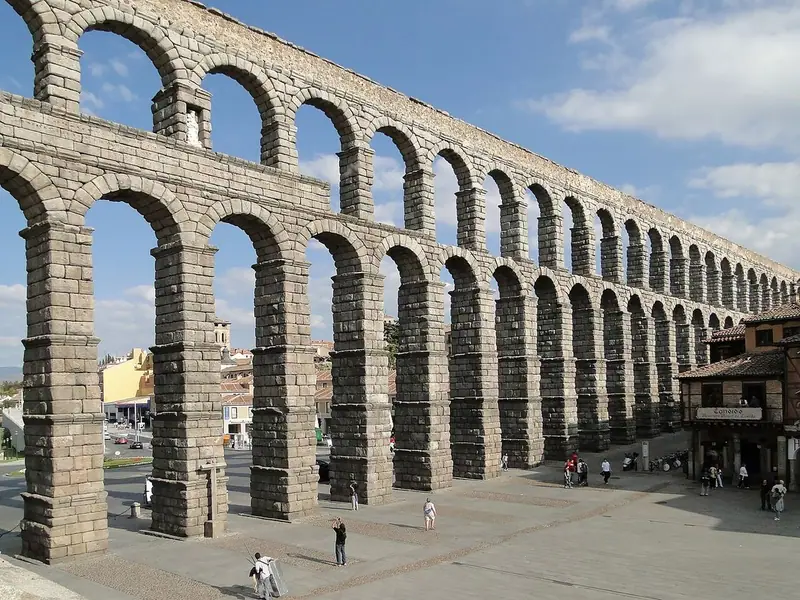 Roman8 stops · c. 100 CE – 16th century
Old Town of Segovia audio guide
From the soaring Roman aqueduct through the Plaza Mayor to the cathedral and the Alcázar on the rocky ridge.
Every guide, in every country
Park Güell and every other guide we publish, including future ones. One payment, no subscription.