Before you start
The Museo del Prado in Madrid holds one of the greatest collections of European painting, built up over centuries by the kings of Spain. It is the finest place in the world to see Velázquez, Goya and El Greco, and it holds treasures from Flanders and Italy too. This guide begins outside Juan de Villanueva’s grand building, then visits Titian, Velázquez’s Las Meninas, El Greco and Goya’s paintings of war and darkness. It ends with Bosch’s Garden of Earthly Delights. Allow three hours.
Use it as a self-guided tour of the Prado Museum: 8 stops in visit order, each played when you’re ready, at your own pace.
 Free preview · Stop 1
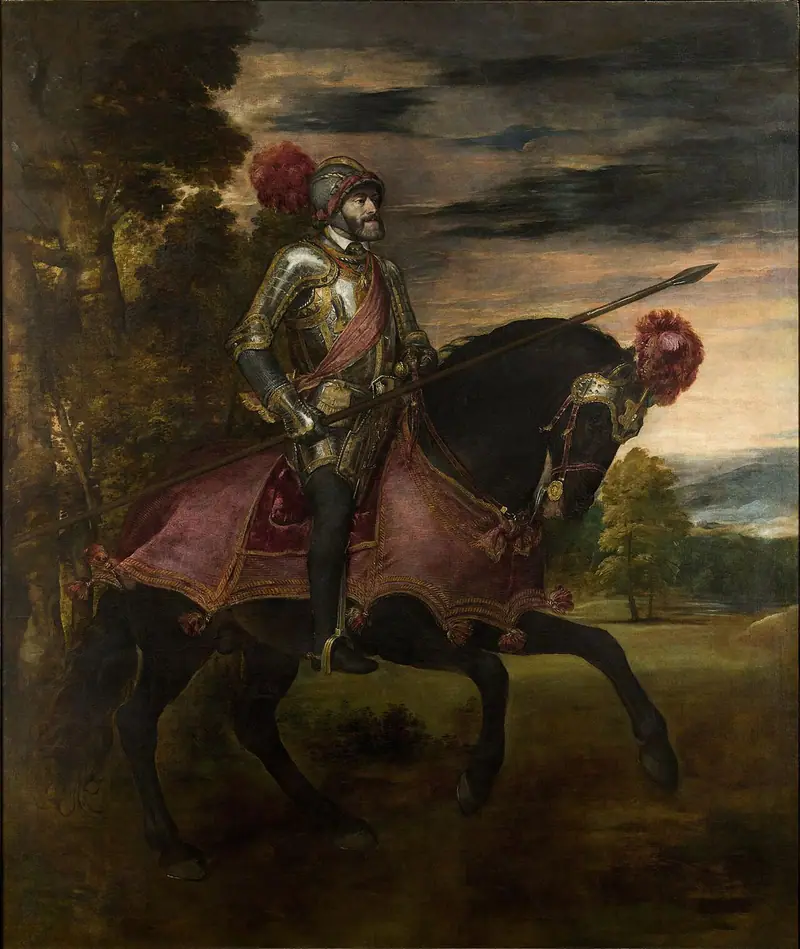
The Velázquez Door
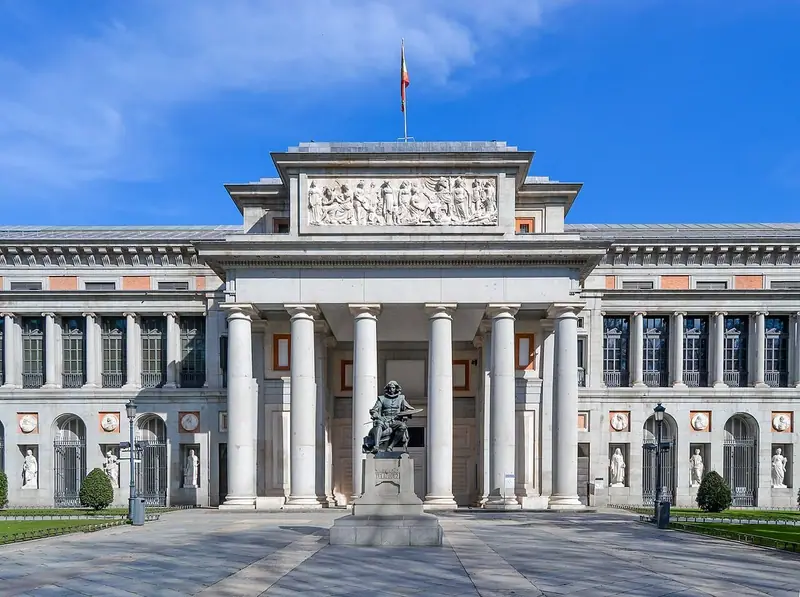
Begin on the Paseo del Prado, in front of the long main façade. Juan de Villanueva designed the building in 1785, in the classical style of the Enlightenment. Look at the great portico of columns at the centre, known as the Velázquez Door. It was first meant to hold a natural history collection, a sign of Charles the Third’s interest in science. In front of it sits a bronze statue of the painter Diego Velázquez, with palette and brush in hand. Walk to the northern end of the building, where a statue of Francisco de Goya stands outside the entrance named after him. At the southern end is a statue of the painter Murillo, facing the Botanical Garden. The main visitor entrance is in the modern extension behind the building, beside the church of San Jerónimo. Go in there and climb to the main floor.
Photo: Emilio J. Rodríguez Posada · CC BY-SA 2.0 · Wikimedia Commons
What to see at the Prado Museum: 8 stops, in visit order
- 01
 The Velázquez DoorA temple of the EnlightenmentFree preview
- 02
 The Central GalleryTitian and the emperorIn the guide
- 03
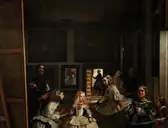 Las MeninasThe painting that watches youIn the guide
- 04
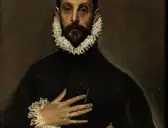 El GrecoFlames of colourIn the guide
- 05
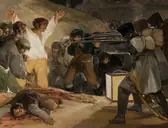 The Third of MayThe horror of warIn the guide
- 06
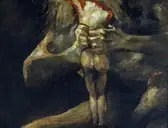 The Black PaintingsGoya aloneIn the guide
- 07
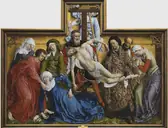 The Descent from the CrossGrief in FlandersIn the guide
- 08
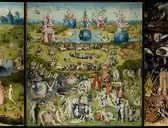 The Garden of Earthly DelightsParadise and hellIn the guide
History of the Prado Museum
The royal collection began to grow in the sixteenth century under the Emperor Charles the Fifth and his son, Philip the Second, and later Habsburg and Bourbon kings added to it. In 1785 King Charles the Third ordered a building here from the architect Juan de Villanueva, to house a cabinet of natural history. It was damaged during the Napoleonic wars, and King Ferdinand the Seventh, encouraged by his wife, Queen María Isabel of Braganza, decided to make it a royal museum of paintings. It opened to the public in November 1819. After the fall of Queen Isabella the Second in 1868 it became a national museum, and it has since been enlarged several times, most recently by the architect Rafael Moneo.
The Prado Museum guide: questions
How many stops does the Prado Museum guide have?
8 stops, in visit order: 1. The Velázquez Door; 2. The Central Gallery; 3. Las Meninas; 4. El Greco; 5. The Third of May; 6. The Black Paintings; 7. The Descent from the Cross; 8. The Garden of Earthly Delights.
Can I do a self-guided tour of the Prado Museum with this guide?
Yes. The guide is made for a self-guided tour: 8 stops in visit order, each with a photo, a story and a voice, so you can explore the Prado Museum at your own pace, without joining a group. Download it before you go and it works offline.
How long is each guide?
The 8 stops add up to about 6 minutes of listening in total. You play each stop when you’re ready, so you can go at your own pace.
Does the guide work offline?
Yes, once it’s downloaded. The guide is a single self-contained web page (about 8.1 MB) with the photos, text and audio built in. Download it to your phone before you go (Wi-Fi is best); after that it opens in any modern browser on iPhone or Android, with no app, account or mobile signal needed.
Does it use GPS or need my location?
No. The guide doesn’t use GPS and doesn’t know where you are: you play each stop when you reach it. It works on iPhone and Android in any modern browser, and it’s in English.
What’s included?
One self-contained HTML guide: 8 stops in visit order, each with a photo, text and a voice, plus the story of who built the site.
Who built the Prado Museum?
The royal collection began to grow in the sixteenth century under the Emperor Charles the Fifth and his son, Philip the Second, and later Habsburg and Bourbon kings added to it. In 1785 King Charles the Third ordered a building here from the architect Juan de Villanueva, to house a cabinet of natural history.
Where is the Prado Museum?
The Museo del Prado in Madrid holds one of the greatest collections of European painting, built up over centuries by the kings of Spain.
Is there a free audio guide to the Prado Museum?
The first stop, The Velázquez Door, is free to read and hear on this page, so you can try the Prado Museum audio tour before you buy. The full guide, with all 8 stops, is a one-off purchase: download it once and it’s yours to keep, working offline.
Is the Prado Museum guide worth it?
If you’d like to know what you’re looking at, yes. For $10 you get 8 stops in visit order, each with a photo, a short history and a voice you play when you’re ready, about 6 minutes of listening in all. It’s short on purpose, so you spend your time looking, not listening. It’s yours to keep, works offline and needs no app. The first stop is free on this page, so you can try it before you buy. If you’d like hours of detail, a guided tour will go deeper.
Audio guide or guided tour?
It depends how you like to visit. This guide lets you explore the Prado Museum at your own pace, at any time, for a one-off price. A guided tour gives you a live expert you can ask questions, but at fixed times and usually for a higher price. Many people use both: a tour for the big picture, and the guide to read beforehand or to revisit the stops in their own time.
Is this the official Prado Museum guide?
No. It’s an independent guide by The Historian Guide, not affiliated with or endorsed by the operator of the Prado Museum. For tickets and opening hours, check the official site operator before you go.
Does the guide include entry tickets or opening hours?
No. The guide is a digital companion only. Admission to the Prado Museum is separate, so check the official site operator for current tickets and opening hours before you go.
- Stop 1 · The Velázquez Door: Emilio J. Rodríguez Posada · CC BY-SA 2.0 · Wikimedia Commons · resized
- Stop 2 · The Central Gallery (also the cover): Titian · Public domain · Wikimedia Commons · resized
- Stop 3 · Las Meninas: Diego Velázquez · Public domain · Wikimedia Commons · resized
- Stop 4 · El Greco: El Greco · Public domain · Wikimedia Commons · resized
- Stop 5 · The Third of May: Francisco Goya · Public domain · Wikimedia Commons · resized
- Stop 6 · The Black Paintings: Francisco Goya · Public domain · Wikimedia Commons · resized
- Stop 7 · The Descent from the Cross: Rogier van der Weyden · Public domain · Wikimedia Commons · resized
- Stop 8 · The Garden of Earthly Delights: Hieronymus Bosch · Public domain · Wikimedia Commons · resized


All photographs from Wikimedia Commons under the licences shown.
More guides in Spain
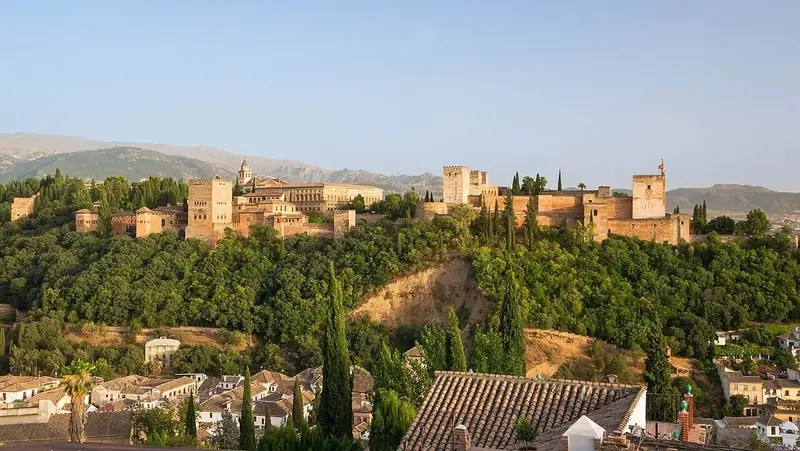 Nasrid9 stops · 13th–15th century CE
Alhambra audio guide
Climb to the Nasrid royal city above Granada, from the Alcazaba through the Court of the Myrtles and the Court of the Lions to the gardens of the Generalife.
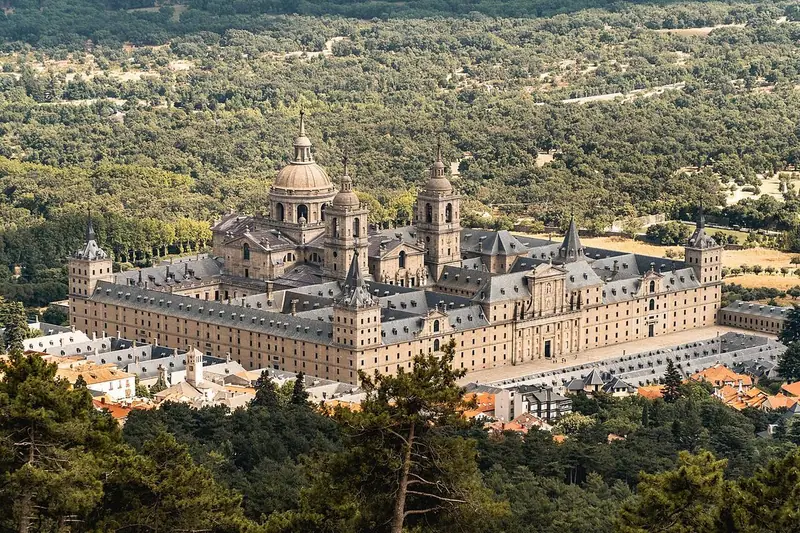 Habsburg7 stops · from 1563 CE
El Escorial audio guide
Explore Philip II’s monastery-palace at the foot of the Guadarrama, from the royal pantheon and the basilica to the painted library.
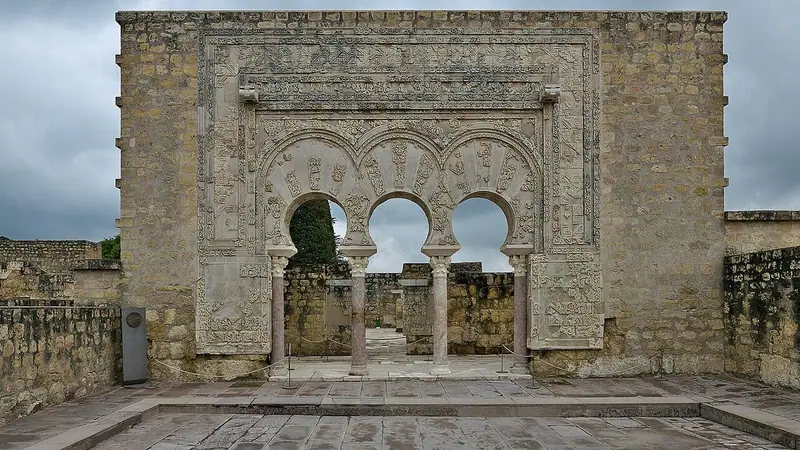 Umayyad9 stops · 936 – 1013 CE
Medina Azahara audio guide
The palace-city of the caliphs of Córdoba on the slopes of the Sierra Morena: the North Gate, the royal house, the House of Ja’far, the great portico, the Salón Rico and the caliph’s mosque.
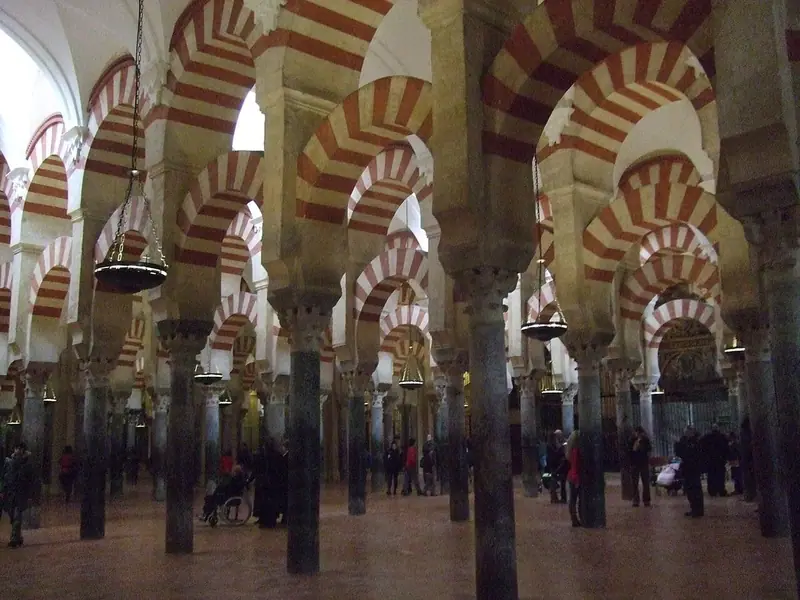 Umayyad8 stops · c. 785–1236 CE
Mosque-Cathedral of Córdoba audio guide
From the Court of the Orange Trees into a forest of columns and arches to the mihrab of the Umayyad mosque that became a cathedral.
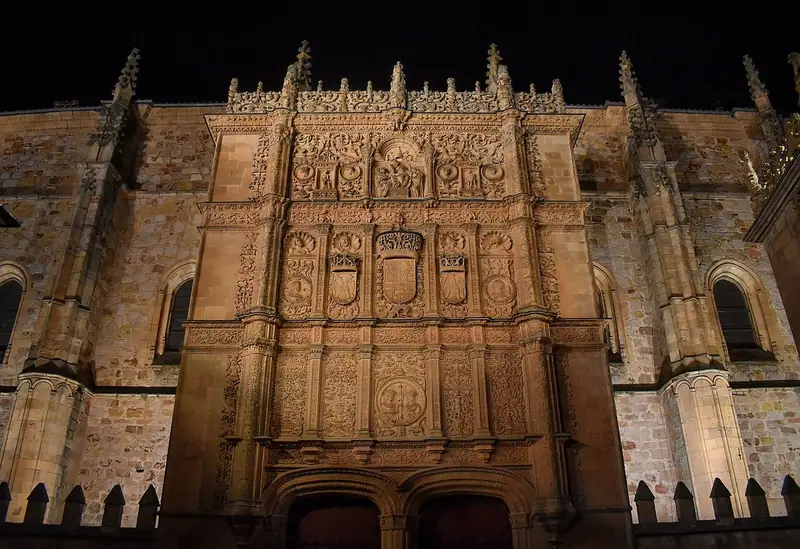 Renaissance11 stops · 1218 – 1755 (university founded to Plaza Mayor completed)
Old City of Salamanca audio guide
A golden-stone university city: the Plateresque university façade, two cathedrals side by side, the House of Shells, the Roman bridge and a Baroque Plaza Mayor.
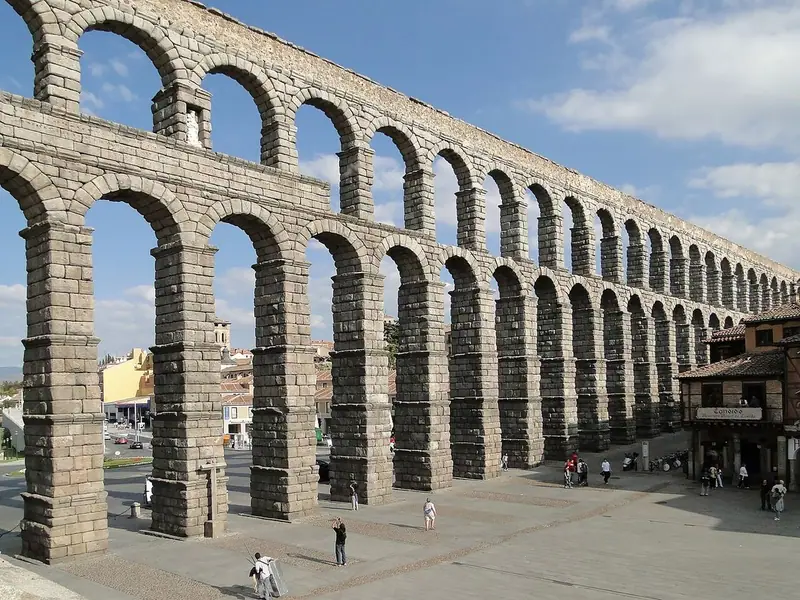 Roman8 stops · c. 100 CE – 16th century
Old Town of Segovia audio guide
From the soaring Roman aqueduct through the Plaza Mayor to the cathedral and the Alcázar on the rocky ridge.
Every guide, in every country
The Prado Museum and every other guide we publish, including future ones. One payment, no subscription.