Before you start
Visby, on the west coast of the island of Gotland, is the best-preserved medieval merchant city in Scandinavia, and its walls, churches and streets were inscribed as a World Heritage Site in 1995. In the twelfth and thirteenth centuries it was a great Hanseatic port, rich on the trade of the Baltic; then the trade moved on, the harbour silted, and the town was left with a circuit of stone churches, many of them now ruins, and a wall that still almost completely encloses the old city. This guide starts at the wall and the North Gate, visits St Mary’s Cathedral and the ruins of St Nicolai and St Karin, and ends at the old harbour, now Almedalen, and at the Powder Tower by the Botanical Garden. The walk is about two kilometres and takes two to three hours.
Use it as a self-guided tour of Visby: 6 stops in visit order, each played when you’re ready, at your own pace.
 Free preview · Stop 1
The city wall and the North Gate
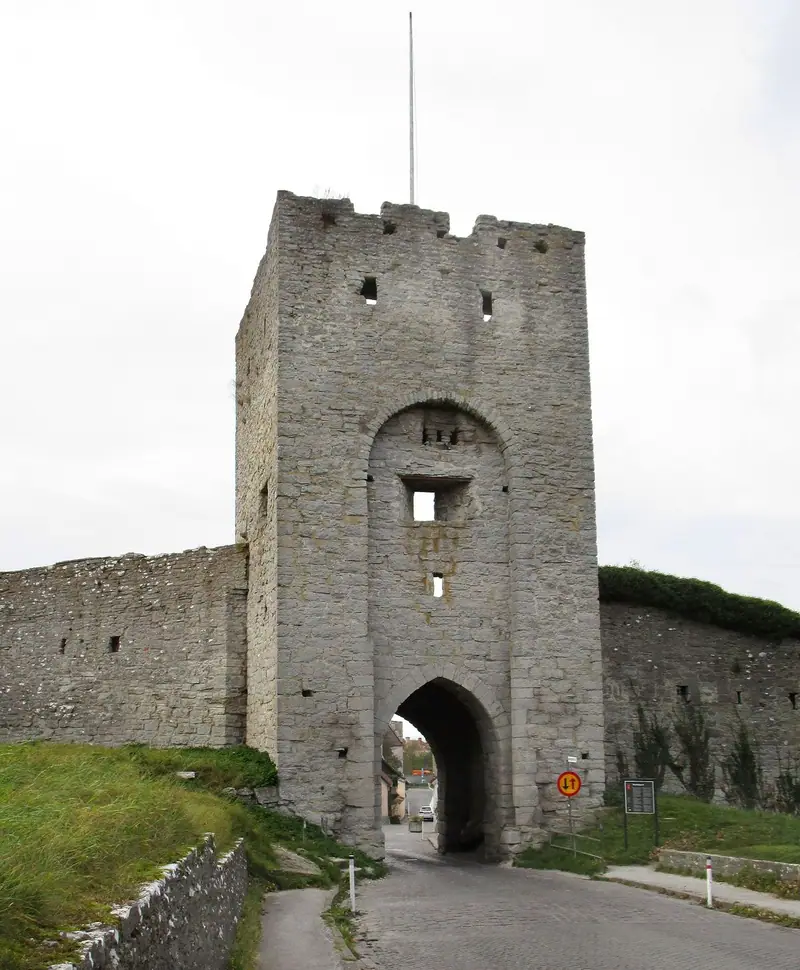
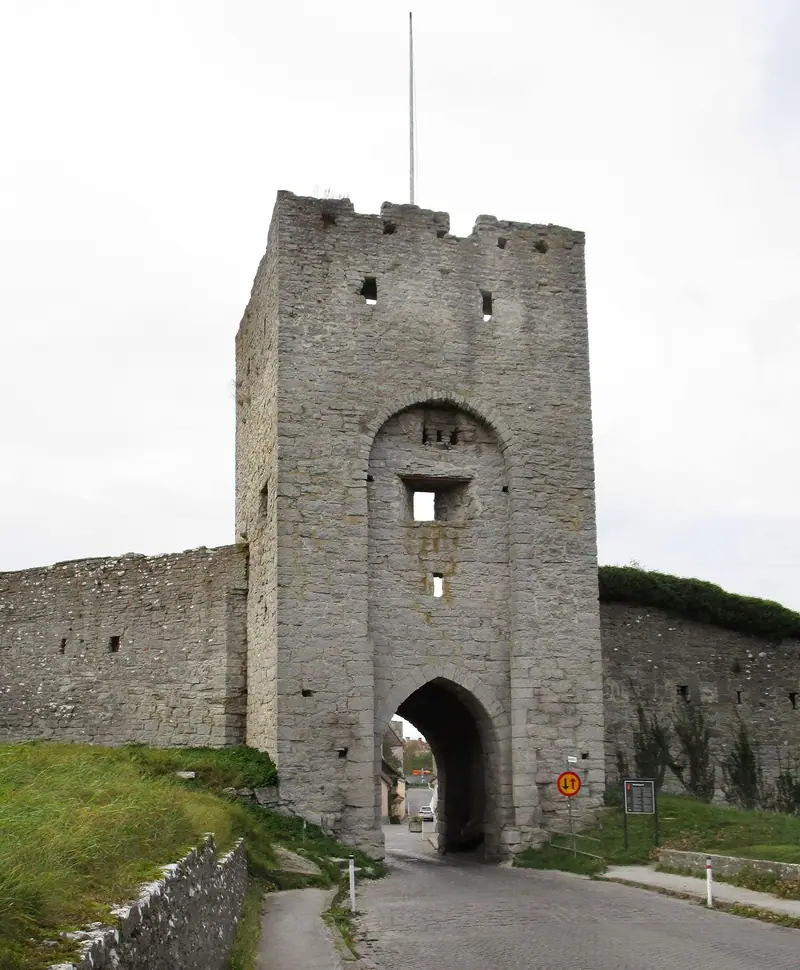
Begin at the North Gate, Norderport, in the great ring of Visby’s town wall. The wall runs for about three and a half kilometres and still almost completely encloses the old city, with some two dozen towers still standing, the most complete medieval town wall in Scandinavia. It was begun in the late twelfth century and rebuilt and extended in the thirteenth, especially after the conflict of 1288, when the townsmen raised the landward defences against the farmers of the island. The North Gate was one of the principal entrances from the countryside, and from here you can walk a stretch of the wall-walk, or simply follow the outside or the inside and look up at the towers. Dalman’s Tower, a little to the east, is one of the most massive. The wall is the reason Visby still feels like a city rather than a scattered ruin, and it is the right place to start. Come in through the gate and walk south, towards the cathedral.
Photo: W.carter · CC BY-SA 4.0 · Wikimedia Commons
What to see at Visby: 6 stops, in visit order
- 01
 The city wall and the North GateThe ring around the townFree preview
- 02
 St Mary’s CathedralThe church of the German merchantsIn the guide
- 03
 The ruin of St NicolaiThe Dominican churchIn the guide
- 04
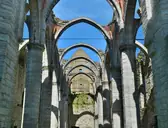 The ruin of St KarinThe church on the squareIn the guide
- 05
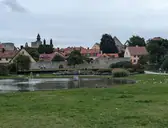 Packhusplan and AlmedalenThe old harbourIn the guide
- 06
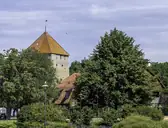 The Powder Tower and the Botanical GardenThe oldest tower by the waterIn the guide
Site map of Visby
History of Visby
Gotland was already a centre of Baltic trade in the Viking Age, and in the twelfth century Visby grew as a town of local and German merchants, with stone warehouses, churches and, from the late twelfth century, a wall. In 1288 a civil war between the town and the countryside ended in a royal settlement, and the wall was extended to its present line, cutting the town off from the island it had once served. Visby became a leading city of the Hanseatic League. In 1361 the Danish king Valdemar Atterdag took Gotland, and the island later passed through various hands, including the Teutonic Knights, before coming under the Swedish crown in 1645. As Stockholm and other ports took the trade, Visby shrank, which is why so much of the medieval town, and so many church ruins, survive. The Hanseatic Town of Visby became a World Heritage Site in 1995.
Visby guide: questions
How many stops does the Visby guide have?
6 stops, in visit order: 1. The city wall and the North Gate; 2. St Mary’s Cathedral; 3. The ruin of St Nicolai; 4. The ruin of St Karin; 5. Packhusplan and Almedalen; 6. The Powder Tower and the Botanical Garden.
Can I do a self-guided tour of Visby with this guide?
Yes. The guide is made for a self-guided tour: 6 stops in visit order, each with a photo, a story and a voice, so you can explore Visby at your own pace, without joining a group. Download it before you go and it works offline.
How long is each guide?
The 6 stops add up to about 4 minutes of listening in total. You play each stop when you’re ready, so you can go at your own pace.
Does the guide work offline?
Yes, once it’s downloaded. The guide is a single self-contained web page (about 6.6 MB) with the photos, text and audio built in. Download it to your phone before you go (Wi-Fi is best); after that it opens in any modern browser on iPhone or Android, with no app, account or mobile signal needed.
Does it use GPS or need my location?
No. The guide doesn’t use GPS and doesn’t know where you are: you play each stop when you reach it. It works on iPhone and Android in any modern browser, and it’s in English.
What’s included?
One self-contained HTML guide: 6 stops in visit order, each with a photo, text and a voice, plus the story of who built the site.
Who built Visby?
Gotland was already a centre of Baltic trade in the Viking Age, and in the twelfth century Visby grew as a town of local and German merchants, with stone warehouses, churches and, from the late twelfth century, a wall. In 1288 a civil war between the town and the countryside ended in a royal settlement, and the wall was extended to its present line, cutting the town off from the island it had once served.
Where is Visby?
Visby, on the west coast of the island of Gotland, is the best-preserved medieval merchant city in Scandinavia, and its walls, churches and streets were inscribed as a World Heritage Site in 1995.
Is there a free audio guide to Visby?
The first stop, The city wall and the North Gate, is free to read and hear on this page, so you can try the Visby audio tour before you buy. The full guide, with all 6 stops, is a one-off purchase: download it once and it’s yours to keep, working offline.
Is the Visby guide worth it?
If you’d like to know what you’re looking at, yes. For $10 you get 6 stops in visit order, each with a photo, a short history and a voice you play when you’re ready, plus a site map of the stops, and about 4 minutes of listening in all. It’s short on purpose, so you spend your time looking, not listening. It’s yours to keep, works offline and needs no app. The first stop is free on this page, so you can try it before you buy. If you’d like hours of detail, a guided tour will go deeper.
Audio guide or guided tour?
It depends how you like to visit. This guide lets you explore Visby at your own pace, at any time, for a one-off price. A guided tour gives you a live expert you can ask questions, but at fixed times and usually for a higher price. Many people use both: a tour for the big picture, and the guide to read beforehand or to revisit the stops in their own time.
Is this the official Visby guide?
No. It’s an independent guide by The Historian Guide, not affiliated with or endorsed by the operator of Visby. For tickets and opening hours, check the official site operator before you go.
Does the guide include entry tickets or opening hours?
No. The guide is a digital companion only. Admission to Visby is separate, so check the official site operator for current tickets and opening hours before you go.
- Stop 1 · The city wall and the North Gate (also the cover): W.carter · CC BY-SA 4.0 · Wikimedia Commons · resized
- Stop 2 · St Mary’s Cathedral: Beckstet · CC BY-SA 3.0 · Wikimedia Commons · resized
- Stop 3 · The ruin of St Nicolai: Jürgen Howaldt · CC BY-SA 2.0 de · Wikimedia Commons · resized
- Stop 4 · The ruin of St Karin: Esquilo · CC BY-SA 3.0 · Wikimedia Commons · resized
- Stop 5 · Packhusplan and Almedalen: AleWi · CC BY-SA 4.0 · Wikimedia Commons · resized
- Stop 6 · The Powder Tower and the Botanical Garden: Bene Riobó · CC BY-SA 4.0 · Wikimedia Commons · resized


All photographs from Wikimedia Commons under the licences shown.
More guides in Sweden
 Swedish7 stops · 1662–1792
Drottningholm Palace audio guide
The Swedish royal family’s lakeside home, from its state rooms and Baroque garden to the palace theatre and the Chinese Pavilion.
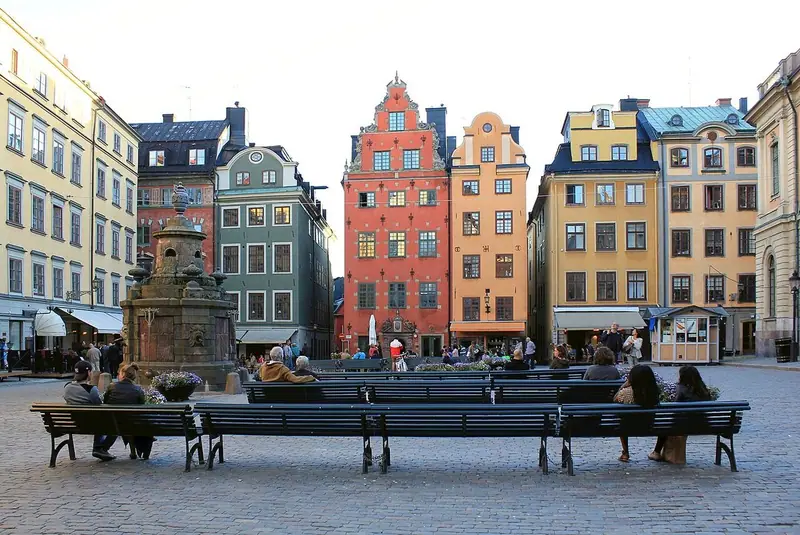 Medieval8 stops · 13th–18th century
Gamla Stan audio guide
The narrow cobbled lanes of Stockholm’s old town, from the Royal Palace and Stortorget to the runestone and Riddarholmen Church.
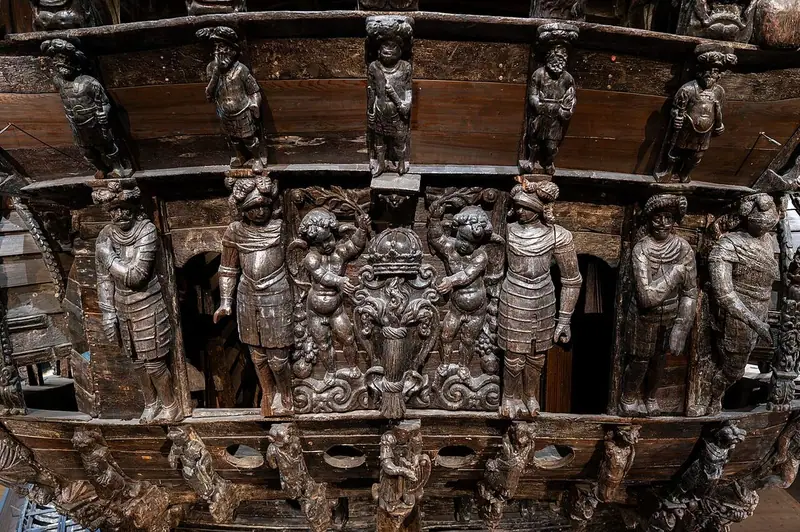 Swedish Empire7 stops · 1626–1628
The Vasa Museum audio guide
The warship Vasa, which sank on her maiden voyage in 1628, from her lion figurehead to the carved stern and gundecks.
Every guide, in every country
Visby and every other guide we publish, including future ones. One payment, no subscription.