Before you start
At the foot of the hills on the northern edge of Taipei stands one of the greatest collections of Chinese art in the world. Most of it once belonged to the emperors of China, and was kept for centuries in the Forbidden City in Beijing, before a long and dangerous journey brought the finest pieces across the sea to Taiwan. The collection spans thousands of years, from Neolithic jades to the treasures of the last dynasty, and only a small part of it can be shown at any one time. Displays change regularly, especially paintings and calligraphy, which are fragile and are shown only for short periods, so check what is on view before you go. This guide begins outside the main building and then visits some of the museum’s most celebrated objects, from an ancient bronze cauldron to a cabbage carved from jade.
Use it as a self-guided tour of the National Palace Museum: 7 stops in visit order, each played when you’re ready, at your own pace.
 Free preview · Stop 1
The Main Building
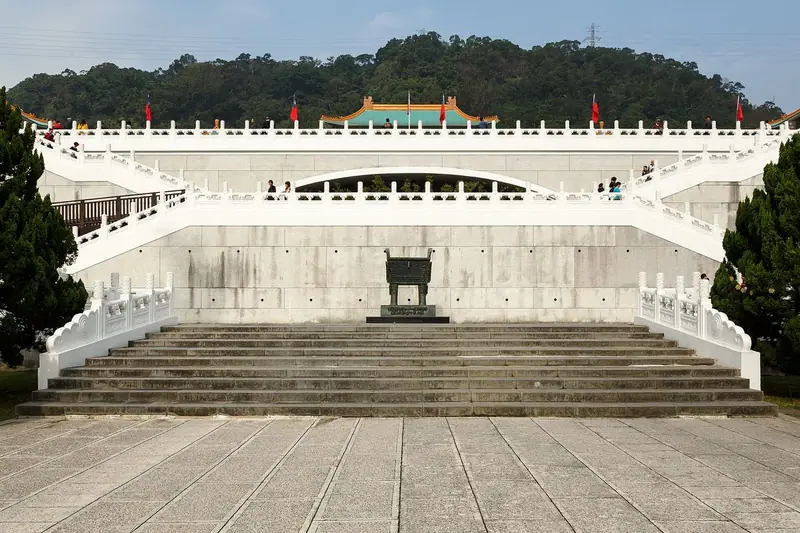
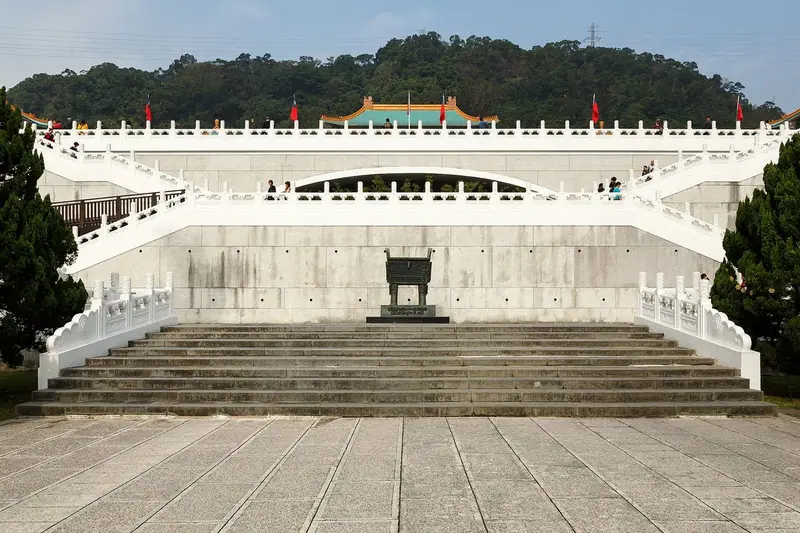
Begin outside, at the foot of the broad steps that lead up to the main building. The museum opened here in November 1965, in the centenary year of the birth of Sun Yat-sen, the founding father of the Republic of China. Its architect, Huang Baoyu, designed it in the style of a traditional Chinese palace, with yellow-green tiled roofs, red columns and white balustrades, and set it against the green hills of the Waishuangxi valley, so that the treasures could be kept safe in tunnels dug into the hillside behind. The building has been enlarged and modernised several times since, most recently in the early years of this century. At the entrance to the grounds stands a large gateway in the traditional style. From the steps, look back over the gardens towards the city. Then go inside, to the galleries of ancient bronzes.
Photo: CEphoto, Uwe Aranas · CC BY-SA 3.0 · Wikimedia Commons
What to see at the National Palace Museum: 7 stops, in visit order
- 01
 The Main BuildingA palace for the collectionFree preview
- 02
 The Mao Gong DingThe longest inscription in bronzeIn the guide
- 03
 Ru Ware of the SongThe colour of the sky after rainIn the guide
- 04
 Travellers among Mountains and StreamsA landscape of the Song dynastyIn the guide
- 05
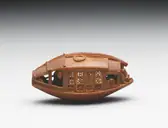 The Carved Olive-stone BoatA masterpiece in miniatureIn the guide
- 06
 The Jadeite CabbageThe most famous object in the museumIn the guide
- 07
 The Meat-shaped StoneA feast in stoneIn the guide
History of the National Palace Museum
The collection was gathered over many centuries by the emperors of China, above all by the Qing dynasty, whose rulers, such as the Qianlong Emperor in the eighteenth century, were passionate collectors. After the last emperor, Puyi, was expelled from the Forbidden City, the Palace Museum was founded there in 1925, to show the imperial treasures to the public. Only a few years later, in 1933, with Japanese armies threatening northern China, the Nationalist government packed the finest pieces into crates and sent them south, first to Shanghai and then to Nanjing. During the Second World War the crates were moved further inland, to remote towns and caves in the west of China, and were returned to Nanjing only after the war. In the civil war that followed, between December 1948 and February 1949, the Nationalists shipped thousands of crates of the very best objects to the harbour of Keelung in Taiwan.
The full history continues in the guide.
The National Palace Museum guide: questions
How many stops does the National Palace Museum guide have?
7 stops, in visit order: 1. The Main Building; 2. The Mao Gong Ding; 3. Ru Ware of the Song; 4. Travellers among Mountains and Streams; 5. The Carved Olive-stone Boat; 6. The Jadeite Cabbage; 7. The Meat-shaped Stone.
Can I do a self-guided tour of the National Palace Museum with this guide?
Yes. The guide is made for a self-guided tour: 7 stops in visit order, each with a photo, a story and a voice, so you can explore the National Palace Museum at your own pace, without joining a group. Download it before you go and it works offline.
How long is each guide?
The 7 stops add up to about 5 minutes of listening in total. You play each stop when you’re ready, so you can go at your own pace.
Does the guide work offline?
Yes, once it’s downloaded. The guide is a single self-contained web page (about 6.5 MB) with the photos, text and audio built in. Download it to your phone before you go (Wi-Fi is best); after that it opens in any modern browser on iPhone or Android, with no app, account or mobile signal needed.
Does it use GPS or need my location?
No. The guide doesn’t use GPS and doesn’t know where you are: you play each stop when you reach it. It works on iPhone and Android in any modern browser, and it’s in English.
What’s included?
One self-contained HTML guide: 7 stops in visit order, each with a photo, text and a voice, plus the story of who built the site.
Who built the National Palace Museum?
The collection was gathered over many centuries by the emperors of China, above all by the Qing dynasty, whose rulers, such as the Qianlong Emperor in the eighteenth century, were passionate collectors. After the last emperor, Puyi, was expelled from the Forbidden City, the Palace Museum was founded there in 1925, to show the imperial treasures to the public.
Where is the National Palace Museum?
At the foot of the hills on the northern edge of Taipei stands one of the greatest collections of Chinese art in the world.
Is there a free audio guide to the National Palace Museum?
The first stop, The Main Building, is free to read and hear on this page, so you can try the National Palace Museum audio tour before you buy. The full guide, with all 7 stops, is a one-off purchase: download it once and it’s yours to keep, working offline.
Is the National Palace Museum guide worth it?
If you’d like to know what you’re looking at, yes. For $10 you get 7 stops in visit order, each with a photo, a short history and a voice you play when you’re ready, about 5 minutes of listening in all. It’s short on purpose, so you spend your time looking, not listening. It’s yours to keep, works offline and needs no app. The first stop is free on this page, so you can try it before you buy. If you’d like hours of detail, a guided tour will go deeper.
Audio guide or guided tour?
It depends how you like to visit. This guide lets you explore the National Palace Museum at your own pace, at any time, for a one-off price. A guided tour gives you a live expert you can ask questions, but at fixed times and usually for a higher price. Many people use both: a tour for the big picture, and the guide to read beforehand or to revisit the stops in their own time.
Is this the official National Palace Museum guide?
No. It’s an independent guide by The Historian Guide, not affiliated with or endorsed by the operator of the National Palace Museum. For tickets and opening hours, check the official site operator before you go.
Does the guide include entry tickets or opening hours?
No. The guide is a digital companion only. Admission to the National Palace Museum is separate, so check the official site operator for current tickets and opening hours before you go.
- Stop 1 · The Main Building (also the cover): CEphoto, Uwe Aranas · CC BY-SA 3.0 · Wikimedia Commons · resized
- Stop 2 · The Mao Gong Ding: National Palace Museum · CC BY 4.0 · Wikimedia Commons · resized
- Stop 3 · Ru Ware of the Song: National Palace Museum · CC BY 4.0 · Wikimedia Commons · resized
- Stop 4 · Travellers among Mountains and Streams: Google Art Project · Public domain · Wikimedia Commons · resized
- Stop 5 · The Carved Olive-stone Boat: National Palace Museum · CC BY 4.0 · Wikimedia Commons · resized
- Stop 6 · The Jadeite Cabbage: Gary Todd · CC0 · Wikimedia Commons · resized
- Stop 7 · The Meat-shaped Stone: Gary Todd · CC0 · Wikimedia Commons · resized


All photographs from Wikimedia Commons under the licences shown.
More guides in Taiwan
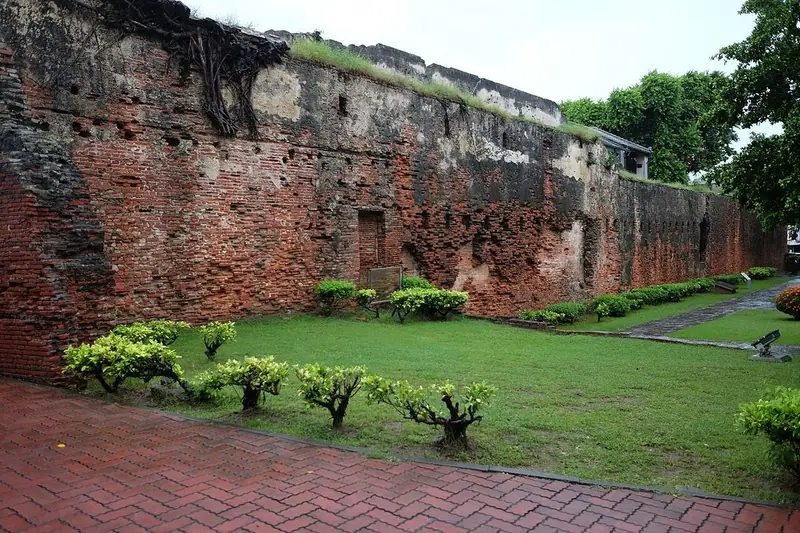 Dutch Colonial8 stops · 1624–1895
Anping audio guide
Start at the Dutch walls of Fort Zeelandia and follow Anping Old Street to the Mazu temple and the banyan-covered Tree House.
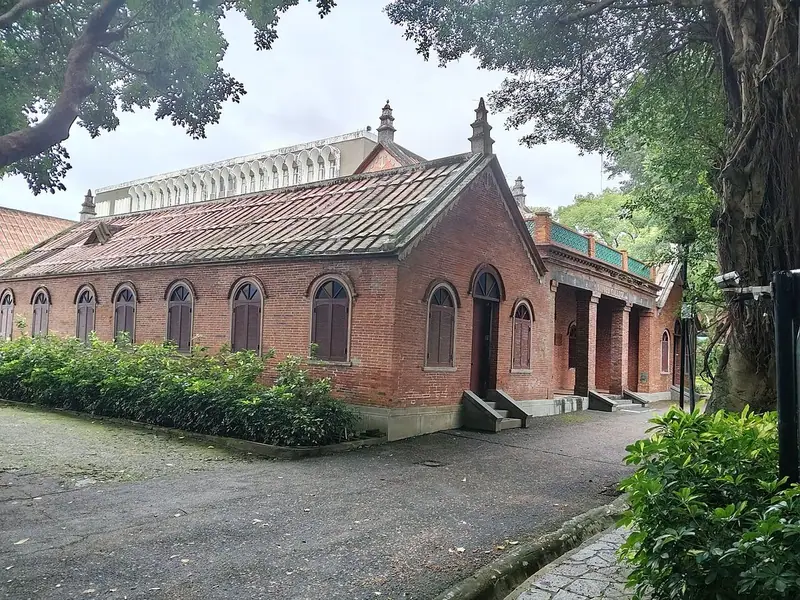 Colonial Formosa7 stops · 1628–1895
Historic Tamsui audio guide
Tamsui Old Street by the river mouth, then up to Fort Santo Domingo, the British consul’s residence and Oxford College.
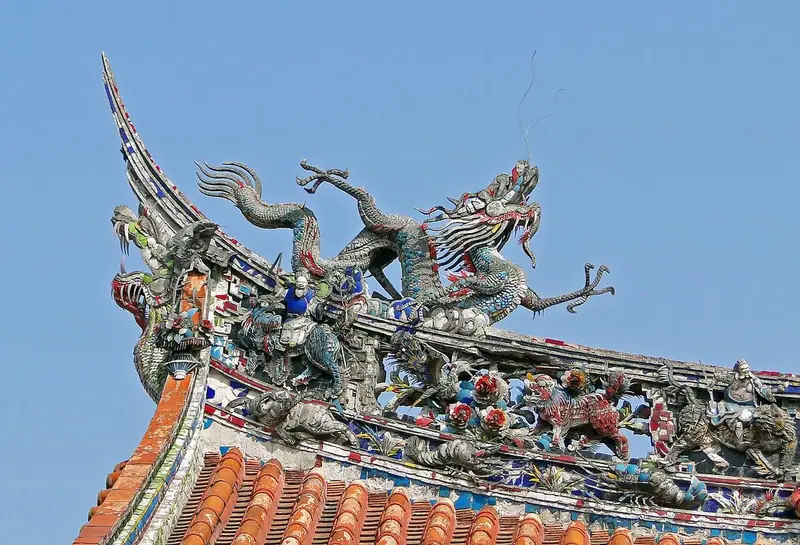 Qing7 stops · 1738–1945
Longshan Temple and Old Bangka audio guide
Start by the river where Taipei began and pass through the gates and halls of Longshan Temple, busy with worshippers from morning till night.
Every guide, in every country
The National Palace Museum and every other guide we publish, including future ones. One payment, no subscription.