Before you start
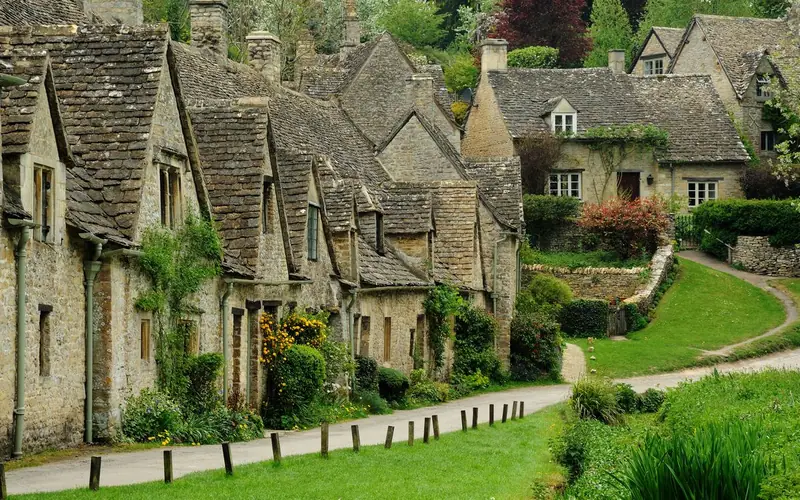
The Cotswolds are a range of limestone hills in the heart of England, and their villages and market towns are built almost entirely of the same honey-coloured stone. This Guide is a one-way drive from south to north, through six places: Bibury, Burford, Bourton-on-the-Water, Stow-on-the-Wold, Chipping Campden and Broadway. Most of the drives between them take a quarter of an hour or less, and the whole route by car is about sixty-seven kilometres, or about an hour and a quarter at the wheel. Within each village the stops are a short walk apart. Parking in the villages is limited, so allow time to find a space.
Use it as a self-guided tour of the Cotswolds: 12 stops in visit order, each played when you’re ready, at your own pace.
 Free preview · Stop 1
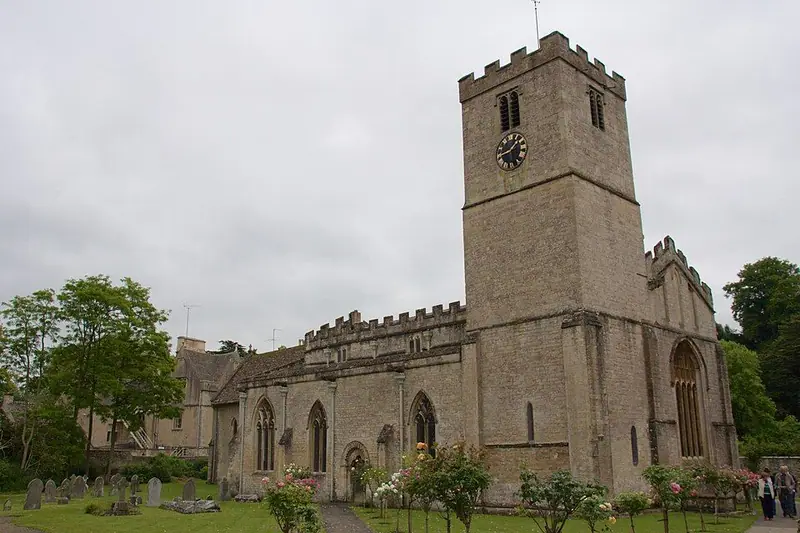
St Mary’s Church, Bibury
Begin in Bibury, a village on the River Coln, at the Church of St Mary. The church was begun by Anglo-Saxon builders in the eleventh century and enlarged over the centuries that followed, and until the Dissolution of the Monasteries it belonged to Osney Abbey, near Oxford. Walk round to the north side. A carved Saxon grave slab has been set into the north wall, and four more slabs like it were given to the British Museum. The north doorway was made around 1180, late in the Norman period. Inside, look for the font, which is unusual for being square, with arches carved on its sides. It dates from the thirteenth century, and the oldest of the stained glass is just as old. In 1863 the church was restored by George Gilbert Scott, one of the busiest church architects of Victorian England. Today it is listed at Grade I, the highest grade for a historic building. From the churchyard, walk west along the road beside the river to Arlington Row.
Photo: Mike Peel · CC BY-SA 4.0 · Wikimedia Commons
What to see at the Cotswolds: 12 stops, in visit order
- 01
 St Mary’s Church, BiburyA Saxon Church by the ColnFree preview
- 02
 Arlington Row and Rack IsleWool Store and Weavers’ CottagesIn the guide
- 03
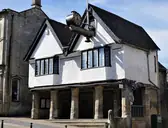 The TolseyBurford’s Market HouseIn the guide
- 04
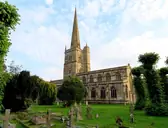 St John the Baptist and the LevellersWool Church and MutinyIn the guide
- 05
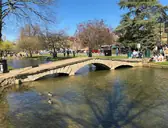 The Windrush at Bourton-on-the-WaterLow Bridges by the GreenIn the guide
- 06
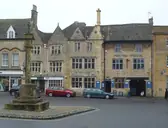 The Market Square, Stow-on-the-WoldSheep, Fairs and SurrenderIn the guide
- 07
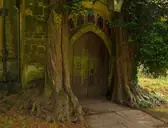 St Edward’s ChurchThe Yew DoorIn the guide
- 08
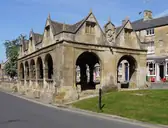 Market Hall and Grevel’s HouseThe Wool Town’s High StreetIn the guide
- 09
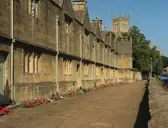 The Almshouses and the Gateway of Campden HouseSir Baptist Hicks’s TownIn the guide
- 10
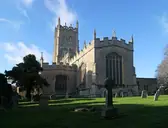 St James’ ChurchCampden’s Wool ChurchIn the guide
- 11
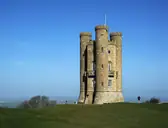 Broadway TowerA Folly on Beacon HillIn the guide
- 12
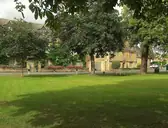 Broadway Village and the GreenThe Broad WayIn the guide
Site map of the Cotswolds
History of the Cotswolds
Wool made the Cotswolds. In the Middle Ages a breed of sheep known as the Cotswold Lion grazed these hills, and the region grew rich from the wool trade with the continent. The trade was at its height between about 1250 and 1350, when much of the wool was sold to Italian merchants. The merchants who grew rich from it paid for the great wool churches of Burford and Chipping Campden, for fine stone houses, and for almshouses, while monasteries built stores for their wool, such as the one that became Arlington Row. Stow-on-the-Wold held great sheep fairs, where thousands of animals changed hands in a day. Everything was built of Cotswold stone, a yellow oolitic limestone laid down in the Jurassic period, which weathers to the honey and golden colours you see on every street.
The full history continues in the guide.
The Cotswolds guide: questions
How many stops does the Cotswolds guide have?
12 stops, in visit order: 1. St Mary’s Church, Bibury; 2. Arlington Row and Rack Isle; 3. The Tolsey; 4. St John the Baptist and the Levellers; 5. The Windrush at Bourton-on-the-Water; 6. The Market Square, Stow-on-the-Wold; 7. St Edward’s Church; 8. Market Hall and Grevel’s House; 9. The Almshouses and the Gateway of Campden House; 10. St James’ Church; 11. Broadway Tower; 12. Broadway Village and the Green.
Can I do a self-guided tour of the Cotswolds with this guide?
Yes. The guide is made for a self-guided tour: 12 stops in visit order, each with a photo, a story and a voice, so you can explore the Cotswolds at your own pace, without joining a group. Download it before you go and it works offline.
How long do you need at the Cotswolds?
We suggest allowing A full day. The 12 stops add up to about 15 minutes of listening, and you play each one when you’re ready, so you can linger wherever you like.
How long is each guide?
The 12 stops add up to about 15 minutes of listening in total. You play each stop when you’re ready, so you can go at your own pace.
Does the guide work offline?
Yes, once it’s downloaded. The guide is a single self-contained web page (about 8.8 MB) with the photos, text and audio built in. Download it to your phone before you go (Wi-Fi is best); after that it opens in any modern browser on iPhone or Android, with no app, account or mobile signal needed.
Does it use GPS or need my location?
No. The guide doesn’t use GPS and doesn’t know where you are: you play each stop when you reach it. It works on iPhone and Android in any modern browser, and it’s in English.
What’s included?
One self-contained HTML guide: 12 stops in visit order, each with a photo, text and a voice, plus the story of who built the site.
Who built the Cotswolds?
Wool made the Cotswolds. In the Middle Ages a breed of sheep known as the Cotswold Lion grazed these hills, and the region grew rich from the wool trade with the continent.
Is there a free audio guide to the Cotswolds?
The first stop, St Mary’s Church, Bibury, is free to read and hear on this page, so you can try the Cotswolds audio tour before you buy. The full guide, with all 12 stops, is a one-off purchase: download it once and it’s yours to keep, working offline.
Is the Cotswolds guide worth it?
If you’d like to know what you’re looking at, yes. For $10 you get 12 stops in visit order, each with a photo, a short history and a voice you play when you’re ready, plus a site map of the stops, and about 15 minutes of listening in all. It’s short on purpose, so you spend your time looking, not listening. It’s yours to keep, works offline and needs no app. The first stop is free on this page, so you can try it before you buy. If you’d like hours of detail, a guided tour will go deeper.
Audio guide or guided tour?
It depends how you like to visit. This guide lets you explore the Cotswolds at your own pace, at any time, for a one-off price. A guided tour gives you a live expert you can ask questions, but at fixed times and usually for a higher price. Many people use both: a tour for the big picture, and the guide to read beforehand or to revisit the stops in their own time.
Is this the official Cotswolds guide?
No. It’s an independent guide by The Historian Guide, not affiliated with or endorsed by the operator of the Cotswolds. For tickets and opening hours, check the official site operator before you go.
Does the guide include entry tickets or opening hours?
No. The guide is a digital companion only. Admission to the Cotswolds is separate, so check the official site operator for current tickets and opening hours before you go.
- Stop 1 · St Mary’s Church, Bibury: Photograph by Mike Peel (www.mikepeel.net). · CC BY-SA 4.0 · Wikimedia Commons · resized
- Stop 2 · Arlington Row and Rack Isle: MPhernambucq · CC BY-SA 3.0 · Wikimedia Commons · resized
- Stop 3 · The Tolsey: Burford Heritage · CC BY-SA 4.0 · Wikimedia Commons · resized
- Stop 4 · St John the Baptist and the Levellers: St John's church in Burford by Steve Daniels · CC BY-SA 2.0 · Wikimedia Commons · resized
- Stop 5 · The Windrush at Bourton-on-the-Water: David Dixon · CC BY-SA 2.0 · Wikimedia Commons · resized
- Stop 6 · The Market Square, Stow-on-the-Wold: John H Darch · CC BY-SA 2.0 · Wikimedia Commons · resized
- Stop 7 · St Edward’s Church: August Schwerdfeger · CC BY 4.0 · Wikimedia Commons · resized
- Stop 8 · Market Hall and Grevel’s House: Mick · CC BY-SA 2.0 · Wikimedia Commons · resized
- Stop 9 · The Almshouses and the Gateway of Campden House: Almshouses, Chipping Campden by Derek Harper · CC BY-SA 2.0 · Wikimedia Commons · resized
- Stop 10 · St James’ Church: amandabhslater · CC BY-SA 2.0 · Wikimedia Commons · resized
- Stop 11 · Broadway Tower: Saffron Blaze · CC BY-SA 3.0 · Wikimedia Commons · resized
- Stop 12 · Broadway Village and the Green: Derek Harper · CC BY-SA 2.0 · Wikimedia Commons · resized
- Cover: Saffron Blaze · CC BY-SA 3.0 · Wikimedia Commons · cropped and resized


All photographs from Wikimedia Commons under the licences shown.
More guides in United Kingdom
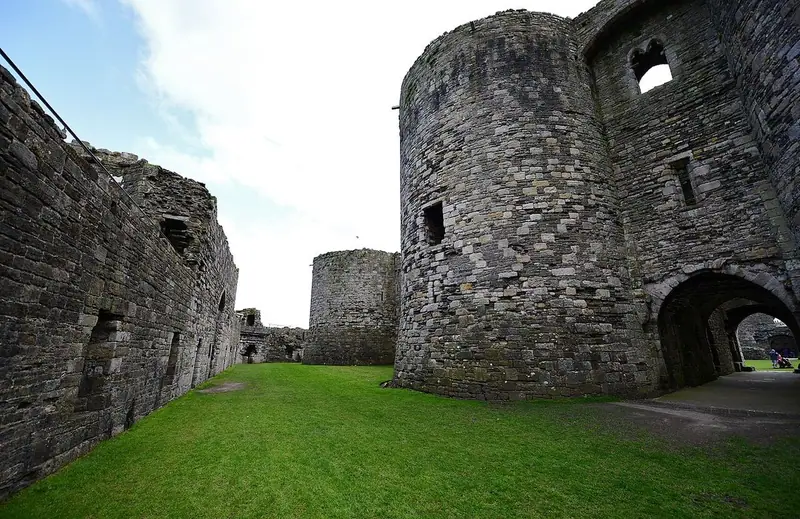 Edwardian8 stops · 1295–1330
Beaumaris audio guide
Explore Edward I’s never-finished castle at the entrance to the Menai Strait, one of the most perfectly planned in Europe, then the old gaol and pier.
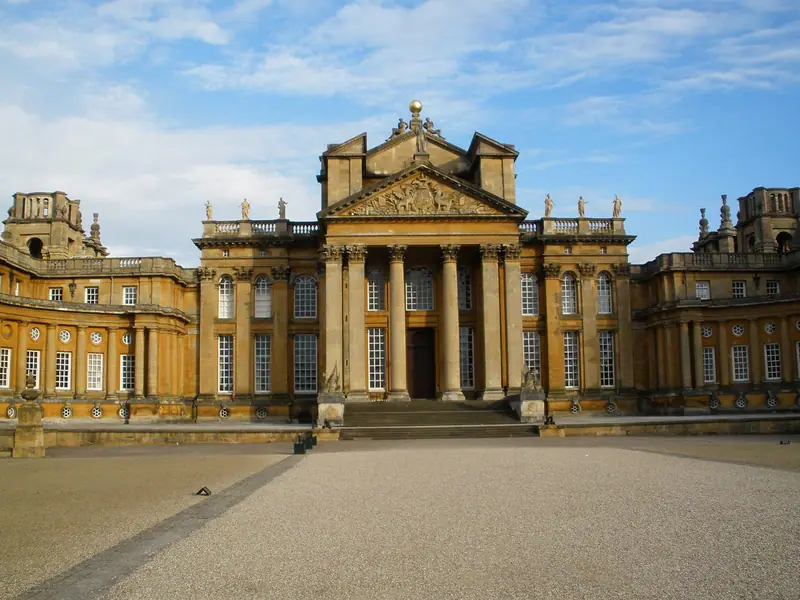 Stuart and Georgian England9 stops · 1705 – 1722 (construction)
Blenheim Palace audio guide
The Baroque palace built for the Duke of Marlborough after the Battle of Blenheim, birthplace of Winston Churchill, set in a landscape park by Capability Brown.
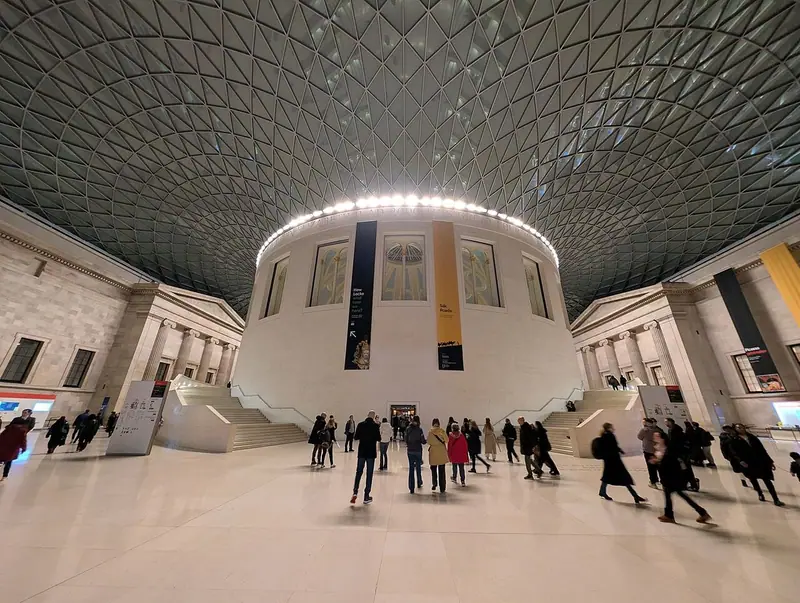 Georgian and Victorian Britain8 stops · Georgian and Victorian
The British Museum audio guide
Pass the portico and the Great Court to the Rosetta Stone, the winged bulls of Assyria, the Parthenon Sculptures and the Lewis Chessmen.
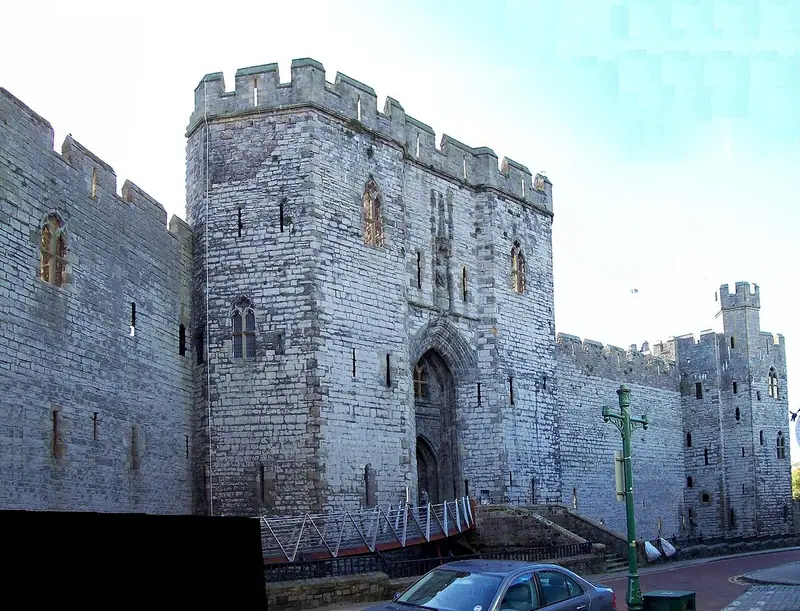 Plantagenet7 stops · 1283–1330
Caernarfon Castle audio guide
Edward I’s fortress-palace on the Menai Strait, with its banded walls and the Eagle Tower.
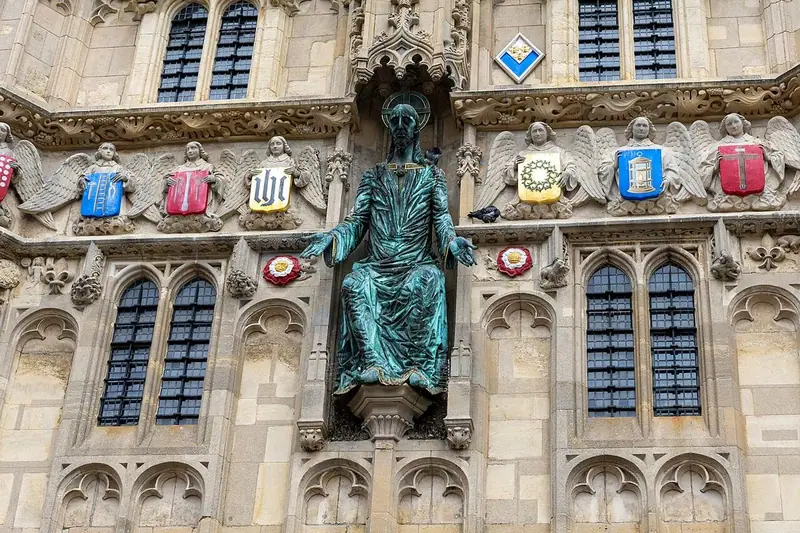 Gothic8 stops · 1070–1503
Canterbury Cathedral audio guide
Stand where Thomas Becket was murdered, then descend to the crypt and rise to the Trinity Chapel.
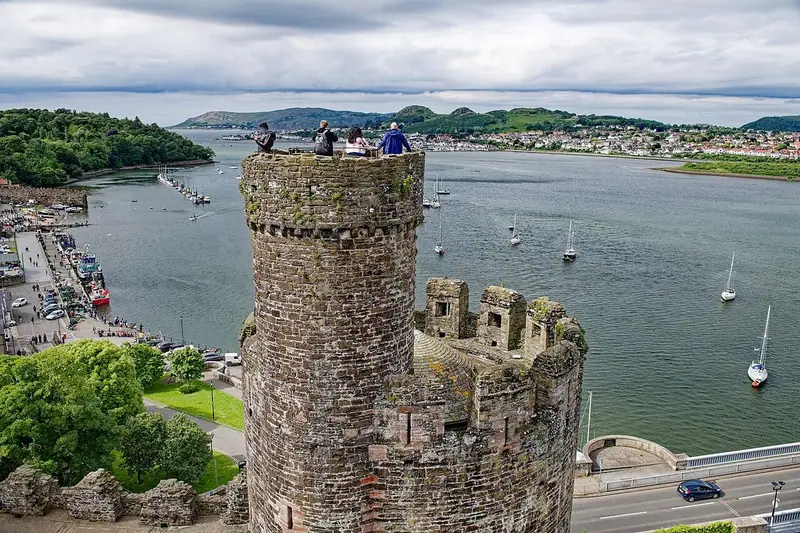 Plantagenet8 stops · 1283–1289
Conwy Castle and Town Walls audio guide
The walls of one of Europe’s finest medieval walled towns, and the mighty castle of Edward I above the River Conwy.
Every guide, in every country
The Cotswolds and every other guide we publish, including future ones. One payment, no subscription.