Before you start
Oxford has been a place of learning for more than eight hundred years, and its centre is still a cluster of colleges, libraries and churches built in honey-coloured stone. The university has no single campus: its colleges are self-governing communities, each with its own quadrangles, chapel, hall and library, while the university itself owns the great shared buildings at the heart of the town. This guide begins at Christ Church, the grandest of the colleges, and walks east to Merton, one of the oldest. It then turns north to the University Church on the High Street and Radcliffe Square, passes under the Bridge of Sighs, and ends at the Bodleian Library and Wren’s Sheldonian Theatre. The route is about a kilometre and a half on foot and takes three to four hours with visits. Several colleges charge for entry and keep their own opening hours.
Use it as a self-guided tour of Oxford: 7 stops in visit order, each played when you’re ready, at your own pace.
 Free preview · Stop 1
Christ Church
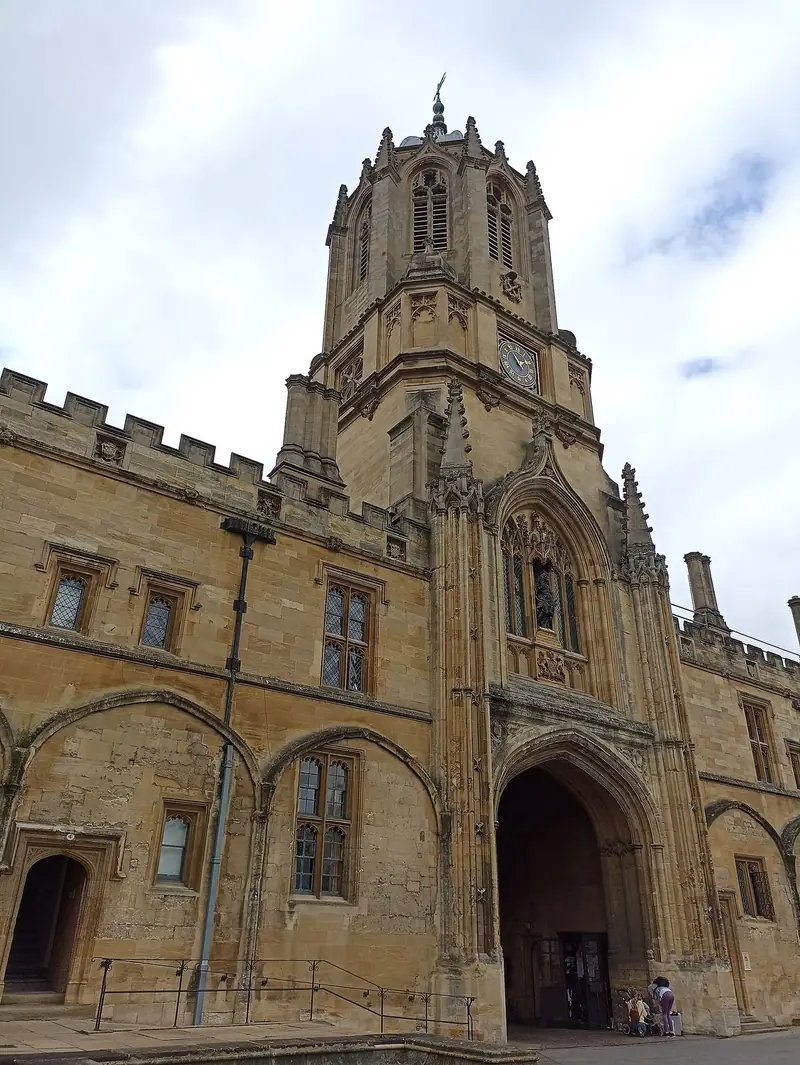
Christ Church is one of the largest of the Oxford colleges, and the only one whose chapel is also a cathedral. In 1525 Cardinal Thomas Wolsey closed the priory of Saint Frideswide here and founded Cardinal College on its lands. When Wolsey fell from power, Henry the Eighth took over the project, and in 1546 he refounded it as Christ Church. The great quadrangle, Tom Quad, is the largest in Oxford. Above the gate on St Aldate’s rises Tom Tower, designed by Christopher Wren and completed in 1682 to hold the bell called Great Tom. Every evening at five past nine the bell is rung a hundred and one times, once for each of the college’s original hundred scholars and one more, a reminder that Oxford once kept its own time, five minutes behind Greenwich. Inside, visitors see the cathedral, the old priory church of Saint Frideswide, and the Great Hall with its portraits. Thirteen British prime ministers studied here, and Charles Dodgson, who wrote as Lewis Carroll, taught mathematics here for most of his life. From Christ Church, walk east along Merton Street to Merton College.
Photo: Daniel Norton · CC BY-SA 4.0 · Wikimedia Commons
What to see at Oxford: 7 stops, in visit order
- 01
 Christ ChurchCathedral and college in oneFree preview
- 02
 Merton CollegeThe oldest quadrangleIn the guide
- 03
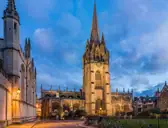 The University Church of St Mary the VirginWhere the martyrs were triedIn the guide
- 04
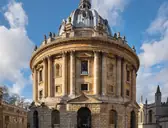 The Radcliffe CameraA library in the roundIn the guide
- 05
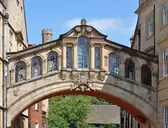 The Bridge of SighsHertford College’s bridgeIn the guide
- 06
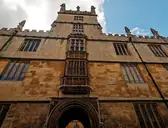 The Bodleian Library and the Divinity SchoolBodley’s libraryIn the guide
- 07
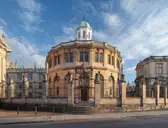 The Sheldonian TheatreWren’s first great buildingIn the guide
Site map of Oxford
History of Oxford
A town grew up at a ford over the Thames in Saxon times, and by the tenth century Oxford was a fortified borough. Teaching began here in the twelfth century, and it grew quickly after 1167, when English scholars were barred from studying in Paris. In 1209 a quarrel with the townspeople drove some masters away, and some of them settled in Cambridge. The first colleges were founded in the thirteenth century, among them University College, Balliol and Merton, as endowed houses where scholars could live and study under their own statutes. In 1555 and 1556, under Mary the First, the Protestant bishops Latimer and Ridley and Archbishop Thomas Cranmer were tried in Oxford and burned at the stake. During the Civil War Charles the First made Oxford his capital, from 1642 to 1646.
The full history continues in the guide.
Oxford guide: questions
How many stops does the Oxford guide have?
7 stops, in visit order: 1. Christ Church; 2. Merton College; 3. The University Church of St Mary the Virgin; 4. The Radcliffe Camera; 5. The Bridge of Sighs; 6. The Bodleian Library and the Divinity School; 7. The Sheldonian Theatre.
Can I do a self-guided tour of Oxford with this guide?
Yes. The guide is made for a self-guided tour: 7 stops in visit order, each with a photo, a story and a voice, so you can explore Oxford at your own pace, without joining a group. Download it before you go and it works offline.
How long is each guide?
The 7 stops add up to about 6 minutes of listening in total. You play each stop when you’re ready, so you can go at your own pace.
Does the guide work offline?
Yes, once it’s downloaded. The guide is a single self-contained web page (about 7.6 MB) with the photos, text and audio built in. Download it to your phone before you go (Wi-Fi is best); after that it opens in any modern browser on iPhone or Android, with no app, account or mobile signal needed.
Does it use GPS or need my location?
No. The guide doesn’t use GPS and doesn’t know where you are: you play each stop when you reach it. It works on iPhone and Android in any modern browser, and it’s in English.
What’s included?
One self-contained HTML guide: 7 stops in visit order, each with a photo, text and a voice, plus the story of who built the site.
Who built Oxford?
A town grew up at a ford over the Thames in Saxon times, and by the tenth century Oxford was a fortified borough. Teaching began here in the twelfth century, and it grew quickly after 1167, when English scholars were barred from studying in Paris.
Where is Oxford?
Oxford has been a place of learning for more than eight hundred years, and its centre is still a cluster of colleges, libraries and churches built in honey-coloured stone.
Is there a free audio guide to Oxford?
The first stop, Christ Church, is free to read and hear on this page, so you can try the Oxford audio tour before you buy. The full guide, with all 7 stops, is a one-off purchase: download it once and it’s yours to keep, working offline.
Is the Oxford guide worth it?
If you’d like to know what you’re looking at, yes. For $10 you get 7 stops in visit order, each with a photo, a short history and a voice you play when you’re ready, plus a site map of the stops, and about 6 minutes of listening in all. It’s short on purpose, so you spend your time looking, not listening. It’s yours to keep, works offline and needs no app. The first stop is free on this page, so you can try it before you buy. If you’d like hours of detail, a guided tour will go deeper.
Audio guide or guided tour?
It depends how you like to visit. This guide lets you explore Oxford at your own pace, at any time, for a one-off price. A guided tour gives you a live expert you can ask questions, but at fixed times and usually for a higher price. Many people use both: a tour for the big picture, and the guide to read beforehand or to revisit the stops in their own time.
Is this the official Oxford guide?
No. It’s an independent guide by The Historian Guide, not affiliated with or endorsed by the operator of Oxford. For tickets and opening hours, check the official site operator before you go.
Does the guide include entry tickets or opening hours?
No. The guide is a digital companion only. Admission to Oxford is separate, so check the official site operator for current tickets and opening hours before you go.
- Stop 1 · Christ Church: Daniel Norton · CC BY-SA 4.0 · Wikimedia Commons · resized
- Stop 2 · Merton College: Tom Murphy VII · CC BY-SA 3.0 · Wikimedia Commons · resized
- Stop 3 · The University Church of St Mary the Virgin: Diliff · CC BY-SA 3.0 · Wikimedia Commons · resized
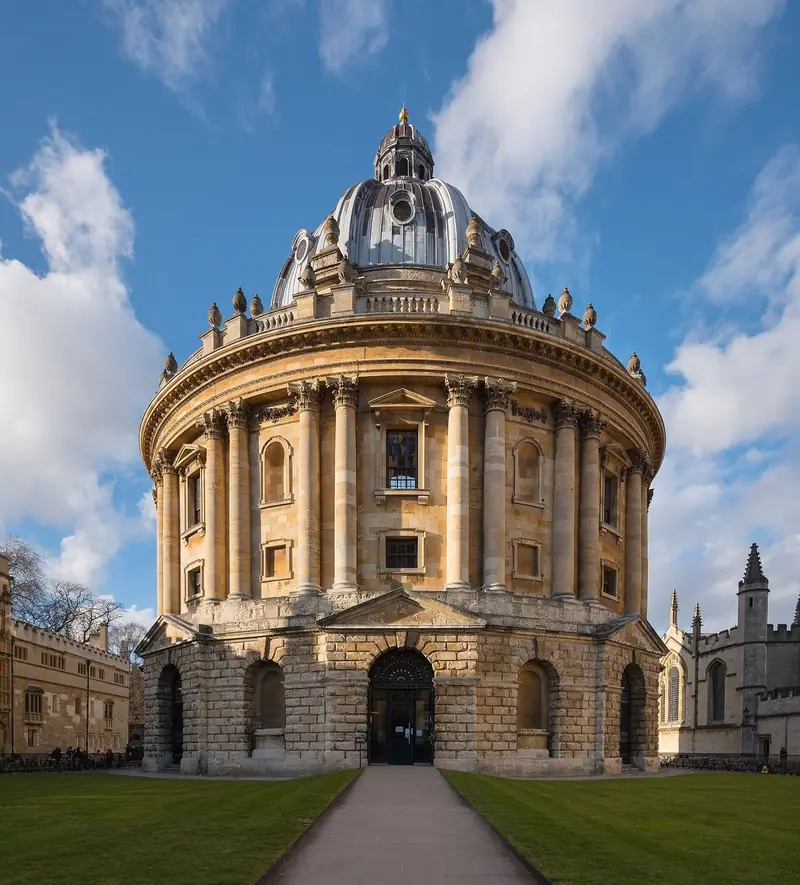
- Stop 4 · The Radcliffe Camera (also the cover): Julian Herzog · CC BY 4.0 · Wikimedia Commons · resized
- Stop 5 · The Bridge of Sighs: Bob Collowan · CC BY-SA 3.0 · Wikimedia Commons · resized
- Stop 6 · The Bodleian Library and the Divinity School: Txllxt TxllxT · CC BY-SA 4.0 · Wikimedia Commons · resized
- Stop 7 · The Sheldonian Theatre: Julian Herzog · CC BY 4.0 · Wikimedia Commons · resized


All photographs from Wikimedia Commons under the licences shown.
More guides in United Kingdom
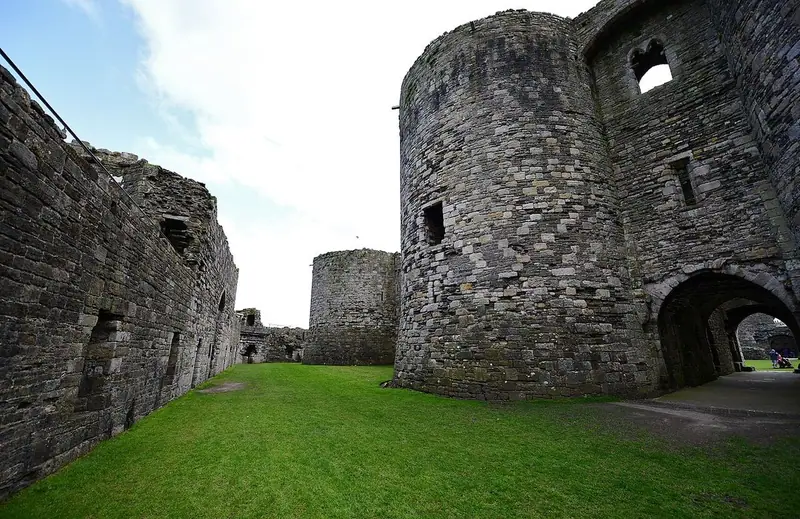 Edwardian8 stops · 1295–1330
Beaumaris audio guide
Explore Edward I’s never-finished castle at the entrance to the Menai Strait, one of the most perfectly planned in Europe, then the old gaol and pier.
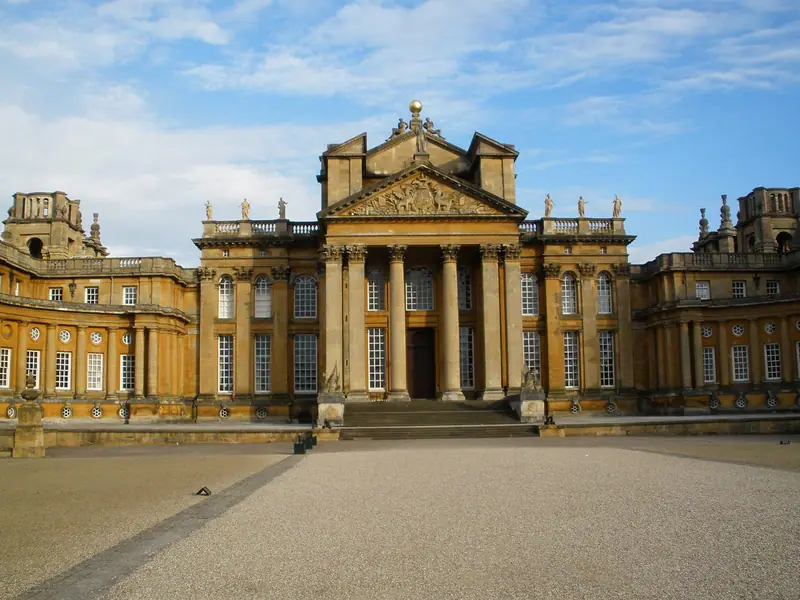 Stuart and Georgian England9 stops · 1705 – 1722 (construction)
Blenheim Palace audio guide
The Baroque palace built for the Duke of Marlborough after the Battle of Blenheim, birthplace of Winston Churchill, set in a landscape park by Capability Brown.
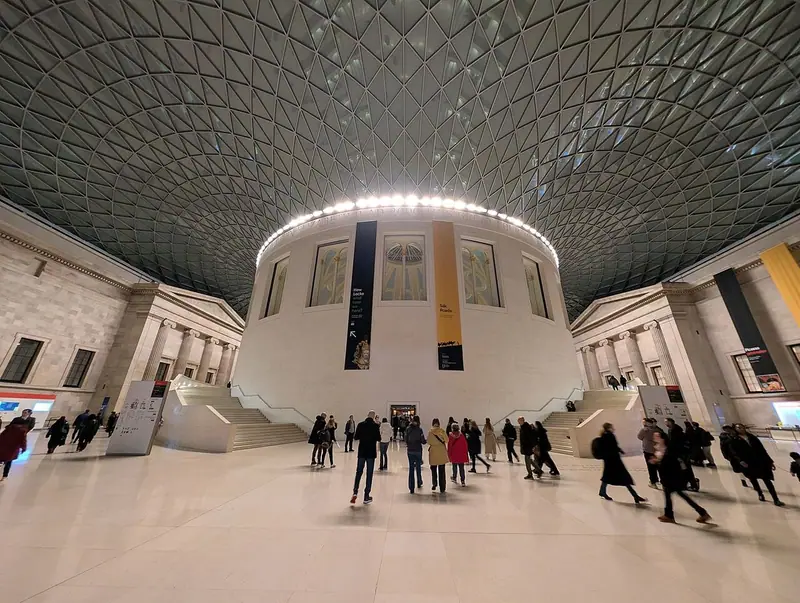 Georgian and Victorian Britain8 stops · Georgian and Victorian
The British Museum audio guide
Pass the portico and the Great Court to the Rosetta Stone, the winged bulls of Assyria, the Parthenon Sculptures and the Lewis Chessmen.
 Plantagenet7 stops · 1283–1330
Caernarfon Castle audio guide
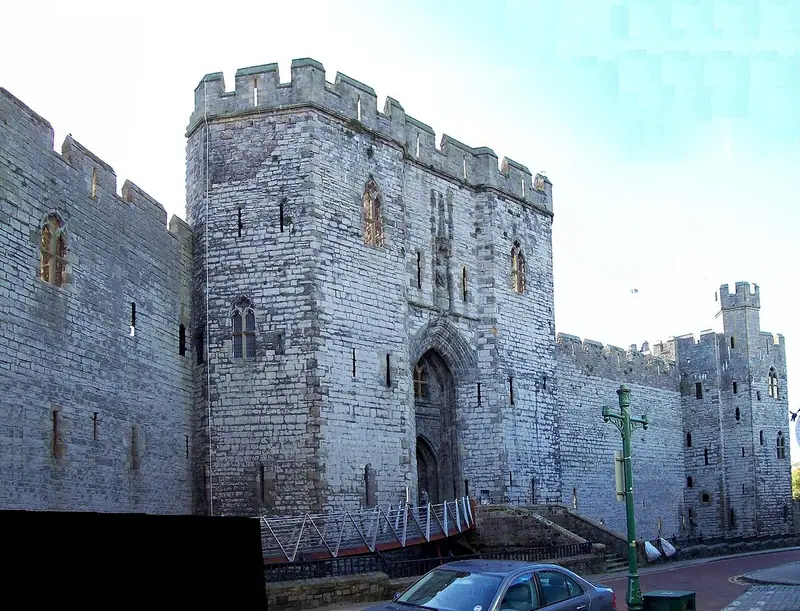
Edward I’s fortress-palace on the Menai Strait, with its banded walls and the Eagle Tower.
 English7 stops · 13th century–present
Cambridge audio guide
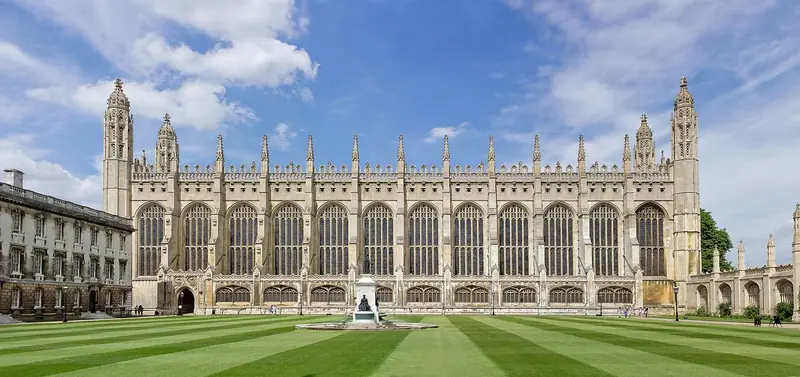
From Queens’ College and its Mathematical Bridge to the fan vault of King’s College Chapel, the Senate House, the Backs, Trinity and St John’s, ending at the twelfth-century Round Church.
 Gothic8 stops · 1070–1503
Canterbury Cathedral audio guide
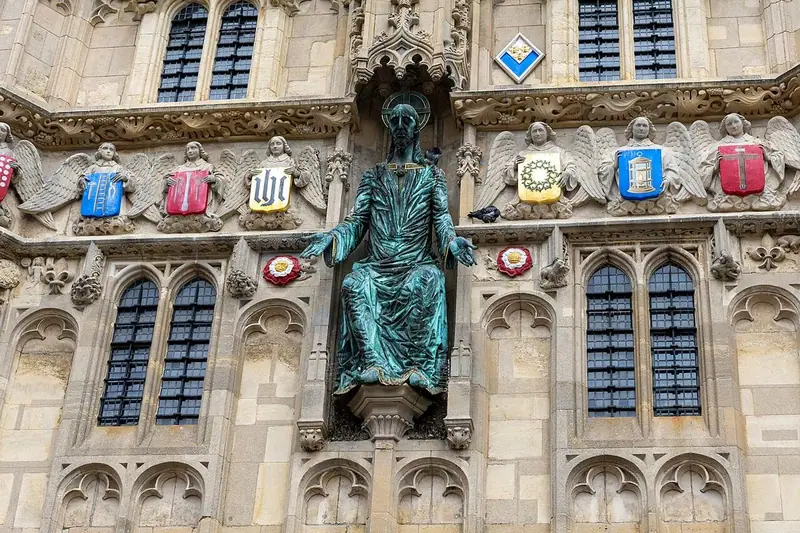
Stand where Thomas Becket was murdered, then descend to the crypt and rise to the Trinity Chapel.
Every guide, in every country
Oxford and every other guide we publish, including future ones. One payment, no subscription.