Before you start
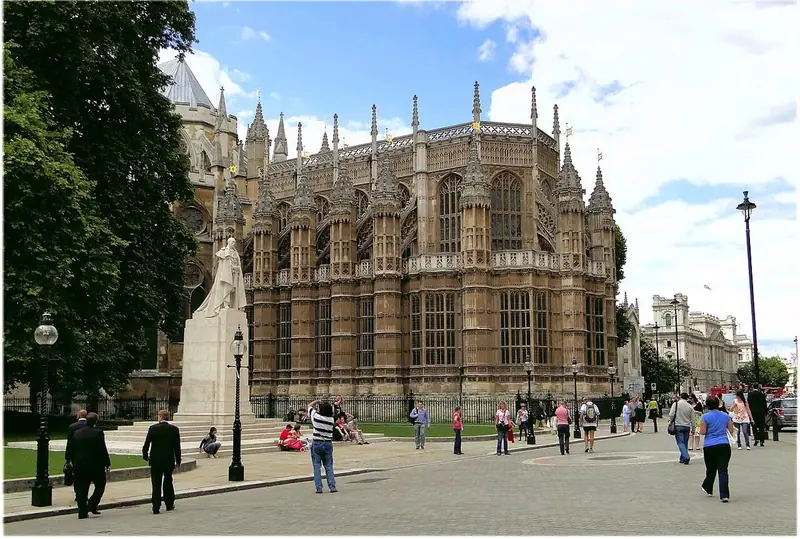
Westminster Abbey stands opposite the Houses of Parliament in the heart of Westminster, a few minutes’ walk from Westminster and St James’s Park Underground stations. It is a working church, a Royal Peculiar under the direct authority of the monarch rather than a bishop, where daily services continue alongside visits. Together with the Palace of Westminster and St Margaret’s Church, it has been a UNESCO World Heritage Site since 1987. Visitors normally enter by the North Door and leave by the Great West Door. This guide follows the usual one-way route: the north transept, the sanctuary, the Lady Chapel, the shrine area, Poets’ Corner, the cloisters and Chapter House, and finally the nave. Security checks operate at every door, and bags larger than cabin size are not allowed.
Use it as a self-guided tour of Westminster Abbey: 7 stops in visit order, each played when you’re ready, at your own pace.
 Free preview · Stop 1
North Transept and Statesmen’s Aisle
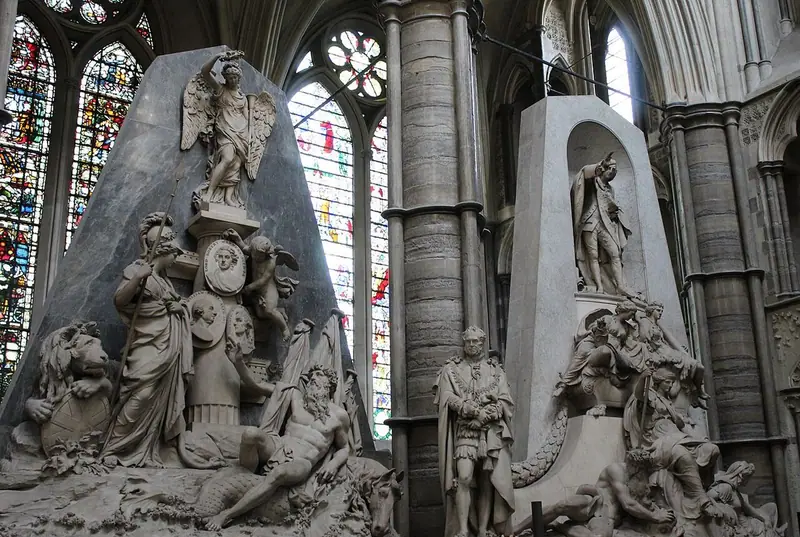
Come in through the North Door, the grand entrance facing Parliament Square, and pause to take in the scale of the church. This is one of the tallest Gothic interiors in England, and from here you can see how Henry III’s builders, inspired by the great cathedrals of France, raised slender piers, pointed arches and a stone vault high above the floor. The north transept is known as Statesmen’s Aisle because of the crowd of monuments to political leaders that fills it, most of them from the eighteenth and nineteenth centuries. Look for the marble statues of prime ministers, among them William Pitt the Younger, Benjamin Disraeli, William Gladstone and Robert Peel, posed in togas or frock coats as if addressing the House. Above you, the great rose window adds colour on a bright day. Then follow the route east towards the high altar.
Photo: 14GTR · CC BY-SA 4.0 · Wikimedia Commons
What to see at Westminster Abbey: 7 stops, in visit order
- 01
 North Transept and Statesmen’s AisleInside the North DoorFree preview
- 02
 The Sanctuary and the Cosmati PavementWhere coronations take placeIn the guide
- 03
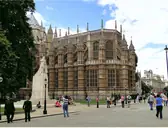 Lady ChapelHenry VII’s chapelIn the guide
- 04
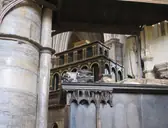 Shrine of St Edward the ConfessorThe heart of the abbeyIn the guide
- 05
 Poets’ CornerThe south transeptIn the guide
- 06
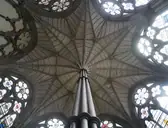 Cloisters and Chapter HouseWhere the monks livedIn the guide
- 07
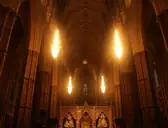 The Nave and the Unknown WarriorTowards the Great West DoorIn the guide
History of Westminster Abbey
The abbey was built by English kings for a community of Benedictine monks. Benedictine monasticism began with Saint Benedict in sixth-century Italy, and monks were living at Westminster by the tenth century. The first great stone church here was built by Edward the Confessor, one of the last kings of Anglo-Saxon England, a civilisation that grew up after the Romans left Britain in the fifth century and ended with the Norman Conquest of 1066. Edward’s church was consecrated in December 1065, days before his death. From 1245 the Plantagenet king Henry III rebuilt it in the Gothic style to honour Edward, by then a saint. The Plantagenets ruled England from 1154 to 1485, and their Gothic church took centuries to finish: the nave was completed in the early sixteenth century and the western towers only in 1745.
The full history continues in the guide.
Westminster Abbey guide: questions
How many stops does the Westminster Abbey guide have?
7 stops, in visit order: 1. North Transept and Statesmen’s Aisle; 2. The Sanctuary and the Cosmati Pavement; 3. Lady Chapel; 4. Shrine of St Edward the Confessor; 5. Poets’ Corner; 6. Cloisters and Chapter House; 7. The Nave and the Unknown Warrior.
Can I do a self-guided tour of Westminster Abbey with this guide?
Yes. The guide is made for a self-guided tour: 7 stops in visit order, each with a photo, a story and a voice, so you can explore Westminster Abbey at your own pace, without joining a group. Download it before you go and it works offline.
How long is each guide?
The 7 stops add up to about 5 minutes of listening in total. You play each stop when you’re ready, so you can go at your own pace.
Does the guide work offline?
Yes, once it’s downloaded. The guide is a single self-contained web page (about 6.6 MB) with the photos, text and audio built in. Download it to your phone before you go (Wi-Fi is best); after that it opens in any modern browser on iPhone or Android, with no app, account or mobile signal needed.
Does it use GPS or need my location?
No. The guide doesn’t use GPS and doesn’t know where you are: you play each stop when you reach it. It works on iPhone and Android in any modern browser, and it’s in English.
What’s included?
One self-contained HTML guide: 7 stops in visit order, each with a photo, text and a voice, plus the story of who built the site.
Who built Westminster Abbey?
The abbey was built by English kings for a community of Benedictine monks. Benedictine monasticism began with Saint Benedict in sixth-century Italy, and monks were living at Westminster by the tenth century.
Is there a free audio guide to Westminster Abbey?
The first stop, North Transept and Statesmen’s Aisle, is free to read and hear on this page, so you can try the Westminster Abbey audio tour before you buy. The full guide, with all 7 stops, is a one-off purchase: download it once and it’s yours to keep, working offline.
Is the Westminster Abbey guide worth it?
If you’d like to know what you’re looking at, yes. For $10 you get 7 stops in visit order, each with a photo, a short history and a voice you play when you’re ready, about 5 minutes of listening in all. It’s short on purpose, so you spend your time looking, not listening. It’s yours to keep, works offline and needs no app. The first stop is free on this page, so you can try it before you buy. If you’d like hours of detail, a guided tour will go deeper.
Audio guide or guided tour?
It depends how you like to visit. This guide lets you explore Westminster Abbey at your own pace, at any time, for a one-off price. A guided tour gives you a live expert you can ask questions, but at fixed times and usually for a higher price. Many people use both: a tour for the big picture, and the guide to read beforehand or to revisit the stops in their own time.
Is this the official Westminster Abbey guide?
No. It’s an independent guide by The Historian Guide, not affiliated with or endorsed by the operator of Westminster Abbey. For tickets and opening hours, check the official site operator before you go.
Does the guide include entry tickets or opening hours?
No. The guide is a digital companion only. Admission to Westminster Abbey is separate, so check the official site operator for current tickets and opening hours before you go.
- Stop 1 · North Transept and Statesmen’s Aisle: 14GTR · CC BY-SA 4.0 · Wikimedia Commons · resized
- Stop 2 · The Sanctuary and the Cosmati Pavement: 14GTR · CC BY-SA 4.0 · Wikimedia Commons · resized
- Stop 3 · Lady Chapel (also the cover): Philip Pankhurst · CC BY-SA 2.0 · Wikimedia Commons · resized
- Stop 4 · Shrine of St Edward the Confessor: Maggie Jones · Public domain · Wikimedia Commons · resized
- Stop 5 · Poets’ Corner: 14GTR · CC BY-SA 4.0 · Wikimedia Commons · resized
- Stop 6 · Cloisters and Chapter House: ChrisVTG Photography · CC BY-SA 4.0 · Wikimedia Commons · resized
- Stop 7 · The Nave and the Unknown Warrior: View of the nave of Westminster Abbey by Robert Lamb · CC BY-SA 2.0 · Wikimedia Commons · resized


All photographs from Wikimedia Commons under the licences shown.
More guides in United Kingdom
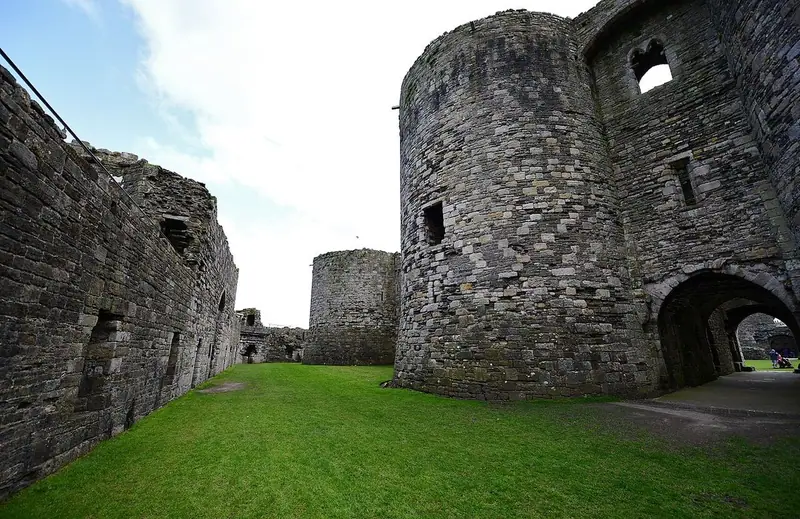 Edwardian8 stops · 1295–1330
Beaumaris audio guide
Explore Edward I’s never-finished castle at the entrance to the Menai Strait, one of the most perfectly planned in Europe, then the old gaol and pier.
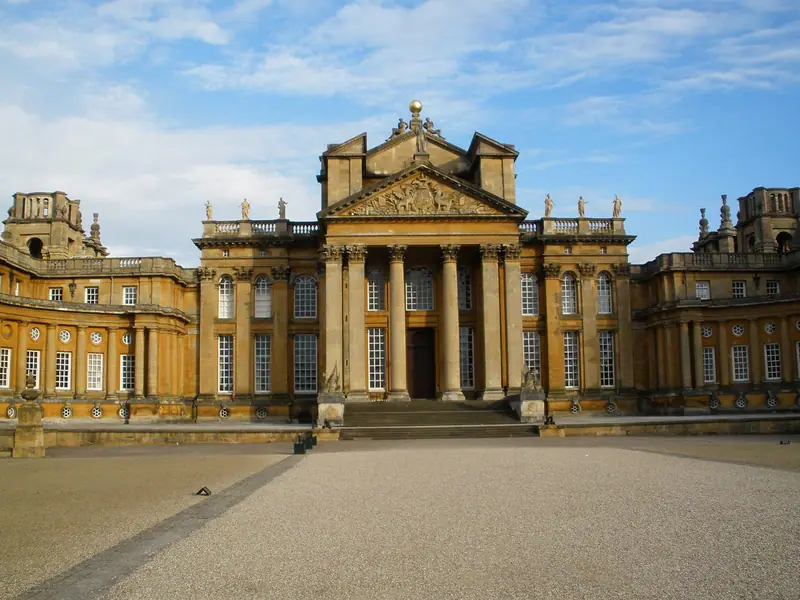 Stuart and Georgian England9 stops · 1705 – 1722 (construction)
Blenheim Palace audio guide
The Baroque palace built for the Duke of Marlborough after the Battle of Blenheim, birthplace of Winston Churchill, set in a landscape park by Capability Brown.
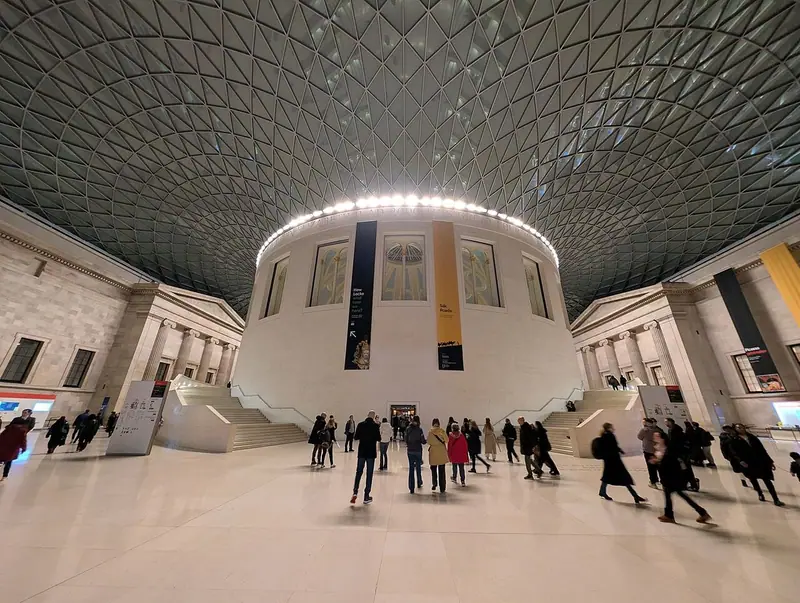 Georgian and Victorian Britain8 stops · Georgian and Victorian
The British Museum audio guide
Pass the portico and the Great Court to the Rosetta Stone, the winged bulls of Assyria, the Parthenon Sculptures and the Lewis Chessmen.
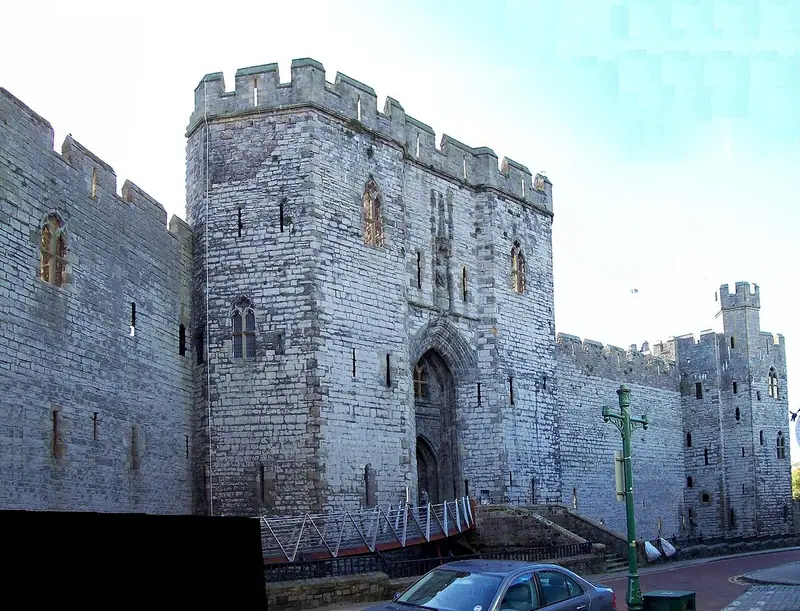 Plantagenet7 stops · 1283–1330
Caernarfon Castle audio guide
Edward I’s fortress-palace on the Menai Strait, with its banded walls and the Eagle Tower.
 Gothic8 stops · 1070–1503
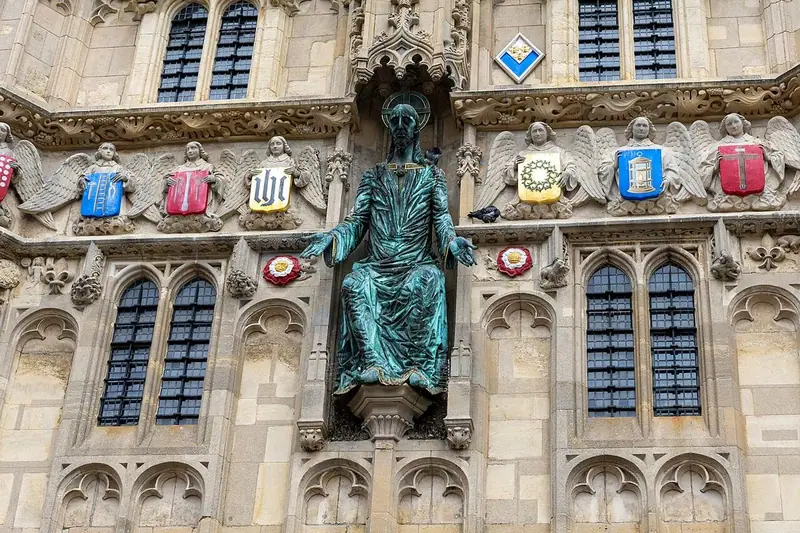
Canterbury Cathedral audio guide
Stand where Thomas Becket was murdered, then descend to the crypt and rise to the Trinity Chapel.
 Plantagenet8 stops · 1283–1289
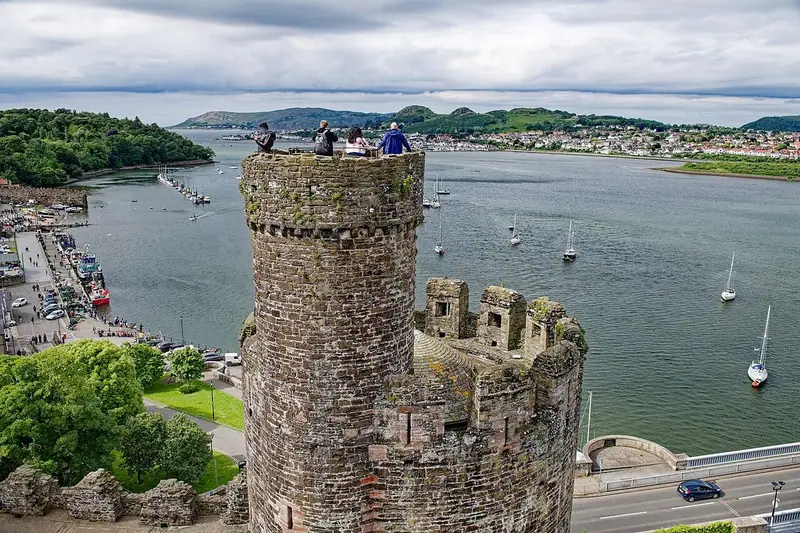
Conwy Castle and Town Walls audio guide
The walls of one of Europe’s finest medieval walled towns, and the mighty castle of Edward I above the River Conwy.
Every guide, in every country
Westminster Abbey and every other guide we publish, including future ones. One payment, no subscription.