Before you start
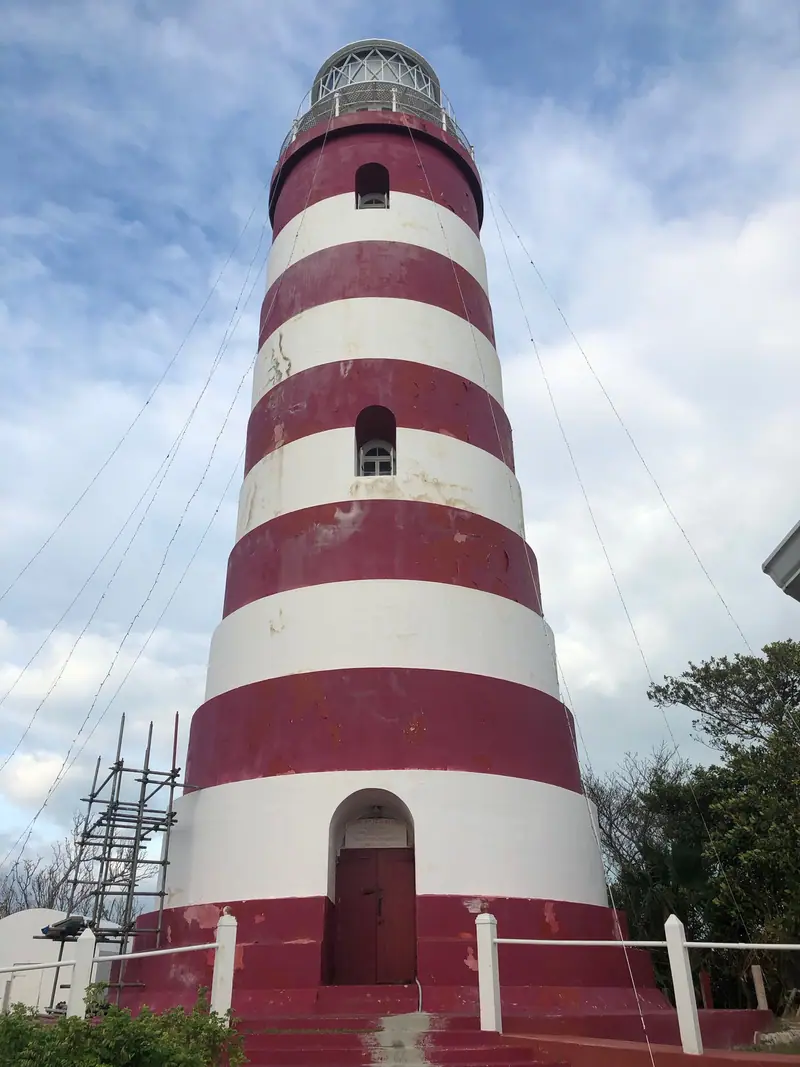
Hope Town is a small settlement on Elbow Cay, a narrow island in the Abacos, about six kilometres east of Marsh Harbour on Great Abaco. You reach it by ferry, and in the centre of town you walk or cycle: cars and carts stop at the edge. Loyalists settled here in 1785, and the harbour, the wooden lanes and the red-and-white lighthouse still give the place its shape. This guide starts at the public harbour, walks east to the cholera cemetery on the Atlantic side, then south to the Wyannie Malone Historical Museum and the lanes, and finishes across the water at the Elbow Reef Lighthouse and Eagle Rock at the harbour mouth. The lighthouse stands on the opposite side of the harbour from the town, and you reach it by boat, not on foot from the settlement. The distances on land are short, and you can see the stops in a few hours, longer if you climb the light.
Use it as a self-guided tour of Hope Town: 6 stops in visit order, each played when you’re ready, at your own pace.
 Free preview · Stop 1
The harbour
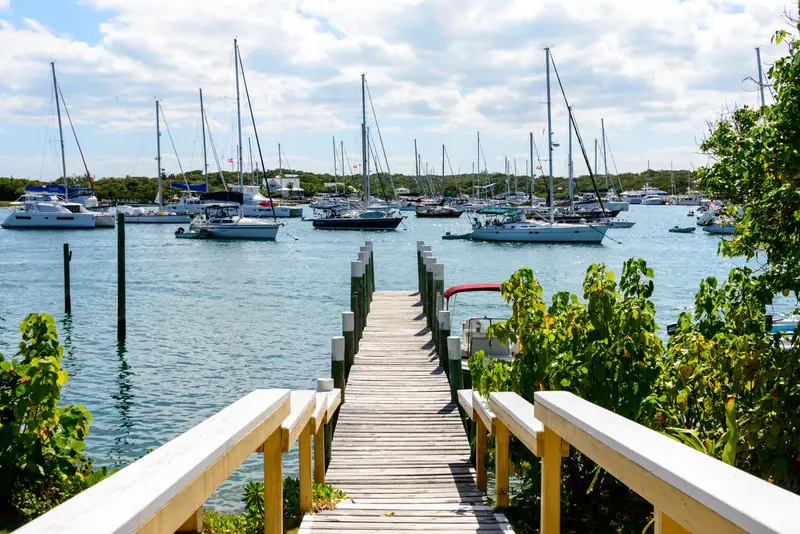
Begin at the public harbour, a sheltered anchorage on the west side of Elbow Cay. Loyalists settled here in 1785, and the town still turns its face to this water. Supplies come in by boat, and from the dock you look out over the moorings to the harbour mouth. The wreckers of Hope Town once worked the reef just beyond that entrance, a dangerous living that also kept the settlement going. Today the centre of town is closed to cars, so you will walk or cycle from here. The first walk is short: go east to the cholera cemetery, on a low hill above the Atlantic.
Photo: Craig Stanfill · CC BY-SA 2.0 · Flickr
What to see at Hope Town: 6 stops, in visit order
- 01
 The harbourWhere the Loyalists came inFree preview
- 02
 The cholera cemeteryA hill above the AtlanticIn the guide
- 03
 Wyannie Malone Historical MuseumThe house of a founding familyIn the guide
- 04
 The lanes of Hope TownA town built for walkingIn the guide
- 05
 Elbow Reef LighthouseA light still tended by handIn the guide
- 06
 Eagle RockThe rock at the harbour mouthIn the guide
Site map of Hope Town
History of Hope Town
Although Lucayan people had visited these islands earlier, the first known permanent settlers of Elbow Cay arrived in 1785, in what was then called Great Harbour. They were Loyalists, among them Wyannie Malone, originally from Charleston in South Carolina, who left the newly independent United States for the nearest British territory. For a long time the cay was isolated. Its people lived by fishing, by building boats, and by the salvage of ships wrecked on Elbow Reef. Hope Town later served as the administrative centre of the Abacos, until that role passed to Marsh Harbour in the 1960s. The lighthouse has stood at the harbour mouth since the 1860s.
The full history continues in the guide.
Hope Town guide: questions
How many stops does the Hope Town guide have?
6 stops, in visit order: 1. The harbour; 2. The cholera cemetery; 3. Wyannie Malone Historical Museum; 4. The lanes of Hope Town; 5. Elbow Reef Lighthouse; 6. Eagle Rock.
Can I do a self-guided tour of Hope Town with this guide?
Yes. The guide is made for a self-guided tour: 6 stops in visit order, each with a photo, a story and a voice, so you can explore Hope Town at your own pace, without joining a group. Download it before you go and it works offline.
How long is each guide?
The 6 stops add up to about 4 minutes of listening in total. You play each stop when you’re ready, so you can go at your own pace.
Does the guide work offline?
Yes, once it’s downloaded. The guide is a single self-contained web page (about 6.3 MB) with the photos, text and audio built in. Download it to your phone before you go (Wi-Fi is best); after that it opens in any modern browser on iPhone or Android, with no app, account or mobile signal needed.
Does it use GPS or need my location?
No. The guide doesn’t use GPS and doesn’t know where you are: you play each stop when you reach it. It works on iPhone and Android in any modern browser, and it’s in English.
What’s included?
One self-contained HTML guide: 6 stops in visit order, each with a photo, text and a voice, plus the story of who built the site.
Who built Hope Town?
Although Lucayan people had visited these islands earlier, the first known permanent settlers of Elbow Cay arrived in 1785, in what was then called Great Harbour. They were Loyalists, among them Wyannie Malone, originally from Charleston in South Carolina, who left the newly independent United States for the nearest British territory.
Where is Hope Town?
Hope Town is a small settlement on Elbow Cay, a narrow island in the Abacos, about six kilometres east of Marsh Harbour on Great Abaco.
Is there a free audio guide to Hope Town?
The first stop, The harbour, is free to read and hear on this page, so you can try the Hope Town audio tour before you buy. The full guide, with all 6 stops, is a one-off purchase: download it once and it’s yours to keep, working offline.
Is the Hope Town guide worth it?
If you’d like to know what you’re looking at, yes. For $10 you get 6 stops in visit order, each with a photo, a short history and a voice you play when you’re ready, plus a site map of the stops, and about 4 minutes of listening in all. It’s short on purpose, so you spend your time looking, not listening. It’s yours to keep, works offline and needs no app. The first stop is free on this page, so you can try it before you buy. If you’d like hours of detail, a guided tour will go deeper.
Audio guide or guided tour?
It depends how you like to visit. This guide lets you explore Hope Town at your own pace, at any time, for a one-off price. A guided tour gives you a live expert you can ask questions, but at fixed times and usually for a higher price. Many people use both: a tour for the big picture, and the guide to read beforehand or to revisit the stops in their own time.
Is this the official Hope Town guide?
No. It’s an independent guide by The Historian Guide, not affiliated with or endorsed by the operator of Hope Town. For tickets and opening hours, check the official site operator before you go.
Does the guide include entry tickets or opening hours?
No. The guide is a digital companion only. Admission to Hope Town is separate, so check the official site operator for current tickets and opening hours before you go.
- Stop 1 · The harbour: Craig Stanfill · CC BY-SA 2.0 · Flickr · resized
- Stop 2 · The cholera cemetery: Craig Stanfill · CC BY-SA 2.0 · Flickr · resized
- Stop 3 · Wyannie Malone Historical Museum: Craig Stanfill · CC BY-SA 2.0 · Flickr · resized
- Stop 4 · The lanes of Hope Town: Craig Stanfill · CC BY-SA 2.0 · Flickr · resized
- Stop 5 · Elbow Reef Lighthouse (also the cover): Roman Tokman · CC BY-SA 4.0 · Wikimedia Commons · resized
- Stop 6 · Eagle Rock: Rüdiger Stehn from Kiel, Deutschland · CC BY-SA 2.0 · Wikimedia Commons · resized


All photographs from Wikimedia Commons under the licences shown.
More guides in The Bahamas
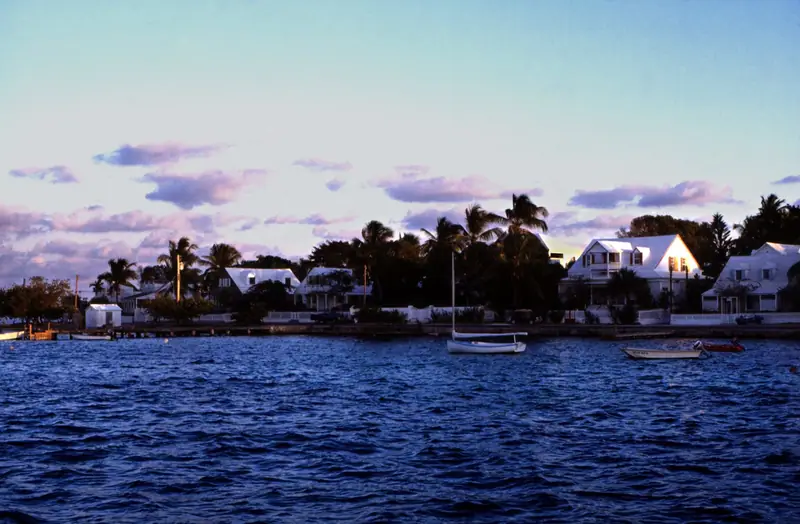 British Colonial5 stops · 18th–20th century
Dunmore Town audio guide
A compact Loyalist town on Harbour Island: Government Dock, the old streets, Loyalist Cottage, the Wesley Methodist Church and Pink Sands Beach.
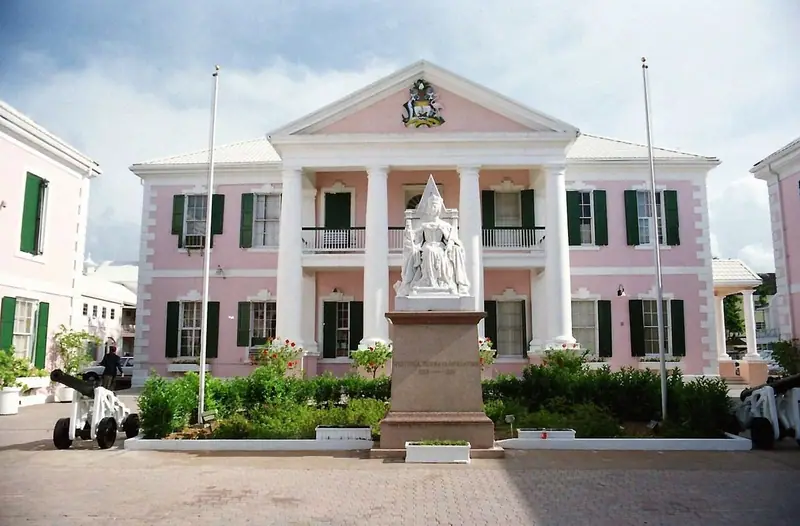 British Colonial9 stops · 17th–20th century
Historic Nassau audio guide
Start on the ramparts of Fort Charlotte, then follow Nassau’s old streets past Parliament Square to the Queen’s Staircase and Fort Fincastle on the ridge above the harbour.
 British Colonial7 stops · 7th–20th century CE
San Salvador audio guide
Round the island most often named as Columbus’s first landfall: the landfall monuments, Watling’s Castle, the Lucayan site at Pigeon Creek, the Dixon Hill Lighthouse and Graham’s Harbour.
Every guide, in every country
Hope Town and every other guide we publish, including future ones. One payment, no subscription.