Before you start
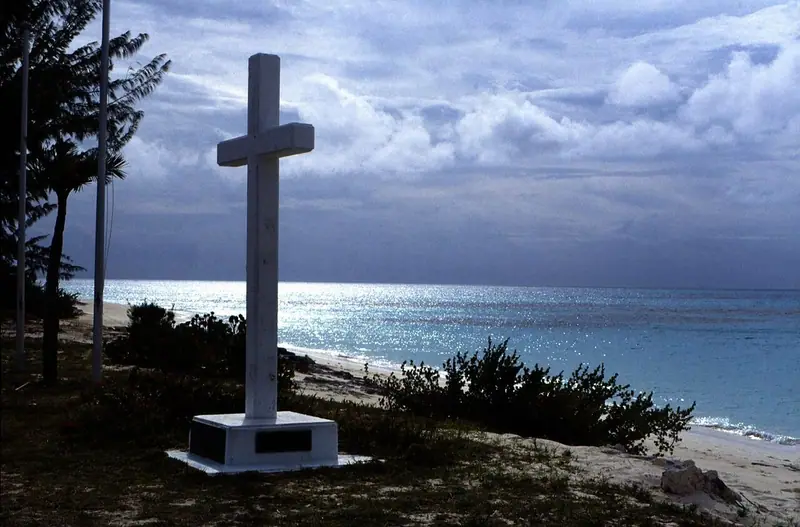
San Salvador is a small island on the far eastern edge of The Bahamas, ringed by reefs and filled with inland salt lakes. It is the island most widely accepted, though not by every scholar, as Guanahaní, where Christopher Columbus first came ashore in the Americas on 12 October 1492. This guide goes anticlockwise round the island by road, from Cockburn Town south past the landfall monuments to the plantation ruins at Sandy Point and the Lucayan site at Pigeon Creek, then north up the windward east coast to the Dixon Hill Lighthouse, United Estates and Graham’s Harbour. The stops are spread around the island, so you will need a car, a bicycle or a taxi, and you should allow most of a day.
Use it as a self-guided tour of San Salvador: 7 stops in visit order, each played when you’re ready, at your own pace.
 Free preview · Stop 1
Cockburn Town
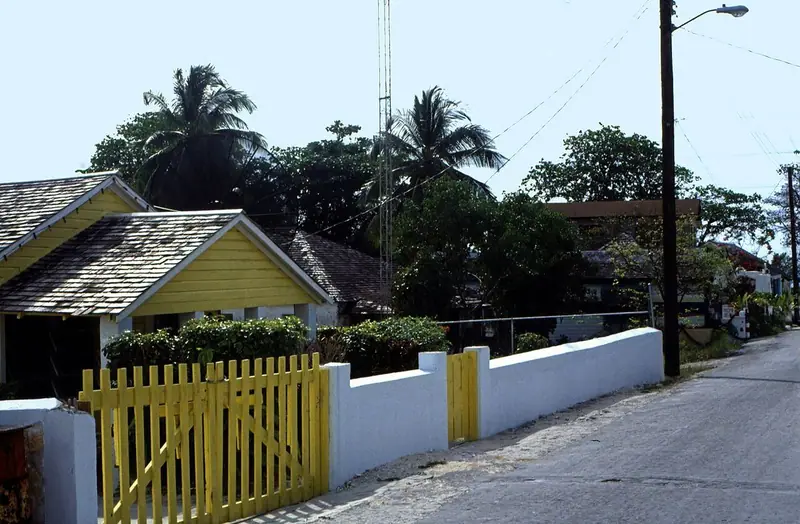
Begin in Cockburn Town, the main settlement of San Salvador, on the sheltered west coast. The town is named after Francis Cockburn, governor of The Bahamas from 1837 to 1844, the years just after the end of slavery, and it is the seat of the island’s local government. Several of its buildings date from the 1800s, among them the old jail. For about two and a half centuries the island was called Watling’s Island, after George or John Watling, an English buccaneer of the seventeenth century who, it was said, would never plunder on the Sabbath. The name was changed back to San Salvador by an act passed in 1925, which came into force in May 1926, after scholars had argued that this was the island where Columbus first landed. In the town is the Roman Catholic church of the Holy Saviour, dedicated in 1992, the five-hundredth anniversary of the landfall. Just offshore lies the Cockburn Town fossil reef, the remains of a coral reef that grew here more than a hundred thousand years ago, when the sea stood higher than it does today.
Photo: Rüdiger Stehn from Kiel, Deutschland · CC BY-SA 2.0 · Wikimedia Commons
What to see at San Salvador: 7 stops, in visit order
- 01
 Cockburn TownThe island’s main settlementFree preview
- 02
 Landfall ParkWhere Columbus is said to have come ashoreIn the guide
- 03
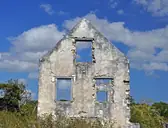 Watling’s CastleA Loyalist plantation at Sandy PointIn the guide
- 04
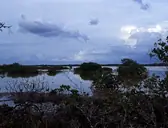 Pigeon CreekThe island’s largest Lucayan siteIn the guide
- 05
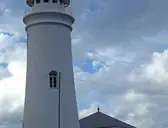 Dixon Hill LighthouseA light tended by handIn the guide
- 06
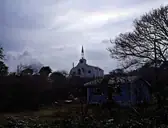 United EstatesA village of free peopleIn the guide
- 07
 Graham’s HarbourFrom Cold War base to research stationIn the guide
Site map of San Salvador
History of San Salvador
The first people of San Salvador were the Lucayans, a Taíno people who settled the island from about 600 CE and lived along its coasts by fishing and farming. Columbus’s arrival in 1492 doomed them. Within a generation they had been carried away as forced labour, and disease and enslavement destroyed them. In the 1600s the empty island took the name of the English buccaneer Watling. After the American Revolution, Loyalist planters arrived with enslaved Africans and laid out cotton plantations, and when the cotton failed they turned to livestock and food crops. Slavery ended in 1834, most of the planters left, and the freed people and their descendants built the settlements that remain today.
The full history continues in the guide.
San Salvador guide: questions
How many stops does the San Salvador guide have?
7 stops, in visit order: 1. Cockburn Town; 2. Landfall Park; 3. Watling’s Castle; 4. Pigeon Creek; 5. Dixon Hill Lighthouse; 6. United Estates; 7. Graham’s Harbour.
Can I do a self-guided tour of San Salvador with this guide?
Yes. The guide is made for a self-guided tour: 7 stops in visit order, each with a photo, a story and a voice, so you can explore San Salvador at your own pace, without joining a group. Download it before you go and it works offline.
How long is each guide?
The 7 stops add up to about 7 minutes of listening in total. You play each stop when you’re ready, so you can go at your own pace.
Does the guide work offline?
Yes, once it’s downloaded. The guide is a single self-contained web page (about 7.3 MB) with the photos, text and audio built in. Download it to your phone before you go (Wi-Fi is best); after that it opens in any modern browser on iPhone or Android, with no app, account or mobile signal needed.
Does it use GPS or need my location?
No. The guide doesn’t use GPS and doesn’t know where you are: you play each stop when you reach it. It works on iPhone and Android in any modern browser, and it’s in English.
What’s included?
One self-contained HTML guide: 7 stops in visit order, each with a photo, text and a voice, plus the story of who built the site.
Who built San Salvador?
The first people of San Salvador were the Lucayans, a Taíno people who settled the island from about 600 CE and lived along its coasts by fishing and farming. Columbus’s arrival in 1492 doomed them.
Where is San Salvador?
San Salvador is a small island on the far eastern edge of The Bahamas, ringed by reefs and filled with inland salt lakes.
Is there a free audio guide to San Salvador?
The first stop, Cockburn Town, is free to read and hear on this page, so you can try the San Salvador audio tour before you buy. The full guide, with all 7 stops, is a one-off purchase: download it once and it’s yours to keep, working offline.
Is the San Salvador guide worth it?
If you’d like to know what you’re looking at, yes. For $10 you get 7 stops in visit order, each with a photo, a short history and a voice you play when you’re ready, plus a site map of the stops, and about 7 minutes of listening in all. It’s short on purpose, so you spend your time looking, not listening. It’s yours to keep, works offline and needs no app. The first stop is free on this page, so you can try it before you buy. If you’d like hours of detail, a guided tour will go deeper.
Audio guide or guided tour?
It depends how you like to visit. This guide lets you explore San Salvador at your own pace, at any time, for a one-off price. A guided tour gives you a live expert you can ask questions, but at fixed times and usually for a higher price. Many people use both: a tour for the big picture, and the guide to read beforehand or to revisit the stops in their own time.
Is this the official San Salvador guide?
No. It’s an independent guide by The Historian Guide, not affiliated with or endorsed by the operator of San Salvador. For tickets and opening hours, check the official site operator before you go.
Does the guide include entry tickets or opening hours?
No. The guide is a digital companion only. Admission to San Salvador is separate, so check the official site operator for current tickets and opening hours before you go.
- Stop 1 · Cockburn Town: Rüdiger Stehn from Kiel, Deutschland · CC BY-SA 2.0 · Wikimedia Commons · resized
- Stop 2 · Landfall Park (also the cover): Rüdiger Stehn from Kiel, Deutschland · CC BY-SA 2.0 · Wikimedia Commons · resized
- Stop 3 · Watling’s Castle: James St. John · CC BY 2.0 · Wikimedia Commons · resized
- Stop 4 · Pigeon Creek: Rüdiger Stehn from Kiel, Deutschland · CC BY-SA 2.0 · Wikimedia Commons · resized
- Stop 5 · Dixon Hill Lighthouse: Rüdiger Stehn from Kiel, Deutschland · CC BY-SA 2.0 · Wikimedia Commons · resized
- Stop 6 · United Estates: Rüdiger Stehn from Kiel, Deutschland · CC BY-SA 2.0 · Wikimedia Commons · resized
- Stop 7 · Graham’s Harbour: Jstuby at en.wikipedia · CC0 · Wikimedia Commons


All photographs from Wikimedia Commons under the licences shown.
More guides in The Bahamas
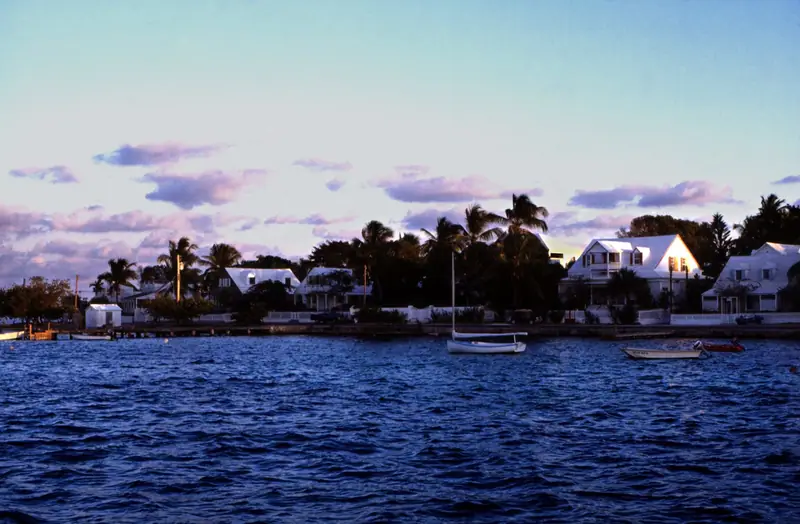 British Colonial5 stops · 18th–20th century
Dunmore Town audio guide
A compact Loyalist town on Harbour Island: Government Dock, the old streets, Loyalist Cottage, the Wesley Methodist Church and Pink Sands Beach.
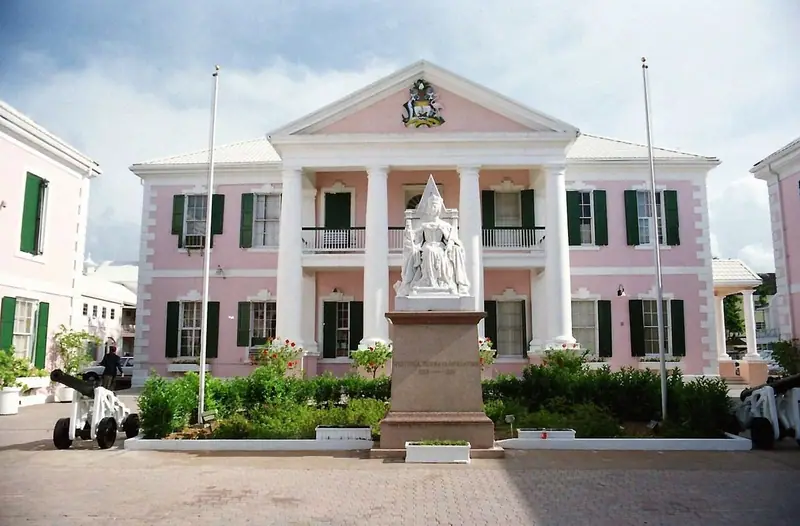 British Colonial9 stops · 17th–20th century
Historic Nassau audio guide
Start on the ramparts of Fort Charlotte, then follow Nassau’s old streets past Parliament Square to the Queen’s Staircase and Fort Fincastle on the ridge above the harbour.
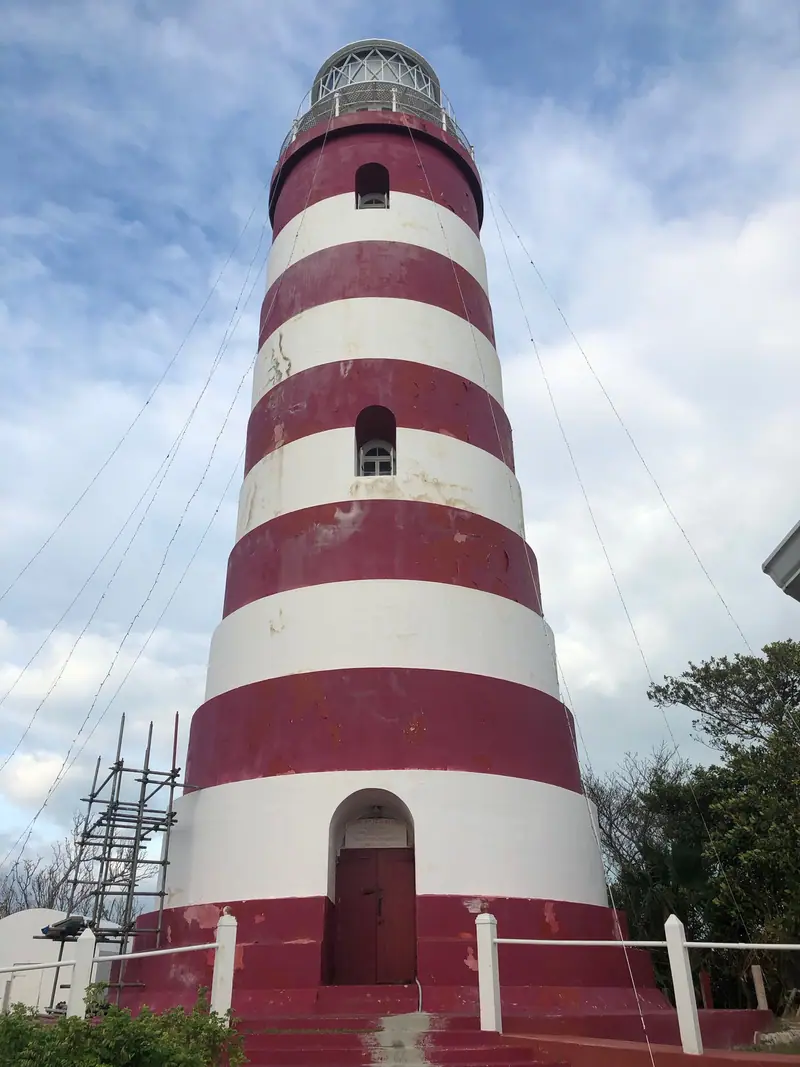 British Colonial6 stops · 18th–21st century
Hope Town audio guide
A Loyalist harbour town on Elbow Cay: the lanes, the Wyannie Malone Museum, the cholera cemetery and the hand-tended Elbow Reef Lighthouse.
Every guide, in every country
San Salvador and every other guide we publish, including future ones. One payment, no subscription.