Before you start
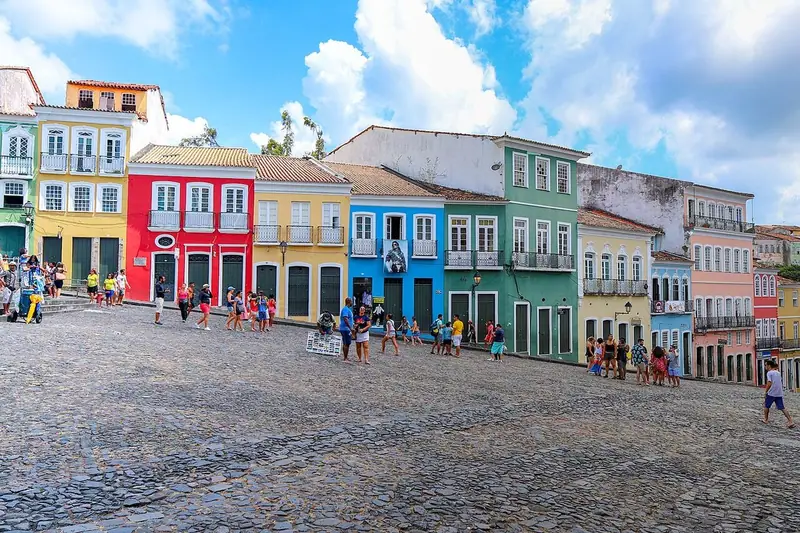
Salvador, on the Bay of All Saints in north-eastern Brazil, was founded by the Portuguese in 1549 and was the first capital of colonial Brazil. Its historic centre, often called the Pelourinho, is a World Heritage Site, with cobbled streets, brightly painted houses and some of the richest Baroque churches in the Americas. Salvador is also the heart of Afro-Brazilian culture, shaped by the millions of enslaved Africans brought to Brazil, whose descendants have given the city its music, religion and food. This guide begins in the lower town by the bay, rides the Lacerda Elevator to the upper town, and continues through the historic centre to the Largo do Pelourinho. Keep valuables out of sight, and stay in busy areas, especially after dark.
Use it as a self-guided tour of Pelourinho, Salvador: 8 stops in visit order, each played when you’re ready, at your own pace.
 Free preview · Stop 1
The Mercado Modelo
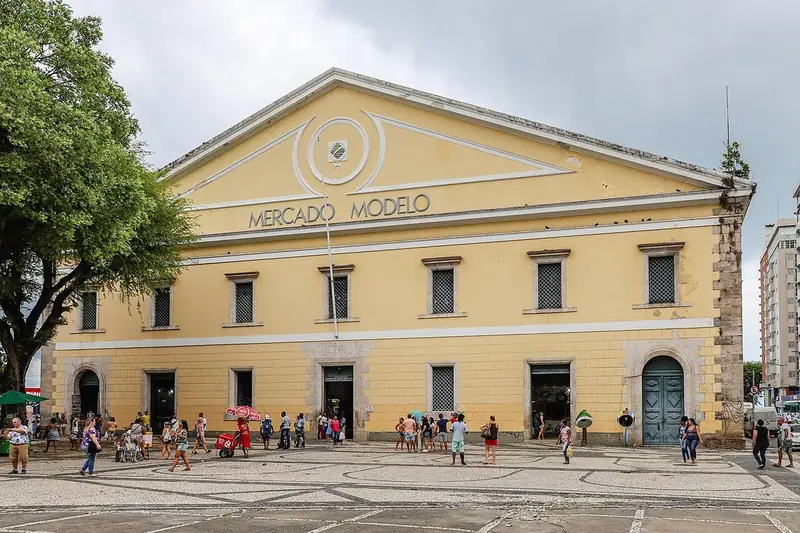
Begin in the lower town, by the waterfront, at the Mercado Modelo, a large yellow building facing the Bay of All Saints. It was built in the nineteenth century as the city’s customs house, and since 1971 it has housed a handicraft market, after a fire destroyed the original market building nearby in 1969. Look at its neoclassical façade, with its pediment and tall windows. Inside, on two floors, hundreds of small shops sell crafts, souvenirs, musical instruments and other goods from Bahia. Notice the wide bay beyond, where ships once arrived from Portugal and from Africa. This busy commercial district, the Comércio, is one of the oldest in the city. Look up at the steep escarpment rising behind you, with the buildings of the upper town along its edge, and the tall tower of the Lacerda Elevator.
Photo: Paul R. Burley · CC BY-SA 4.0 · Wikimedia Commons
What to see at Pelourinho, Salvador: 8 stops, in visit order
- 01
 The Mercado ModeloThe Lower TownFree preview
- 02
 The Lacerda ElevatorBetween Two TownsIn the guide
- 03
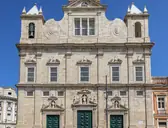 The Cathedral BasilicaThe Jesuit ChurchIn the guide
- 04
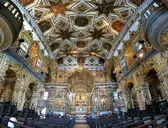 The Church of São FranciscoA Church of GoldIn the guide
- 05
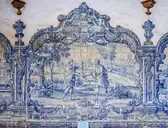 The CloisterBlue and White TilesIn the guide
- 06
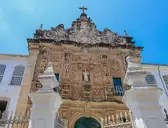 The Church of the Third OrderA Carved FaçadeIn the guide
- 07
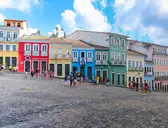 The Largo do PelourinhoThe Pillory SquareIn the guide
- 08
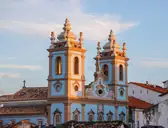 Our Lady of the Rosary of the Black PeopleA Church of the BrotherhoodIn the guide
Site map of Pelourinho, Salvador
History of Pelourinho, Salvador
Salvador was founded by the Portuguese nobleman Tomé de Sousa, the first governor-general of Brazil, and it was the colony’s capital until the capital moved to Rio de Janeiro in 1763. The city was built on two levels, the upper town on top of a steep escarpment, and the lower town along the shore, with the port. Its wealth came from sugar, grown on plantations worked by enslaved Africans, and Salvador was one of the great ports of the Atlantic slave trade. Slavery was finally abolished in Brazil in 1888. After a long decline in the twentieth century, much of the historic centre was restored from the 1990s, although the restoration also displaced many of its Afro-Brazilian residents.
Pelourinho, Salvador guide: questions
How many stops does the Pelourinho, Salvador guide have?
8 stops, in visit order: 1. The Mercado Modelo; 2. The Lacerda Elevator; 3. The Cathedral Basilica; 4. The Church of São Francisco; 5. The Cloister; 6. The Church of the Third Order; 7. The Largo do Pelourinho; 8. Our Lady of the Rosary of the Black People.
Can I do a self-guided tour of Pelourinho, Salvador with this guide?
Yes. The guide is made for a self-guided tour: 8 stops in visit order, each with a photo, a story and a voice, so you can explore Pelourinho, Salvador at your own pace, without joining a group. Download it before you go and it works offline.
How long is each guide?
The 8 stops add up to about 6 minutes of listening in total. You play each stop when you’re ready, so you can go at your own pace.
Does the guide work offline?
Yes, once it’s downloaded. The guide is a single self-contained web page (about 8.1 MB) with the photos, text and audio built in. Download it to your phone before you go (Wi-Fi is best); after that it opens in any modern browser on iPhone or Android, with no app, account or mobile signal needed.
Does it use GPS or need my location?
No. The guide doesn’t use GPS and doesn’t know where you are: you play each stop when you reach it. It works on iPhone and Android in any modern browser, and it’s in English.
What’s included?
One self-contained HTML guide: 8 stops in visit order, each with a photo, text and a voice, plus the story of who built the site.
Who built Pelourinho, Salvador?
Salvador was founded by the Portuguese nobleman Tomé de Sousa, the first governor-general of Brazil, and it was the colony’s capital until the capital moved to Rio de Janeiro in 1763. The city was built on two levels, the upper town on top of a steep escarpment, and the lower town along the shore, with the port.
Where is Pelourinho, Salvador?
Salvador, on the Bay of All Saints in north-eastern Brazil, was founded by the Portuguese in 1549 and was the first capital of colonial Brazil.
Is there a free audio guide to Pelourinho, Salvador?
The first stop, The Mercado Modelo, is free to read and hear on this page, so you can try the Pelourinho, Salvador audio tour before you buy. The full guide, with all 8 stops, is a one-off purchase: download it once and it’s yours to keep, working offline.
Is the Pelourinho, Salvador guide worth it?
If you’d like to know what you’re looking at, yes. For $10 you get 8 stops in visit order, each with a photo, a short history and a voice you play when you’re ready, plus a site map of the stops, and about 6 minutes of listening in all. It’s short on purpose, so you spend your time looking, not listening. It’s yours to keep, works offline and needs no app. The first stop is free on this page, so you can try it before you buy. If you’d like hours of detail, a guided tour will go deeper.
Audio guide or guided tour?
It depends how you like to visit. This guide lets you explore Pelourinho, Salvador at your own pace, at any time, for a one-off price. A guided tour gives you a live expert you can ask questions, but at fixed times and usually for a higher price. Many people use both: a tour for the big picture, and the guide to read beforehand or to revisit the stops in their own time.
Is this the official Pelourinho, Salvador guide?
No. It’s an independent guide by The Historian Guide, not affiliated with or endorsed by the operator of Pelourinho, Salvador. For tickets and opening hours, check the official site operator before you go.
Does the guide include entry tickets or opening hours?
No. The guide is a digital companion only. Admission to Pelourinho, Salvador is separate, so check the official site operator for current tickets and opening hours before you go.
- Stop 1 · The Mercado Modelo: Paul R. Burley · CC BY-SA 4.0 · Wikimedia Commons · resized
- Stop 2 · The Lacerda Elevator: Juliana Bruder · CC BY-SA 4.0 · Wikimedia Commons · resized
- Stop 3 · The Cathedral Basilica: Paul R. Burley · CC BY-SA 4.0 · Wikimedia Commons · resized
- Stop 4 · The Church of São Francisco: BrunoEspindola84 · CC BY-SA 4.0 · Wikimedia Commons · resized
- Stop 5 · The Cloister: Paul R. Burley · CC BY-SA 4.0 · Wikimedia Commons · resized
- Stop 6 · The Church of the Third Order: Paul R. Burley · CC BY-SA 4.0 · Wikimedia Commons · resized
- Stop 7 · The Largo do Pelourinho (also the cover): Paul R. Burley · CC BY-SA 4.0 · Wikimedia Commons · resized
- Stop 8 · Our Lady of the Rosary of the Black People: Paul R. Burley · CC BY-SA 4.0 · Wikimedia Commons · resized


All photographs from Wikimedia Commons under the licences shown.
More guides in Brazil
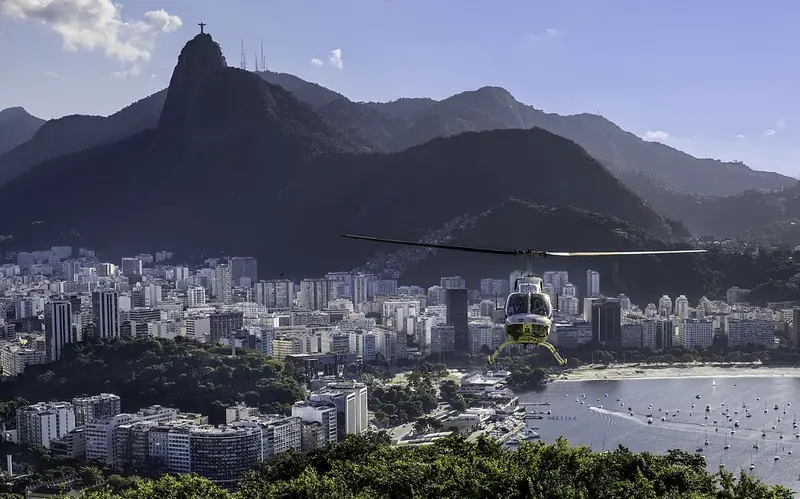 Modern7 stops · 1922–1931 CE
Christ the Redeemer audio guide
Ride up through the Tijuca Forest to the soapstone-clad statue on Corcovado, with Sugarloaf and Guanabara Bay spread out below.
 Natural wonder7 stops
Iguaçu Falls audio guide
Forest trails and walkways to the Devil’s Throat, where the Iguaçu River plunges over a curving cliff in hundreds of separate falls.
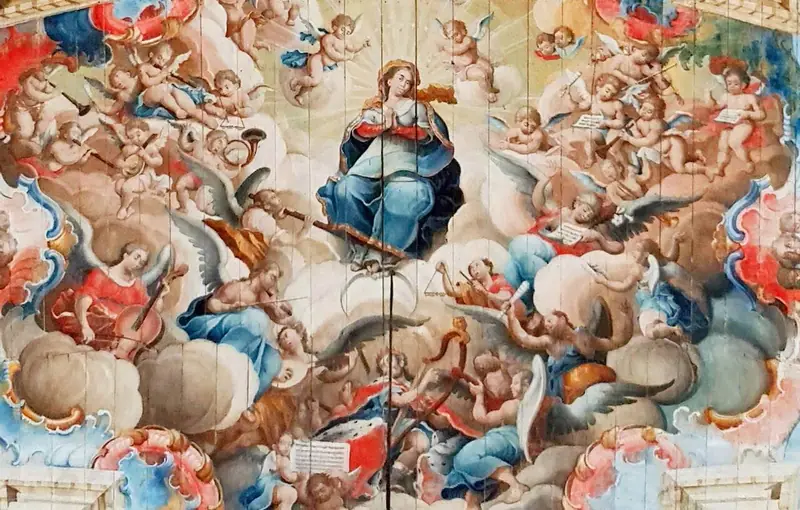 Portuguese Colonial9 stops · 1698 – 1897
Ouro Preto audio guide
Brazil’s gold-rush capital: Praça Tiradentes, the Inconfidência museum, Aleijadinho’s São Francisco, Ataíde’s painted ceiling and the gilded churches of the Pilar and Rosário.
 Natural wonder7 stops
Sugarloaf Mountain audio guide
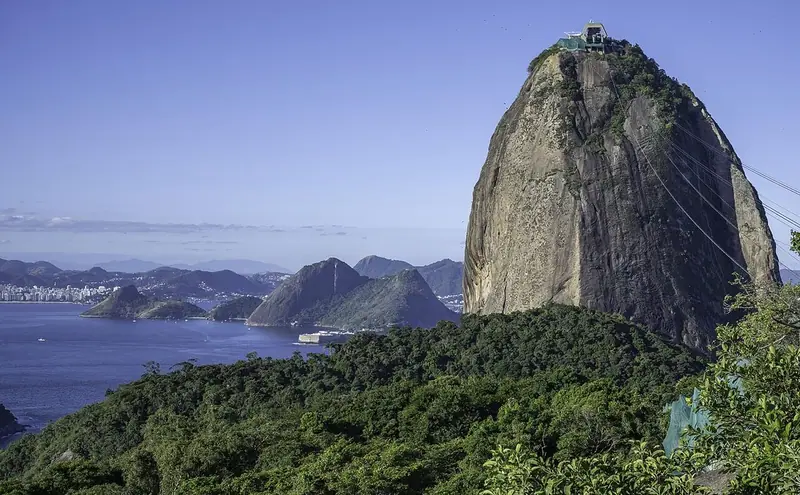
Ride Brazil’s first cable car from Praia Vermelha via Morro da Urca to the granite summit above the mouth of Guanabara Bay.
Every guide, in every country
Pelourinho, Salvador and every other guide we publish, including future ones. One payment, no subscription.