Before you start
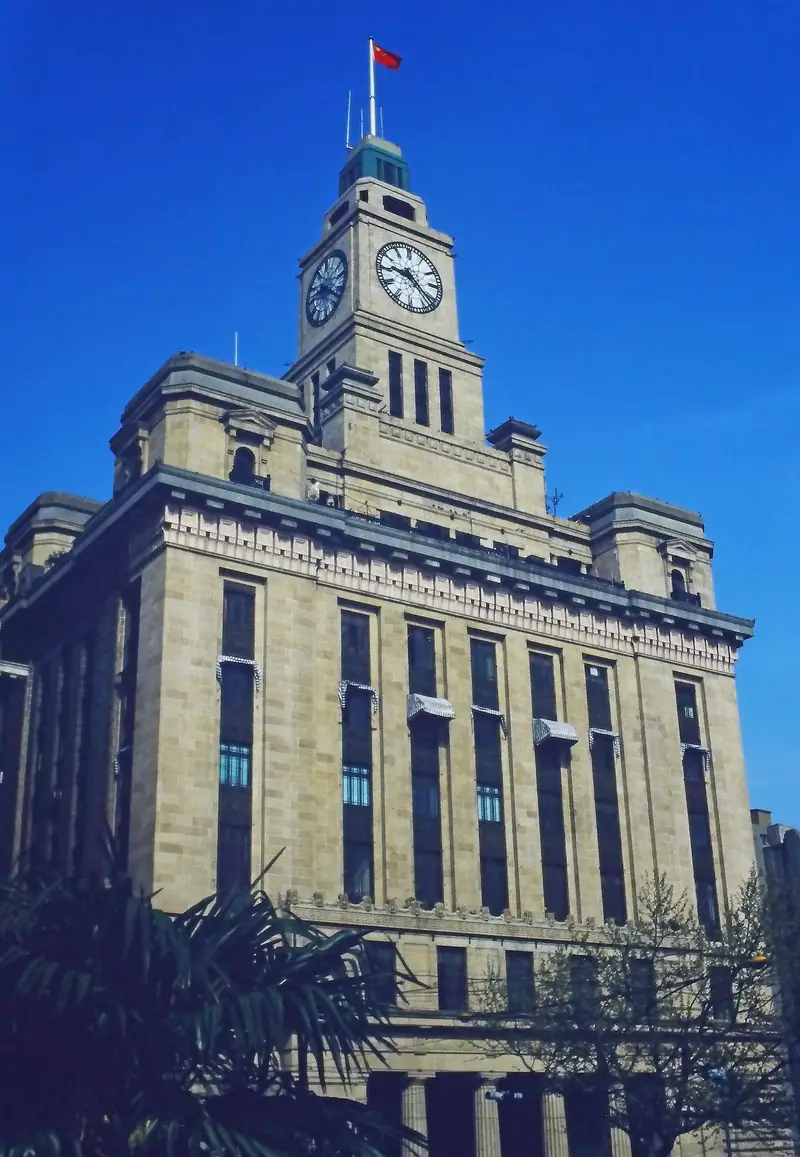
Shanghai holds two very different cities side by side. Along the Huangpu River runs the Bund, the waterfront of the foreign settlement that grew up after 1843, lined with the banks, trading houses and hotels that made Shanghai the great commercial city of East Asia. A short way to the south lies the old Chinese walled town, with its temple to the city gods and the garden of a Ming dynasty official. This guide begins at the Garden Bridge over Suzhou Creek, goes south along the Bund past the old British consulate, Sassoon House, the Customs House and the signal tower, and ends in the old city at Yu Garden and the City God Temple. The route is about three kilometres on foot.
Use it as a self-guided tour of the Bund and Yu Garden: 7 stops in visit order, each played when you’re ready, at your own pace.
 Free preview · Stop 1
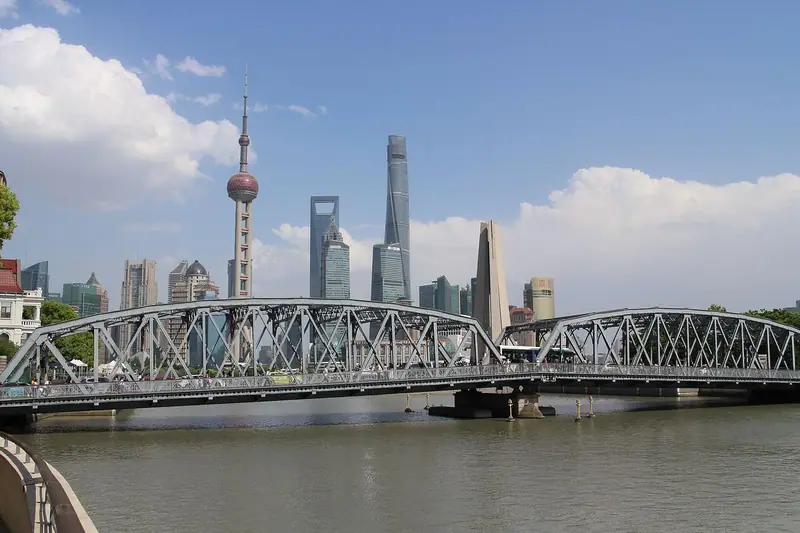
The Garden Bridge
Start on the Waibaidu Bridge, known in English as the Garden Bridge, where Suzhou Creek flows into the Huangpu River at the northern end of the Bund. The first bridge here was a wooden toll bridge built in 1856 by a British businessman. Chinese people had to pay to cross it, which caused great resentment, and in 1873 the municipal council replaced it with a free bridge. The present steel truss bridge, the first all-steel bridge in China, opened in 1908. In 1937, when the Japanese army attacked Shanghai, thousands of refugees crossed it to the safety of the International Settlement. In 2008 it was taken away for repairs and returned to its place the following year. Below the bridge, on the triangle of land between the creek and the river, lies Huangpu Park, the city’s first public park, opened in 1886, and now home to the Monument to the People’s Heroes. Walk south to the old British consulate.
Photo: Suicasmo · CC0 · Wikimedia Commons
What to see at the Bund and Yu Garden: 7 stops, in visit order
- 01
 The Garden BridgeThe bridge over Suzhou CreekFree preview
- 02
 The British ConsulateThe oldest building on the BundIn the guide
- 03
 Sassoon HouseThe Jazz Age on the BundIn the guide
- 04
 The Customs HouseBig Ching and the bankIn the guide
- 05
 The Signal TowerTyphoon warnings for the portIn the guide
- 06
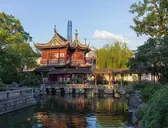 Yu GardenA Ming dynasty gardenIn the guide
- 07
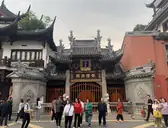 The City God TempleThe guardians of the old cityIn the guide
Site map of the Bund and Yu Garden
History of the Bund and Yu Garden
Shanghai was a walled county town and a busy port at the mouth of the Yangtze long before Europeans arrived. After the First Opium War, the Treaty of Nanking of 1842 forced China to open it to foreign trade, and from 1843 British, American and French merchants settled outside the walls on the muddy riverbank to the north. The British and American settlements later merged into the International Settlement, run by its own council, while the French had their own concession. On the embankment, which took its name, the Bund, from a word for an embankment in India, the foreign firms built ever grander offices. By the 1920s and 1930s Shanghai was one of the largest and richest cities in Asia, a place of great fortunes and great poverty. Japan occupied the city during the Second World War, the foreign concessions were given up in 1943, and in 1949 the Communists took Shanghai.
The full history continues in the guide.
The Bund and Yu Garden guide: questions
How many stops does the Bund and Yu Garden guide have?
7 stops, in visit order: 1. The Garden Bridge; 2. The British Consulate; 3. Sassoon House; 4. The Customs House; 5. The Signal Tower; 6. Yu Garden; 7. The City God Temple.
Can I do a self-guided tour of the Bund and Yu Garden with this guide?
Yes. The guide is made for a self-guided tour: 7 stops in visit order, each with a photo, a story and a voice, so you can explore the Bund and Yu Garden at your own pace, without joining a group. Download it before you go and it works offline.
How long is each guide?
The 7 stops add up to about 6 minutes of listening in total. You play each stop when you’re ready, so you can go at your own pace.
Does the guide work offline?
Yes, once it’s downloaded. The guide is a single self-contained web page (about 7.3 MB) with the photos, text and audio built in. Download it to your phone before you go (Wi-Fi is best); after that it opens in any modern browser on iPhone or Android, with no app, account or mobile signal needed.
Does it use GPS or need my location?
No. The guide doesn’t use GPS and doesn’t know where you are: you play each stop when you reach it. It works on iPhone and Android in any modern browser, and it’s in English.
What’s included?
One self-contained HTML guide: 7 stops in visit order, each with a photo, text and a voice, plus the story of who built the site.
Who built the Bund and Yu Garden?
Shanghai was a walled county town and a busy port at the mouth of the Yangtze long before Europeans arrived. After the First Opium War, the Treaty of Nanking of 1842 forced China to open it to foreign trade, and from 1843 British, American and French merchants settled outside the walls on the muddy riverbank to the north.
Where is the Bund and Yu Garden?
Shanghai holds two very different cities side by side.
Is there a free audio guide to the Bund and Yu Garden?
The first stop, The Garden Bridge, is free to read and hear on this page, so you can try the Bund and Yu Garden audio tour before you buy. The full guide, with all 7 stops, is a one-off purchase: download it once and it’s yours to keep, working offline.
Is the Bund and Yu Garden guide worth it?
If you’d like to know what you’re looking at, yes. For $10 you get 7 stops in visit order, each with a photo, a short history and a voice you play when you’re ready, plus a site map of the stops, and about 6 minutes of listening in all. It’s short on purpose, so you spend your time looking, not listening. It’s yours to keep, works offline and needs no app. The first stop is free on this page, so you can try it before you buy. If you’d like hours of detail, a guided tour will go deeper.
Audio guide or guided tour?
It depends how you like to visit. This guide lets you explore the Bund and Yu Garden at your own pace, at any time, for a one-off price. A guided tour gives you a live expert you can ask questions, but at fixed times and usually for a higher price. Many people use both: a tour for the big picture, and the guide to read beforehand or to revisit the stops in their own time.
Is this the official Bund and Yu Garden guide?
No. It’s an independent guide by The Historian Guide, not affiliated with or endorsed by the operator of the Bund and Yu Garden. For tickets and opening hours, check the official site operator before you go.
Does the guide include entry tickets or opening hours?
No. The guide is a digital companion only. Admission to the Bund and Yu Garden is separate, so check the official site operator for current tickets and opening hours before you go.
- Stop 1 · The Garden Bridge: Suicasmo · CC0 · Wikimedia Commons · resized
- Stop 2 · The British Consulate: Clithering · CC BY-SA 4.0 · Wikimedia Commons · resized
- Stop 3 · Sassoon House: Rob Deutscher from Melbourne, Australia · CC BY 2.0 · Wikimedia Commons · resized
- Stop 4 · The Customs House (also the cover): Jan Kranendonk (https://www.jankranendonk.nl) · CC BY-SA 4.0 · Wikimedia Commons · resized
- Stop 5 · The Signal Tower: Spudgun67 · CC BY-SA 4.0 · Wikimedia Commons · resized
- Stop 6 · Yu Garden: Stefan Fussan · CC BY-SA 3.0 · Wikimedia Commons · resized
- Stop 7 · The City God Temple: Chainwit. · CC BY 4.0 · Wikimedia Commons · resized


All photographs from Wikimedia Commons under the licences shown.
More guides in China
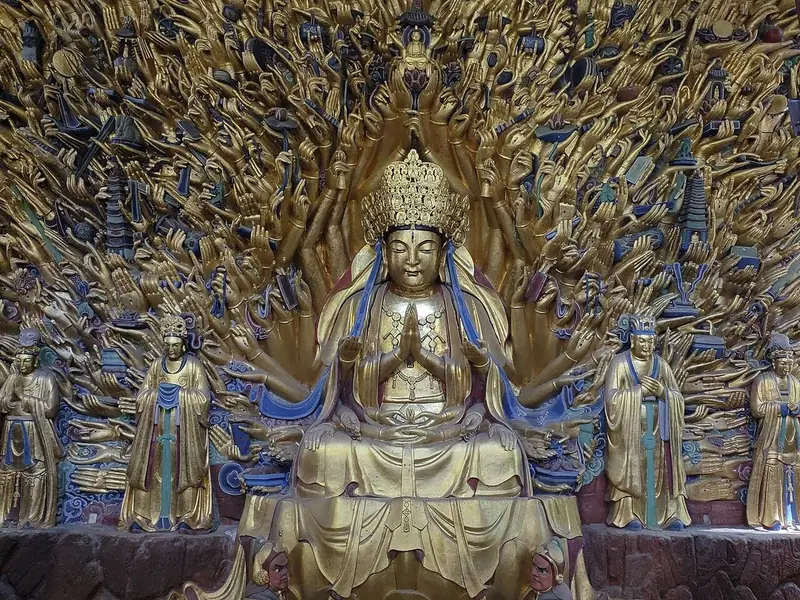 Song9 stops · 892 – c. 1249 CE
Dazu Rock Carvings audio guide
Buddhist cliff carvings of the Tang and Song: the niches of Beishan and the great horseshoe of Baodingshan, with its Wheel of Rebirth, Thousand-Armed Guanyin and Reclining Buddha.
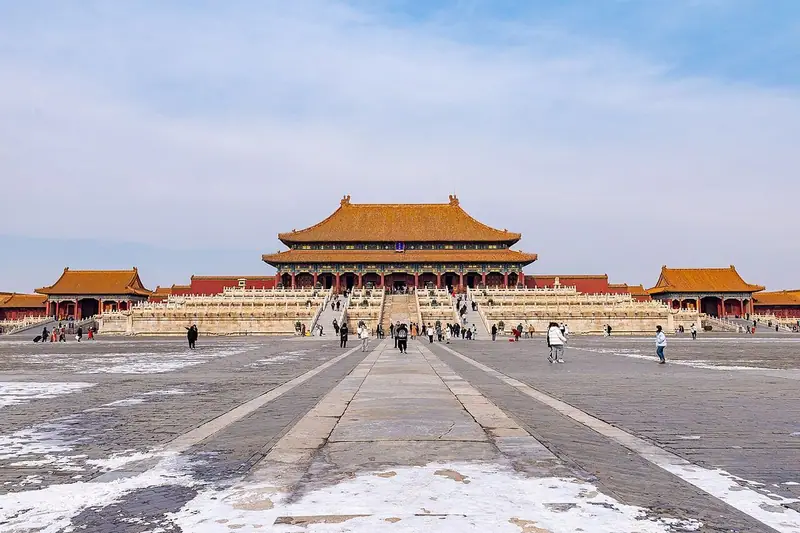 Ming8 stops · 1406–1912 CE
The Forbidden City audio guide
Follow the central axis of China’s imperial palace through its gates and halls of harmony, roofed in the emperor’s golden-yellow tiles.
 Ming6 stops · 1368–1644 CE
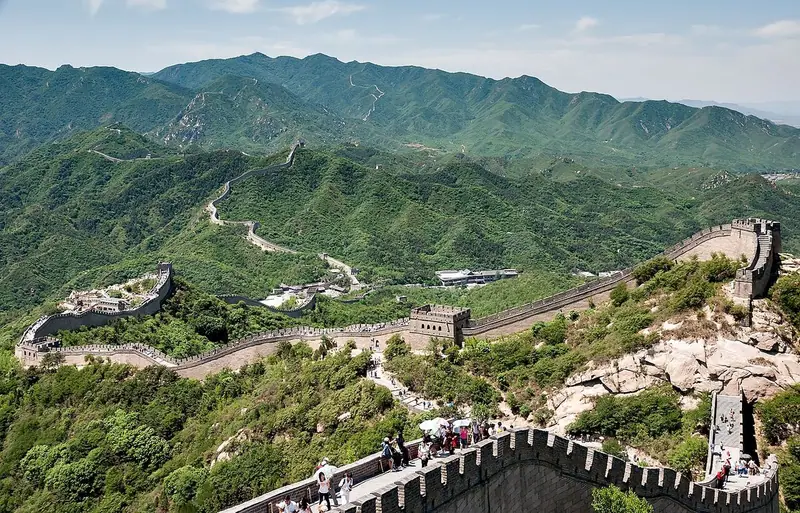
Great Wall at Badaling audio guide
Climb the grey brick battlements and watchtowers of the Great Wall as it rides the mountain crests on either side of the Badaling pass.
 Ming7 stops · from c. 1510 CE
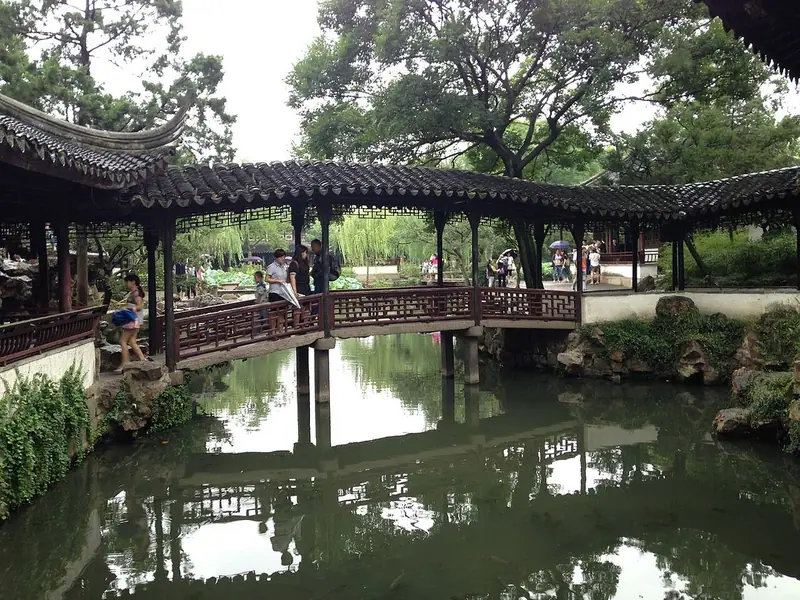
Humble Administrator’s Garden audio guide
Suzhou’s largest classical garden, a landscape in miniature of ponds, islands, bridges and pavilions, each framing a composed view.
 Tang6 stops · early 8th century – 803 CE
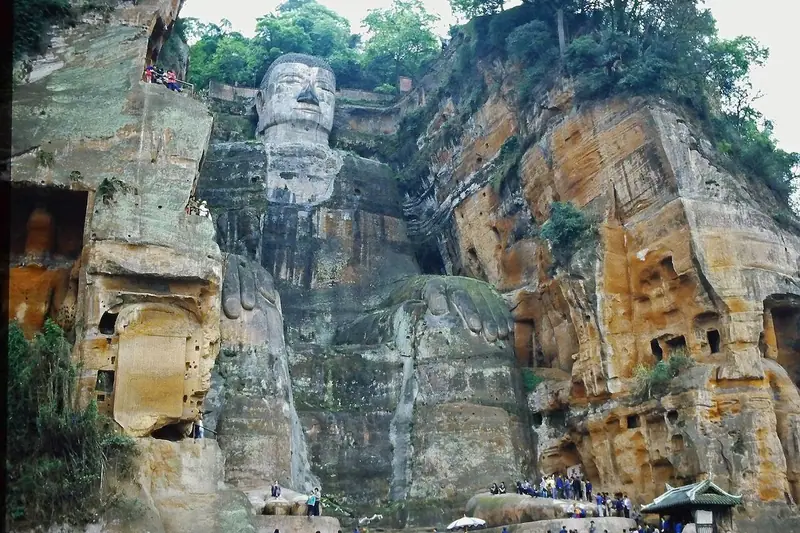
Leshan Giant Buddha audio guide
Climb down the Nine-Turn Plank Road beside the 71-metre Giant Buddha, carved into a red sandstone cliff where three rivers meet.
 Tang7 stops · 494–907 CE
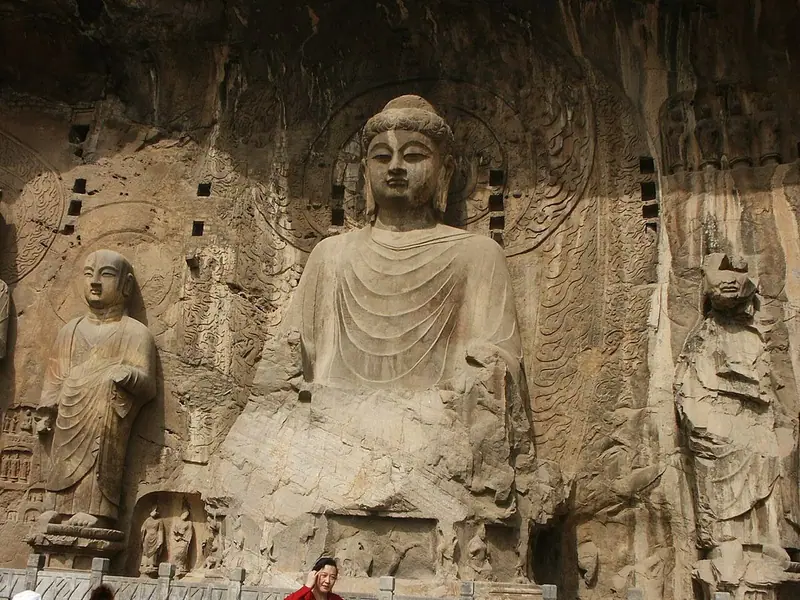
Longmen Grottoes audio guide
Follow the Yi River past limestone cliffs honeycombed with Buddhist caves and niches to the colossal statues of the Fengxian Temple.
Every guide, in every country
The Bund and Yu Garden and every other guide we publish, including future ones. One payment, no subscription.