Before you start
Trogir sits on a tiny island, pinched between the mainland and the larger island of Čiovo, and linked to both by bridges. A Greek settlement, then a Roman town, then a medieval city-state, it came under the Hungarian-Croatian crown and later under Venice, and it has kept a complete historic core of streets, palaces and churches. In 1997 that core was inscribed as a World Heritage Site, as an outstanding example of a medieval Mediterranean town. This guide comes in through the Land Gate, visits the cathedral and Radovan’s portal, the Čipiko Palace and the Town Loggia, and ends at the Kamerlengo Fortress and the Riva by the Sea Gate. The island is so small that the walk itself is short; allow two to three hours with the interiors.
Use it as a self-guided tour of Trogir: 6 stops in visit order, each played when you’re ready, at your own pace.
 Free preview · Stop 1
The Land Gate
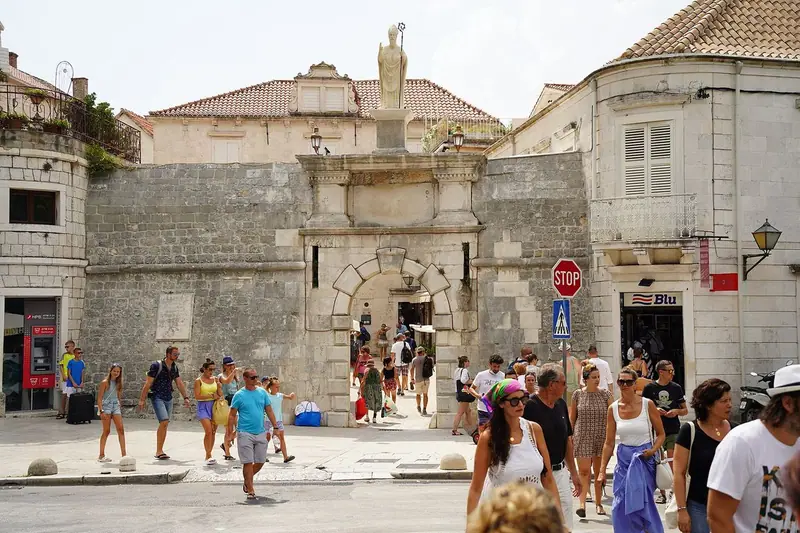
Begin at the Land Gate, the northern entrance to the old town, at the end of the short bridge from the mainland. The present gate was rebuilt in the seventeenth century, in a late Renaissance style, and in the niche above the arch stands a statue of the Blessed Ivan of Trogir, the town’s patron bishop, who died in 1111 and whose cult has been celebrated here ever since. The gate was the official entrance from the landward side, and it still has the feeling of a threshold: once you pass through it you are inside a tight, complete stone town, with little of the later city visible. The street ahead leads in a few dozen paces to the main square. Walk through and on to the cathedral.
Photo: TimeTravelRome · CC BY 2.0 · Wikimedia Commons
What to see at Trogir: 6 stops, in visit order
- 01
 The Land GateThe northern entranceFree preview
- 02
 The Cathedral of St LawrenceRadovan’s portalIn the guide
- 03
 The Čipiko PalaceA Venetian Gothic facadeIn the guide
- 04
 The Town Loggia and Clock TowerThe public courtIn the guide
- 05
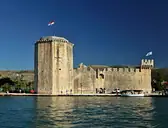 The Kamerlengo FortressThe Venetian castleIn the guide
- 06
 The Sea Gate and the RivaThe harbour frontIn the guide
Site map of Trogir
History of Trogir
Settlers from the Greek island of Paros founded a town here, Tragurion, in the third century BCE. Rome took it in the first century BCE, and a Roman town, Tragurium, stood on the same island. In the early Middle Ages the people withdrew within the walls, and from the thirteenth century Trogir was a prosperous commune under the Hungarian-Croatian kings, with a cathedral, a count’s palace and a tight grid of streets that still survive. Venice seized the town in 1420 and held it until the fall of the Republic in 1797, adding the Kamerlengo Fortress and leaving a strong Venetian stamp on the palaces. After a period under the Habsburgs, Trogir became part of Yugoslavia and, in 1991, of Croatia. The historic city was added to the World Heritage List in 1997.
Trogir guide: questions
How many stops does the Trogir guide have?
6 stops, in visit order: 1. The Land Gate; 2. The Cathedral of St Lawrence; 3. The Čipiko Palace; 4. The Town Loggia and Clock Tower; 5. The Kamerlengo Fortress; 6. The Sea Gate and the Riva.
Can I do a self-guided tour of Trogir with this guide?
Yes. The guide is made for a self-guided tour: 6 stops in visit order, each with a photo, a story and a voice, so you can explore Trogir at your own pace, without joining a group. Download it before you go and it works offline.
How long is each guide?
The 6 stops add up to about 4 minutes of listening in total. You play each stop when you’re ready, so you can go at your own pace.
Does the guide work offline?
Yes, once it’s downloaded. The guide is a single self-contained web page (about 6.5 MB) with the photos, text and audio built in. Download it to your phone before you go (Wi-Fi is best); after that it opens in any modern browser on iPhone or Android, with no app, account or mobile signal needed.
Does it use GPS or need my location?
No. The guide doesn’t use GPS and doesn’t know where you are: you play each stop when you reach it. It works on iPhone and Android in any modern browser, and it’s in English.
What’s included?
One self-contained HTML guide: 6 stops in visit order, each with a photo, text and a voice, plus the story of who built the site.
Who built Trogir?
Settlers from the Greek island of Paros founded a town here, Tragurion, in the third century BCE. Rome took it in the first century BCE, and a Roman town, Tragurium, stood on the same island.
Where is Trogir?
Trogir sits on a tiny island, pinched between the mainland and the larger island of Čiovo, and linked to both by bridges.
Is there a free audio guide to Trogir?
The first stop, The Land Gate, is free to read and hear on this page, so you can try the Trogir audio tour before you buy. The full guide, with all 6 stops, is a one-off purchase: download it once and it’s yours to keep, working offline.
Is the Trogir guide worth it?
If you’d like to know what you’re looking at, yes. For $10 you get 6 stops in visit order, each with a photo, a short history and a voice you play when you’re ready, plus a site map of the stops, and about 4 minutes of listening in all. It’s short on purpose, so you spend your time looking, not listening. It’s yours to keep, works offline and needs no app. The first stop is free on this page, so you can try it before you buy. If you’d like hours of detail, a guided tour will go deeper.
Audio guide or guided tour?
It depends how you like to visit. This guide lets you explore Trogir at your own pace, at any time, for a one-off price. A guided tour gives you a live expert you can ask questions, but at fixed times and usually for a higher price. Many people use both: a tour for the big picture, and the guide to read beforehand or to revisit the stops in their own time.
Is this the official Trogir guide?
No. It’s an independent guide by The Historian Guide, not affiliated with or endorsed by the operator of Trogir. For tickets and opening hours, check the official site operator before you go.
Does the guide include entry tickets or opening hours?
No. The guide is a digital companion only. Admission to Trogir is separate, so check the official site operator for current tickets and opening hours before you go.
- Stop 1 · The Land Gate: TimeTravelRome · CC BY 2.0 · Wikimedia Commons · resized
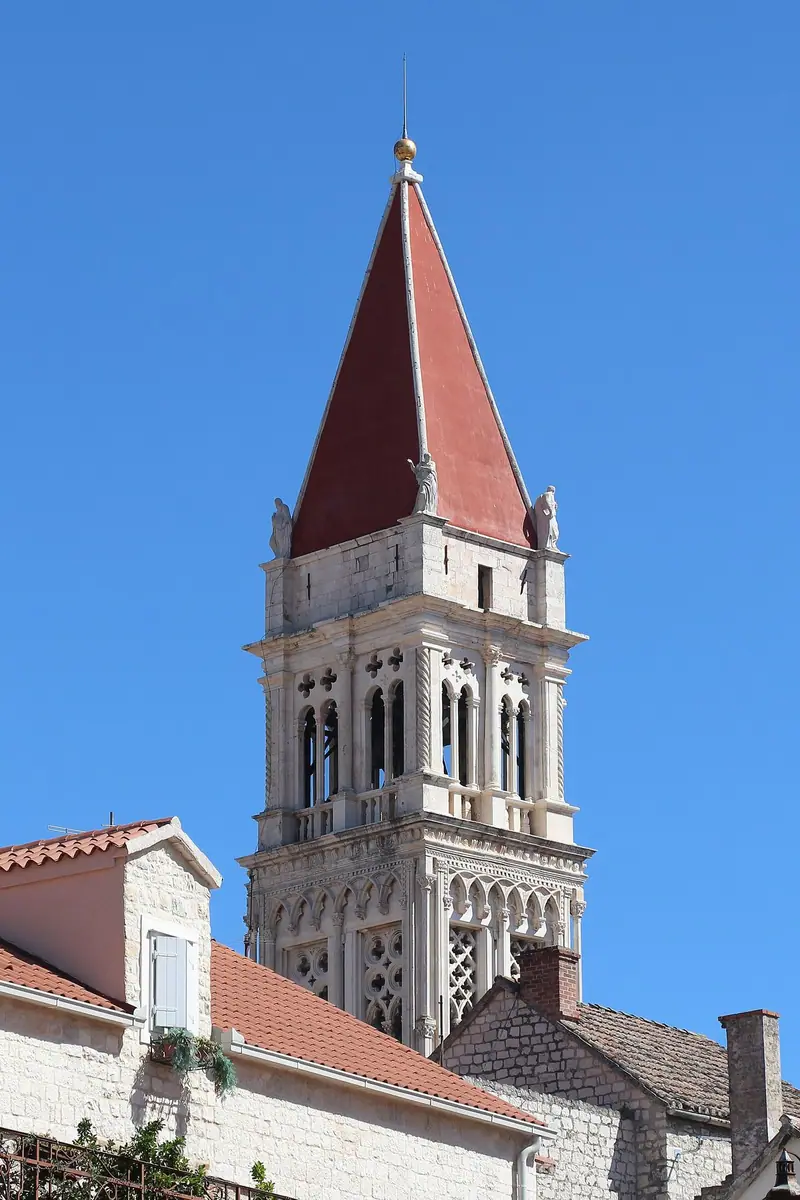
- Stop 2 · The Cathedral of St Lawrence (also the cover): Bernard Gagnon · CC BY-SA 4.0 · Wikimedia Commons · resized
- Stop 3 · The Čipiko Palace: TimeTravelRome · CC BY 2.0 · Wikimedia Commons · resized
- Stop 4 · The Town Loggia and Clock Tower: Rigorius · CC BY-SA 4.0 · Wikimedia Commons · resized
- Stop 5 · The Kamerlengo Fortress: VitVit · CC BY-SA 4.0 · Wikimedia Commons · resized
- Stop 6 · The Sea Gate and the Riva: Bernard Gagnon · CC BY-SA 4.0 · Wikimedia Commons · resized


All photographs from Wikimedia Commons under the licences shown.
More guides in Croatia
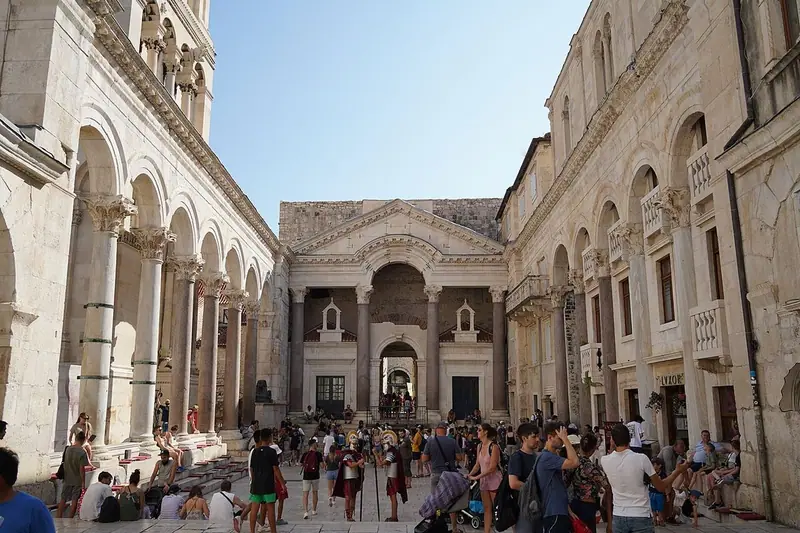 Roman7 stops · c. 295–305 CE
Diocletian’s Palace audio guide
The retirement palace of the emperor Diocletian, whose walls still enclose half of old Split, from the Bronze Gate cellars to the Peristyle.
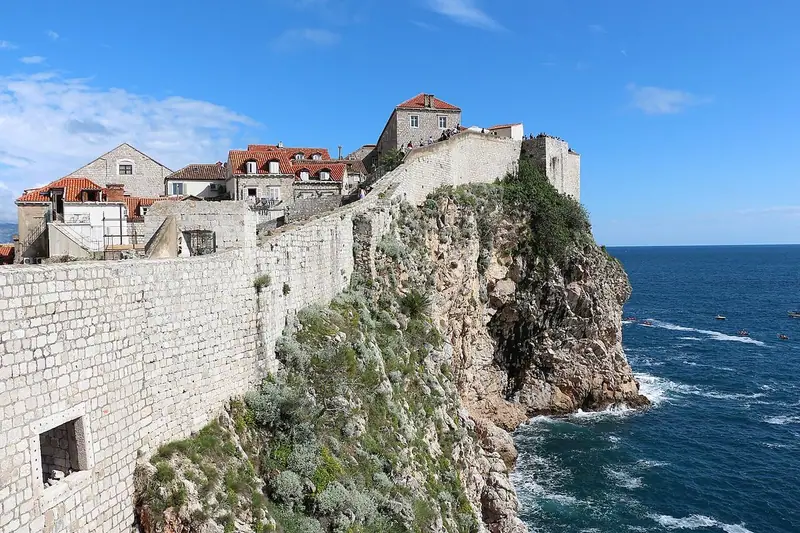 Republic of Ragusa8 stops · 1358–1808 CE
Dubrovnik Old Town audio guide
Enter by the Pile Gate and walk the Stradun of the old merchant republic of Ragusa, then circle its limestone walls above the Adriatic.
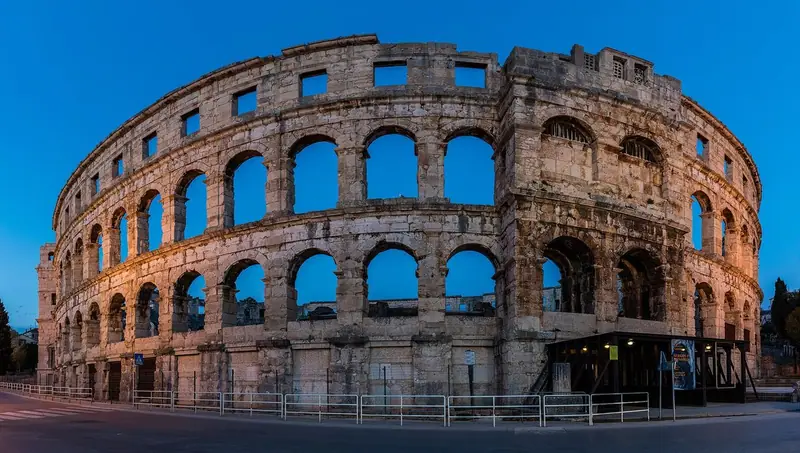 Roman7 stops · 1st century BCE–1630s
Pula audio guide
From the Roman amphitheatre whose outer wall still stands complete, through the Arch of the Sergii, the Forum and the Temple of Augustus, to the northern gates, the small theatre and the Venetian castle on the old Capitol.
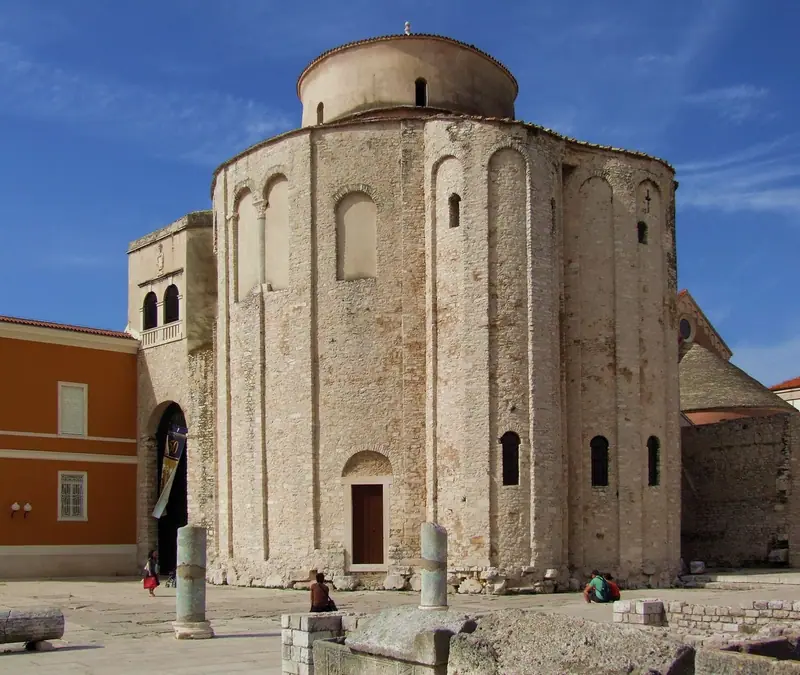 Roman and Venetian6 stops · 1st century BCE–1543
Zadar audio guide
From the Roman Forum and the ninth-century Church of St Donatus to the Cathedral of St Anastasia, then east through People’s Square and Five Wells Square to Michele Sanmicheli’s Land Gate in the Venetian walls.
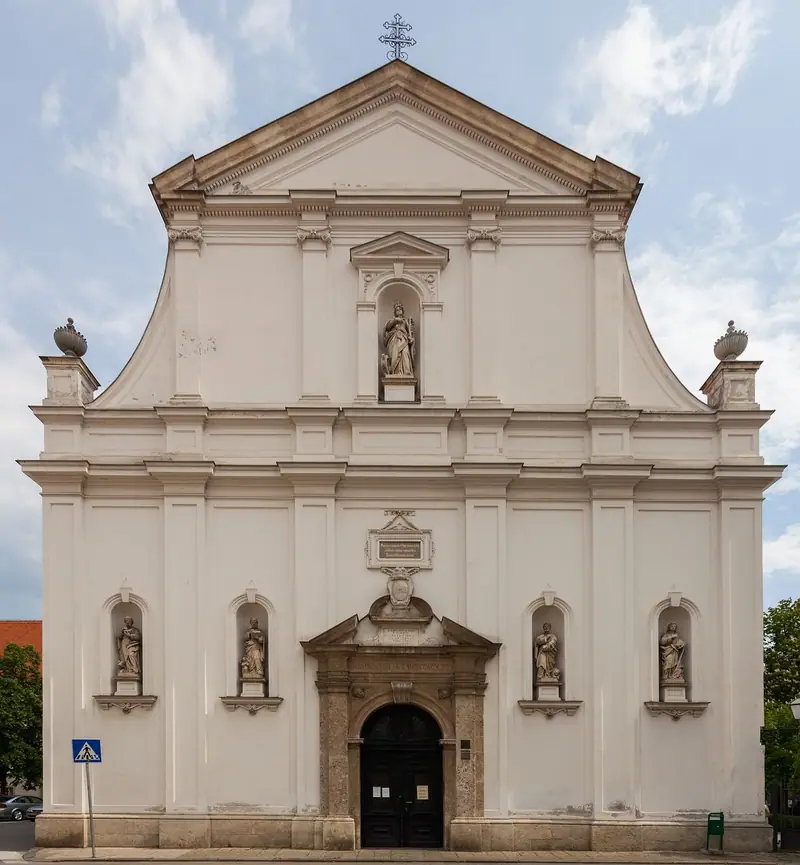 Croatian7 stops · 1094–1890
Zagreb Upper Town audio guide
From Zagreb Cathedral on Kaptol, across Dolac Market and through the Stone Gate to St Mark’s, St Catherine’s and the Lotrščak Tower, ending in Ban Jelačić Square below the Upper Town.
Every guide, in every country
Trogir and every other guide we publish, including future ones. One payment, no subscription.