Before you start
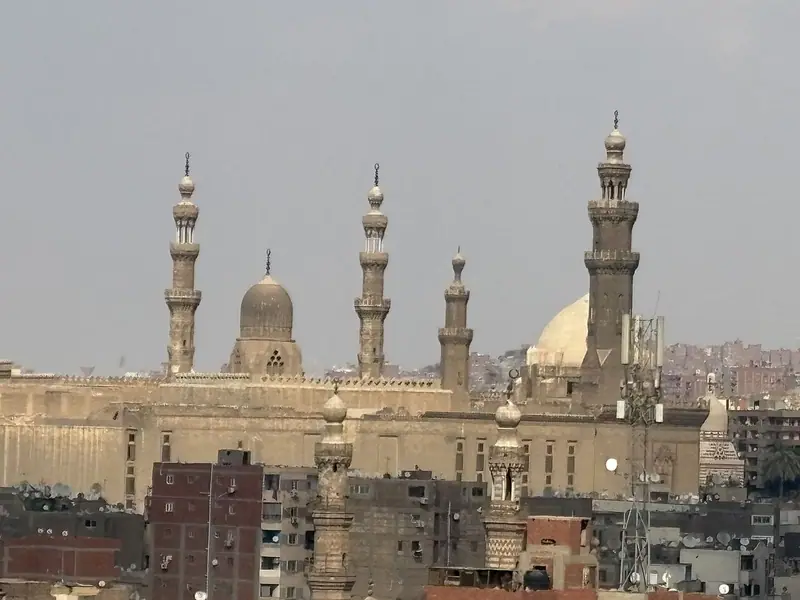
Islamic Cairo is the historic city that grew north of the first Arab capital, a dense quarter of mosques, gates, markets and colleges, most of it Fatimid and Mamluk in origin. This guide is a walk through that city, and it does not go up to the Citadel, which has its own guide. It begins at the northern wall, at the Mosque of al-Hakim and the gate of Bab al-Futuh, and follows al-Muizz Street past the Qalawun complex, the historic caravanserais of Khan el-Khalili and the Mosque of al-Azhar, to the southern gate of Bab Zuweila. From there a final leg, on foot or by taxi, reaches the great facing mosques of Sultan Hassan and al-Rifa‘i. The main spine along al-Muizz Street is about two kilometres; the extension to Sultan Hassan adds another kilometre or so. Allow half a day, or longer if you go into several interiors. The historic quarter is a World Heritage Site.
Use it as a self-guided tour of Islamic Cairo: 6 stops in visit order, each played when you’re ready, at your own pace.
 Free preview · Stop 1
The Mosque of al-Hakim and Bab al-Futuh
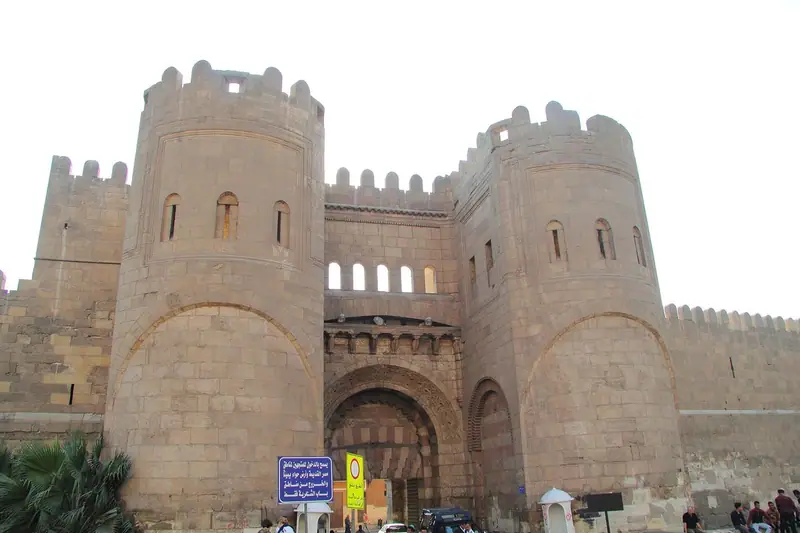
The walk begins at the northern edge of the Fatimid city. Bab al-Futuh, the Gate of Conquests, was built in 1087 of finely dressed stone, with rounded towers and a decorated entrance passage, as part of the new walls of Badr al-Jamali. Just inside it stands the Mosque of al-Hakim, begun under the caliph al-Aziz and completed in the early eleventh century by his son, the caliph al-Hakim. It is one of the largest Fatimid mosques, with a wide courtyard and two unusual minarets, later encased in great square bastions. The mosque has been ruined, rebuilt and restored more than once, and it remains a monumental introduction to the city the Fatimids made. From the gate, walk south along al-Muizz Street, the old ceremonial way, towards the Qalawun complex.
Photo: Djehouty · CC BY-SA 4.0 · Wikimedia Commons
What to see at Islamic Cairo: 6 stops, in visit order
- 01
 The Mosque of al-Hakim and Bab al-FutuhThe northern wallFree preview
- 02
 Al-Muizz Street and the Qalawun ComplexThe street of the caliphsIn the guide
- 03
 Khan el-Khalili and the Wikala of al-GhuriThe market and the caravanseraiIn the guide
- 04
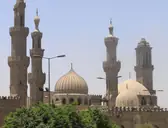 The Mosque of al-AzharThe mosque of the FatimidsIn the guide
- 05
 Bab ZuweilaThe southern gateIn the guide
- 06
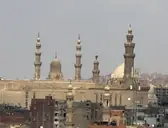 The Mosques of Sultan Hassan and al-Rifa‘iTwo monuments, six centuries apartIn the guide
Site map of Islamic Cairo
History of Islamic Cairo
In 969 the Fatimids, a Shi‘a dynasty from North Africa, founded a new walled capital, al-Qahira, ‘the Victorious’, north of the older Arab settlement of Fustat. They laid out a ceremonial street, built the Mosque of al-Azhar, and in the late eleventh century, under the commander Badr al-Jamali, replaced the earlier brick walls with the stone gates that still stand. After Saladin brought the city over to Sunni rule in the late twelfth century, and especially under the Mamluk sultans of the thirteenth to early sixteenth centuries, Cairo became the greatest city in the Islamic world, crowded with mosques, madrasas, mausoleums and wikalas, the enclosed warehouses of long-distance trade. The Ottomans and the later Egyptian dynasties added to that fabric, of which the nineteenth-century mosque of al-Rifa‘i is the grand final chord. The Citadel, Saladin’s fortress on the hill to the south, is covered in a separate guide.
Islamic Cairo guide: questions
How many stops does the Islamic Cairo guide have?
6 stops, in visit order: 1. The Mosque of al-Hakim and Bab al-Futuh; 2. Al-Muizz Street and the Qalawun Complex; 3. Khan el-Khalili and the Wikala of al-Ghuri; 4. The Mosque of al-Azhar; 5. Bab Zuweila; 6. The Mosques of Sultan Hassan and al-Rifa‘i.
Can I do a self-guided tour of Islamic Cairo with this guide?
Yes. The guide is made for a self-guided tour: 6 stops in visit order, each with a photo, a story and a voice, so you can explore Islamic Cairo at your own pace, without joining a group. Download it before you go and it works offline.
How long is each guide?
The 6 stops add up to about 5 minutes of listening in total. You play each stop when you’re ready, so you can go at your own pace.
Does the guide work offline?
Yes, once it’s downloaded. The guide is a single self-contained web page (about 5.6 MB) with the photos, text and audio built in. Download it to your phone before you go (Wi-Fi is best); after that it opens in any modern browser on iPhone or Android, with no app, account or mobile signal needed.
Does it use GPS or need my location?
No. The guide doesn’t use GPS and doesn’t know where you are: you play each stop when you reach it. It works on iPhone and Android in any modern browser, and it’s in English.
What’s included?
One self-contained HTML guide: 6 stops in visit order, each with a photo, text and a voice, plus the story of who built the site.
Who built Islamic Cairo?
In 969 the Fatimids, a Shi‘a dynasty from North Africa, founded a new walled capital, al-Qahira, ‘the Victorious’, north of the older Arab settlement of Fustat. They laid out a ceremonial street, built the Mosque of al-Azhar, and in the late eleventh century, under the commander Badr al-Jamali, replaced the earlier brick walls with the stone gates that still stand.
Where is Islamic Cairo?
Islamic Cairo is the historic city that grew north of the first Arab capital, a dense quarter of mosques, gates, markets and colleges, most of it Fatimid and Mamluk in origin.
Is there a free audio guide to Islamic Cairo?
The first stop, The Mosque of al-Hakim and Bab al-Futuh, is free to read and hear on this page, so you can try the Islamic Cairo audio tour before you buy. The full guide, with all 6 stops, is a one-off purchase: download it once and it’s yours to keep, working offline.
Is the Islamic Cairo guide worth it?
If you’d like to know what you’re looking at, yes. For $10 you get 6 stops in visit order, each with a photo, a short history and a voice you play when you’re ready, plus a site map of the stops, and about 5 minutes of listening in all. It’s short on purpose, so you spend your time looking, not listening. It’s yours to keep, works offline and needs no app. The first stop is free on this page, so you can try it before you buy. If you’d like hours of detail, a guided tour will go deeper.
Audio guide or guided tour?
It depends how you like to visit. This guide lets you explore Islamic Cairo at your own pace, at any time, for a one-off price. A guided tour gives you a live expert you can ask questions, but at fixed times and usually for a higher price. Many people use both: a tour for the big picture, and the guide to read beforehand or to revisit the stops in their own time.
Is this the official Islamic Cairo guide?
No. It’s an independent guide by The Historian Guide, not affiliated with or endorsed by the operator of Islamic Cairo. For tickets and opening hours, check the official site operator before you go.
Does the guide include entry tickets or opening hours?
No. The guide is a digital companion only. Admission to Islamic Cairo is separate, so check the official site operator for current tickets and opening hours before you go.
- Stop 1 · The Mosque of al-Hakim and Bab al-Futuh: Djehouty · CC BY-SA 4.0 · Wikimedia Commons · resized
- Stop 2 · Al-Muizz Street and the Qalawun Complex: Marsupium · CC BY 4.0 · Wikimedia Commons · resized
- Stop 3 · Khan el-Khalili and the Wikala of al-Ghuri: Casual Builder · CC BY-SA 4.0 · Wikimedia Commons · resized
- Stop 4 · The Mosque of al-Azhar: Daniel Mayer · CC BY-SA 4.0 · Wikimedia Commons · resized
- Stop 5 · Bab Zuweila: Rahmnaj · CC BY-SA 4.0 · Wikimedia Commons · resized
- Stop 6 · The Mosques of Sultan Hassan and al-Rifa‘i (also the cover): ولاء · Public domain · Wikimedia Commons · resized


All photographs from Wikimedia Commons under the licences shown.
More guides in Egypt
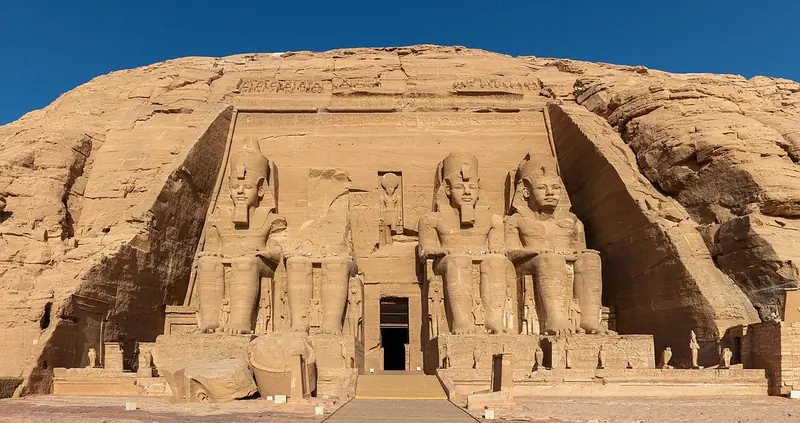 Ancient Egyptian8 stops · 13th century BCE
Abu Simbel audio guide
Ramesses II’s colossal temple façade, the Temple of Nefertari, and how both were rescued from the waters of Lake Nasser.
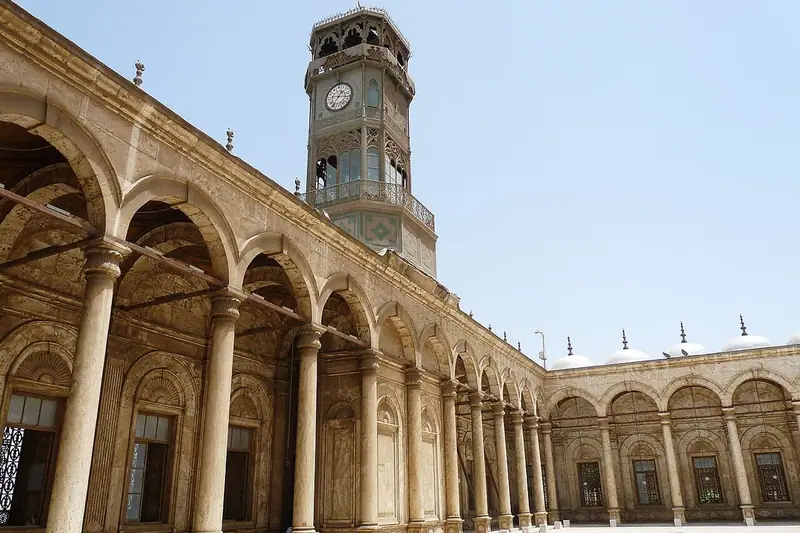 Ayyubid7 stops · from 1176 CE
Cairo Citadel audio guide
Saladin’s walls on the Muqattam Hills and the domes of Muhammad Ali’s mosque, high above the minarets of Islamic Cairo.
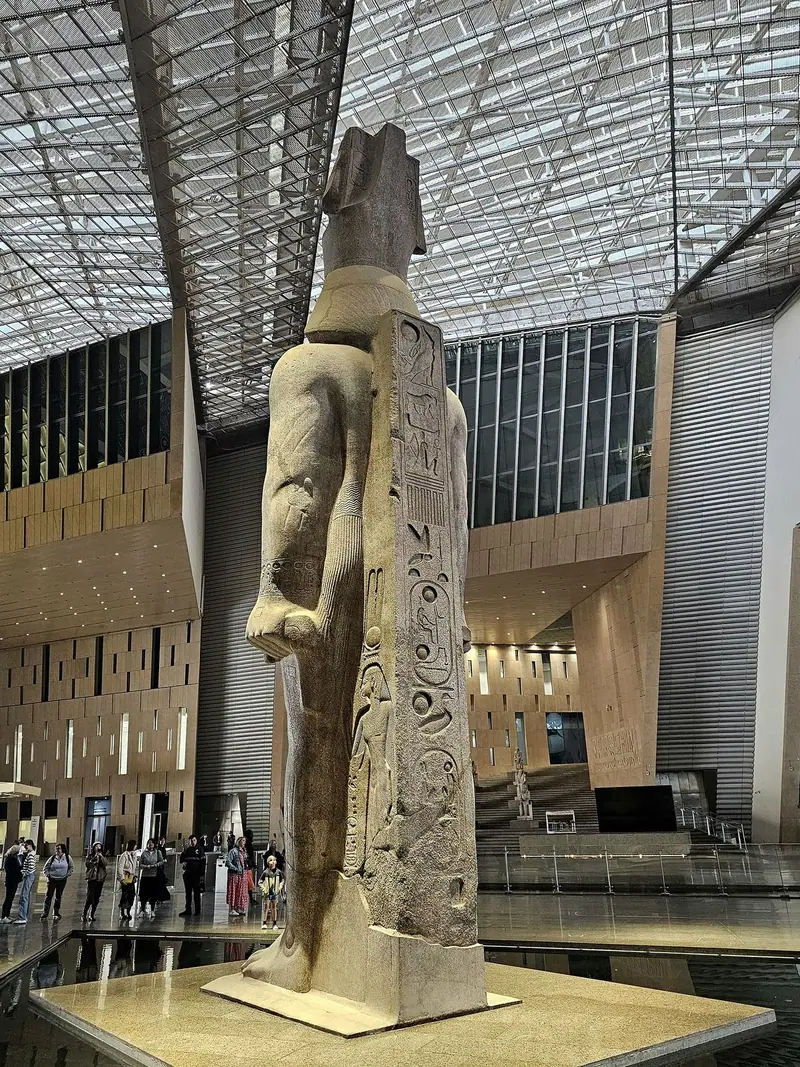 Ancient Egypt7 stops · c. 3100 BCE–400 CE
The Grand Egyptian Museum audio guide
Under the hanging obelisk, past the colossus of Ramesses II and up the Grand Staircase to the pyramids window, then to the whole treasure of Tutankhamun and Khufu’s great cedar boat.
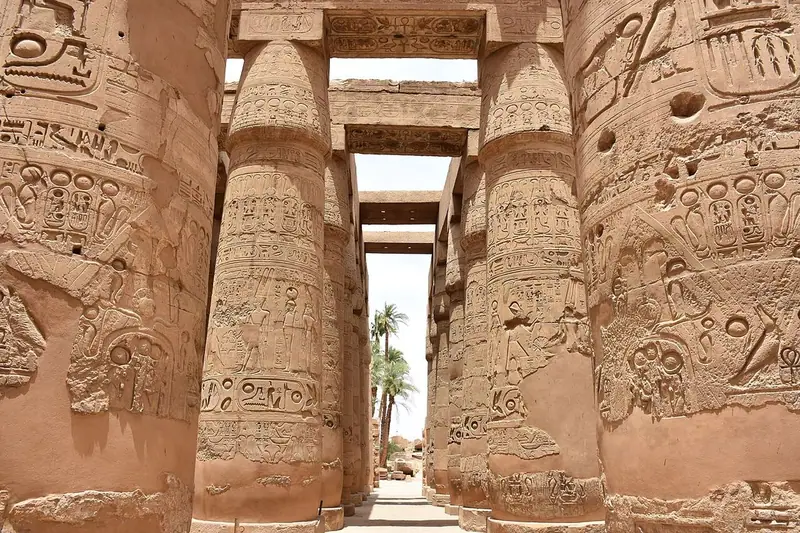 Ancient Egyptian7 stops · Middle Kingdom to Ptolemaic period
Karnak Temple audio guide
Along the Avenue of Rams into the Great Hypostyle Hall, a forest of giant columns built for Amun-Re.
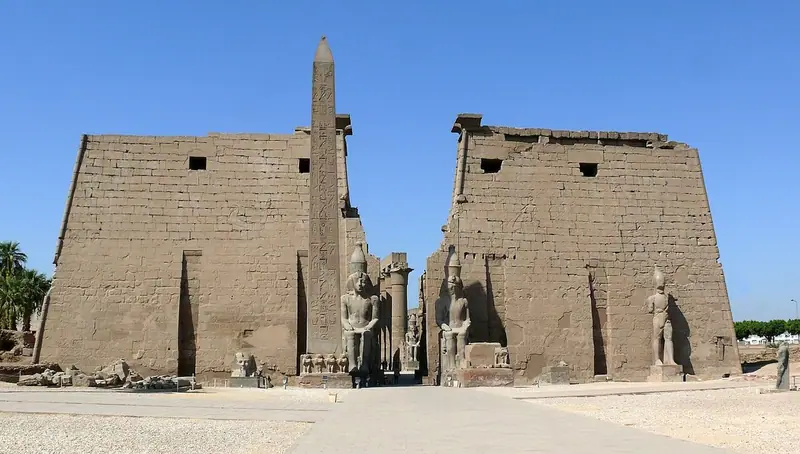 Ancient Egyptian7 stops · from c. 1390 BCE
Luxor Temple audio guide
Past Ramesses II’s pylon to Amenhotep III’s colonnade, with a Roman chapel and a shrine of Alexander within.
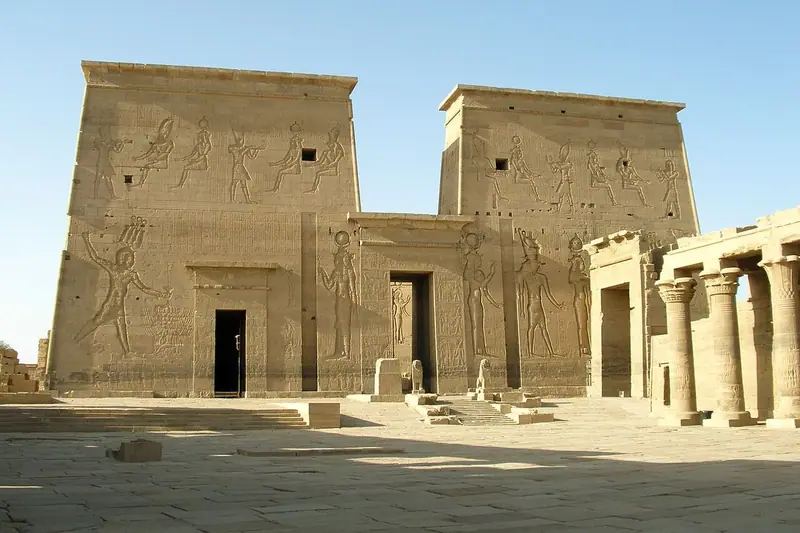 Ancient Egyptian8 stops · 3rd century BCE onwards
Philae Temple audio guide
A short boat ride to the island temple of Isis, with the Kiosk of Trajan standing at the water’s edge.
Every guide, in every country
Islamic Cairo and every other guide we publish, including future ones. One payment, no subscription.