Before you start
The Arc de Triomphe stands at the top of the Champs-Élysées, in the middle of a great star of twelve avenues. Commissioned by Napoleon to honour his armies, it is carved with victories and the names of generals, and beneath it lies the Tomb of the Unknown Soldier, with its eternal flame. This guide crosses beneath the traffic to the arch, explores its sculptures and inscriptions, and climbs to the rooftop for one of the finest views in Paris. Allow about ninety minutes.
Use it as a self-guided tour of the Arc de Triomphe: 8 stops in visit order, each played when you’re ready, at your own pace.
 Free preview · Stop 1
The Champs-Élysées
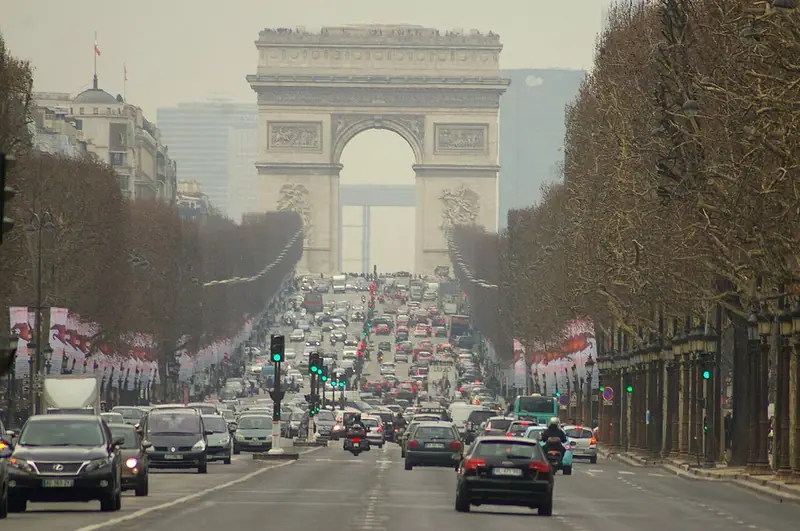
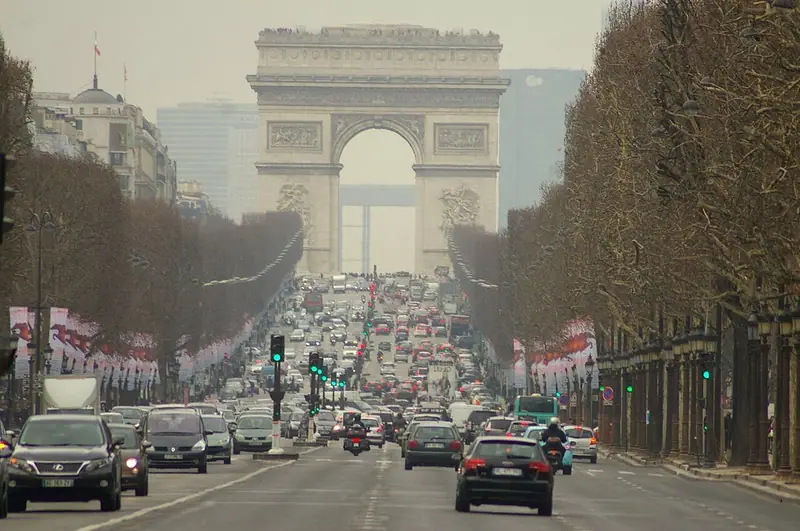
Begin at the top of the Champs-Élysées, on the pavement looking up towards the arch. Do not try to cross the roundabout, which carries some of the heaviest traffic in Paris; instead, look for the stairs to the pedestrian underpass, which leads you safely to the arch. Before you go down, turn and look back along the avenue. The arch stands on a great straight line, the historic axis, which runs from the Louvre, through the Tuileries Gardens and the Place de la Concorde, up the Champs-Élysées, and on, beyond the arch, to the modern Grande Arche at La Défense. The arch is almost fifty metres high and forty-five metres wide, and it was inspired by the Arch of Titus in Rome. Now take the underpass to the arch.
Photo: Bert Seghers · CC0 · Wikimedia Commons
What to see at the Arc de Triomphe: 8 stops, in visit order
- 01
 The Champs-ÉlyséesThe historic axisFree preview
- 02
 La MarseillaiseRude’s call to armsIn the guide
- 03
 Napoleon CrownedThe other great groupsIn the guide
- 04
 Battles in StoneFriezes and shieldsIn the guide
- 05
 The Names of the GeneralsRemembered on the wallsIn the guide
- 06
 The Tomb of the Unknown SoldierThe eternal flameIn the guide
- 07
 The Museum in the AtticBuilding the archIn the guide
- 08
 The Rooftop TerraceThe star of ParisIn the guide
History of the Arc de Triomphe
Napoleon commissioned the arch in 1806, after his victory at Austerlitz, and the architect Jean-François Chalgrin designed it on the model of the triumphal arches of ancient Rome. Work stopped after Napoleon’s fall, and the arch was completed only in 1836, under King Louis-Philippe. In 1921 the Unknown Soldier of the First World War was buried beneath it, and in 1923 the flame was lit.
Arc de Triomphe guide: questions
How many stops does the Arc de Triomphe guide have?
8 stops, in visit order: 1. The Champs-Élysées; 2. La Marseillaise; 3. Napoleon Crowned; 4. Battles in Stone; 5. The Names of the Generals; 6. The Tomb of the Unknown Soldier; 7. The Museum in the Attic; 8. The Rooftop Terrace.
Can I do a self-guided tour of the Arc de Triomphe with this guide?
Yes. The guide is made for a self-guided tour: 8 stops in visit order, each with a photo, a story and a voice, so you can explore the Arc de Triomphe at your own pace, without joining a group. Download it before you go and it works offline.
How long is each guide?
The 8 stops add up to about 5 minutes of listening in total. You play each stop when you’re ready, so you can go at your own pace.
Does the guide work offline?
Yes, once it’s downloaded. The guide is a single self-contained web page (about 6.7 MB) with the photos, text and audio built in. Download it to your phone before you go (Wi-Fi is best); after that it opens in any modern browser on iPhone or Android, with no app, account or mobile signal needed.
Does it use GPS or need my location?
No. The guide doesn’t use GPS and doesn’t know where you are: you play each stop when you reach it. It works on iPhone and Android in any modern browser, and it’s in English.
What’s included?
One self-contained HTML guide: 8 stops in visit order, each with a photo, text and a voice, plus the story of who built the site.
Who built the Arc de Triomphe?
Napoleon commissioned the arch in 1806, after his victory at Austerlitz, and the architect Jean-François Chalgrin designed it on the model of the triumphal arches of ancient Rome. Work stopped after Napoleon’s fall, and the arch was completed only in 1836, under King Louis-Philippe.
Is there a free audio guide to the Arc de Triomphe?
The first stop, The Champs-Élysées, is free to read and hear on this page, so you can try the Arc de Triomphe audio tour before you buy. The full guide, with all 8 stops, is a one-off purchase: download it once and it’s yours to keep, working offline.
Is the Arc de Triomphe guide worth it?
If you’d like to know what you’re looking at, yes. For $10 you get 8 stops in visit order, each with a photo, a short history and a voice you play when you’re ready, about 5 minutes of listening in all. It’s short on purpose, so you spend your time looking, not listening. It’s yours to keep, works offline and needs no app. The first stop is free on this page, so you can try it before you buy. If you’d like hours of detail, a guided tour will go deeper.
Audio guide or guided tour?
It depends how you like to visit. This guide lets you explore the Arc de Triomphe at your own pace, at any time, for a one-off price. A guided tour gives you a live expert you can ask questions, but at fixed times and usually for a higher price. Many people use both: a tour for the big picture, and the guide to read beforehand or to revisit the stops in their own time.
Is this the official Arc de Triomphe guide?
No. It’s an independent guide by The Historian Guide, not affiliated with or endorsed by the operator of the Arc de Triomphe. For tickets and opening hours, check the official site operator before you go.
Does the guide include entry tickets or opening hours?
No. The guide is a digital companion only. Admission to the Arc de Triomphe is separate, so check the official site operator for current tickets and opening hours before you go.
- Stop 1 · The Champs-Élysées (also the cover): Bert Seghers · CC0 · Wikimedia Commons · resized
- Stop 2 · La Marseillaise: Bradley Weber · CC BY 2.0 · Wikimedia Commons · resized
- Stop 3 · Napoleon Crowned: Norio NAKAYAMA from saitama, japan · CC BY-SA 2.0 · Wikimedia Commons · resized
- Stop 4 · Battles in Stone: Jebulon · CC0 · Wikimedia Commons · resized
- Stop 5 · The Names of the Generals: Photograph by Mike Peel (www.mikepeel.net). · CC BY-SA 4.0 · Wikimedia Commons · resized
- Stop 6 · The Tomb of the Unknown Soldier: Jebulon · CC0 · Wikimedia Commons · resized
- Stop 7 · The Museum in the Attic: Eric Chan from Hollywood, United States · CC BY 2.0 · Wikimedia Commons · resized
- Stop 8 · The Rooftop Terrace: Jorge Láscar from Melbourne, Australia · CC BY 2.0 · Wikimedia Commons · resized


All photographs from Wikimedia Commons under the licences shown.
More guides in France
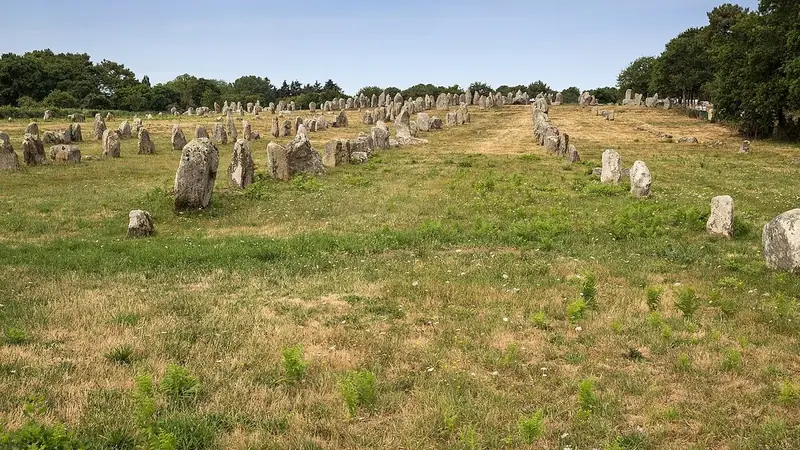 Neolithic10 stops · c. 5000 – 2300 BCE (megalith building)
Carnac Megaliths audio guide
Thousands of standing stones in rows, giant mounds and decorated tombs: the alignments of Carnac, the broken menhir of Locmariaquer and the carved cairn of Gavrinis.
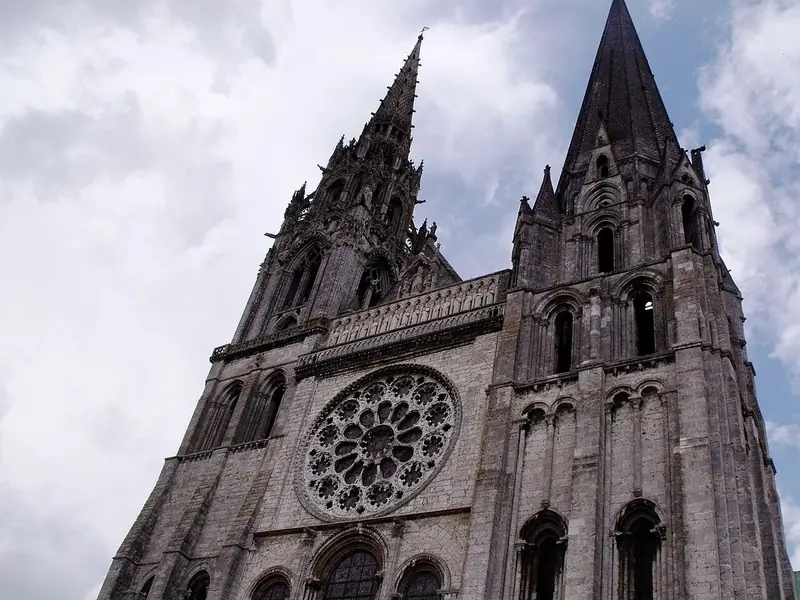 Gothic8 stops · 12th–13th century CE
Chartres Cathedral audio guide
Step through the Royal Portal into a Gothic cathedral rebuilt after the fire of 1194, with its labyrinth and the deep Chartres blue of its glass.
 Renaissance8 stops · from 1519 CE
Château de Chambord audio guide
Climb the double-helix staircase of François I’s great hunting château to roof terraces crowded with chimneys and turrets, above a vast walled forest park.
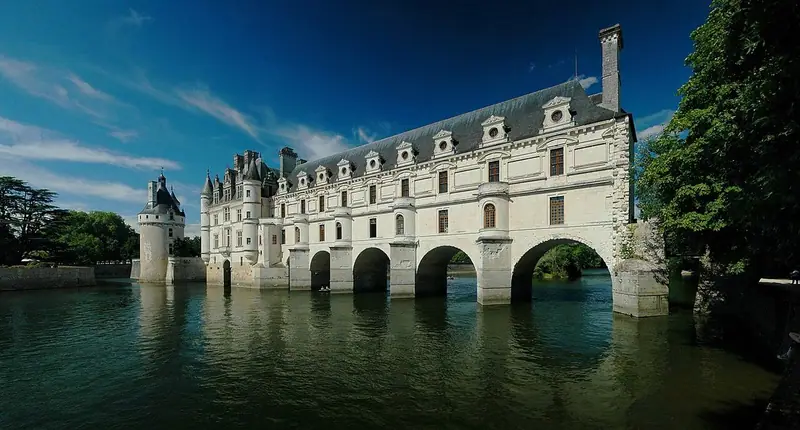 Renaissance8 stops · 1513–1521 CE
Château de Chenonceau audio guide
Cross the River Cher on the long gallery of the château built under Katherine Briçonnet’s eye and later home to Diane de Poitiers.
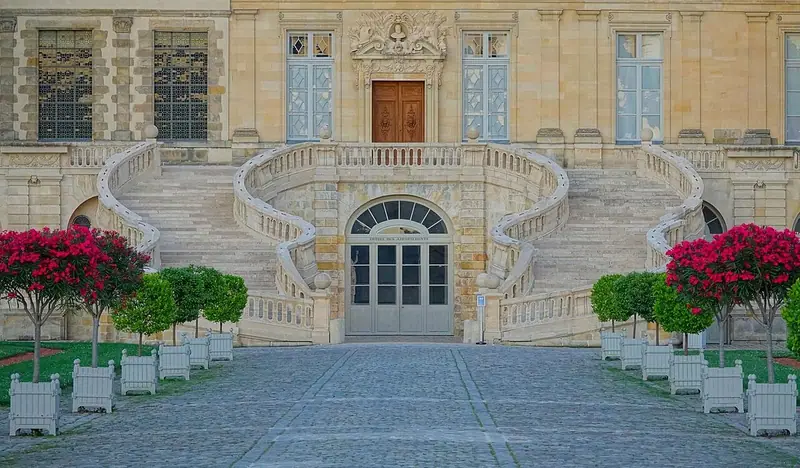 Renaissance8 stops · from 1528 CE
Château de Fontainebleau audio guide
From the Courtyard of Farewells through François I’s Renaissance gallery to the throne room and Napoleon’s apartments.
 Medieval7 stops · 12th–13th century CE
Cité de Carcassonne audio guide
Enter by the Porte Narbonnaise and walk the lices and ramparts of a double-walled medieval town above the River Aude.
Every guide, in every country
Arc de Triomphe and every other guide we publish, including future ones. One payment, no subscription.