Before you start
The Château de Chambord stands in the Loire Valley, about fifteen kilometres east of Blois, in the middle of a vast walled forest park. It belongs to the French state and is run by the Domaine national de Chambord, and it is part of the UNESCO World Heritage Site of the Loire Valley between Sully-sur-Loire and Chalonnes. Car parks are a short walk from the château, and there are shuttle buses from Blois at some times of year. The château is huge, so be prepared for many stairs and long distances. This guide starts on the north side of the château, goes inside to the famous staircase, visits the royal apartments and the vaulted halls, climbs to the roof terraces and finishes in the formal gardens. Allow time to walk around the outside before you go in, as the views of the château are part of the experience.
Use it as a self-guided tour of Château de Chambord: 8 stops in visit order, each played when you’re ready, at your own pace.
 Free preview · Stop 1
The North Front
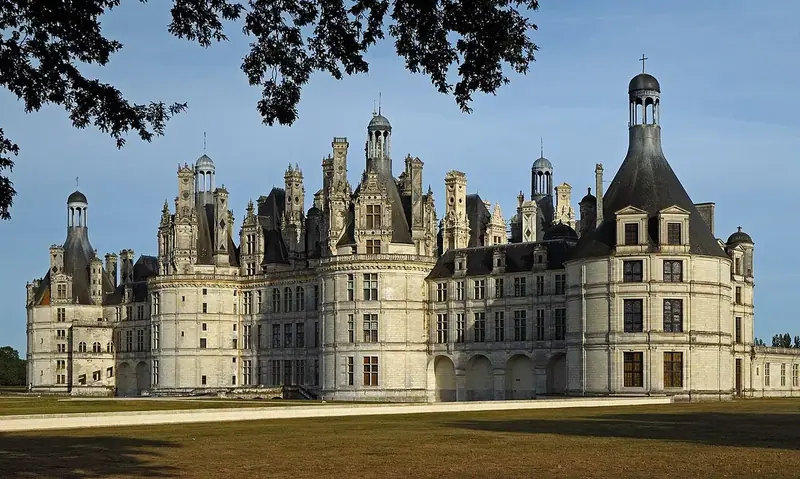
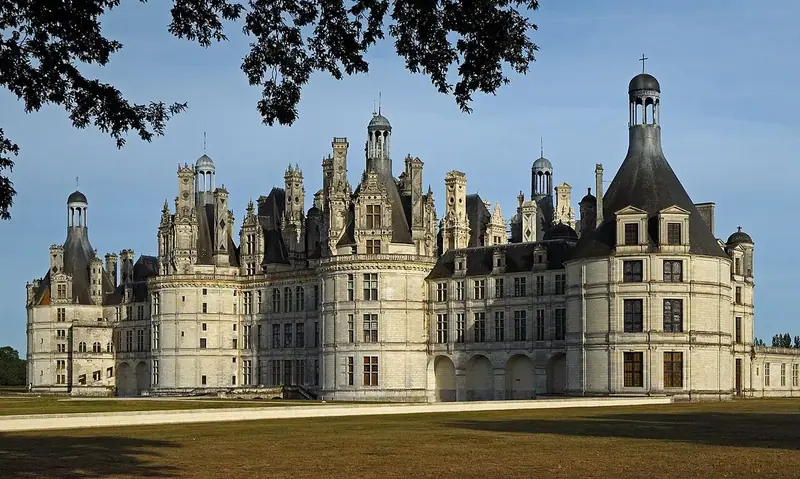
Begin on the lawn in front of the north side, which faces the River Cosson. This is the classic view of Chambord. Look at the shape of the château. At its heart is the square keep, with a round tower at each corner, like a medieval castle. Around it, a lower range of buildings forms an enclosure with more great towers at its corners. The design is almost perfectly symmetrical, an idea that came from the Italian Renaissance. Now look up at the roof. It is crowded with chimneys, turrets, dormer windows and small domes, so that it looks like the skyline of a town, and at the centre rises the lantern tower above the great staircase. The château has more than four hundred rooms, and the park around it, enclosed by a wall about thirty-two kilometres long, is one of the largest enclosed parks in Europe.
Photo: Ввласенко · CC BY-SA 3.0 · Wikimedia Commons
What to see at Château de Chambord: 8 stops, in visit order
- 01
 The North FrontFirst view of the châteauFree preview
- 02
 The KeepA cross-shaped planIn the guide
- 03
 The Double-Helix StaircaseTwo stairs in oneIn the guide
- 04
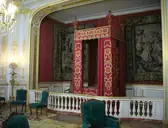 The Royal ApartmentsThe rooms of the kingsIn the guide
- 05
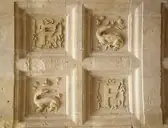 The Vaulted HallsSalamanders on the ceilingIn the guide
- 06
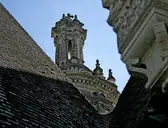 The Roof TerracesA city in the skyIn the guide
- 07
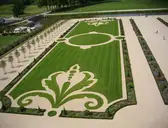 The Formal GardensRestored in 2017In the guide
- 08
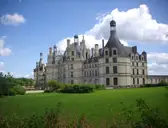 The Park and ForestThe royal hunting groundIn the guide
Site map of Château de Chambord
History of Château de Chambord
Chambord was built by the kingdom of France in the age of the Renaissance, under the Valois kings, who ruled France from 1328 until 1589. In the late fifteenth and early sixteenth centuries French kings fought wars in Italy and came home inspired by Italian art and architecture. King François I, who reigned from 1515 to 1547, began Chambord in 1519 as a hunting residence and a statement of royal power. He invited Leonardo da Vinci to France, and many historians believe Leonardo influenced the design, though he died in 1519 and no plan by him survives. The building mixes a French medieval castle plan, with a keep and corner towers, with Italian ideas of symmetry. Work continued under later kings, and Louis XIV completed the outer buildings in the seventeenth century.
The full history continues in the guide.
Château de Chambord guide: questions
How many stops does the Château de Chambord guide have?
8 stops, in visit order: 1. The North Front; 2. The Keep; 3. The Double-Helix Staircase; 4. The Royal Apartments; 5. The Vaulted Halls; 6. The Roof Terraces; 7. The Formal Gardens; 8. The Park and Forest.
Can I do a self-guided tour of Château de Chambord with this guide?
Yes. The guide is made for a self-guided tour: 8 stops in visit order, each with a photo, a story and a voice, so you can explore Château de Chambord at your own pace, without joining a group. Download it before you go and it works offline.
How long is each guide?
The 8 stops add up to about 5 minutes of listening in total. You play each stop when you’re ready, so you can go at your own pace.
Does the guide work offline?
Yes, once it’s downloaded. The guide is a single self-contained web page (about 6.9 MB) with the photos, text and audio built in. Download it to your phone before you go (Wi-Fi is best); after that it opens in any modern browser on iPhone or Android, with no app, account or mobile signal needed.
Does it use GPS or need my location?
No. The guide doesn’t use GPS and doesn’t know where you are: you play each stop when you reach it. It works on iPhone and Android in any modern browser, and it’s in English.
What’s included?
One self-contained HTML guide: 8 stops in visit order, each with a photo, text and a voice, plus the story of who built the site.
Who built Château de Chambord?
Chambord was built by the kingdom of France in the age of the Renaissance, under the Valois kings, who ruled France from 1328 until 1589. In the late fifteenth and early sixteenth centuries French kings fought wars in Italy and came home inspired by Italian art and architecture.
Where is Château de Chambord?
The Château de Chambord stands in the Loire Valley, about fifteen kilometres east of Blois, in the middle of a vast walled forest park.
Is there a free audio guide to Château de Chambord?
The first stop, The North Front, is free to read and hear on this page, so you can try the Château de Chambord audio tour before you buy. The full guide, with all 8 stops, is a one-off purchase: download it once and it’s yours to keep, working offline.
Is the Château de Chambord guide worth it?
If you’d like to know what you’re looking at, yes. For $10 you get 8 stops in visit order, each with a photo, a short history and a voice you play when you’re ready, plus a site map of the stops, and about 5 minutes of listening in all. It’s short on purpose, so you spend your time looking, not listening. It’s yours to keep, works offline and needs no app. The first stop is free on this page, so you can try it before you buy. If you’d like hours of detail, a guided tour will go deeper.
Audio guide or guided tour?
It depends how you like to visit. This guide lets you explore Château de Chambord at your own pace, at any time, for a one-off price. A guided tour gives you a live expert you can ask questions, but at fixed times and usually for a higher price. Many people use both: a tour for the big picture, and the guide to read beforehand or to revisit the stops in their own time.
Is this the official Château de Chambord guide?
No. It’s an independent guide by The Historian Guide, not affiliated with or endorsed by the operator of Château de Chambord. For tickets and opening hours, check the official site operator before you go.
Does the guide include entry tickets or opening hours?
No. The guide is a digital companion only. Admission to Château de Chambord is separate, so check the official site operator for current tickets and opening hours before you go.
- Stop 1 · The North Front (also the cover): Ввласенко · CC BY-SA 3.0 · Wikimedia Commons · resized
- Stop 2 · The Keep: Fab5669 · CC BY-SA 4.0 · Wikimedia Commons · resized
- Stop 3 · The Double-Helix Staircase: No machine-readable author provided. Daabomb101 assumed… · CC BY-SA 3.0 · Wikimedia Commons · resized
- Stop 4 · The Royal Apartments: Fab5669 · CC BY-SA 4.0 · Wikimedia Commons · resized
- Stop 5 · The Vaulted Halls: Henneveux Marc · CC BY-SA 3.0 · Wikimedia Commons · resized
- Stop 6 · The Roof Terraces: Hélène Rival · CC BY-SA 3.0 · Wikimedia Commons · resized
- Stop 7 · The Formal Gardens: Fab5669 · CC BY-SA 4.0 · Wikimedia Commons · resized
- Stop 8 · The Park and Forest: Fab5669 · CC BY-SA 4.0 · Wikimedia Commons · resized


All photographs from Wikimedia Commons under the licences shown.
More guides in France
 Napoleonic France8 stops · Napoleonic era
Arc de Triomphe audio guide
Cross beneath the traffic to Napoleon’s arch, read its carved victories and the names of its generals, then climb to the rooftop terrace.
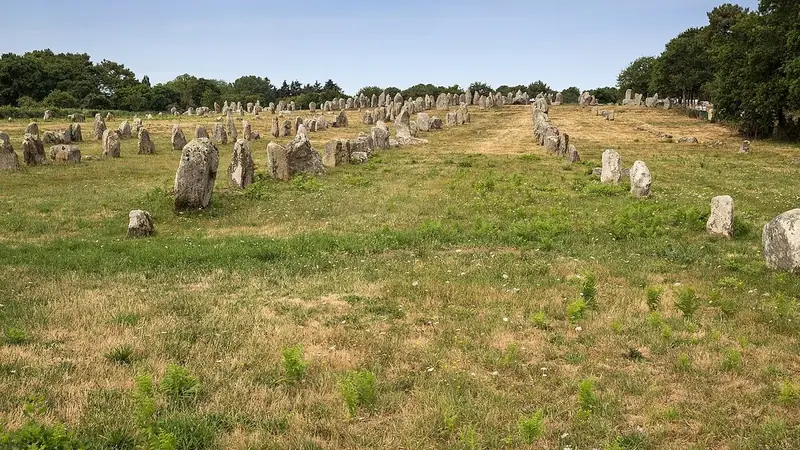 Neolithic10 stops · c. 5000 – 2300 BCE (megalith building)
Carnac Megaliths audio guide
Thousands of standing stones in rows, giant mounds and decorated tombs: the alignments of Carnac, the broken menhir of Locmariaquer and the carved cairn of Gavrinis.
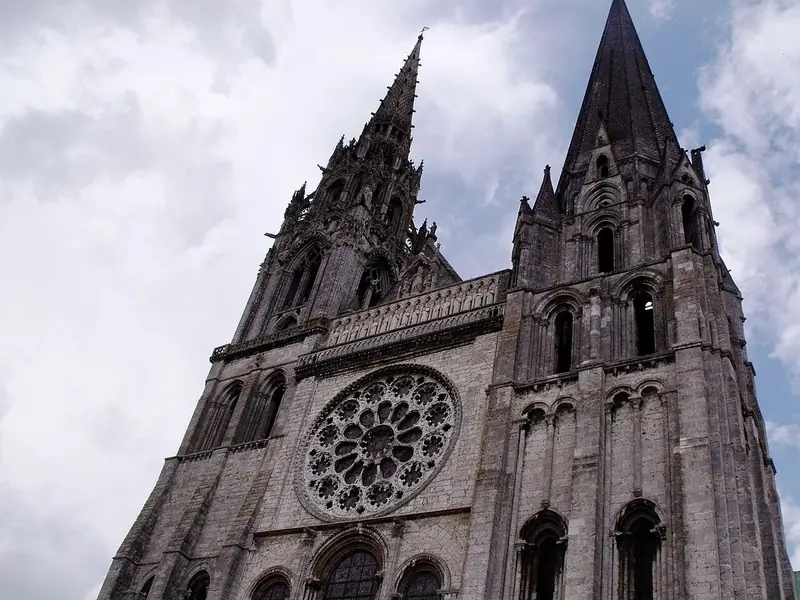 Gothic8 stops · 12th–13th century CE
Chartres Cathedral audio guide
Step through the Royal Portal into a Gothic cathedral rebuilt after the fire of 1194, with its labyrinth and the deep Chartres blue of its glass.
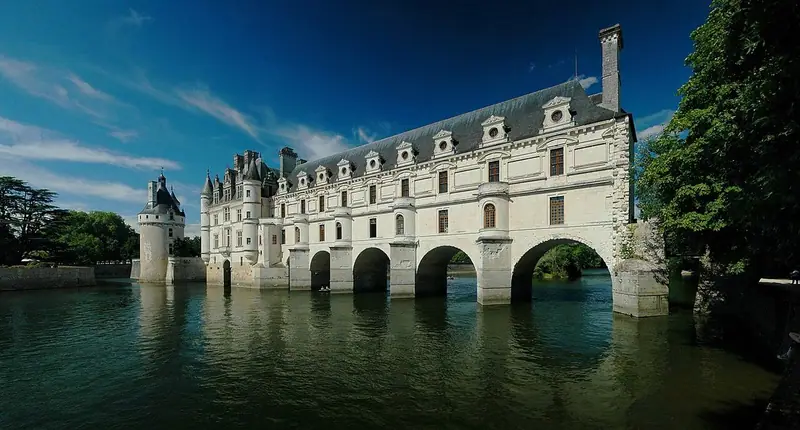 Renaissance8 stops · 1513–1521 CE
Château de Chenonceau audio guide
Cross the River Cher on the long gallery of the château built under Katherine Briçonnet’s eye and later home to Diane de Poitiers.
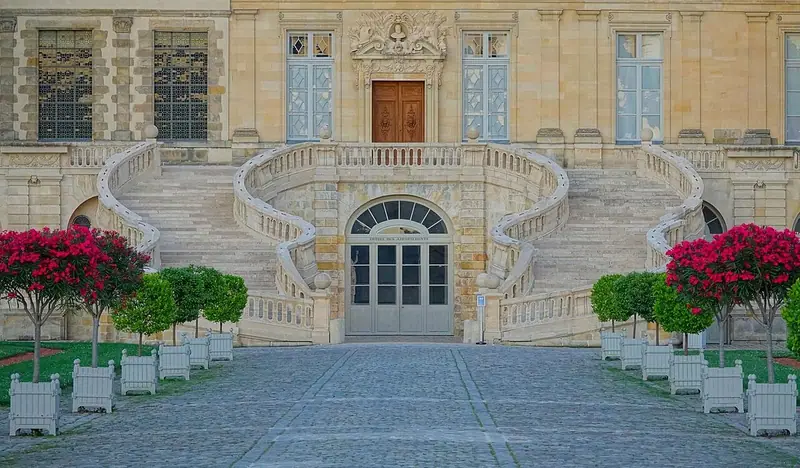 Renaissance8 stops · from 1528 CE
Château de Fontainebleau audio guide
From the Courtyard of Farewells through François I’s Renaissance gallery to the throne room and Napoleon’s apartments.
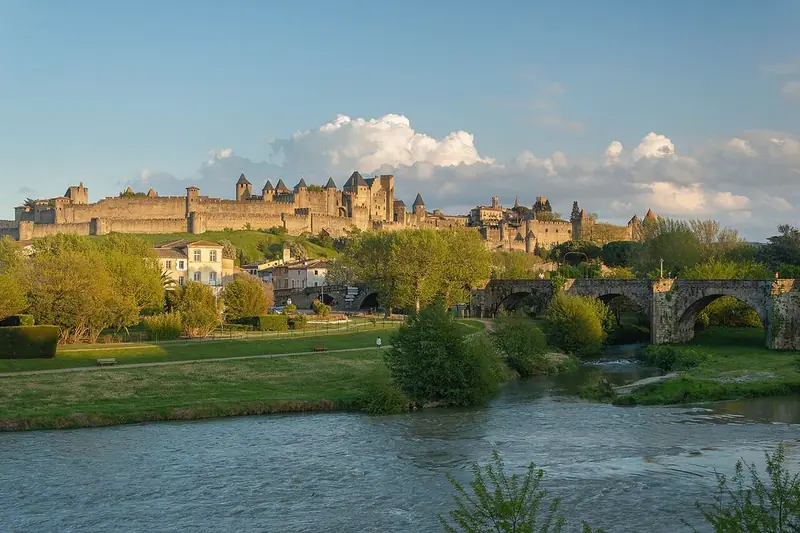 Medieval7 stops · 12th–13th century CE
Cité de Carcassonne audio guide
Enter by the Porte Narbonnaise and walk the lices and ramparts of a double-walled medieval town above the River Aude.
Every guide, in every country
Château de Chambord and every other guide we publish, including future ones. One payment, no subscription.