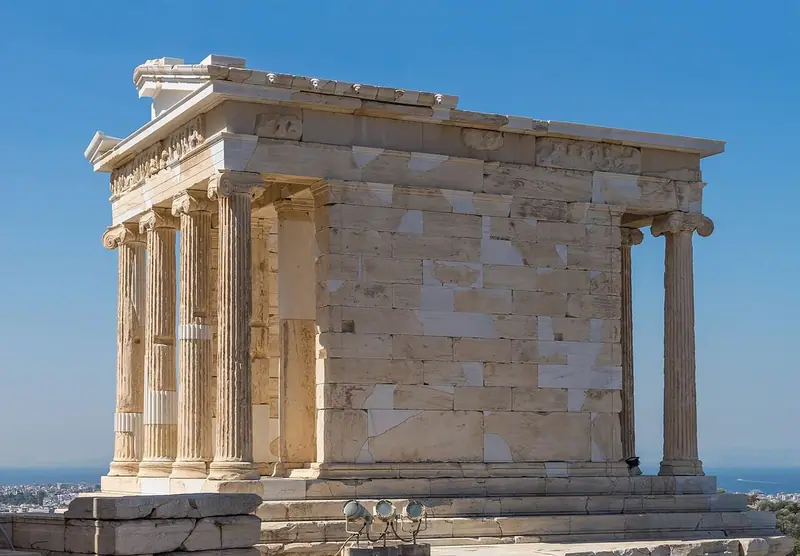
Before you start
The Acropolis rises about 70 metres above the centre of Athens, a flat-topped limestone rock some 300 metres long that has been the city’s citadel and holy place for more than three thousand years. It has been a UNESCO World Heritage Site since 1987 and is cared for by the Hellenic Ministry of Culture through the Ephorate of Antiquities of the City of Athens. This guide follows the natural visiting order from the main western entrance: past the Odeon of Herodes Atticus and the little Temple of Athena Nike, up through the Propylaia, across the summit to the Erechtheion and the Parthenon, then down the south slope to the Theatre of Dionysus, with the Acropolis Museum as an optional final stop.
Use it as a self-guided tour of the Acropolis of Athens: 7 stops in visit order, each played when you’re ready, at your own pace.
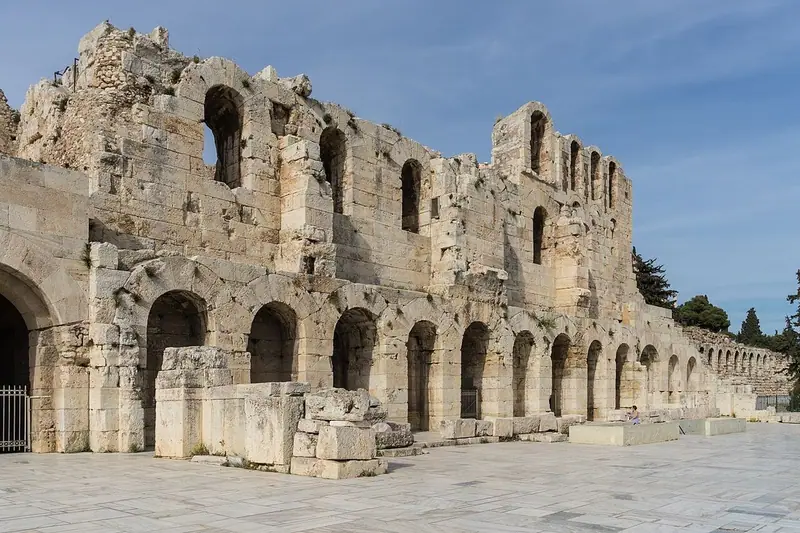 Free preview · Stop 1
Odeon of Herodes Atticus
As you climb the path from the south-west, look down on your left into the Odeon of Herodes Atticus, a steep stone theatre built in 161 CE. Herodes Atticus was an immensely rich Athenian who rose to become a Roman consul, and he paid for this concert hall in memory of his wife, Aspasia Annia Regilla. It originally held around five thousand people and had a cedar-wood roof, which is long gone, though the tall arched wall of the stage building still stands three storeys high. The seating you see today was rebuilt in white marble in the 1950s, and the theatre came back to life: it is the main summer venue of the Athens Festival, where opera, drama and concerts are performed under the stars. Even empty, it gives a sense of Roman Athens at its grandest.
Photo: Jebulon · CC0 · Wikimedia Commons
What to see at the Acropolis of Athens: 7 stops, in visit order
- 01
 Odeon of Herodes AtticusOdeío Iródou AttikoúFree preview
- 02
 Temple of Athena NikeNaós tis Athinás NíkisIn the guide
- 03
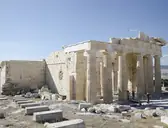 PropylaiaPropýlaiaIn the guide
- 04
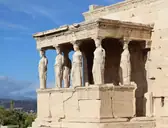 ErechtheionErechtheíoIn the guide
- 05
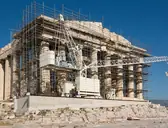 ParthenonParthenónasIn the guide
- 06
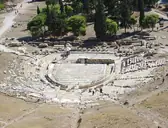 Theatre of DionysusThéatro tou DionýsouIn the guide
- 07
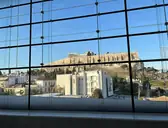 Acropolis MuseumMouseío AkrópolisIn the guide
Site map of the Acropolis of Athens
History of the Acropolis of Athens
The monuments you see were built by the ancient Greeks, the Athenians above all. The rock was already a fortified Mycenaean citadel in the late Bronze Age, part of a civilisation that flourished from about 1600 to 1100 BCE. Greek civilisation then ran through the Archaic period, from about 800 BCE, into the Classical age, when, after the Persians sacked the old temples in 480 BCE, the statesman Pericles launched the great building programme of the 440s and 430s BCE, with the architects Iktinos, Kallikrates and Mnesikles and the sculptor Pheidias. The Hellenistic world that followed lasted until the Roman conquest of Greece in 146 BCE, and Romans such as Herodes Atticus kept adding to the slopes. Later the Parthenon served as a Byzantine church, a Latin cathedral and an Ottoman mosque. And the builders’ descendants are still here: Greek conservators have been restoring the rock, stone by stone, since 1975.
Acropolis of Athens guide: questions
How many stops does the Acropolis of Athens guide have?
7 stops, in visit order: 1. Odeon of Herodes Atticus; 2. Temple of Athena Nike; 3. Propylaia; 4. Erechtheion; 5. Parthenon; 6. Theatre of Dionysus; 7. Acropolis Museum.
Can I do a self-guided tour of the Acropolis of Athens with this guide?
Yes. The guide is made for a self-guided tour: 7 stops in visit order, each with a photo, a story and a voice, so you can explore the Acropolis of Athens at your own pace, without joining a group. Download it before you go and it works offline.
How long is each guide?
The 7 stops add up to about 7 minutes of listening in total. You play each stop when you’re ready, so you can go at your own pace.
Does the guide work offline?
Yes, once it’s downloaded. The guide is a single self-contained web page (about 7.8 MB) with the photos, text and audio built in. Download it to your phone before you go (Wi-Fi is best); after that it opens in any modern browser on iPhone or Android, with no app, account or mobile signal needed.
Does it use GPS or need my location?
No. The guide doesn’t use GPS and doesn’t know where you are: you play each stop when you reach it. It works on iPhone and Android in any modern browser, and it’s in English.
What’s included?
One self-contained HTML guide: 7 stops in visit order, each with a photo, text and a voice, plus the story of who built the site.
Who built the Acropolis of Athens?
The monuments you see were built by the ancient Greeks, the Athenians above all. The rock was already a fortified Mycenaean citadel in the late Bronze Age, part of a civilisation that flourished from about 1600 to 1100 BCE.
Where is the Acropolis of Athens?
The Acropolis rises about 70 metres above the centre of Athens, a flat-topped limestone rock some 300 metres long that has been the city’s citadel and holy place for more than three thousand years.
Is there a free audio guide to the Acropolis of Athens?
The first stop, Odeon of Herodes Atticus, is free to read and hear on this page, so you can try the Acropolis of Athens audio tour before you buy. The full guide, with all 7 stops, is a one-off purchase: download it once and it’s yours to keep, working offline.
Is the Acropolis of Athens guide worth it?
If you’d like to know what you’re looking at, yes. For $10 you get 7 stops in visit order, each with a photo, a short history and a voice you play when you’re ready, plus a site map of the stops, and about 7 minutes of listening in all. It’s short on purpose, so you spend your time looking, not listening. It’s yours to keep, works offline and needs no app. The first stop is free on this page, so you can try it before you buy. If you’d like hours of detail, a guided tour will go deeper.
Audio guide or guided tour?
It depends how you like to visit. This guide lets you explore the Acropolis of Athens at your own pace, at any time, for a one-off price. A guided tour gives you a live expert you can ask questions, but at fixed times and usually for a higher price. Many people use both: a tour for the big picture, and the guide to read beforehand or to revisit the stops in their own time.
Is this the official Acropolis of Athens guide?
No. It’s an independent guide by The Historian Guide, not affiliated with or endorsed by the operator of the Acropolis of Athens. For tickets and opening hours, check the official site operator before you go.
Does the guide include entry tickets or opening hours?
No. The guide is a digital companion only. Admission to the Acropolis of Athens is separate, so check the official site operator for current tickets and opening hours before you go.
- Stop 1 · Odeon of Herodes Atticus: Jebulon · CC0 · Wikimedia Commons · resized
- Stop 2 · Temple of Athena Nike (also the cover): Jebulon · CC0 · Wikimedia Commons · resized
- Stop 3 · Propylaia: Peulle · CC BY-SA 4.0 · Wikimedia Commons · resized
- Stop 4 · Erechtheion: Coolcaesar · CC BY 4.0 · Wikimedia Commons · resized
- Stop 5 · Parthenon: Jebulon · CC0 · Wikimedia Commons · resized
- Stop 6 · Theatre of Dionysus: Berthold Werner · CC BY-SA 3.0 · Wikimedia Commons · resized
- Stop 7 · Acropolis Museum: Pinterpandai.com · CC BY-SA 3.0 · Wikimedia Commons · resized


All photographs from Wikimedia Commons under the licences shown.
More guides in Greece
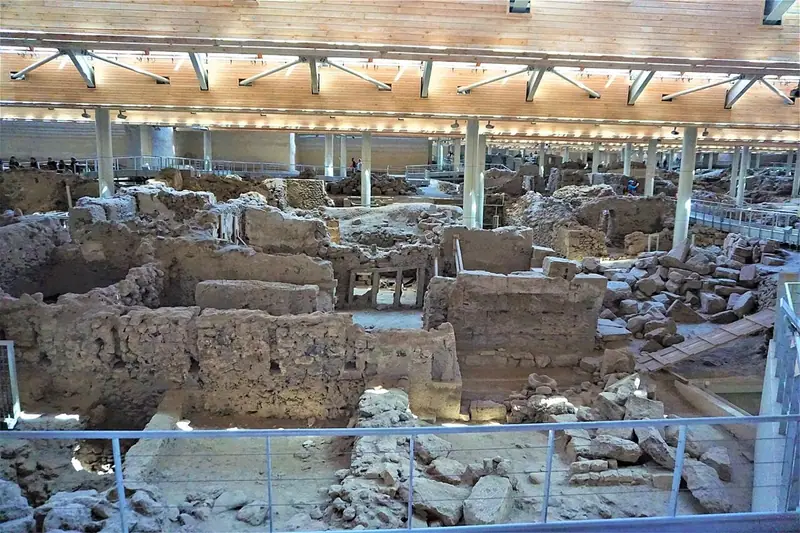 Minoan7 stops · c. 2000–1600 BCE
Akrotiri audio guide
The streets of a Bronze Age town buried by Santorini’s volcano, preserved beneath a great modern roof.
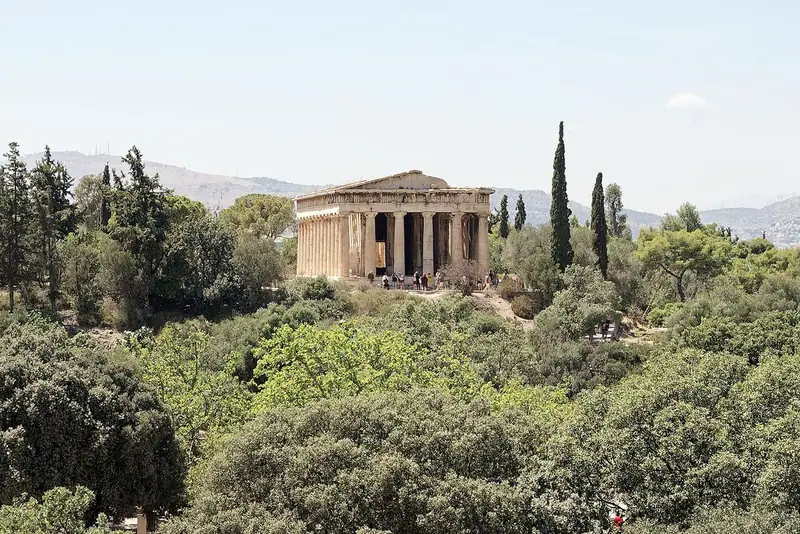 Greek7 stops · 6th century BCE – 2nd century CE
Ancient Agora of Athens audio guide
The market square where Athenians shopped, voted and argued, overlooked by the Temple of Hephaestus.
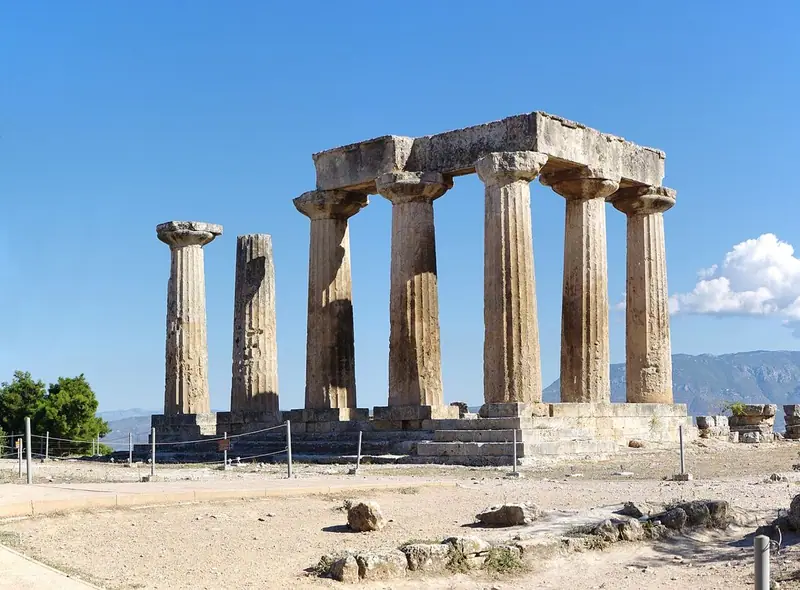 Roman7 stops · 6th century BCE – 4th century CE
Ancient Corinth audio guide
The Temple of Apollo, the Roman forum and the Bema, with the great rock of Acrocorinth above.
 Greek7 stops · c. 800 BCE – 1st century BCE
Delos audio guide
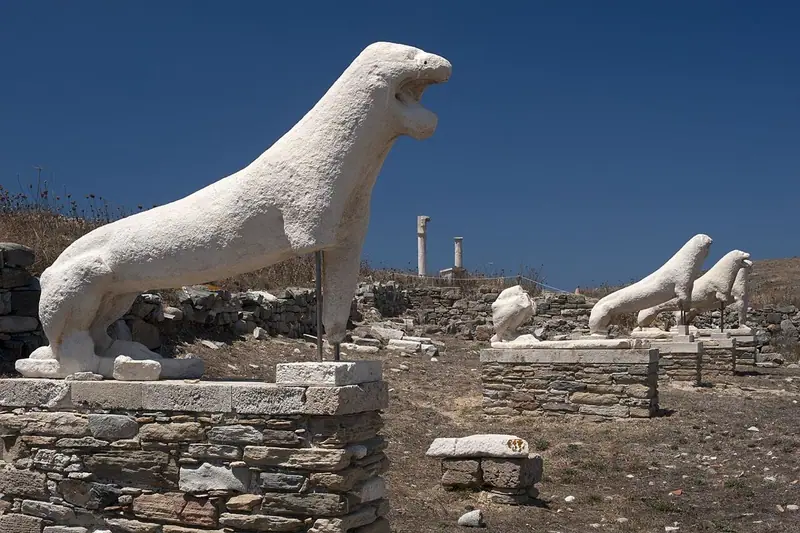
The sacred island of Apollo: the Terrace of the Lions, mosaic-floored houses and the climb up Mount Kynthos.
 Greek8 stops · 8th century BCE – 4th century CE
Delphi audio guide
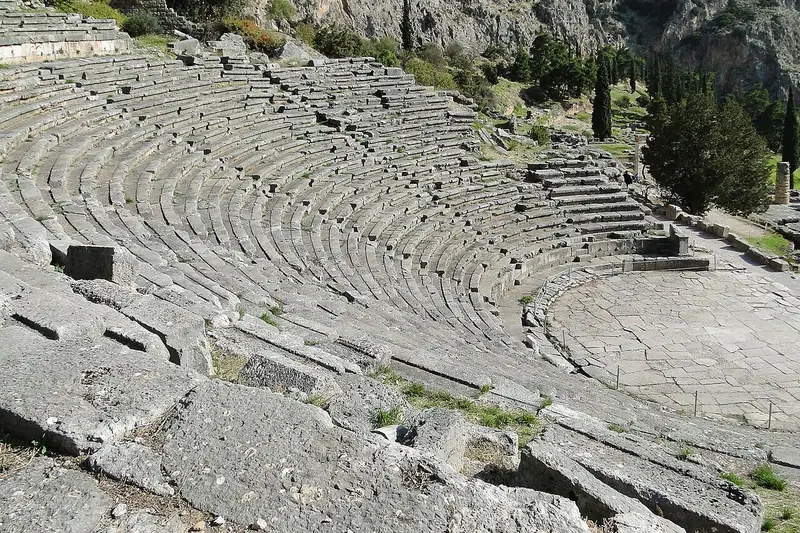
Up the Sacred Way past the treasuries to Apollo’s temple, the theatre and the stadium, high on the slopes of Parnassus.
 Greek7 stops · 4th century BCE
Epidaurus audio guide
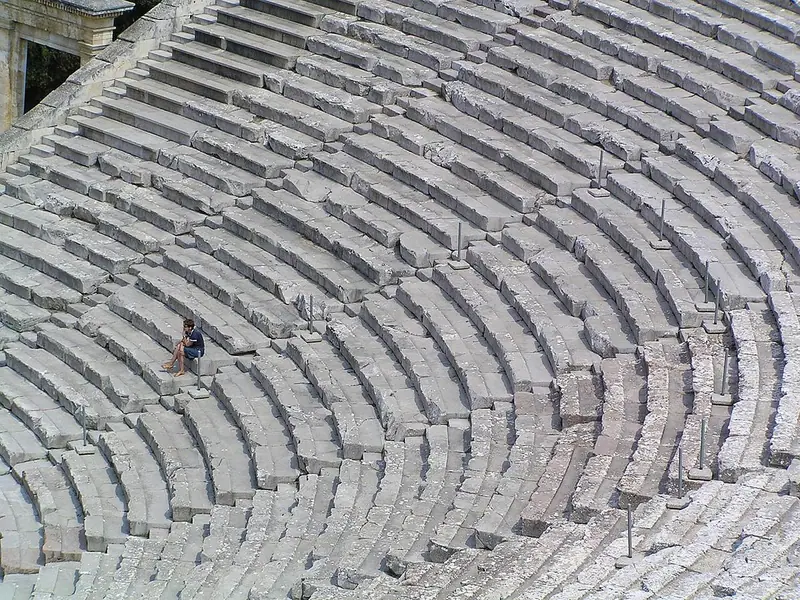
The healing sanctuary of Asklepios, with its celebrated theatre, stadium and the mysterious Tholos.
Every guide, in every country
Acropolis of Athens and every other guide we publish, including future ones. One payment, no subscription.