Before you start
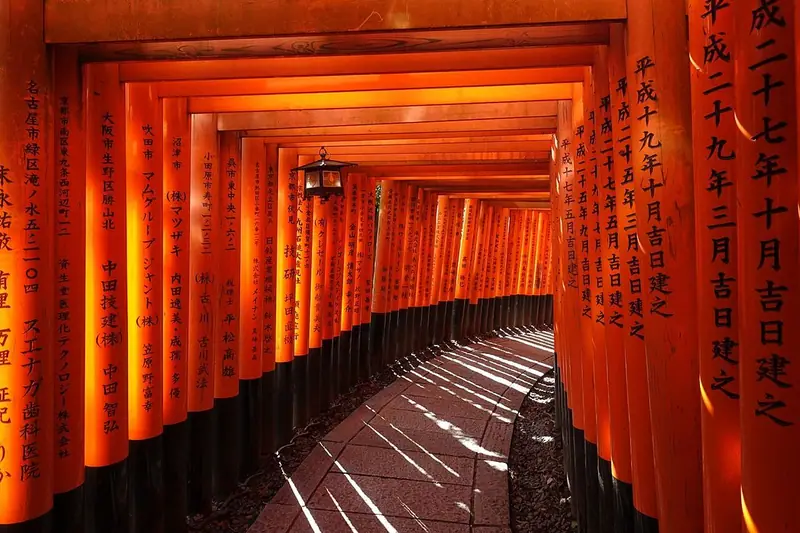
Fushimi Inari Taisha lies in Fushimi ward, in the south-east of Kyoto, directly opposite JR Inari Station on the Nara Line and a short walk from Fushimi-Inari Station on the Keihan line. It is the head shrine of Inari, the Shinto deity of rice, prosperity and business, and the shrine says there are some thirty thousand Inari shrines across Japan. The whole of Mount Inari, a 233-metre wooded hill behind the main buildings, counts as part of the shrine. The lower precinct is flat and paved, but the mountain path climbs steadily on stone steps; the full circuit to the summit and back takes most visitors two to three hours. The route starts at the great Tower Gate and the main sanctuary, follows the famous tunnels of torii gates uphill past ponds and stone altars to the Yotsutsuji crossroads, and ends at the summit.
Use it as a self-guided tour of Fushimi Inari Taisha: 7 stops in visit order, each played when you’re ready, at your own pace.
 Free preview · Stop 1
Romon Gate
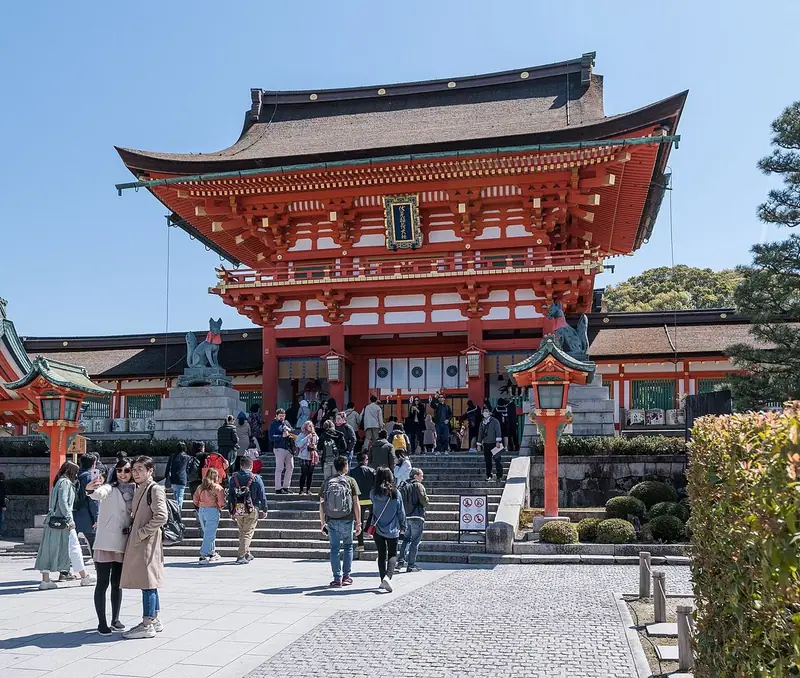
Start at the Romon, the great two-storey Tower Gate at the top of the approach, painted in the bright vermilion that is the colour of Inari shrines. The shrine says it was built in 1589 by Toyotomi Hideyoshi, the warlord who reunified Japan. The story goes that when his mother fell ill, he promised a generous gift if she recovered; she did, and the gate was built with his donation. Historians doubted the tale until repairs uncovered an ink inscription dated to the very year of the pledge. Before you pass through, look at the pair of stone foxes on either side. Foxes are the messengers of Inari, and they appear all over the shrine, usually holding something in their mouths, such as a jewel, a scroll or a key, which is often said to be the key to the rice granary.
Photo: DXR · CC BY-SA 4.0 · Wikimedia Commons
What to see at Fushimi Inari Taisha: 7 stops, in visit order
- 01
 Romon GateHideyoshi’s giftFree preview
- 02
 HondenThe main sanctuaryIn the guide
- 03
 Senbon ToriiThe Thousand GatesIn the guide
- 04
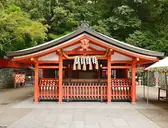 Okusha HohaishoThe inner prayer hallIn the guide
- 05
 Shin-ike PondKumataka shrineIn the guide
- 06
 YotsutsujiThe crossroads with a viewIn the guide
- 07
 IchinomineThe summit of Mount InariIn the guide
Site map of Fushimi Inari Taisha
History of Fushimi Inari Taisha
Fushimi Inari was founded by the Hata clan, one of the most powerful immigrant families in early Japan. The Hata came from the Korean peninsula and settled in the Kyoto basin before the city existed, bringing skills in irrigation, silk production and brewing. According to the shrine, the deity Inari Okami took up residence on Mount Inari in 711, during the Nara period, and the shrine celebrated its 1300th anniversary in 2011. It grew in importance after Kyoto became the imperial capital in 794, the start of the Heian period, and it was among the shrines honoured by the court. The shrine belongs to Shinto, Japan’s native religion, whose roots lie in the worship of nature spirits, or kami, long before written records began, and which is still practised every day here.
The full history continues in the guide.
Fushimi Inari Taisha guide: questions
How many stops does the Fushimi Inari Taisha guide have?
7 stops, in visit order: 1. Romon Gate; 2. Honden; 3. Senbon Torii; 4. Okusha Hohaisho; 5. Shin-ike Pond; 6. Yotsutsuji; 7. Ichinomine.
Can I do a self-guided tour of Fushimi Inari Taisha with this guide?
Yes. The guide is made for a self-guided tour: 7 stops in visit order, each with a photo, a story and a voice, so you can explore Fushimi Inari Taisha at your own pace, without joining a group. Download it before you go and it works offline.
How long is each guide?
The 7 stops add up to about 5 minutes of listening in total. You play each stop when you’re ready, so you can go at your own pace.
Does the guide work offline?
Yes, once it’s downloaded. The guide is a single self-contained web page (about 6.9 MB) with the photos, text and audio built in. Download it to your phone before you go (Wi-Fi is best); after that it opens in any modern browser on iPhone or Android, with no app, account or mobile signal needed.
Does it use GPS or need my location?
No. The guide doesn’t use GPS and doesn’t know where you are: you play each stop when you reach it. It works on iPhone and Android in any modern browser, and it’s in English.
What’s included?
One self-contained HTML guide: 7 stops in visit order, each with a photo, text and a voice, plus the story of who built the site.
Who built Fushimi Inari Taisha?
Fushimi Inari was founded by the Hata clan, one of the most powerful immigrant families in early Japan. The Hata came from the Korean peninsula and settled in the Kyoto basin before the city existed, bringing skills in irrigation, silk production and brewing.
Where is Fushimi Inari Taisha?
Fushimi Inari Taisha lies in Fushimi ward, in the south-east of Kyoto, directly opposite JR Inari Station on the Nara Line and a short walk from Fushimi-Inari Station on the Keihan line.
Is there a free audio guide to Fushimi Inari Taisha?
The first stop, Romon Gate, is free to read and hear on this page, so you can try the Fushimi Inari Taisha audio tour before you buy. The full guide, with all 7 stops, is a one-off purchase: download it once and it’s yours to keep, working offline.
Is the Fushimi Inari Taisha guide worth it?
If you’d like to know what you’re looking at, yes. For $10 you get 7 stops in visit order, each with a photo, a short history and a voice you play when you’re ready, plus a site map of the stops, and about 5 minutes of listening in all. It’s short on purpose, so you spend your time looking, not listening. It’s yours to keep, works offline and needs no app. The first stop is free on this page, so you can try it before you buy. If you’d like hours of detail, a guided tour will go deeper.
Audio guide or guided tour?
It depends how you like to visit. This guide lets you explore Fushimi Inari Taisha at your own pace, at any time, for a one-off price. A guided tour gives you a live expert you can ask questions, but at fixed times and usually for a higher price. Many people use both: a tour for the big picture, and the guide to read beforehand or to revisit the stops in their own time.
Is this the official Fushimi Inari Taisha guide?
No. It’s an independent guide by The Historian Guide, not affiliated with or endorsed by the operator of Fushimi Inari Taisha. For tickets and opening hours, check the official site operator before you go.
Does the guide include entry tickets or opening hours?
No. The guide is a digital companion only. Admission to Fushimi Inari Taisha is separate, so check the official site operator for current tickets and opening hours before you go.
- Stop 1 · Romon Gate: DXR · CC BY-SA 4.0 · Wikimedia Commons · resized
- Stop 2 · Honden: Saigen Jiro · CC0 · Wikimedia Commons · resized
- Stop 3 · Senbon Torii (also the cover): Luka Peternel · CC BY-SA 4.0 · Wikimedia Commons · resized
- Stop 4 · Okusha Hohaisho: Saigen Jiro · CC0 · Wikimedia Commons · resized
- Stop 5 · Shin-ike Pond: そらみみ · CC BY-SA 4.0 · Wikimedia Commons · resized
- Stop 6 · Yotsutsuji: myself · CC BY-SA 3.0 · Wikimedia Commons · resized
- Stop 7 · Ichinomine: Guilhem Vellut from Annecy, France · CC BY 2.0 · Wikimedia Commons · resized


All photographs from Wikimedia Commons under the licences shown.
More guides in Japan
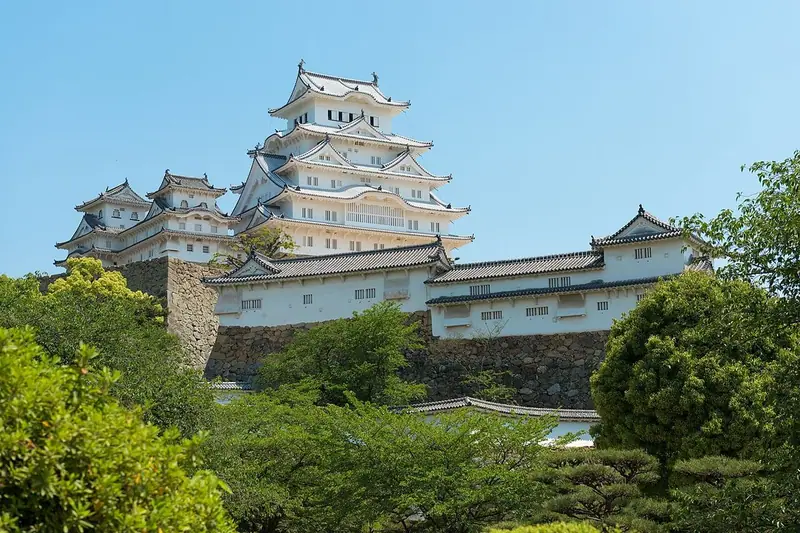 Edo7 stops · keep 1601–1609
Himeji Castle audio guide
Through the gates of the maze and the baileys to the main keep of Himeji, the great castle of the samurai lords.
 Shōwa Japan8 stops · Post-war Shōwa
Hiroshima Peace Memorial Park audio guide
The Peace Memorial Park, from the museum and the cenotaph to the Children’s Peace Monument and the Atomic Bomb Dome.
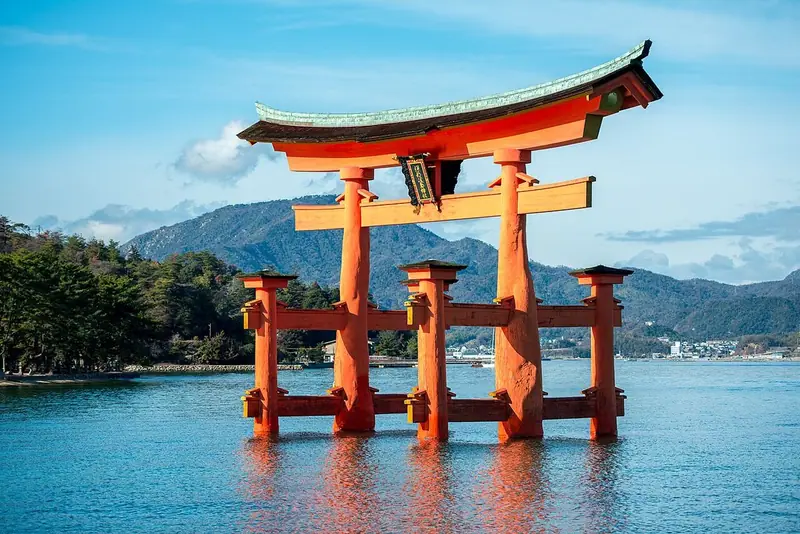 Heian7 stops · plan of 1168
Itsukushima Shrine audio guide
Past the Great Torii to the shrine’s corridors, stages and Noh stage on the shore of Miyajima.
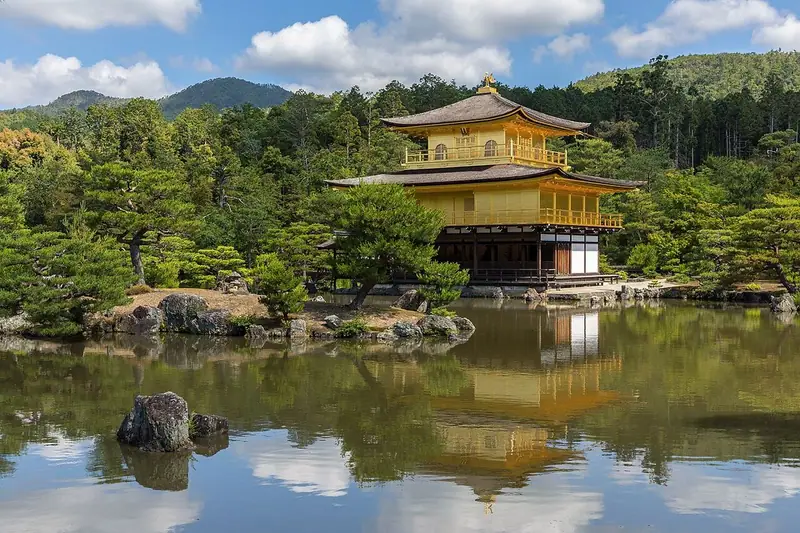 Muromachi7 stops · 1397 (rebuilt 1955)
Kinkaku-ji audio guide
The Golden Pavilion mirrored in its pond, then a garden path past the Ryumon Falls to an old teahouse.
 Japanese Buddhist7 stops · founded 778; main hall 1633
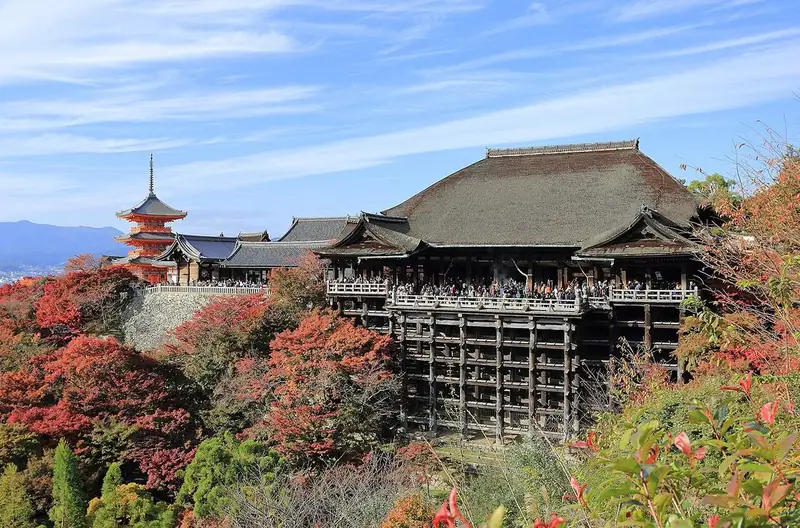
Kiyomizu-dera audio guide
Out onto the great wooden stage of the Main Hall, then down to the Otowa Waterfall below.
 Imperial Japan7 stops · Meiji and Taishō
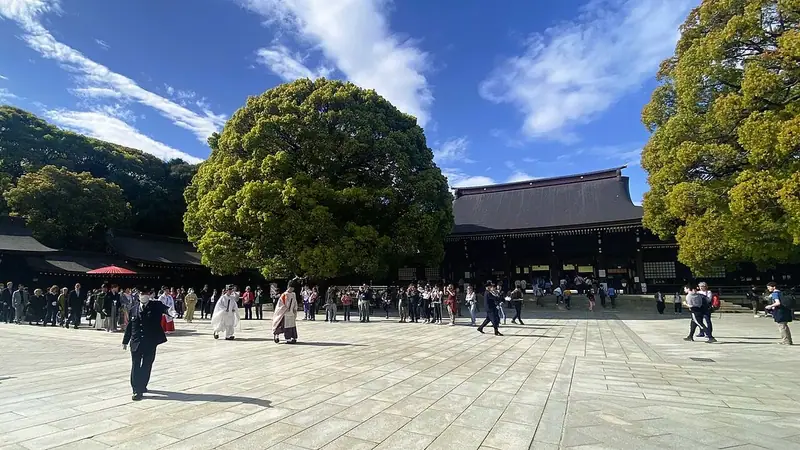
Meiji Jingu audio guide
Follow the gravel approach through a hand-planted forest, past the sake and wine barrels and under the great torii, to Tokyo’s great Shinto shrine.
Every guide, in every country
Fushimi Inari Taisha and every other guide we publish, including future ones. One payment, no subscription.