Before you start
Itsukushima Shrine stands on the shore of Miyajima, an island in Hiroshima Bay that belongs to the city of Hatsukaichi in Hiroshima Prefecture. Ferries make the short crossing from Miyajimaguchi on the mainland, which is served by JR trains and Hiroden trams from Hiroshima, and the shrine is about fifteen minutes’ walk along the shore from the island’s ferry terminal. In 1996 the shrine, its great torii gate and the forested slopes of Mount Misen behind it were inscribed together as a UNESCO World Heritage Site. Check the tide tables before you go: the gate appears to float at high tide, while at low tide you can walk out to it across the sand. Deer roam freely on the island; do not feed them, and keep maps and snacks out of reach. The route starts on the shore, climbs the small hill to Senjokaku and the Five-Storey Pagoda, then follows the one-way corridors of the shrine from the east entrance to the west exit.
Use it as a self-guided tour of Itsukushima Shrine: 7 stops in visit order, each played when you’re ready, at your own pace.
 Free preview · Stop 1
The Great Torii
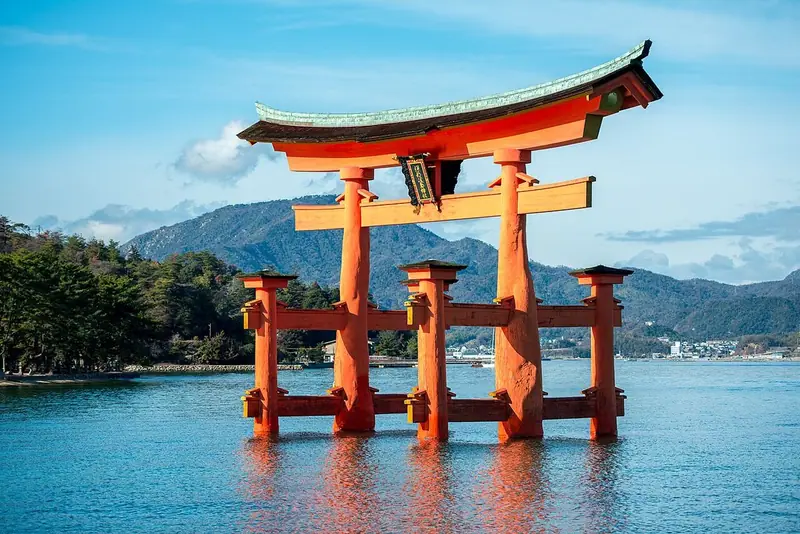
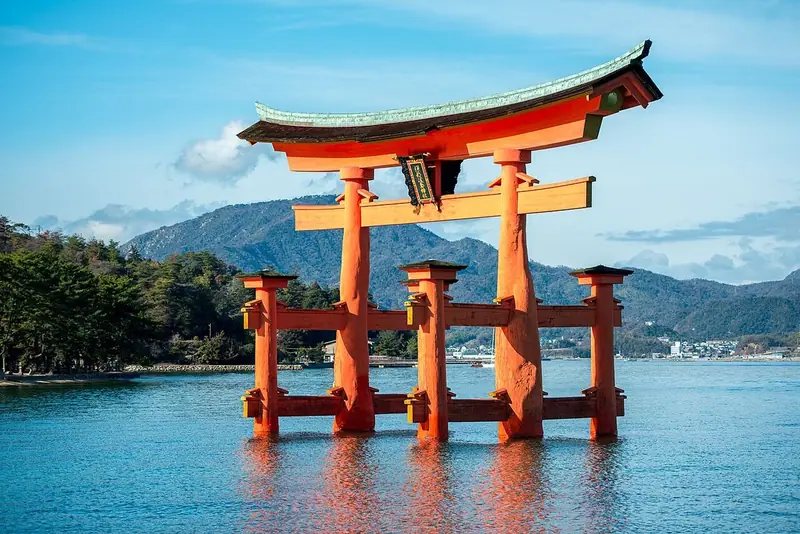
Begin on the shore near the stone torii and look out across the water to the Great Torii, the symbol of Miyajima. It marks the boundary between the sacred and the everyday world, and in the past pilgrims arrived by boat, steering through it towards the shrine. A torii has stood here since 1168, and Taira no Kiyomori is said to have built the first. The present gate, raised in 1875, is over sixteen metres tall and weighs about sixty tonnes. Remarkably, it is not buried in the seabed: it stands by its own weight, helped by about seven tonnes of stones packed inside the box-shaped top beam. Its two main pillars are cut from camphor trees more than five hundred years old, a wood that resists rot and insects, and the four smaller pillars that brace them follow a style adopted in 1547.
Photo: JordyMeow · CC BY-SA 3.0 · Wikimedia Commons
What to see at Itsukushima Shrine: 7 stops, in visit order
- 01
 The Great ToriiA gate in the seaFree preview
- 02
 SenjokakuHideyoshi’s unfinished hallIn the guide
- 03
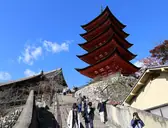 Five-Storey PagodaA tower of 1407In the guide
- 04
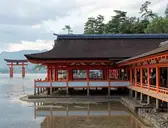 East Corridor and Marodo ShrineEntering a palace on the seaIn the guide
- 05
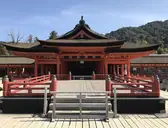 Main Shrine and StagesFacing the toriiIn the guide
- 06
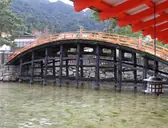 Sori-bashi and Tenjin ShrineThe messengers’ bridgeIn the guide
- 07
 Noh StageThe only stage on the seaIn the guide
Site map of Itsukushima Shrine
History of Itsukushima Shrine
Itsukushima Shrine is the work of the court aristocracy of Heian Japan, the age when emperors and great noble families ruled from Kyoto, which lasted from 794 to 1185. The island itself was worshipped as a goddess from ancient times, and tradition says a shrine was first founded here in 593 by a local chieftain, Saeki Kuramoto; it appears in official records by 811. Its splendour dates from the twelfth century, when Taira no Kiyomori, governor of Aki Province from 1146 and later the most powerful man in Japan, adopted it as the shrine of the Taira clan and around 1168 built the halls and corridors over the water in the style of an aristocratic palace. After the Taira fell in 1185 the shrine survived fires in 1207 and 1223, and later lords kept it alive: the warlord Mori Motonari rebuilt the main sanctuary in 1571, faithfully following the Heian design, and Toyotomi Hideyoshi added the great hall of Senjokaku from 1587.
Itsukushima Shrine guide: questions
How many stops does the Itsukushima Shrine guide have?
7 stops, in visit order: 1. The Great Torii; 2. Senjokaku; 3. Five-Storey Pagoda; 4. East Corridor and Marodo Shrine; 5. Main Shrine and Stages; 6. Sori-bashi and Tenjin Shrine; 7. Noh Stage.
Can I do a self-guided tour of Itsukushima Shrine with this guide?
Yes. The guide is made for a self-guided tour: 7 stops in visit order, each with a photo, a story and a voice, so you can explore Itsukushima Shrine at your own pace, without joining a group. Download it before you go and it works offline.
How long is each guide?
The 7 stops add up to about 5 minutes of listening in total. You play each stop when you’re ready, so you can go at your own pace.
Does the guide work offline?
Yes, once it’s downloaded. The guide is a single self-contained web page (about 6.8 MB) with the photos, text and audio built in. Download it to your phone before you go (Wi-Fi is best); after that it opens in any modern browser on iPhone or Android, with no app, account or mobile signal needed.
Does it use GPS or need my location?
No. The guide doesn’t use GPS and doesn’t know where you are: you play each stop when you reach it. It works on iPhone and Android in any modern browser, and it’s in English.
What’s included?
One self-contained HTML guide: 7 stops in visit order, each with a photo, text and a voice, plus the story of who built the site.
Who built Itsukushima Shrine?
Itsukushima Shrine is the work of the court aristocracy of Heian Japan, the age when emperors and great noble families ruled from Kyoto, which lasted from 794 to 1185. The island itself was worshipped as a goddess from ancient times, and tradition says a shrine was first founded here in 593 by a local chieftain, Saeki Kuramoto; it appears in official records by 811.
Where is Itsukushima Shrine?
Itsukushima Shrine stands on the shore of Miyajima, an island in Hiroshima Bay that belongs to the city of Hatsukaichi in Hiroshima Prefecture.
Is there a free audio guide to Itsukushima Shrine?
The first stop, The Great Torii, is free to read and hear on this page, so you can try the Itsukushima Shrine audio tour before you buy. The full guide, with all 7 stops, is a one-off purchase: download it once and it’s yours to keep, working offline.
Is the Itsukushima Shrine guide worth it?
If you’d like to know what you’re looking at, yes. For $10 you get 7 stops in visit order, each with a photo, a short history and a voice you play when you’re ready, plus a site map of the stops, and about 5 minutes of listening in all. It’s short on purpose, so you spend your time looking, not listening. It’s yours to keep, works offline and needs no app. The first stop is free on this page, so you can try it before you buy. If you’d like hours of detail, a guided tour will go deeper.
Audio guide or guided tour?
It depends how you like to visit. This guide lets you explore Itsukushima Shrine at your own pace, at any time, for a one-off price. A guided tour gives you a live expert you can ask questions, but at fixed times and usually for a higher price. Many people use both: a tour for the big picture, and the guide to read beforehand or to revisit the stops in their own time.
Is this the official Itsukushima Shrine guide?
No. It’s an independent guide by The Historian Guide, not affiliated with or endorsed by the operator of Itsukushima Shrine. For tickets and opening hours, check the official site operator before you go.
Does the guide include entry tickets or opening hours?
No. The guide is a digital companion only. Admission to Itsukushima Shrine is separate, so check the official site operator for current tickets and opening hours before you go.
- Stop 1 · The Great Torii (also the cover): JordyMeow · CC BY-SA 3.0 · Wikimedia Commons · resized
- Stop 2 · Senjokaku: Hyppolyte de Saint-Rambert · CC BY 4.0 · Wikimedia Commons · resized
- Stop 3 · Five-Storey Pagoda: Sailko · CC BY 3.0 · Wikimedia Commons · resized
- Stop 4 · East Corridor and Marodo Shrine: Jakub Hałun · CC BY 4.0 · Wikimedia Commons · resized
- Stop 5 · Main Shrine and Stages: そらみみ · CC BY-SA 4.0 · Wikimedia Commons · resized
- Stop 6 · Sori-bashi and Tenjin Shrine: KimonBerlin · CC BY-SA 2.0 · Wikimedia Commons · resized
- Stop 7 · Noh Stage: そらみみ · CC BY-SA 4.0 · Wikimedia Commons · resized


All photographs from Wikimedia Commons under the licences shown.
More guides in Japan
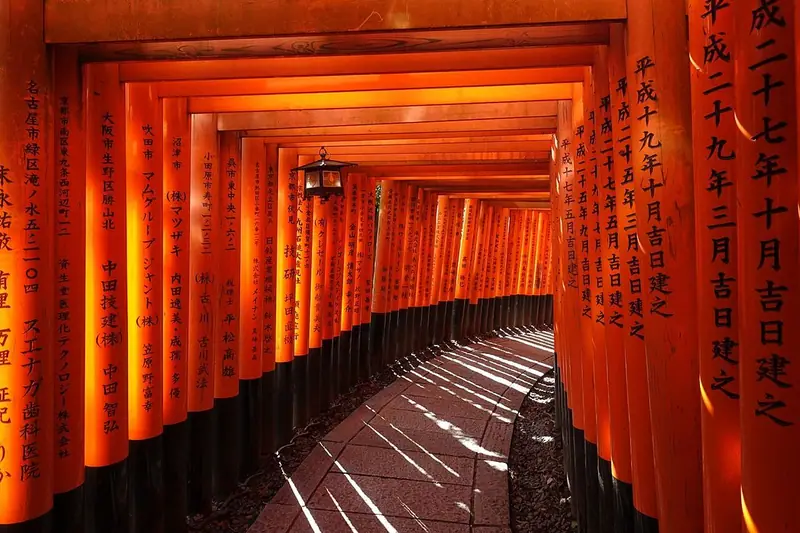 Shinto7 stops · founded 711; main hall 1499
Fushimi Inari Taisha audio guide
Pass through the Senbon Torii, the 'thousand gates', on the trail that winds up Mount Inari to the summit.
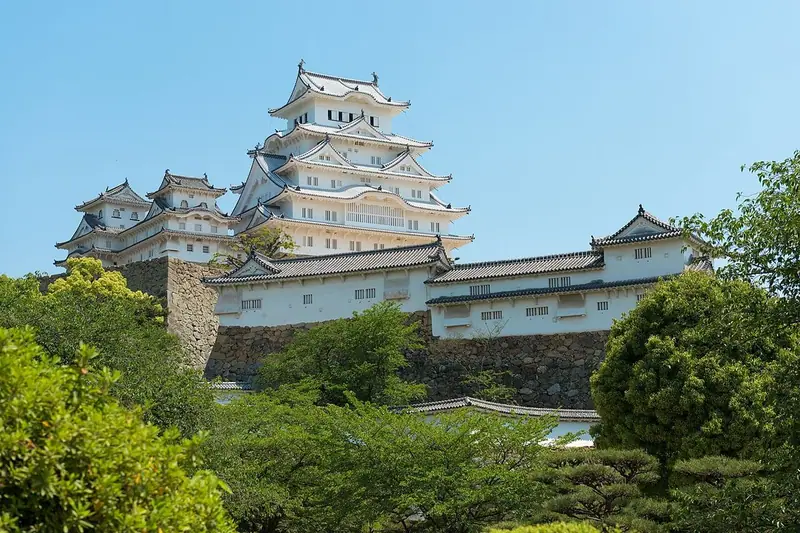 Edo7 stops · keep 1601–1609
Himeji Castle audio guide
Through the gates of the maze and the baileys to the main keep of Himeji, the great castle of the samurai lords.
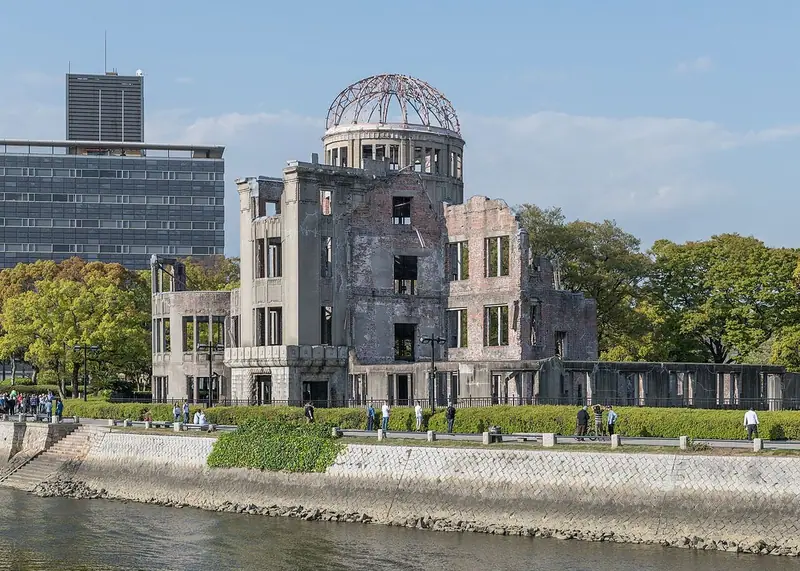 Shōwa Japan8 stops · Post-war Shōwa
Hiroshima Peace Memorial Park audio guide
The Peace Memorial Park, from the museum and the cenotaph to the Children’s Peace Monument and the Atomic Bomb Dome.
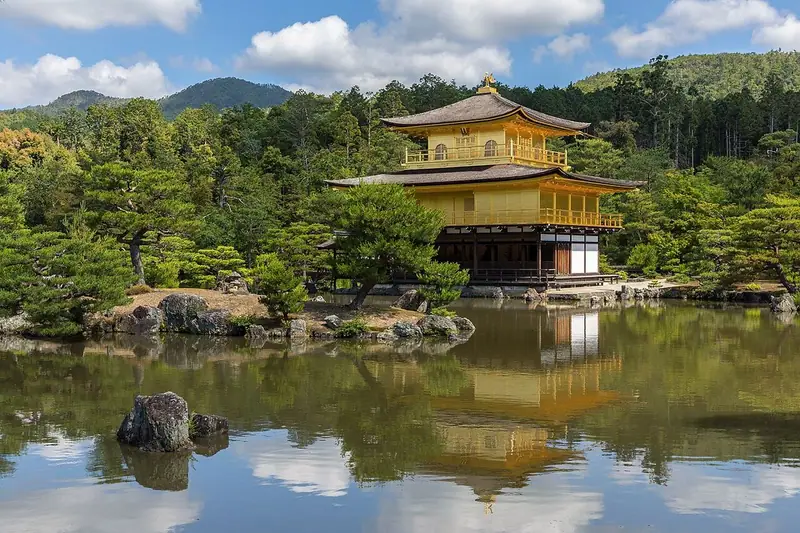 Muromachi7 stops · 1397 (rebuilt 1955)
Kinkaku-ji audio guide
The Golden Pavilion mirrored in its pond, then a garden path past the Ryumon Falls to an old teahouse.
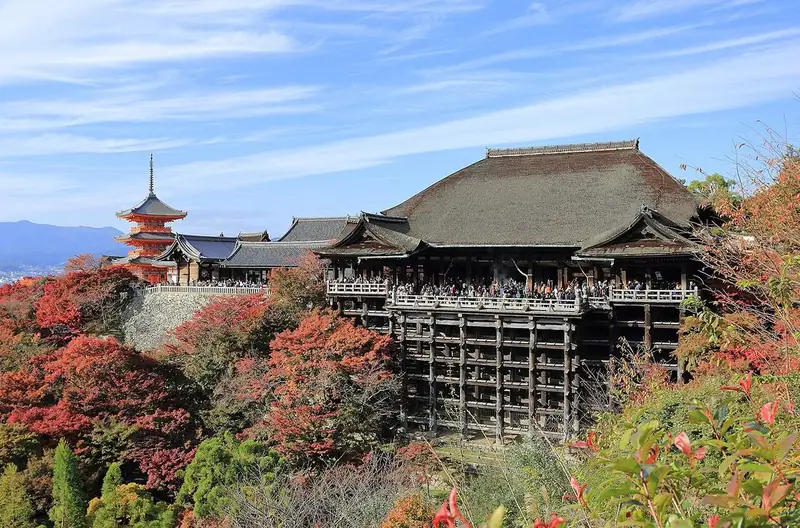 Japanese Buddhist7 stops · founded 778; main hall 1633
Kiyomizu-dera audio guide
Out onto the great wooden stage of the Main Hall, then down to the Otowa Waterfall below.
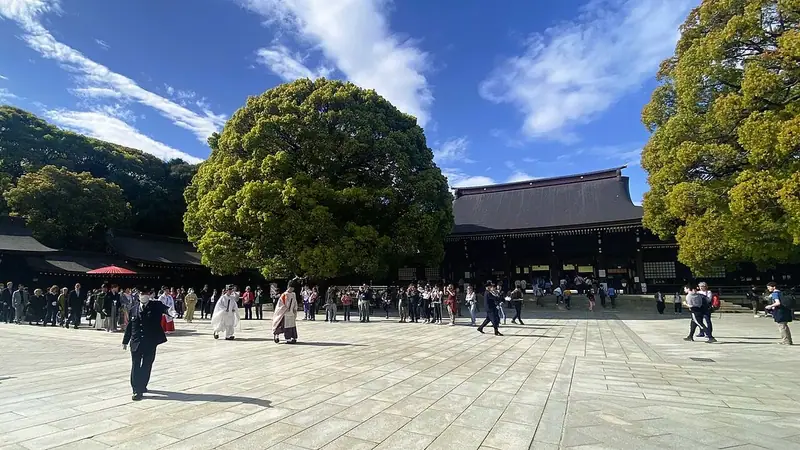 Imperial Japan7 stops · Meiji and Taishō
Meiji Jingu audio guide
Follow the gravel approach through a hand-planted forest, past the sake and wine barrels and under the great torii, to Tokyo’s great Shinto shrine.
Every guide, in every country
Itsukushima Shrine and every other guide we publish, including future ones. One payment, no subscription.