Before you start
Cyrene stands on a ridge of the green Jebel Akhdar uplands in eastern Libya, beside the modern town of Shahhat, looking north towards the sea and its ancient port of Apollonia. UNESCO describes it as one of the principal cities of the Greek world, and it was inscribed as a World Heritage Site in 1982. Since 2016 the site has been on UNESCO’s List of World Heritage in Danger. In 2026 the World Heritage Committee welcomed continuing conservation work with university missions and international partners, including the restoration of a Roman aqueduct to carry rainwater away from the Sanctuary of Apollo, while asking for further work on erosion, the stability of the escarpment and a management plan. The site is spread across hills and terraces, with steep paths and steps, so wear sturdy shoes and bring water and a hat. Please keep off walls and fallen blocks. The route begins at the Temple of Zeus, follows the old main street to the agora, and descends to the Sanctuary of Apollo and the tombs beyond.
Use it as a self-guided tour of Cyrene: 8 stops in visit order, each played when you’re ready, at your own pace.
 Free preview · Stop 1
The Temple of Zeus
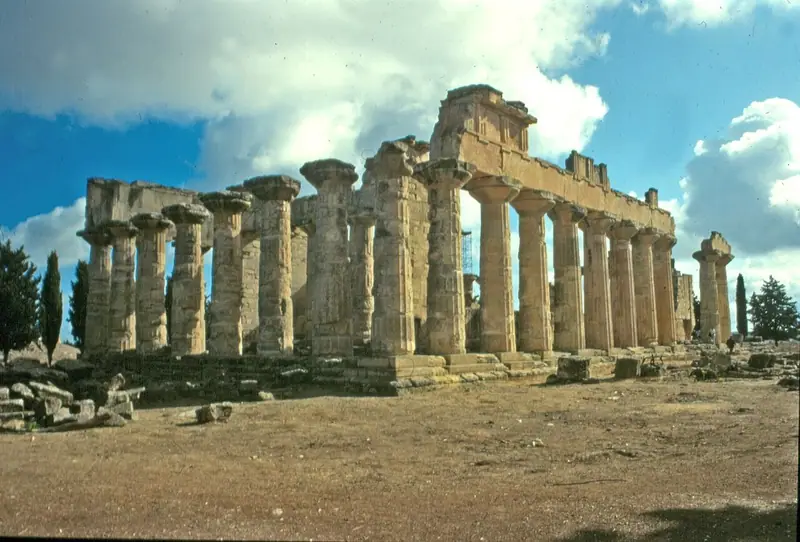
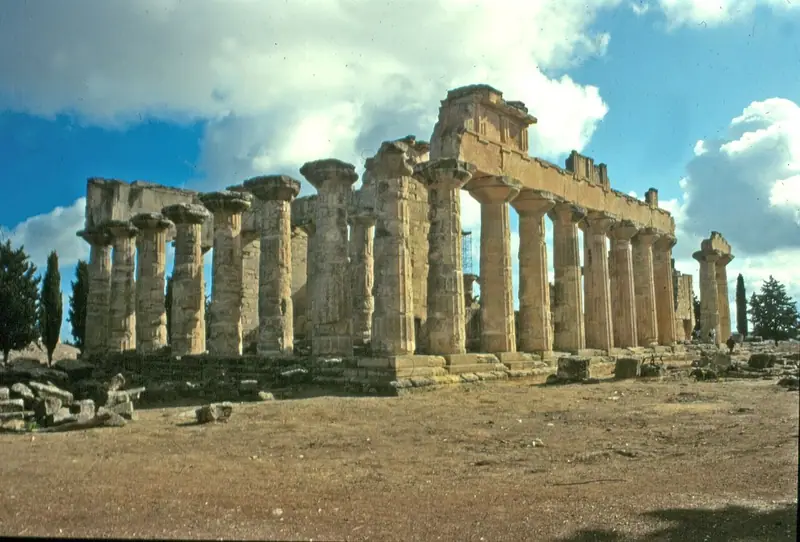
Begin on the eastern hill at the Temple of Zeus, the largest temple of Cyrene. Built in the Doric style in about 500 to 480 BCE, it measured about sixty-eight metres by thirty, roughly the size of the Parthenon in Athens, with eight columns across each end and seventeen along each side. Its capitals weigh around seventeen tonnes each. During the Jewish revolt of 115 CE the columns were undermined and set alight, so that they toppled outwards. The temple was restored by about 175, and under the emperor Commodus a seated statue of Zeus was set up inside, a replica of the famous statue at Olympia; fragments of it are in the Cyrene museum. The earthquake of 365 brought the temple down again. Most of the columns you see were re-erected between 1967 and 2008.
Photo: MM · Public domain · Wikimedia Commons
What to see at Cyrene: 8 stops, in visit order
- 01
 The Temple of ZeusA rival to OlympiaFree preview
- 02
 The CaesareumA square for athletesIn the guide
- 03
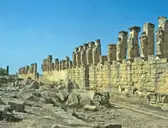 The Stoa of Hermes and HeraclesA running track in the shadeIn the guide
- 04
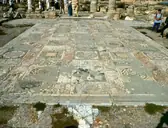 The House of Jason MagnusA priest’s palaceIn the guide
- 05
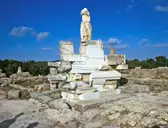 The AgoraThe founder’s tombIn the guide
- 06
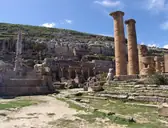 The Sanctuary of ApolloWhere the city’s spring risesIn the guide
- 07
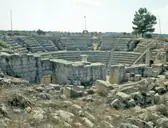 The Greek TheatreAn arena on the edgeIn the guide
- 08
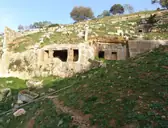 The NecropolisA city of the deadIn the guide
Site map of Cyrene
History of Cyrene
Cyrene was founded by Greek settlers and grew into one of the great cities of the Greek and Roman Mediterranean. Ancient Greek civilisation spread from the Aegean through colonies founded from about the eighth century BCE, from Spain to the Black Sea, and its cities kept their language and culture long after the Roman conquest. According to Herodotus, colonists from the island of Thera, prompted by the oracle at Delphi, founded Cyrene in about 631 BCE under their leader Battus. His descendants ruled as kings until about 440 BCE, growing rich on horses and silphium, a prized medicinal plant. Cyrene later passed to Ptolemaic Egypt and in 96 BCE was bequeathed to Rome. Heavy damage in the Jewish revolt of 115 CE was followed by rebuilding, but earthquakes in 262 and 365 brought decline.
The full history continues in the guide.
Cyrene guide: questions
How many stops does the Cyrene guide have?
8 stops, in visit order: 1. The Temple of Zeus; 2. The Caesareum; 3. The Stoa of Hermes and Heracles; 4. The House of Jason Magnus; 5. The Agora; 6. The Sanctuary of Apollo; 7. The Greek Theatre; 8. The Necropolis.
Can I do a self-guided tour of Cyrene with this guide?
Yes. The guide is made for a self-guided tour: 8 stops in visit order, each with a photo, a story and a voice, so you can explore Cyrene at your own pace, without joining a group. Download it before you go and it works offline.
How long do you need at Cyrene?
We suggest allowing half a day. The 8 stops add up to about 6 minutes of listening, and you play each one when you’re ready, so you can linger wherever you like.
How long is each guide?
The 8 stops add up to about 6 minutes of listening in total. You play each stop when you’re ready, so you can go at your own pace.
Does the guide work offline?
Yes, once it’s downloaded. The guide is a single self-contained web page (about 7.2 MB) with the photos, text and audio built in. Download it to your phone before you go (Wi-Fi is best); after that it opens in any modern browser on iPhone or Android, with no app, account or mobile signal needed.
Does it use GPS or need my location?
No. The guide doesn’t use GPS and doesn’t know where you are: you play each stop when you reach it. It works on iPhone and Android in any modern browser, and it’s in English.
What’s included?
One self-contained HTML guide: 8 stops in visit order, each with a photo, text and a voice, plus the story of who built the site.
Who built Cyrene?
Cyrene was founded by Greek settlers and grew into one of the great cities of the Greek and Roman Mediterranean. Ancient Greek civilisation spread from the Aegean through colonies founded from about the eighth century BCE, from Spain to the Black Sea, and its cities kept their language and culture long after the Roman conquest.
Where is Cyrene?
Cyrene stands on a ridge of the green Jebel Akhdar uplands in eastern Libya, beside the modern town of Shahhat, looking north towards the sea and its ancient port of Apollonia.
Is there a free audio guide to Cyrene?
The first stop, The Temple of Zeus, is free to read and hear on this page, so you can try the Cyrene audio tour before you buy. The full guide, with all 8 stops, is a one-off purchase: download it once and it’s yours to keep, working offline.
Is the Cyrene guide worth it?
If you’d like to know what you’re looking at, yes. For $10 you get 8 stops in visit order, each with a photo, a short history and a voice you play when you’re ready, plus a site map of the stops, and about 6 minutes of listening in all. It’s short on purpose, so you spend your time looking, not listening. It’s yours to keep, works offline and needs no app. The first stop is free on this page, so you can try it before you buy. If you’d like hours of detail, a guided tour will go deeper.
Audio guide or guided tour?
It depends how you like to visit. This guide lets you explore Cyrene at your own pace, at any time, for a one-off price. A guided tour gives you a live expert you can ask questions, but at fixed times and usually for a higher price. Many people use both: a tour for the big picture, and the guide to read beforehand or to revisit the stops in their own time.
Is this the official Cyrene guide?
No. It’s an independent guide by The Historian Guide, not affiliated with or endorsed by the operator of Cyrene. For tickets and opening hours, check the official site operator before you go.
Does the guide include entry tickets or opening hours?
No. The guide is a digital companion only. Admission to Cyrene is separate, so check the official site operator for current tickets and opening hours before you go.
- Stop 1 · The Temple of Zeus (also the cover): MM · Public domain · Wikimedia Commons · resized
- Stop 2 · The Caesareum: Libyan Studies · CC BY-SA 2.0 · Wikimedia Commons · resized
- Stop 3 · The Stoa of Hermes and Heracles: MM · Public domain · Wikimedia Commons · resized
- Stop 4 · The House of Jason Magnus: MM · Public domain · Wikimedia Commons · resized
- Stop 5 · The Agora: MM · Public domain · Wikimedia Commons · resized
- Stop 6 · The Sanctuary of Apollo: Libyan Studies · CC BY-SA 2.0 · Wikimedia Commons · resized
- Stop 7 · The Greek Theatre: MM · Public domain · Wikimedia Commons · resized
- Stop 8 · The Necropolis: Libyan Studies · CC BY-SA 2.0 · Wikimedia Commons · resized


All photographs from Wikimedia Commons under the licences shown.
More guides in Libya
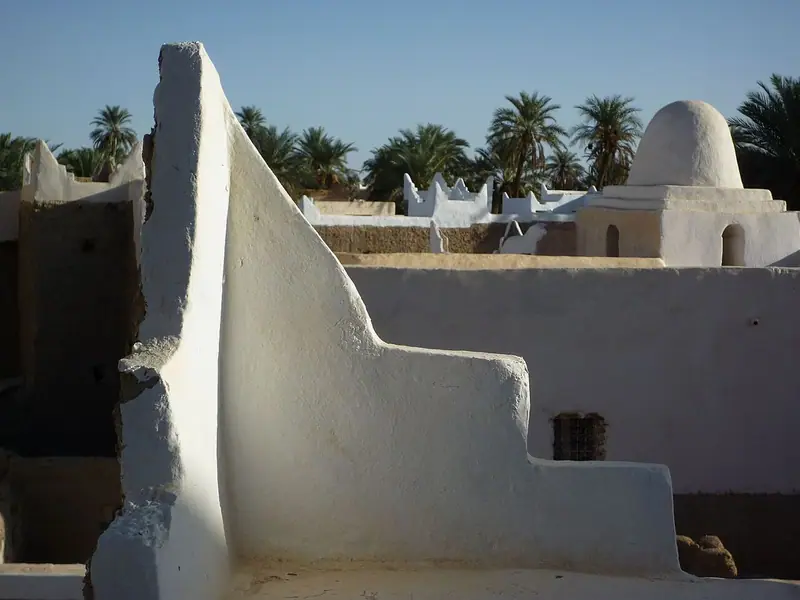 Amazigh7 stops · 1st millennium BCE – 20th century CE
Ghadames audio guide
The Pearl of the Desert: the spring of Ain al-Faras, covered lanes of the old town, the Seven Quarters, a whitewashed Ghadamsi house, the women’s rooftop paths and the palm gardens.
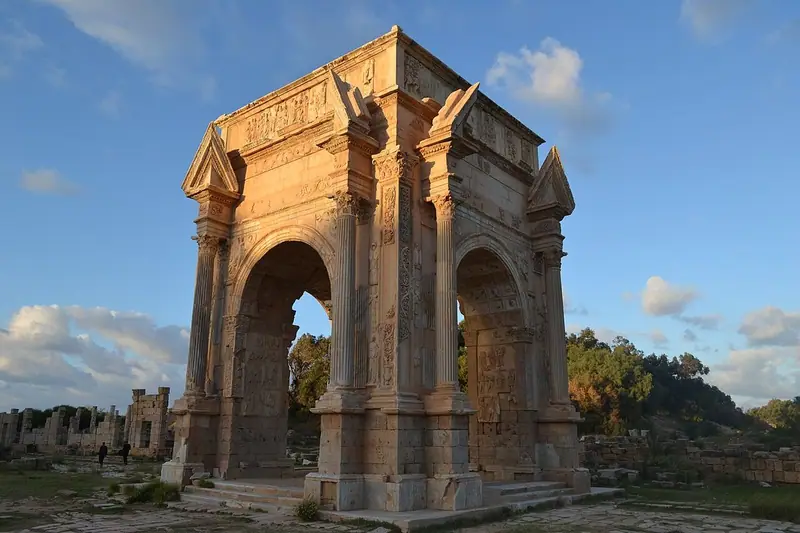 Roman8 stops · 7th century BCE – 7th century CE
Leptis Magna audio guide
The home town of the emperor Septimius Severus on the Libyan shore: his four-way arch, the Hadrianic Baths, the Severan Forum and Basilica, the market, the theatre and the amphitheatre.
 Roman8 stops · 5th century BCE – 7th century CE
Sabratha audio guide
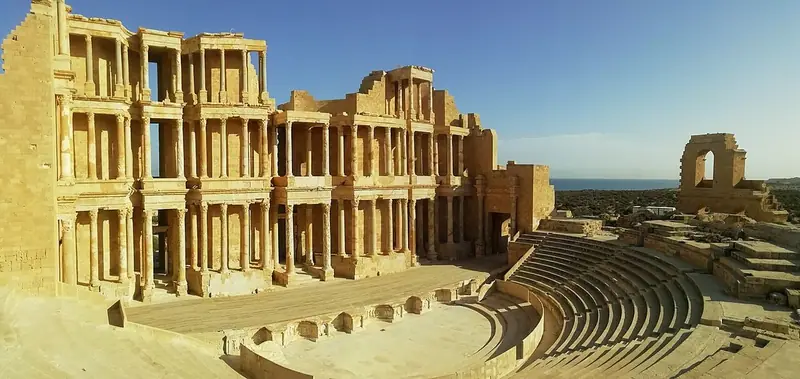
A Punic port turned Roman city by the sea: the towering Punic Mausoleum B, the forum and basilicas, the seaward baths, the three-storey theatre stage and the Temple of Isis.
Every guide, in every country
Cyrene and every other guide we publish, including future ones. One payment, no subscription.