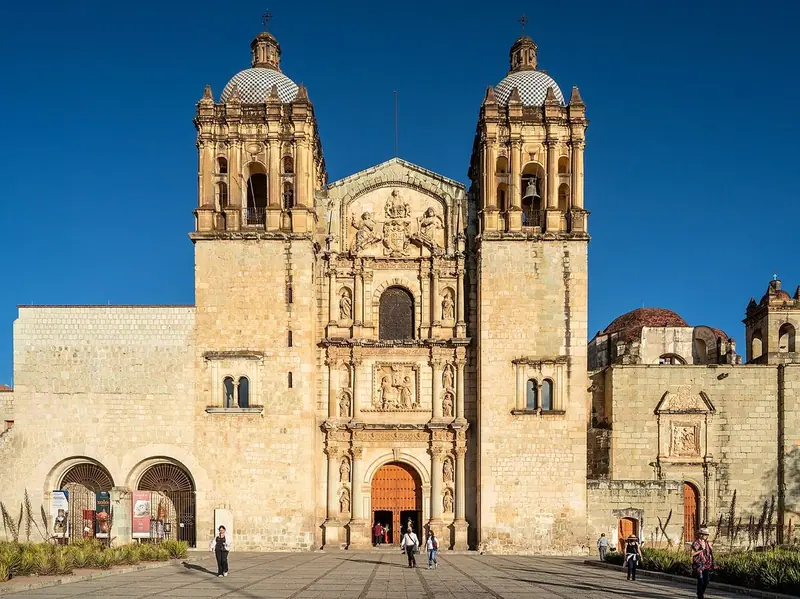
Before you start
Oaxaca lies in a wide green valley in the mountains of southern Mexico, where three valleys meet, about fifteen hundred metres above sea level. For more than two thousand years this has been the land of the Zapotec and Mixtec peoples, and many of their languages are still spoken in the markets and villages around the city. The Spanish town that grew here in the sixteenth century was built in a soft green stone, and its churches were made low and massive to stand up to the earthquakes that shake the valley. Its historic centre, together with the ancient Zapotec city of Monte Albán on the hill above, was inscribed as a UNESCO World Heritage Site in 1987. This guide starts at the Basilica of La Soledad on the west side of the centre, crosses the main square and follows the pedestrian street north to the great Dominican church of Santo Domingo, ending at the arches of the old aqueduct. Allow about half a day.
Use it as a self-guided tour of Oaxaca: 8 stops in visit order, each played when you’re ready, at your own pace.
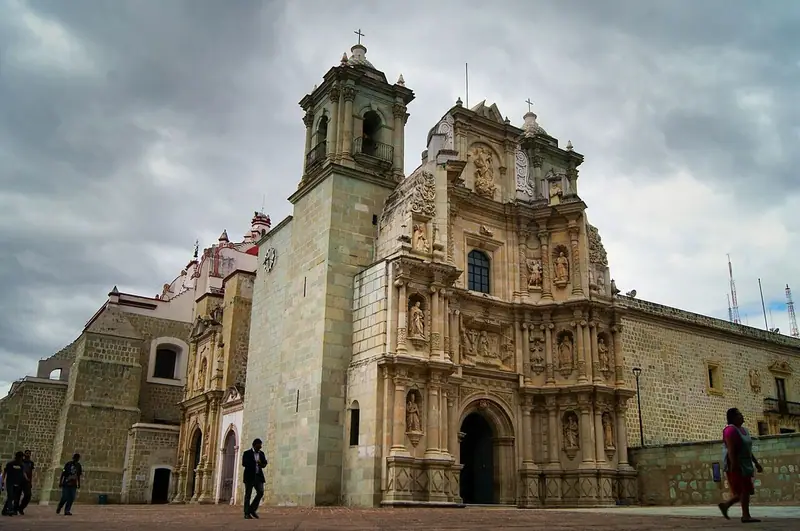 Free preview · Stop 1
The Basilica of La Soledad
Begin in the wide terraced square in front of the Basilica of Nuestra Señora de la Soledad, Our Lady of Solitude, the patron of Oaxaca. According to tradition, in 1620 a mule driver on the road from Veracruz to Guatemala found an extra mule in his train. The mule lay down here, near the hermitage of San Sebastián, and died, and in the box it carried was an image of the Virgin. A shrine was built for her, and the present church was begun in 1682 and finished in 1689; it was consecrated in 1690. Look at its height: it was deliberately built low, with thick walls, because earthquakes had already brought down several buildings in the city. Its front, carved in stone, rises in tiers like a great folding screen, with saints in niches and, in the centre, the Virgin of La Soledad. Inside, her image is dressed in black velvet, and her feast, on the eighteenth of December, fills the square with pilgrims.
Photo: Balam aleica · CC BY-SA 4.0 · Wikimedia Commons
What to see at Oaxaca: 8 stops, in visit order
- 01
 The Basilica of La SoledadThe shrine of the city's patronFree preview
- 02
 The Church of San Felipe NeriWhere Benito Juárez was marriedIn the guide
- 03
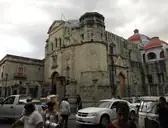 The Church of La CompañíaThe Jesuits in OaxacaIn the guide
- 04
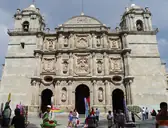 The Zócalo and the CathedralThe heart of the cityIn the guide
- 05
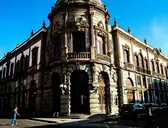 The Teatro Macedonio AlcaláA theatre of the Porfirian ageIn the guide
- 06
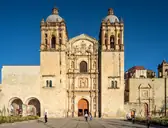 Santo Domingo and the Museum of CulturesThe great Dominican houseIn the guide
- 07
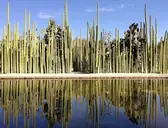 The Ethnobotanical GardenThe old convent orchardIn the guide
- 08
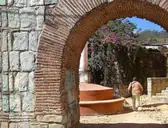 The Arcos de XochimilcoThe arches of the old aqueductIn the guide
History of Oaxaca
Long before the Spanish came, the valley was the heartland of the Zapotecs, whose city of Monte Albán, on a levelled mountain top a few kilometres west of here, was founded around 500 BCE and ruled the valley for centuries. Later, Mixtec lords spread into the valley as well. In the fifteenth century the Mexica, the Aztecs, pushed south and set up a garrison here, which they called Huaxyacac, after the huaje trees that grew in the valley; the Spanish heard the name as Oaxaca. After the conquest, Spanish settlers founded a town here, and in 1532 the Spanish king granted it the title of city, as Antequera. Dominican friars, Jesuits and nuns built churches and convents, and the city grew rich on trade, including cochineal, the red dye made from insects that live on cactus. Earthquakes struck again and again, so buildings were rebuilt low and thick-walled, in the local green stone.
The full history continues in the guide.
Oaxaca guide: questions
How many stops does the Oaxaca guide have?
8 stops, in visit order: 1. The Basilica of La Soledad; 2. The Church of San Felipe Neri; 3. The Church of La Compañía; 4. The Zócalo and the Cathedral; 5. The Teatro Macedonio Alcalá; 6. Santo Domingo and the Museum of Cultures; 7. The Ethnobotanical Garden; 8. The Arcos de Xochimilco.
Can I do a self-guided tour of Oaxaca with this guide?
Yes. The guide is made for a self-guided tour: 8 stops in visit order, each with a photo, a story and a voice, so you can explore Oaxaca at your own pace, without joining a group. Download it before you go and it works offline.
How long is each guide?
The 8 stops add up to about 7 minutes of listening in total. You play each stop when you’re ready, so you can go at your own pace.
Does the guide work offline?
Yes, once it’s downloaded. The guide is a single self-contained web page (about 8.1 MB) with the photos, text and audio built in. Download it to your phone before you go (Wi-Fi is best); after that it opens in any modern browser on iPhone or Android, with no app, account or mobile signal needed.
Does it use GPS or need my location?
No. The guide doesn’t use GPS and doesn’t know where you are: you play each stop when you reach it. It works on iPhone and Android in any modern browser, and it’s in English.
What’s included?
One self-contained HTML guide: 8 stops in visit order, each with a photo, text and a voice, plus the story of who built the site.
Who built Oaxaca?
Long before the Spanish came, the valley was the heartland of the Zapotecs, whose city of Monte Albán, on a levelled mountain top a few kilometres west of here, was founded around 500 BCE and ruled the valley for centuries. Later, Mixtec lords spread into the valley as well.
Where is Oaxaca?
Oaxaca lies in a wide green valley in the mountains of southern Mexico, where three valleys meet, about fifteen hundred metres above sea level.
Is there a free audio guide to Oaxaca?
The first stop, The Basilica of La Soledad, is free to read and hear on this page, so you can try the Oaxaca audio tour before you buy. The full guide, with all 8 stops, is a one-off purchase: download it once and it’s yours to keep, working offline.
Is the Oaxaca guide worth it?
If you’d like to know what you’re looking at, yes. For $10 you get 8 stops in visit order, each with a photo, a short history and a voice you play when you’re ready, about 7 minutes of listening in all. It’s short on purpose, so you spend your time looking, not listening. It’s yours to keep, works offline and needs no app. The first stop is free on this page, so you can try it before you buy. If you’d like hours of detail, a guided tour will go deeper.
Audio guide or guided tour?
It depends how you like to visit. This guide lets you explore Oaxaca at your own pace, at any time, for a one-off price. A guided tour gives you a live expert you can ask questions, but at fixed times and usually for a higher price. Many people use both: a tour for the big picture, and the guide to read beforehand or to revisit the stops in their own time.
Is this the official Oaxaca guide?
No. It’s an independent guide by The Historian Guide, not affiliated with or endorsed by the operator of Oaxaca. For tickets and opening hours, check the official site operator before you go.
Does the guide include entry tickets or opening hours?
No. The guide is a digital companion only. Admission to Oaxaca is separate, so check the official site operator for current tickets and opening hours before you go.
- Stop 1 · The Basilica of La Soledad: Balam aleica · CC BY-SA 4.0 · Wikimedia Commons · resized
- Stop 2 · The Church of San Felipe Neri: Pablo Fossas · CC BY-SA 3.0 · Wikimedia Commons · resized
- Stop 3 · The Church of La Compañía: Pablo Fossas · CC BY-SA 3.0 · Wikimedia Commons · resized
- Stop 4 · The Zócalo and the Cathedral: Thelmadatter · CC BY-SA 3.0 · Wikimedia Commons · resized
- Stop 5 · The Teatro Macedonio Alcalá: Mateo A. Torres-Ruiz · CC BY-SA 3.0 · Wikimedia Commons · resized
- Stop 6 · Santo Domingo and the Museum of Cultures (also the cover): nan palmero · CC BY 2.0 · Wikimedia Commons · resized
- Stop 7 · The Ethnobotanical Garden: Kaldari · CC0 · Wikimedia Commons · resized
- Stop 8 · The Arcos de Xochimilco: Adam Jones from Kelowna, BC, Canada · CC BY-SA 2.0 · Wikimedia Commons · resized


All photographs from Wikimedia Commons under the licences shown.
More guides in Mexico
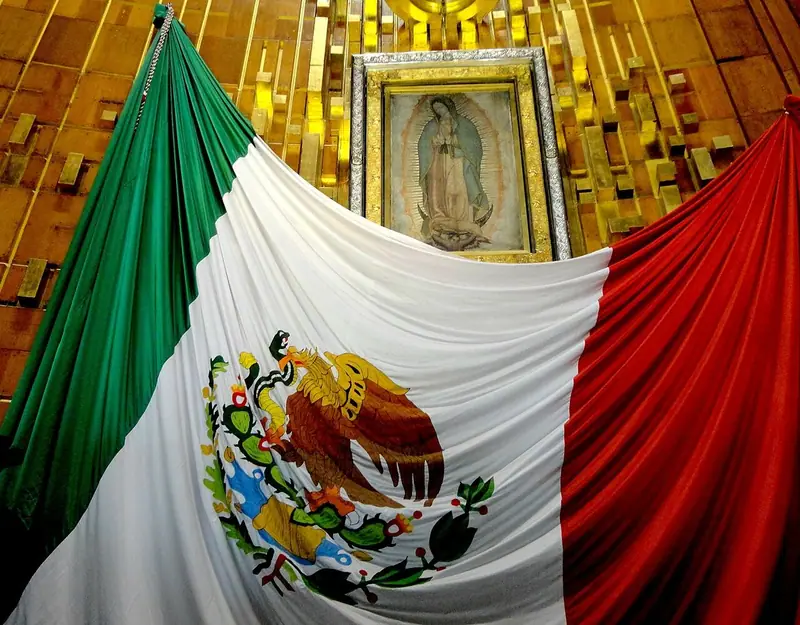 New Spain and Mexico8 stops · Colonial and modern Mexico
The Basilica of Guadalupe audio guide
Cross the great plaza of the world’s most visited Catholic shrine to see the image of Our Lady of Guadalupe, then climb the hill of Tepeyac.
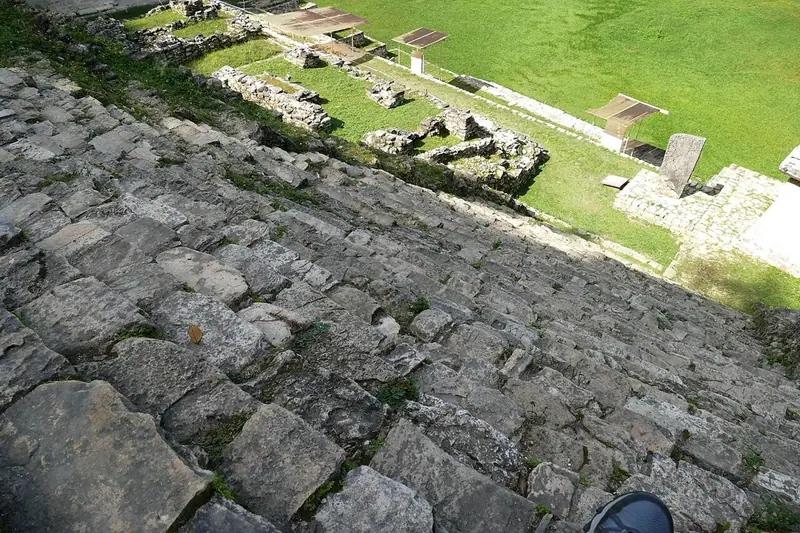 Maya6 stops · c. 600–800 CE
Bonampak audio guide
Three small rooms in the Lacandon forest painted with vivid Maya murals: a royal court, a battle and a celebration.
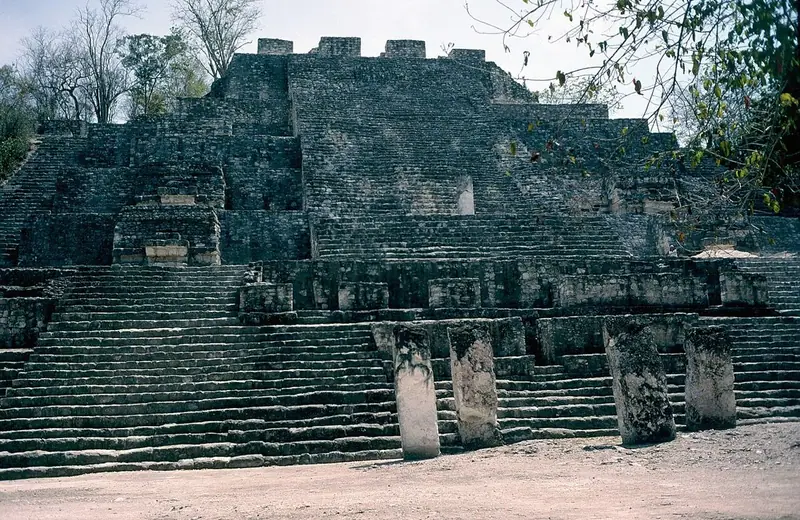 Maya6 stops · c. 250–900 CE
Calakmul audio guide
Capital of the Snake Kingdom, rising out of the Campeche rainforest.
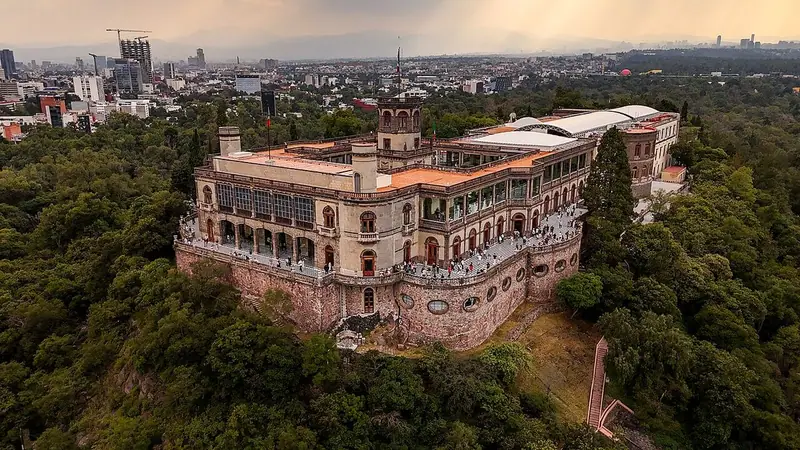 New Spain and Mexico8 stops · Second Mexican Empire
Chapultepec Castle audio guide
Climb the hill of Chapultepec to the castle of a viceroy, an emperor and presidents, now the National Museum of History.
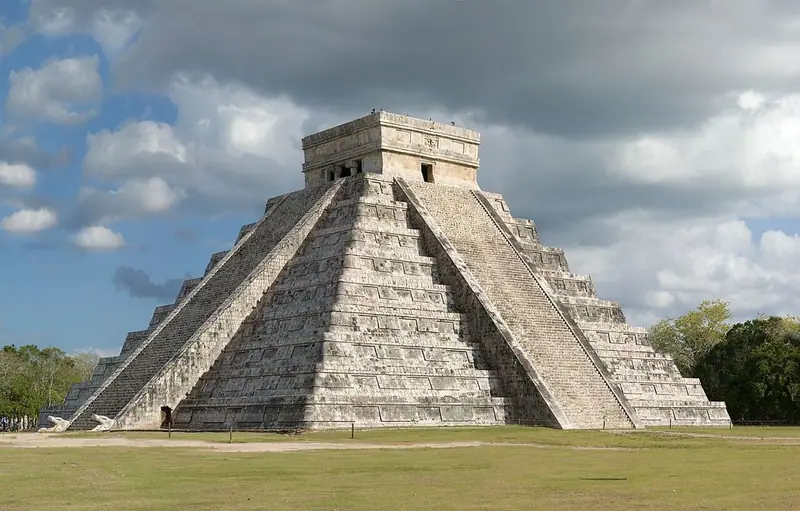 Maya8 stops · c. 600–1200 CE
Chichén Itzá audio guide
El Castillo and its serpent of light, the greatest ballcourt in Mesoamerica and the Sacred Cenote.
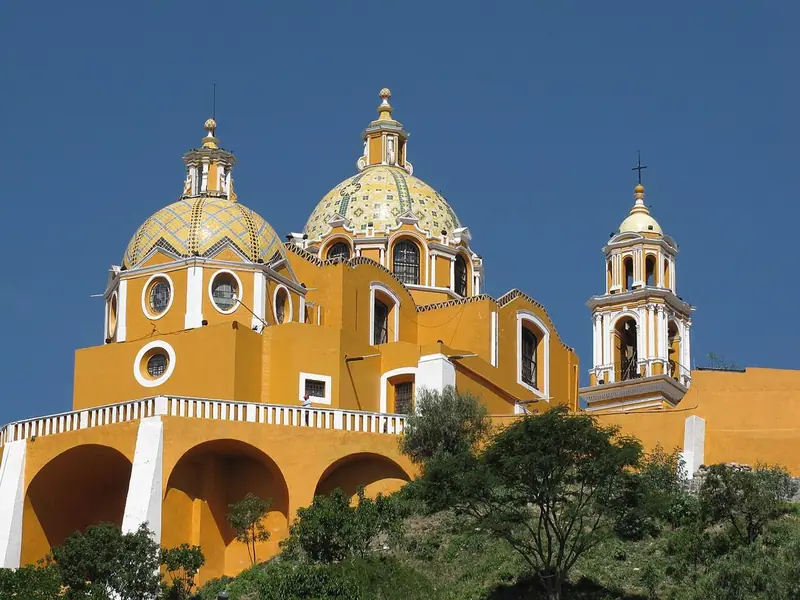 Mesoamerican6 stops · c. 300 BCE – 900 CE (pyramid)
Cholula audio guide
Tunnel into the Great Pyramid, then climb to the church on its summit and the view of the volcanoes.
Every guide, in every country
Oaxaca and every other guide we publish, including future ones. One payment, no subscription.